
Southbank Heritage Trail
STOP 12
Warehouses, Goods Sheds and Bond Stores
Location: South Wharf Promenade
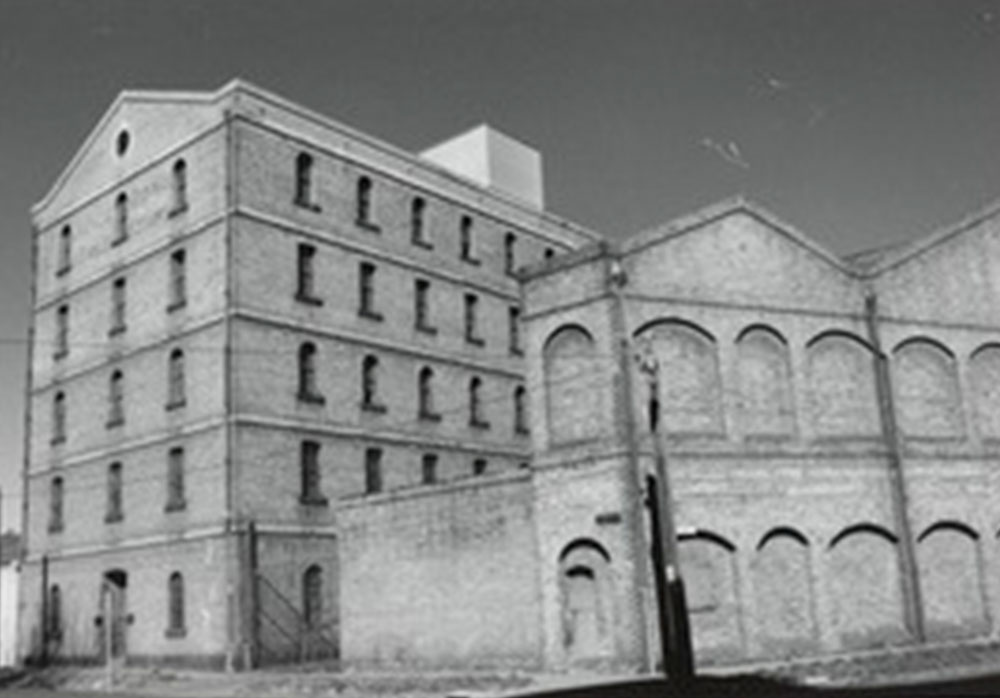
As the Port of Melbourne expanded and Melbourne prospered, the increasing population meant commercial expansion. The Melbourne Harbour Trust was formed to represent the commercial interests of maritime trade which was central to the economy of Victoria. Port infrastructure became necessary for berthing increasing numbers of ships, and facilities to transport, handle and store cargo had to keep pace with the huge range of perishable and non-perishable goods coming through Melbourne’s port week after week. By 1840 riverfront goods sheds proliferated on both north and south banks of the river.
Wharf sheds downstream from the Polly Woodside are representative of the early stage in port infrastructure development on south bank and are the oldest and most intact group on the Birrarung/Yarra today. Although re-purposed, these sheds are examples of early riverside wharfage and shipping sheds in their original location. Of the few remaining, Cargo Shed No.9, is the oldest shed on the south bank upstream from Charles Grimes Bridge. No.9 Shed links us to Melbourne’s pre-containerisation maritime trade when the volume and variety of imported and exported cargo passing through the port of Melbourne in the remote Southern Ocean, was astounding.
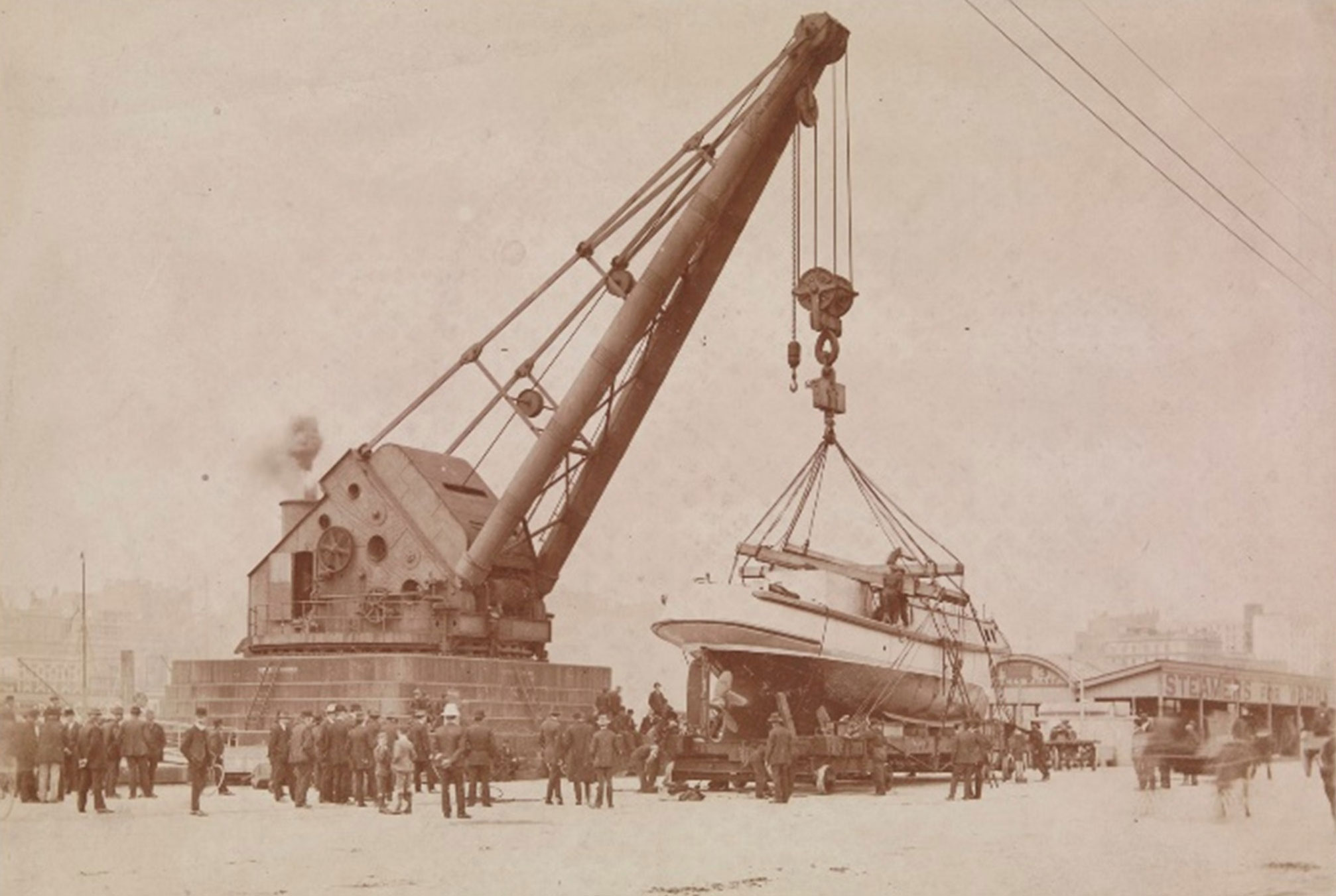
Wharves which lined the river banks were crammed with wharf labourers, goods sheds, and operational equipment such as lifting pulleys, cranes, trolleys on rails and loading yards. Two steam cranes, the Jenner and Junner, each 100ft long, were on the South Wharf, east of Spencer Street Bridge. Set back from the wharves to serve and sustain maritime trade, a plethora of commercial industrial businesses were established – engineers, makers and repairers of nets, boxes, and other related equipment.
As well as goods sheds, bond stores were important components of Melbourne’s port infrastructure relating to revenue collection. Bond stores enabled imported and exported goods to be held in a ‘bonded’ status awaiting customs clearance with no excise duty needing to be paid by the importers and exporters. Entrepreneur William B. Jones opened the Jones’ Bond Store in 1865. It began as a single building but developed into a complex of buildings that by 1888 covered 6 1⁄4 acres on the south side of the Birrarung/Yarra. It was leased for a time by the Melbourne Storage Company and stored kerosene, flax, barley, and other goods. Municipal rate books reveal the original complex included three timber and iron kerosene stores (Nos. 1, 2, 3) and a four-room timber house with stables. Additions and changes over the decades included heavy buttressing, presumably to withstand potential explosions from the kerosene stores. Today only Stores B and C and Building 11 of the Jones Bond Store complex remain. These are listed Victorian Heritage Register (H828) for architectural significance and the notable iron columns, timber floors and roof trusses. This multi-storey warehouse was enhanced by new hydraulic lift technology in the mid-1880s.
Today, many warehouses and goods sheds along the Birrarung/Yarra have been re-purposed as hospitality venues, restaurants, bars etc. But the sheer number and dimensions of these remaining structures gives some indication of the crucial role they played in supporting maritime trade when Melbourne was a riverport.
FURTHER READING
- Victorian Heritage Database, https://vhd.heritagecouncil.vic.gov.au/places/1064
IMAGE CREDITS
Image 1: Jones Bond Store, 1 Riverside Quay, Southbank, photographer John T. Collins, 1973, State Library Victoria
Image 2: Steam crane, built at Robinson Bros., South Melbourne in 1912 at South Wharf, lifting a launch into the river, State Library Victoria