

Although MMHN often bemoan the lack of due recognition for maritime heritage and industry today, on reflection it is clear that the burgeoning 19th century maritime trade resulted in significant investment in port infrastructure expansion downstream, away from the public gaze. While the Port of Melbourne remains immensely important to our prosperity, tight security on port operations means that it is largely ‘out of sight and out of mind’ when it comes to public awareness. MMHN was delighted to see the recent, rare media focus on the extraordinary Port of Melbourne, triggered by the release of the Port of Melbourne’s 2055 Port Development Strategy. You might enjoy looking back over images of the PoM development.
See: The Age – Look back at Port of Melbourne
Contents
1. Port of Melbourne (PoM) Draft Port Development Strategy 2055
2. HMAS Goorangai: The Story from the Queenscliffe Perspective
3. Station Pier: Hear about the remarkable ‘backstory’ (or ‘understory’) of this Heritage listed Pier
4. Singing at the Seafarers
5. Lighthouse Keepers of the Great South-West
6. Growing the ‘Blue Economy’ into the Future
7. Heritage Fleet – Eviction Threat in the Docklands Precinct
8. Maritime Industry Australia (MIAL) – Merchant Shipping Strategic Fleet and Seafaring Skills
9. Shipwrecks
10. Ferries: Investment in WA and Deficit in Melbourne
11. Industry Opinion: AI at Sea
12. Panama Canal – Denmark, China, US, Panama
13. AUKUS Issues: UK Launches Review
14. RAN Sailors Graduate U.S. Navy’s Nuclear Power Training Unit
15. Trump Whitehouse Executive Order – US Maritime Dominance Plans
16. U.S. Shipbuilding Capability – A Matter Related to AUKUS
17. Australian Maritime Safety Authority (AMSA): Crew Injuries
18. Bad to Worse: Disabled Tanker and Fouled Tug
19. Heritage Vessel Collision with Container Ship
20. Chinese Presence Near Australia – RAN Fleet Assets
21. Offshore Wind Energy – Renewable Energy Terminal
22. Waterways Tourism
23. MMHN Internship Program
24. Australian National Maritime Museum Grants
25. Excellent News: MMHN Wins History Award
1. Port of Melbourne (PoM) Draft Port Development Strategy 2055
The strategy outlines a vision which supports the continued growth and development of the Port of Melbourne.
See: Draft 2055 Port Development Strategy (Draft 2055 PDS)
Also see: The Age – Port of Melbourne outgrows its prime slice of the city
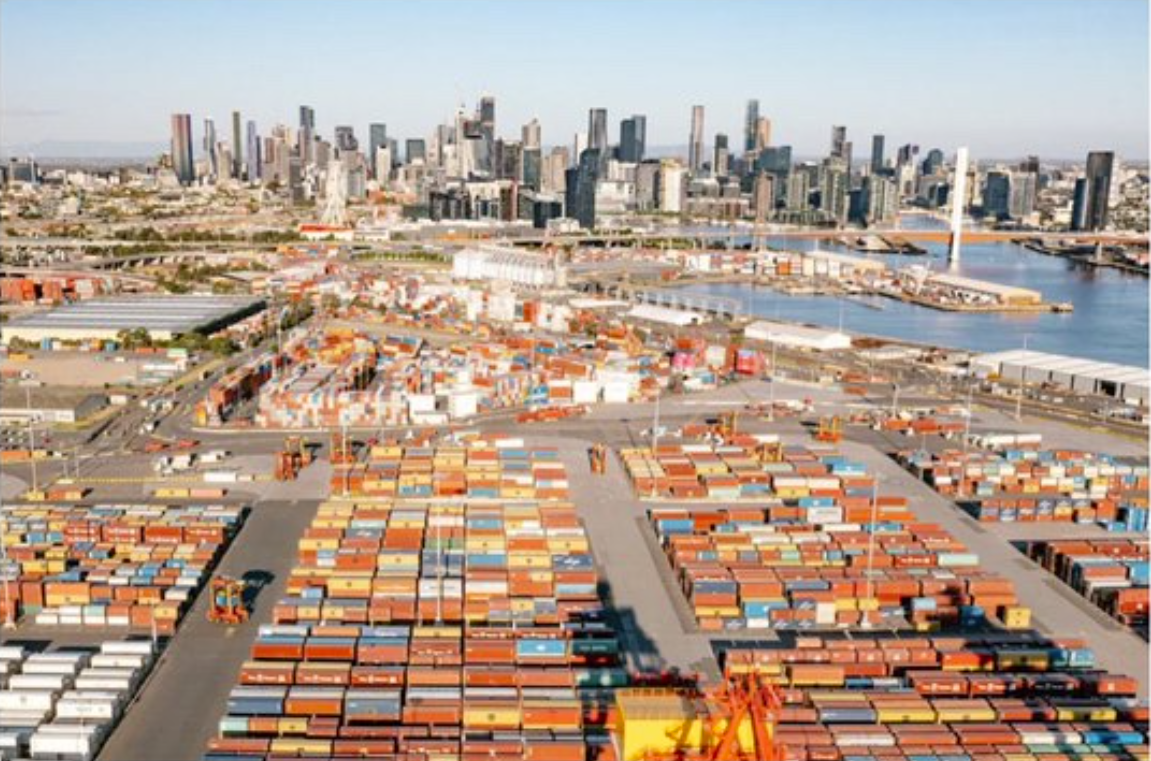
Image: Port Melbourne via The Age website
Many Invitations!
2. HMAS Goorangai: The Story from the Queenscliffe Perspective
After a collision in Port Phillip Bay, the vessel became the first Australian ship lost with all hands in WW2. A little-known story, a tragedy, and a mystery of local, national and international significance.
When: Saturday 3rd of May, 6:45pm to 9:00pm
Where: Queenscliffe Maritime Museum, Gil Adams Boat Shed,
Wharf St Queenscliff
3. Station Pier: Hear about the remarkable ‘backstory’ (or ‘understory’) of this Heritage listed Pier
A reminder about this Station Pier event, hosted by MMHN and Ports Victoria as part of the National Trust’s Australian Heritage Festival
MMHN staunchly advocates for the urgent ‘Reimagining of Station Pier’.
See ‘Opportunity 7’ on our website for more information.
When: Saturday 10th of May, 2:00pm to 4:00pm
Where: Station Pier Waterfront Place Port Melbourne, Victoria 3207
See: National Trust – Station Pier
See also: https://mmhn.org.au/wp-content/uploads/2023/07/MMHN-Opportunity-7-Station-Pier.pdf
4. Singing at the Seafarers
The Mission to Seafarers on Flinders St will host a performance from the Australian Welsh Male Choir. The event will support the work of the Mission to raise awareness about the plight facing the Heritage Fleet. Australian-built tall ships, Alma Doepel and Enterprize, and the steam tug Wattle are facing eviction from North Wharf in Victoria Harbour, Docklands. The Australian Welsh Male Voice choir will sing the Alma protest shanty, Where will Alma Go.
When: Wednesday 14th of May, 7:00pm to 9:00pm
Where: 717 Flinders St, Docklands VIC 3005
5. Lighthouse Keepers of the Great South-West
Four historic lighthouses, four unique locations along Victoria’s south-west coast, and 150 years of lighthouse keepers’ stories waiting to be uncovered. Throughout the weekend of May 10th – 11th, explore the heritage-listed lighthouses of Cape Nelson, Portland, Port Fairy, and Warrnambool, where local historians will reveal little-known tales of those who safeguarded mariners along this perilous coastline. At each site, experience the dramatic firing of a cannon by the Warrnambool Garrison in tribute to the bravery and dedication of lighthouse keepers past.
Saturday 10th of May
- 10am – 11am: Presentation from Gordon Stokes and cannon firing at Cape Nelson Light station, Cape Nelson Road, Portland West Victoria, 3305
- 12pm – 1pm: Presentation from Mike Risk at the Whalers Bluff Lighthouse, Lighthouse Ave, Portland Victoria, 3305
- 2pm – 2:30pm: Cannon firing at Portland Battery, 20 Victoria Parade, Portland Victoria, 3305
Sunday 11th of May
- 10am – 11:30pm: Presentation from Marten Syme and cannon firing (includes 15 minutes walk time to and from lighthouse from carpark) at Port Fairy Lighthouse, Griffiths Island, Port Fairy, Victoria, 3284
- 2pm – 3pm: Presentation from John Harrison and cannon firing at Warrnambool Lighthouse Precinct, Flagstaff Hill, 89 Merri Street, Warrnambool Victoria, 3280
Note: Cape Schank Lighthouse offers tours all throughout this weekend
See: National Trust – Lighthouse Keepers of the Great South West
6. Growing the ‘Blue Economy’ into the Future
The Royal Society of Victoria (RSV) together with MMHN will co-host Growing the ‘Blue Economy’ into the Future at the historic RSV premises in La Trobe St, Melbourne. MMHN Director, Dr Gregory Harper, will lead an impressive panel in a discussion on topics critical to Victoria’s marine environment. Please standby for more information about this event in due course – MMHN’s first exciting collaboration with the marine science community.
When: Thursday 12th of June, 6pm – 8pm
Where: Royal Society of Victoria, 8 La Trobe St, Melbourne VIC 3000
7. Heritage Fleet – Eviction Threat in the Docklands Precinct
In response to alarm at Development Victoria’s (DV) intention to evict the Heritage Fleet restoration project from North Wharf, MMHN convened a forum to enable the Docklands Precinct community and maritime heritage stakeholders to discuss the impact of DV’s action. Development Victoria declined multiple invitations to attend the forum, which provided an opportunity to engage with around 70 stakeholders. As promised, MMHN produced a comprehensive Forum Report, sharing the comments from the event and subsequent feedback. MMHN provided this to DV and all other relevant State Government authorities, as well as the wider heritage community.
You are invited to access this report here: https://mmhn.org.au/wp-content/uploads/2025/04/MMHN-HF-Forum-Report-25-3-2025.pdf
8. Maritime Industry Australia (MIAL) – Merchant Shipping Strategic Fleet and Seafaring Skills
MIAL CEO, Angela Gillham, reminds us that, “Australia is an island nation at the end of the global supply chain. We depend upon shipping for over 90% of our imports and exports – including essential fuel, medicines, and construction materials that impact on every aspect of our lives. Australian sovereign commercial maritime capability is vital to our supply chain security and national resilience.”
Dual national maritime deficits need to be addressed: the skills deficit and a strategic fleet. MIAL is intent on industry-driven reform to reduce costs, increase efficiency and deliver maritime careers and opportunities to Australians. Accessing sea time is a key barrier to Australians achieving an internationally recognised seagoing qualification. Federal investment in this key component of seafaring skills training will help create a “sustainable pipeline of Australians with the knowledge, skills and experience acquired at sea.” The implementation of the strategic fleet pilot program is yet to occur.
You may wish to see this MIAL interview: Government investment a welcome boost for strategic maritime skills
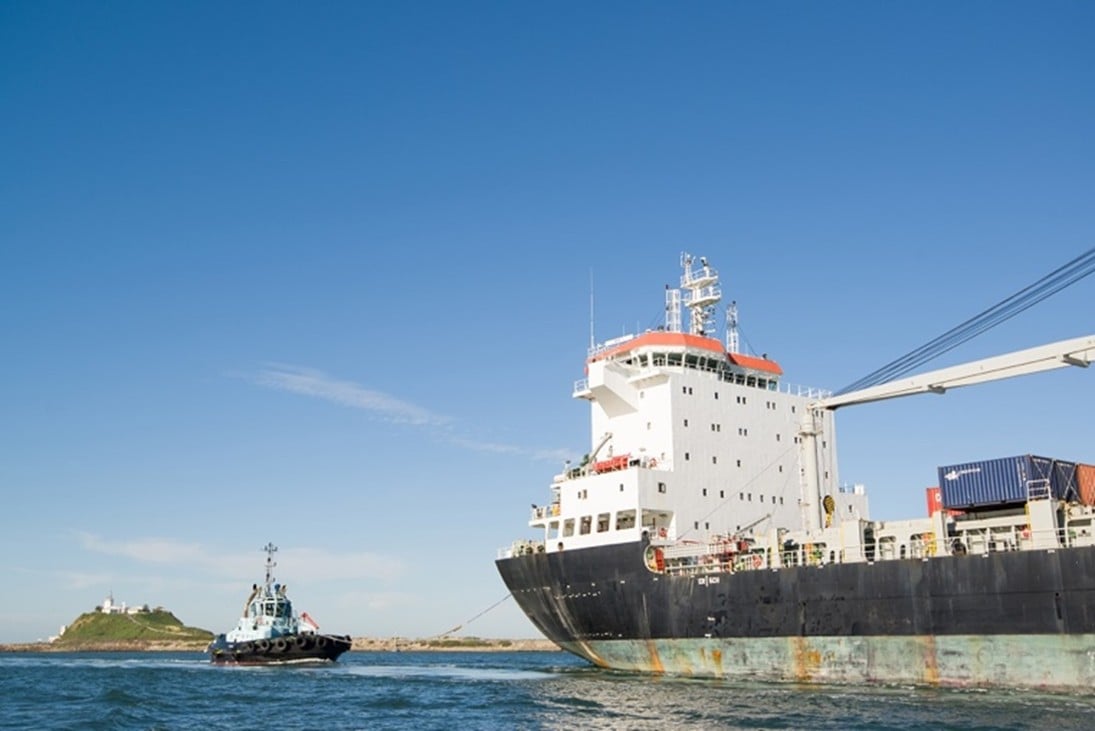
Image: MIAL
9. Shipwrecks
According to Angus Holland in the Sunday Age on the 23rd of March, there are 8000 wrecks off the Australian Coast. Given the treacherous southern ocean waters of Bass Strait, Victorian and Tasmanian coastlines are particularly unlucky! MMHN recommends you look at this in-depth analysis, and the gripping account of the three-masted sailing ship Netherby. On her way from London carrying 400 passengers, the Brisbane-bound Netherby was wrecked in foul weather on the west coast of King Island.
See: The Age – What does it take to find a shipwreck
10. Ferries: Investment in WA and Deficit in Melbourne
MMHN notes that the WA State Government has called for local companies to pitch for the design and construction of five electric ferries scheduled to service the Swan River. Given the ever-increasing congestion on Victorian roads, State Government resistance to seriously considering an expanded public ferry system is simply inexplicable. We have, after all, more navigable waterways than the Sydney Harbour system.
See: The DCN – Five Electric Ferries to Ply the Swan River
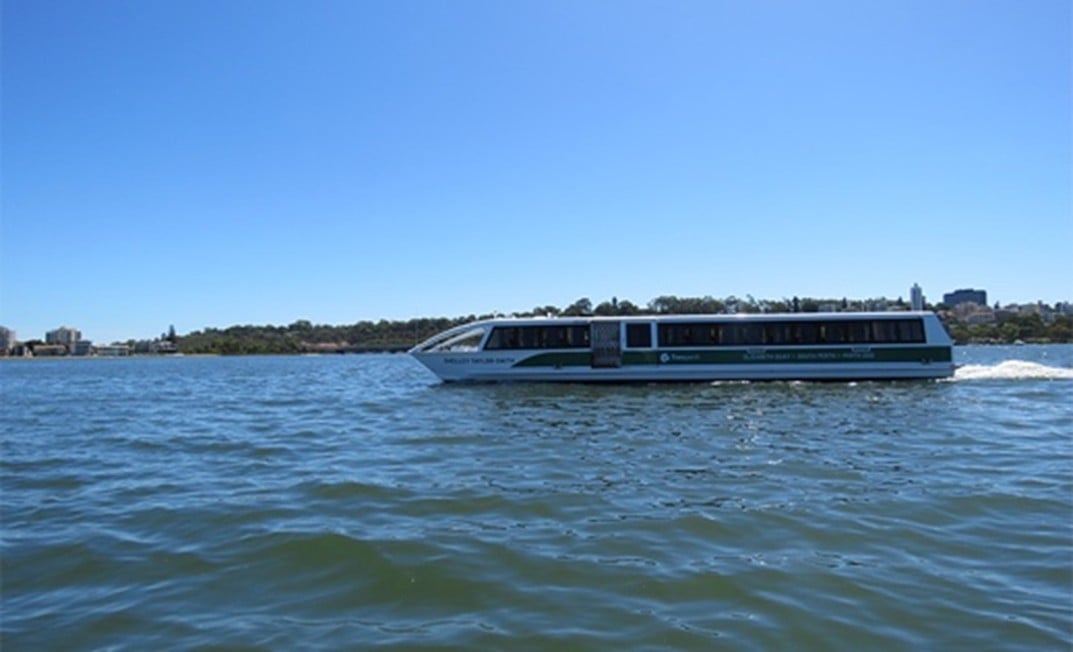
Image: DCN News
11. Industry Opinion: AI at Sea
Given that Australia is an island nation with an acute seafaring skills deficit, it seems reasonable to ask the question; is the use of AI at sea the seafaring future? Matt Shirley writes of a recent illustrative collision incident in DCN News:
“It wasn’t a dark and stormy night – just a foggy one. The watchkeeper aboard the anchored Stena Immaculate wouldn’t have seen the MV Solong until it was half a mile away from piercing its jet fuel laden tanks at 16 knots. But AI did. Footage from newly installed artificial intelligence (AI) technology on a nearby vessel captured the allision – footage now seen by investigators and the public, fuelling debate over how, why, and what led to the tragedy, including the loss of a seafarer’s life. The thermal imaging clearly shows the approach, the impact, and the fireball that followed. What’s less clear is the role this technology will play in the future. High-definition cameras capable of seeing better than the human eye have existed for decades.”
Question 2: Why aren’t such technical enhancements standard equipment on ships? Cost. Many shipping companies operate on tight budgets, with safety and technology investments competing against financial pressures. AI-powered vision is still in its early days at sea, but this cost barrier will soon cease to exist.
Question 3: Should AI-powered surveillance be mandated, and if so, by whom? The International Maritime Organization (IMO) and other bureaucracies have yet to establish clear frameworks, leaving adoption up to companies’ discretion. Without standardised protocols, we risk inconsistent implementation and uncertainty about accountability. The value of AI in accident investigations is undeniable. The Solong/Stena footage offers clear evidence, despite coming from a vessel uninvolved in the incident. This raises other important questions:
“Who owns such data? Should AI be an ‘observer’, an ‘advisor’, or a ‘decision-maker’? Could it become a tool for insurance companies, authorities, legal teams, and the public to assign blame, rather than improve safety?”
See: The DCN – AI at Sea: a double edged sword
12. Panama Canal – Denmark, China, US, Panama
Over recent weeks, global political tension related to the conduct of maritime trade has resulted in multiple twists and twirls in the ownership of Panama Canal infrastructure. Exactly how all of this political and commercial wrangling reconciles with the operations of the canal (which is currently constrained due to lack of water in the lakes and lock system) remains unclear. Stay tuned.
- March 5 – US: US Consortium BlackRock will acquire CK Hutchison (Hong Kong-based) assets along the Panama Canal. The deal will give the U.S. control of key Panama Canal ports amid White House calls to remove them from what it says is Chinese ownership.
See: Reuters – CK Hutchinson shares jump after Panama sale
- March 7 – Panama: Panama Canal Authority, responsible for oversight of Panama’s port infrastructure, would request all legal and financial documents involved in the sale of two key ports on either end of the Canal to a group of investors backed by the US asset management firm.
See: Trade Finance Global – Panama pushes back against acquisition
Also: CNN – Panama Canal Ports Deal Blocked
- March 31 – China: China delays $23B sale of Panama Canal ports to US-backed consortium led by BlackRock. China’s State Administration for Market Regulation unexpectedly initiated an investigation on Friday into potential violations of Chinese anti-monopoly laws, effectively stalling the deal.
See: NY Post – China blocks sale of Panama canal ports to Blackrock
- April 3 – Denmark: Danish shipping powerhouse A.P. Moller-Maersk A/S, one of the world’s largest container shipping groups, has acquired the Panama Canal Railway Company from Canadian Pacific Kansas City and the U.S.-based Lanco Group.
See: Bloomberg – Maersk buys Panama canal railway despite threat
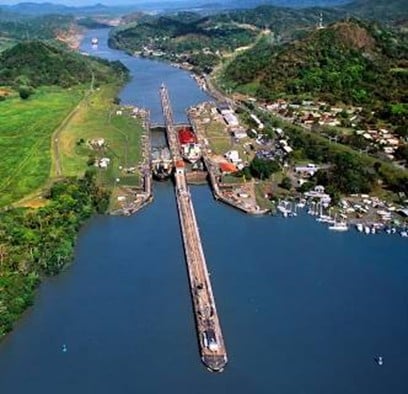
Image: Panama Authority
13. AUKUS Issues: UK Launches Review
On the 3rd of April, the ABC reports “Britain launches AUKUS parliamentary inquiry amid ‘geopolitical shifts’. The UK House of Commons Defence Committee has announced it is putting the AUKUS Partnership under the ‘microscope’.”
This “committee is a long-standing means of scrutinising government decisions, providing detailed reviews, and holding inquiries to ensure key strategies and policies are fit for purpose.” The $368B trilateral AUKUS pact, signed three and a half years ago (prior to the Trump presidency), will result in Australia acquiring nuclear-powered submarines. Experts say no adverse evidence has been seen to date to indicate that the inquiry might result in the UK withdrawing from AUKUS. It is actively focused on ensuring the most effective and efficient delivery of AUKUS, given how invested the UK is in the success of the program. The UK Committee will consider written evidence submissions, with the deadline scheduled for May 30. Hearings will be held based on those initial submissions and a report will be compiled. The UK government will produce a response to the committee’s findings and potentially act on recommendations.
See: ABC News – Britain launches AUKUS parliamentary inquiry
Also see: ABC News – What the UK’s AUKUS inquiry means to Australia
Australian Background: Just in case you have forgotten, back in 2021 the ABC reported on “Why Australia is teaming up with the US and UK to build nuclear-powered submarines”, referring to the scrapping of the $90B program to build 12 French-designed diesel-powered submarines, prompting many to ask – why are we doing this? Simplistically, nuclear-powered submarines are often quieter and can stay under longer than diesel-powered alternatives. They have become so quiet that in 2009, UK and French nuclear ballistic missile submarines, unaware of each other’s presence, reportedly collided in the Atlantic.
See: ABC News – Why Australia wants nuclear submarines
Also see: ABC News – British French Nuclear Subs collide
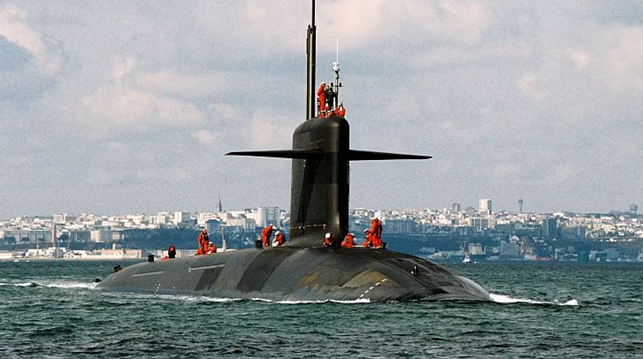
Image: Historic ABC – Australia will join other countries, like France, in adding nuclear-powered submarines to its fleet. (Wikimedia: French Navy)
14. RAN Sailors Graduate U.S. Navy’s Nuclear Power Training Unit
The US Naval Institute News reports that eight RAN sailors graduated from the six-month course on April 18th and are now “qualified to handle the reactors and other associated systems on the nuclear attack boats that Canberra is set to receive under the 2021 Australia, United Kingdom and United States trilateral security agreement. The training, which began in the fall of 2024, included courses on mathematics, nuclear physics, reactor principles, and nuclear reactor technology.
While five officers also completed their naval nuclear power training, they were preceded by two batches of three graduates each from 2023. After additional training in Connecticut, these officers were slated to embark on Hawaii-based Virginia-class nuclear attack boats to gain further operational experience.”
See: USNI News – First enlisted Royal Australian Navy sailors graduate US Navy Nuke School
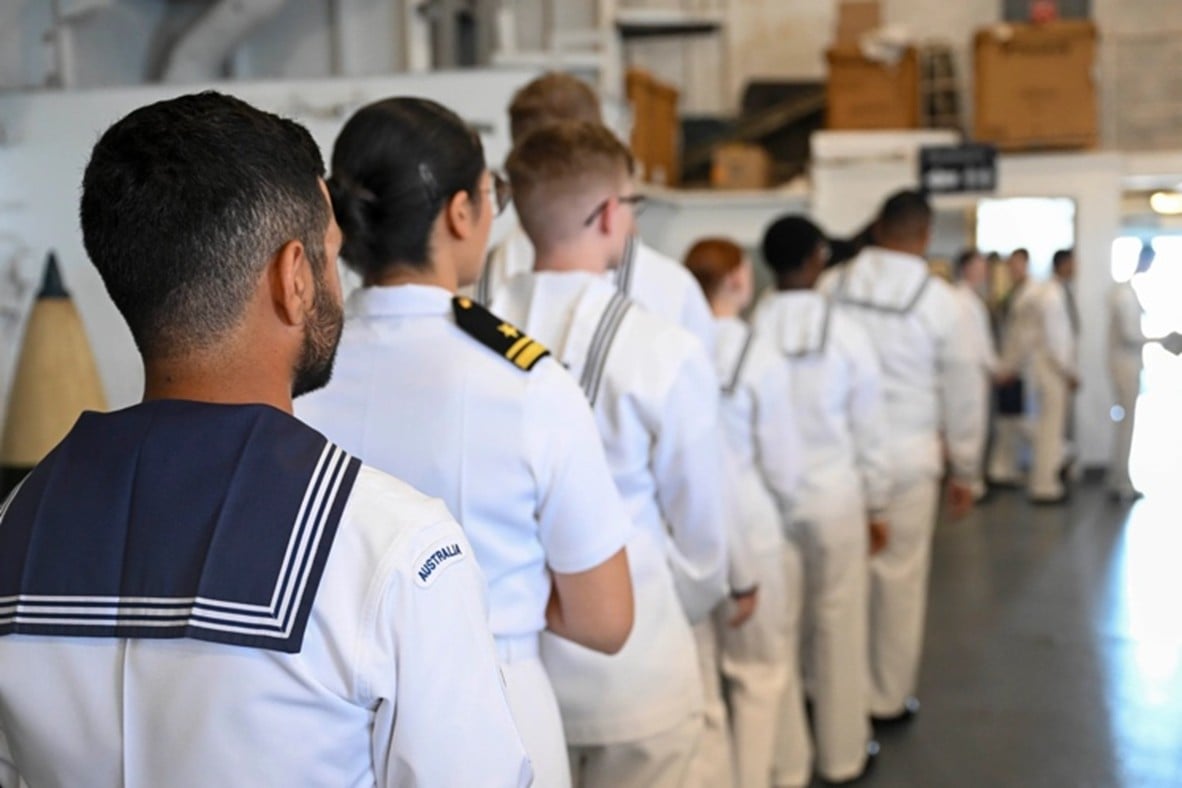
Image: USNI
15. Trump Whitehouse Executive Order – US Maritime Dominance Plans
MMHN recommends you read this unexpected direction from the U.S. attempting to address perceived maritime deficiencies and ‘threats’ and perhaps draw comparisons with MIAL and the actions the Australian Federal Government is taking to address our deficiencies, as outlined above.
See: Whitehouse Presidential Actions – Restoring America’s maritime dominance
Also see: https://www.youtube.com/watch?v=4niyOODTafo
16. U.S. Shipbuilding Capability – A Matter Related to AUKUS
The U.S. Naval Institute News reports that after the fall of the Soviet Union, submarine construction dropped as demand waned. A newly created Office of Shipbuilding in the White House will help make the process more efficient. It aims to help the U.S. keep its promises to its AUKUS partners to cooperatively field and build a conventionally armed, nuclear-powered submarine force for Australia. Currently, there are two submarine building yards capable of delivering 1.3 submarines per annum. However, to meet AUKUS commitments, they need to deliver 2.33 vessels per annum. The U.S. Congress is reported as being concerned about that timeline.
See: USNI – Navy pushing innovation to push next gen submarines

17. Australian Maritime Safety Authority (AMSA): Crew Injuries
MMHN commends all efforts to achieve wage justice for the immensely vulnerable seafarers in our waters. The Australian Maritime Safety Authority (AMSA) is collaborating with the Fair Work Ombudsman (FWO) to address wage theft aboard foreign-flagged vessels operating under the Coastal Trading Act. An updated Memorandum of Understanding between AMSA and FWO formalises their commitment to the Strategic Fleet Pilot Program, which will focus on compliance monitoring of foreign-flagged vessels operating in Australian waters. It aims to ensure adherence to Australian wage entitlements through joint ship visits across the South, East, and West regions of Australia. AMSA and FWO officers will gather critical evidence to support compliance with Australian workplace standards. This begs the question, what work at sea is covered?
See: AMSA and Fair Work Ombudsman Join Forces to Tackle Wage Theft
Also: Fair Work Ombudsman – Seagoing Industry Award
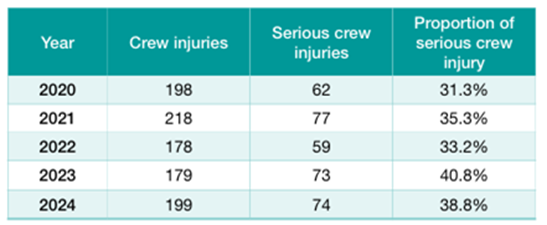
Image: AMSA graph showing proportion of reported serious crew injuries by year. Source: AMSA
18. Bad to Worse: Disabled Tanker and Fouled Tug
LPG tanker Victoire suffered engine failure in Bass Strait on the 4th of April and remains adrift off the south-east of Australia but is in no danger, AMSA says. The Pacific Tug company dispatched its Wambiri from Eden to take the tanker in tow, but the tug fouled a line from the tanker, effectively disabling the Wambiri’s propulsion! A second Eden-based tug, Flinders Bay, was sent to retrieve Wambiri and return it to Eden for clearance of the fouled line, whereupon Wambiri will resume providing assistance to Victoire. An AMSA spokesman said that Victoire is currently 76 km east-southeast of Gabo Island and moving in a northerly direction, posing no immediate threat to the coastline. AMSA are closely monitoring the situation.
The tanker departed Western Port on the 3rd of April. AIS showed the tanker as having an ‘undefined’ destination and later reported the tanker as ‘not under command’. The 2005-built Panama-flagged Victoire is owned by Gas Pacifique SAS (Geogas of France/Switzerland, an LPG tanker specialist) and is operated by subsidiary Oceangas Services Australia of Sydney throughout Australia, NZ, PNG and the South Pacific. The tanker is due for its next special survey in May.
See: THE DCN – Fouled tug will return to Victoire
The tanker was eventually towed to safety in Twofold Bay, NSW.
See: The DCN – Victoire towed to safety
19. Heritage Vessel Collision with Container Ship
The Australian Transport Safety Bureau (ATSB), Australia’s national transport safety investigation agency, released an Interim Report of the collision between tall ship STS Leeuwin II and the containership Maersk Shekou which occurred in August 2024.
Contemplating such a collision seems inexplicable for those of us who love tall ships, especially given the sail training ship Leeuwin was moored in Fremantle Port at the time. Grappling with wind gusts of up to 50 knots, the container ship’s bow collided with the Leeuwin causing the wooden masts to collapse. Containers from the Maersk Shekou toppled over onto the maritime museum roof and two of the Leeuwin crew were injured.
See: ATSB – Interim report on ship collision STS Leeuwin II
Also see: https://youtu.be/vqfSVkQMvCY
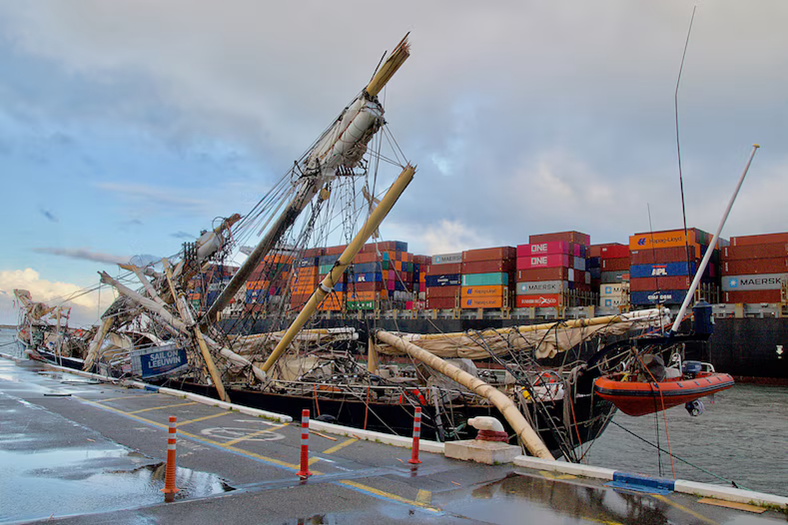
Image: ABC reports STS Leeuwin II suffered extensive damage when the Maersk Shekou container ship crashed into it. (Supplied by Roel Loopers)
20. Chinese Presence Near Australia – RAN Fleet Assets
A perceived increase in Chinese naval presence in international waters around our coastline has certainly sharpened the public focus on the Royal Australian Navy. The strength of the nation’s defence force has been under scrutiny in the wake of revelations that the Chinese navy has conducted live-fire exercises in the Tasman Sea. An analysis of the RAN fleet by Andrew Tillett in the Australian Financial Review indicates that RAN has retired 14 surface ships from service as of May 2022. Four new patrol boats have been added to the RAN fleet over this period, bringing RAN total to 25 surface vessels to defend our strategic interests and our vast coastline. The Australian Financial Review’s analysis of the navy fleet shows that 14 ships – a frigate, eight patrol boats, three survey ships and two minehunters – have been retired since May 2022. Over that same period, four new patrol boats have joined the fleet. The net loss represents a reduction of almost a third of the navy’s commissioned surface ships, which now stands at 25. Former rear admiral Rowan Moffitt said every new shipbuilding program for the past 25 years has started at least a decade later than it should have, meaning vessels were being retired without being replaced.
See: Australian Financial Review – Chinese flotilla exposes Navy
See: https://www.youtube.com/watch?v=oyI1x_It2_M
21. Offshore Wind Energy – Renewable Energy Terminal
The State Government planned to establish the Victorian Renewable Energy Terminal at the Port of Hastings on the Mornington Peninsula to facilitate development of an offshore wind industry, reports Angela Macdonald-Smith for the Australian Financial Review.
“Gippsland offshore wind hopes left flapping in uncertain breeze.”
At least 2GW (gigawatts) of wind generation from a 15,000 square kilometre area off the Gippsland coast was to be operational by 2028 and expanded to 9GW by 2032. The timeline has changed due to initial ministerial environmental concerns. Stay tuned.
See: Australian Financial Review – Victoria walks back timetable for Gippsland wind infrastructure
You may also wish to see this video relating to environmental monitoring: https://www.youtube.com/watch?v=qXh-KMrtZN4
22. Waterways Tourism
MMHN share the dismay expressed by MMHN member Tim Bracher (EO of the Yarra River Business Association) who reminds us that, “river cruising is a major tourist activity in this city, yet the ticketing and boarding process at Fed Wharf has not changed in nearly 100 years. If anything, it has gone backwards, because previously the ferry companies enjoyed dedicated ticketing offices in the bluestone vaults and, more recently on the upper deck, opposite Transport.
The image below left is from the 1940s, when ticketing was done off a small table. Fast forward 80 years and ticketing is still done off a small table, under an umbrella (see below right). Then – as now – there is no cover for waiting passengers, who must share the walkway in rain, heat and wind, while having to watch out for speeding cyclists and e-scooters. It took YRBA over 15 years to attract $2 million in government funding to install the floating hospitality pontoons at Southbank. Now, we need to get serious about Fed Wharf and its related tourism activity.”
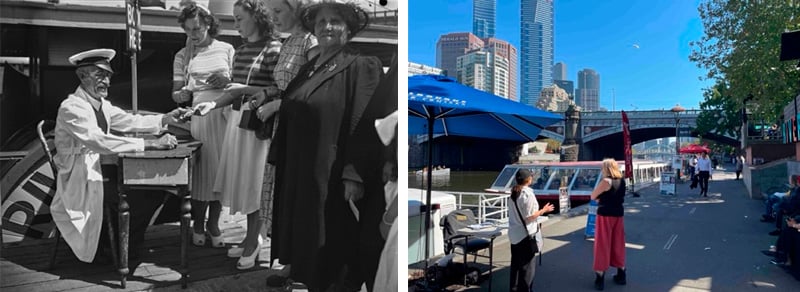
Image: YRBA Wharf below Federation Square, then and now
23. MMHN Internship Program
MMHN Director Martin Dixon oversees this important program. MMHN partners up with Victorian universities to offer students an opportunity to partake in research projects. These projects assist the network in its work but also offer students the opportunity to apply their theoretical skills to a real-life project. Students from Melbourne, Monash and Victoria Universities have taken part in the program. Students from Monash University in their final year of a business degree, for example, are working on an analysis of how MMHN can improve its profile and content on social media as well as ideas to incorporate AI tools in this endeavour. The project, which runs for the current semester, counts as a unit of study to meet their degree requirements. The students meet regularly with their academic supervisor and with MMHN. The finished product is presented at the end of the semester to their fellow students and academic staff. The reports are lodged on the MMHN website.
See: https://mmhn.org.au/resources/mmhn-internship-program/
The MMHN Internship Program not only provides valuable research and practical ideas for the network but also gives the students a valuable opportunity to apply their skills and exposes them to our maritime heritage and the work of MMHN.
24. Australian National Maritime Museum Grants
MMHN was delighted to accept an invitation from the Australian National Maritime Museum to act as an independent assessor on the ANMM Committee evaluating the 2025 grant applications, the diversity of which was astounding! A reminder to all that each year $150,000 in ANMM funding is available for maritime projects around the nation. MMHN encourages you to consider making an application.
See: https://www.sea.museum/en/about/grants-and-awards
25. Excellent News: MMHN Wins History Award
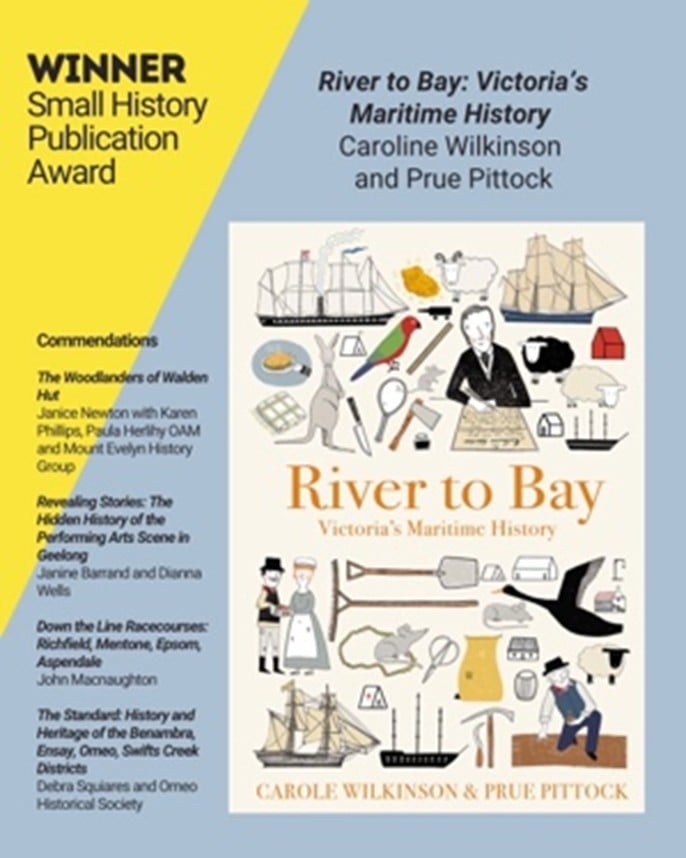
Last month, the MMHN won the Victorian Community History Award for a Small History Publication for our first children’s maritime heritage book, River to Bay: Victoria’s Maritime History.
In 2024, MMHN was awarded the National Children’s Non-Fiction Award for this same splendid book. Be reassured that adult readers report having learned a lot from reading this work too.
So, if you haven’t bought a copy ($25), please consider doing so by emailing info@mmhn.org.au.
Until next time,
Jackie
Dr Jackie Watts OAM
Chair,
Melbourne Maritime Heritage Network