

Greetings all,
As winter darkness sets in the far south, hopefully this diverse round-up of maritime news will provoke curiosity and encourage the diverse MMHN readership of maritime enthusiasts to further investigate topics of interest. We commence with encouraging news at last of the Australian Strategic Fleet.
Contents
1. Australian Strategic Fleet
2. MV Steve Irwin aka Ship4Good Events From 14 June
3. The Swimmable Birrarung, June 15, 6pm
4. Lloyd’s Register: Shaping Global Shipping For Four Centuries, July 28, 6.30pm, Athenaeum Library
5. Maritime Archaeology For All Of Us! Conference, 18-20 September, Geelong. Note in your diaries.
6. Heritage Vessels – UK
7. Heritage Vessels in Victoria
8. Seafarer Conditions Close to Home
9. Malacca Strait
10. Marine Infrastructure Grants
11. Point Nepean Field Station
12. Antarctic Fuel Wrangle – RSV Nuyina and the Bridge
13. Undersea Cables – Global Security Threat
14. Port of Darwin – International Centre for Settlement of Investment Disputes
15. Containers Lost at Sea
16. Tall Ship Leeuwin, Collision at Sea – Final Report Australian Analysis
17. Undersea Surveillance – Lombok Strait
18. Marvellous Gateway Piers
19. RAN – Collins Class Submarines
20. Keeping watch on AUKUS
21. The Alma Doepel – EOFY Appeal
22. Hidden Waters of the Birrarung Exhibition
23. River Waterways Heritage
24. Birrarung Yarra River – Riparian Zone
25. Antelope Reef
26. Japanese Navy – ANZAC Connection
27. Naval Bell Diplomatic Symbolism
28. Ship building of the Future
Membership
If you enjoyed reading articles in this MMHN Update and are not an MMHN Member, please consider taking out a 6 month, $15 membership valid until December 31, 2026.
https://mmhn.org.au/membership/
1. Australian Strategic Fleet
MMHN has waited impatiently for concrete action from the Federal Government on establishing a National Strategic Fleet. The urgency is undeniable: the number of Australian-flagged large commercial vessels has dwindled to an alarming nine ships, compared with approximately 100 vessels fifty years ago. Australian-flagged and crewed ships are estimated to cost operators around $7 million per year more than offshore competitors, contributing significantly to the decline of the local industry.
Recent conflict in the Middle East and its adverse impact on global shipping have made the necessity for Australia to strengthen its sovereign maritime capability, abundantly clear. Against this backdrop, Matthew Knott reported in The Age (28 May), ‘First ship in government’s long-awaited “strategic fleet’ revealed’. The announcement by Transport Minister Catherine King represents a critical step forward for the nation.
In 2022, the ALP pledged to establish a strategic fleet of 12 merchant vessels. While this has now been reduced to a pilot program of three ships, the initiative nevertheless marks important progress. Minister King announced the first contracted vessel, the container ship ANL Kokoda, which will become the first of three ships in the pilot program.
The longer-term plan remains the creation of a National Strategic Fleet comprising 12 privately owned and commercially operated vessels that could be requisitioned during times of crisis, including natural disasters, geopolitical conflict, and major supply chain disruptions. Minister King stated, ‘recent global events have emphasised the importance of Australia having a resilient domestic maritime sector. The ANL Kokoda will provide critical maritime capabilities, including by adding a new tool to respond to disruption events.’
MMHN concurs with Angela Gillham, CEO of peak body Maritime Industry Australia, that rebuilding Australia’s sovereign maritime capability is essential for national resilience, security, and economic stability.
2. MV Steve Irwin aka Ship4Good Events From 14 June
Having lost the Heritage Fleet from Victoria Harbour, MMHN is delighted to welcome the newly painted and resplendent MV Steve Irwin back to New Quay, where it is currently berthed at the City of Melbourne Marina after several years in Newcastle. While the ship is in our waters, don’t miss the opportunity to visit this remarkable vessel.
From 14 June, visitors can enjoy guided ship tours, the weekly light show “Seaing is Believing” each Saturday evening, and live music performances on Sundays.
The vessel carries a rich and extraordinary history of adventure and environmental activism, much of it involving determined yet non-violent direct conservation action. The ship became internationally recognised as a frontline vessel in the ecological campaign against illegal whaling in the Australian Marine Sanctuary and Antarctic waters, participating in 18 anti-whaling campaigns. Over the course of a decade, the ship and its volunteer crew fought valiantly, directly helping to save more than 6,000 whales, as documented in the acclaimed television series Whale Wars.
Originally built in 1975 as the Scottish fisheries patrol vessel Westra, the ship was renamed Robert Hunter in 2006 in honour of the Greenpeace co-founder, before later being renamed MV Steve Irwin in tribute to the celebrated Australian naturalist and conservationist Steve Irwin.
Details of upcoming events can be found at Ship4Good
To find the ship, take the Waterfront City Tram to Docklands, Tram 86, cross the road and walk towards New Quary and Harbour water.
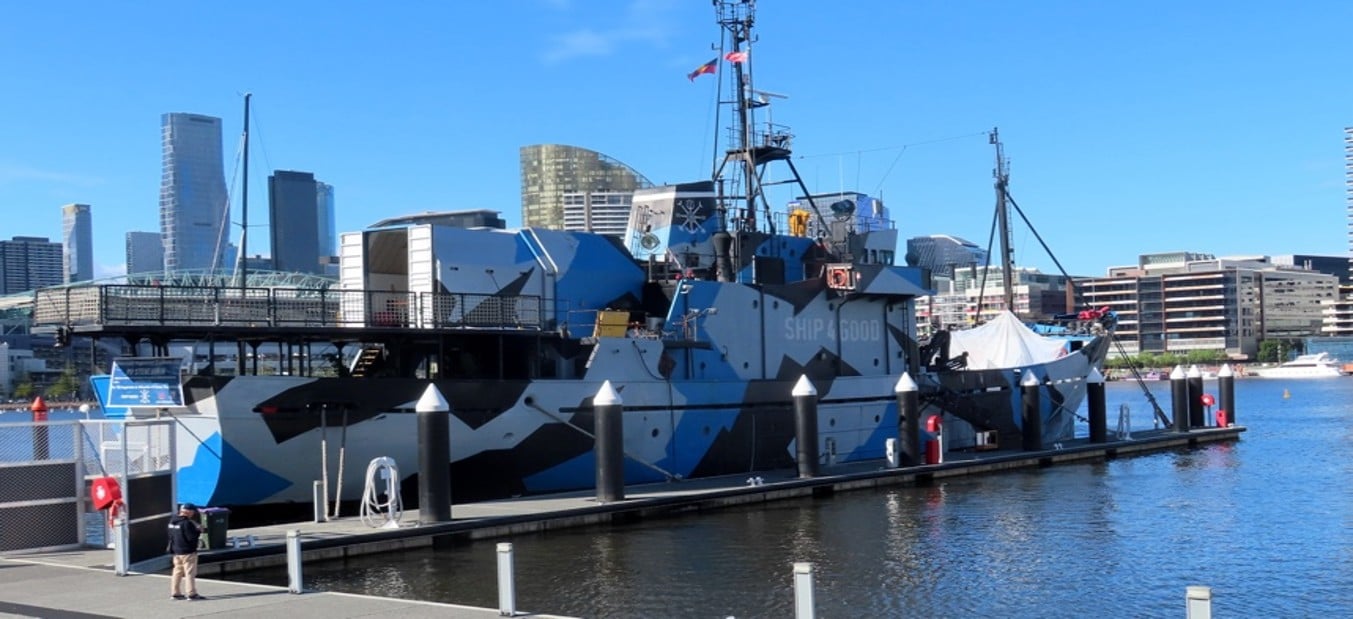
Image: Ship4Good. Credit: MMHN member Jeff Malley
3. The Swimmable Birrarung, June 15, 6pm
Melbourne Conversations in collaboration with Fed Square presents, The Swimmable Birrarung: Would you swim in the Birrarung/ Yarra River?
MMHN invites you to an evening of spirited discussion exploring what it would take to make a swimmable Birrarung a reality. A distinguished panel of scientists, designers, community advocates, and city leaders will examine how water quality, ecological restoration, civic pride, and Caring for Country can shape the future of Melbourne’s unique river system.
The discussion will also consider whether there are successful international precedents that Melbourne might learn from in pursuing the vision of a swimmable urban river.
The evening will be hosted by MMHN member Janet Bolitho, President of the Yarra Riverkeeper Association. Panellists include James Henderson, co-founder of Wattle; Charity Mosienyane, Lead Convenor of Swimmable Birrarung; Dr Rebecca Olive, senior researcher in public swimming at RMIT University; and Uncle Andrew Gardiner, Wurundjeri Elder and Chair of the Birrarung Council.
When: 6pm, Monday June 15, 2026
Where: The Edge, Federation Square
Cost: Free event but bookings required – https://fedsquare.com/events/melbourne-conversations-the-swimmable-birrarung

Image: Fed Square Events
4. Lloyd’s Register: Shaping Global Shipping For Four Centuries, July 28, 6.30pm, Athenaeum Library
MMHN Board member, Dr Liz Rushen AM will be speaking on the evolution of Lloyd’s Register. Widely regarded as foundational to maritime history, the Register originated in Edward Lloyd’s London coffee house in 1760 and was substantially revised in 1834. Through the formalisation of ship classification, it supplied shipowners, underwriters, and mariners with authoritative evaluations of vessel condition. By standardising technical knowledge and risk assessment, it reshaped commercial practice, strengthened maritime governance, and contributed significantly to the safety of seafarers. Its legacy endures as a central instrument in the development of modern global shipping.
The event is presented as part of the Rare Book Week 2026 Program.
When: 6.30pm, Tuesday July 28, 2026
Where: The Athenaeum Library, Level 1, 188 Collins St, Melbourne

Images: The Register; Register’s genesis in a London Coffee house
5. Maritime Archaeology For All Of Us! Conference, 18-20 September, Geelong. Note in your diaries.
The 2026 Conference of the Australian Institute for Maritime Archaeology (AIMA) adopts the theme “For the Love of It: Celebrating Avocational Contributions to Maritime Archaeology.” MMHN is delighted by the opportunity to engage with fellow maritime enthusiasts and contribute to this important conversation. The conference will be presented both in person and online.
Across the world, countless individuals share a deep avocational passion for maritime archaeology and underwater cultural heritage. While only a small number pursue maritime archaeology professionally, it is those who undertake this work “for the love of it” who form the enduring backbone of the discipline.
In Victoria, dedicated maritime enthusiasts have long been at the forefront of maritime archaeological fieldwork, site monitoring, research, education, advocacy, and museum management. Organisations such as the Maritime Archaeology Association of Victoria and Amazon 1863 Project Inc., together with volunteer-supported maritime museums and notable individuals including Jack Loney, Terry Arnott, and Don Love, have played an invaluable role in advancing maritime archaeology across the State. Through their commitment, they have helped foster both the legislative framework and the political will necessary to protect and preserve Victoria’s maritime heritage. Comparable contributions have likewise been made by avocational groups and individuals throughout Australasia.
Yet sustaining this community-driven work is increasingly challenging. Funding pressures, insurance requirements, digital infrastructure demands, health and safety regulations, and the difficulty of engaging new audiences all threaten the long-term viability of volunteer-based initiatives. What continues to sustain these efforts is a shared passion, a common purpose, and the strength of community support.
This conference celebrates the avocational groups and individuals who continue to contribute to the research, protection, and preservation of maritime and underwater cultural heritage: divers monitoring fragile sites; researchers and surveyors dedicating countless volunteer hours; museum volunteers bringing maritime stories to life; and passionate community organisations preserving knowledge for future generations. Without their contribution, maritime archaeology as we know it would scarcely exist — a reality underscored by the fact that both AIMA and this conference itself are sustained through volunteer effort.
In particular, the conference invites volunteers, researchers, community groups, and all others with a passion for maritime archaeology and maritime heritage to share their projects, achievements, and challenges. It also seeks to encourage deeper discussion about the future of avocational involvement. Key questions include: How can avocational efforts be better supported? What is the evolving role of volunteers in maritime archaeology? And what new opportunities can be created to ensure their continued and meaningful participation?
See: For more information about the conference, sponsorship tiers and opportunities aima-underwater.conference-2026
6. Heritage Vessels – UK
MMHN regards with considerable envy the extraordinary level of recognition, public attention, and financial support afforded to heritage vessels in the United Kingdom — particularly through substantial philanthropic investment and the National Heritage Lottery Fund. The scale of commitment to preserving maritime heritage in Britain provides a striking contrast and an inspiring model for maritime heritage advocates elsewhere.
One notable example is the important research initiative examining the challenge of vessel stability: ‘Don’t Rock the Boat: Why Stability Matters for Historic Floating Vessels’.
Britain is home to more than 1,500 historic craft representing the full breadth of its maritime history. Approximately 200 of these comprise the National Historic Fleet — vessels recognised as the finest surviving examples of their type and therefore accorded the highest priority for conservation. Many of these ships, however, have long outlived their original operational purpose and have instead found new lives as museums, restaurants, hotels, office spaces, and other public venues.
Yet despite no longer going to sea, these vessels continue to float, making issues of stability and structural safety critically important. Significant alterations — particularly the removal of heavy machinery below the waterline — can profoundly affect vessel stability. At the same time, gaps in UK legislation and the absence of clear stability criteria for static floating vessels have left many historically important ships vulnerable and difficult to manage safely.
Supported through the Lloyd’s Register Foundation Small Grants Programme, the ‘Don’t Rock the Boat’ project, led by National Historic Ships UK in partnership with maritime engineers Beckett Rankin, sought to address this problem by developing practical stability guidance for custodians of historic vessels. The project recognised the complex technical challenges involved in preserving historic craft while ensuring public safety and structural integrity.
MMHN considers this an outstanding example of serious, well-funded, and forward-thinking maritime heritage conservation — the kind of practical research and institutional commitment urgently needed to safeguard historic vessels for future generations. Great work.
See: National Historic Ships Don’t Rock the Boat Project
Also: National Historic Ships Register
7. Heritage Vessels in Victoria
Despite the longstanding paucity of investment in heritage vessels within Australia, a central objective of MMHN is to raise awareness of Victoria’s significant maritime assets, including vintage and veteran vessels of every type.
While the Australian National Maritime Museum (ANMM) maintains a register of historic vessels, MMHN believes that Victoria possesses many noteworthy craft that are either absent from existing records or, in some cases, are no longer widely known or properly located. This represents a significant gap in the documentation and preservation of the State’s maritime heritage. After all, what is not recorded can too easily disappear from public memory altogether.
To help address this regrettable deficit, MMHN is establishing the MMHN Historic Vessels Victoria Database Project, an ambitious initiative designed to identify, record, and preserve information about historic vessels throughout Victoria. The project aims to work collaboratively with yacht clubs, boating associations, maritime museums, local historians, and community groups across the State to capture important historical and technical data before it is lost.
MMHN hopes this initiative will become a significant step toward recognising, protecting, and celebrating Victoria’s rich maritime heritage. However, such a project can only succeed through broad community involvement and volunteer support.
MMHN warmly invites anyone with an interest in maritime heritage, historic vessels, or archival research to assist with the project. To register your interest in contributing, please contact: info@mmhn.org.au
Unlike the UK (see earlier article), MMHN relies upon our members!
See: Australian Register of Historic Vessels
8. Seafarer Conditions Close to Home
The last MMHN Update referred to the appalling plight of stranded seafarers in the Strait of Hormuz, a situation that continues to attract troubling international media attention. Against this backdrop, MMHN is heartened to note that the Australian Maritime Safety Authority (AMSA) takes matters of seafarer welfare extremely seriously.
Under Australian law and the obligations of the Maritime Labour Convention (MLC), maritime employers operating in Australian waters are required to meet minimum standards relating to seafarers’ living and working conditions. These obligations include the timely payment of wages, safe accommodation, adequate rest, sufficient food and drinking water, and access to welfare support services. Employers who fail to meet these standards face significant regulatory consequences.
A recent example involved the Liberia-flagged vessel BBG Wuzhou, which was boarded and inspected by AMSA upon arrival in Newcastle. Inspectors identified multiple serious breaches, including deficiencies relating to seaworthiness, underpayment of crew wages, and inadequate provision of food and free drinking water.
Most disturbingly, AMSA found that the crew had not been paid for almost seven months, with unpaid wages totalling AUD $68,994.15. In response, AMSA imposed an immediate ban preventing the vessel from entering or using any Australian ports or waters until 4 October 2026.
MMHN strongly supports robust enforcement measures that uphold the dignity, safety, and welfare of seafarers, individuals whose labour remains essential to global trade and maritime operations.
See: Seafarer Welfare
9. Malacca Strait
The Malacca Strait, the shortest maritime route between the Indian Ocean and the South China Sea, passes between Indonesia, Malaysia, and Singapore. Jointly managed by these three countries, it carries more than 25% of global seaborne trade. It is particularly crucial for China, as a large proportion of its maritime trade – including nearly 75% of its imported crude oil supplies – passes through the strait.
The Andaman and Nicobar archipelago belongs to India, which is planning a $9 billion military infrastructure project on Great Nicobar Island, strategically positioned near the western entrance to the Malacca Strait, approximately 150 kilometres away. The project is intended to enhance India’s capabilities in the maritime domain, including surveillance, monitoring of shipping traffic, and potential naval operations.
India is seeking to address the strategic maritime challenge posed by China, which has expanded its presence in the Indian Ocean through developments in Sri Lanka and Pakistan, as well as through road and rail links providing access to the Indian Ocean via Myanmar.
See: India To Build Strategic Outpost
Also: Toll On Malacca Strait Puts Indonesia’s Own Legal Foundations At Risk?
10. Marine Infrastructure Grants
Better Boating Victoria has opened the 2025–26 Recreational Boating Structural Maintenance Program, with $500,000 available through the Better Boating Fund to support upgrades at public boating facilities. Grants of up to $110,000 are available for eligible ramp managers to deliver essential works, such as ramp surfaces, jetties and pontoons, breakwalls, parking areas, and navigation aids, thereby helping keep infrastructure safe and functional. BIAV encourages members working with local facilities or stakeholders to be aware of the opportunity and consider potential projects. Applications close at 5 pm on Friday, 12 June 2026.
See: 2025-26 Recreational Boating Structural Maintenance Program
11. Point Nepean Field Station
Having noted the degradation of this significant maritime heritage site, MMHN is delighted at the news of a joint initiative involving University of Melbourne and Monash University. The Point Nepean Research and Education Field Station is a partnership with the Australian Government, who is investing $17 million, alongside $5 million from each university.
The $27 million development will create a nationally significant centre focused on climate science, coastal environments, and cultural heritage. It will serve as a hub for research, teaching, and public programs and will include a short-stay accommodation building for up to 50 visitors.
See: Point Nepean Quarantine Station
Also:
New research and cultural education centre set to open at Point Nepean
Universities to support Field Station at Point Nepean
12. Antarctic Fuel Wrangle – RSV Nuyina and the Bridge
An unresolved and costly refuelling issue—or possibly a bridge clearance and handling issue—is affecting Australia’s Antarctic icebreaker, with internal government documents indicating that most proposed fixes could take up to three years to implement.
Until then, the vessel will continue to refuel at Burnie in north-west Tasmania, adding almost $1 million a year in additional operating costs. A request for the ship to transit under Hobart’s Tasman Bridge to access the city’s marine refuelling facilities was rejected by the Harbour Master on safety grounds.
The decision followed computer simulations assessing the vessel’s directional stability, which suggested a risk of collision with the bridge pylons. TasPorts confirmed the refusal was made after repeated testing in recent weeks showed that even conditional approval could not reduce the risk to an acceptable level.
The ABC (26/5) reports that broader concerns have also been raised about structural uncertainties affecting the nearby Bridgewater Bridge, including disputed engineering assessments during its design phase, though the extent of any impact on current navigation risk remains unclear.
Tasmanian Harbour Master Michael Wall said the vessel is ‘perfectly designed’ as an icebreaker but exhibits a ‘high degree of side-slip’, which creates handling challenges in constrained waterways. He added that even a minor contact with a structure such as a bridge ‘at a very slow speed… is going to be catastrophic’, underscoring the precautionary basis for the decision.
See: ABC Netas Nuyina Refuel Senate Estimates
Also: Nuyina ‘hit’ Tasman Bridge multiple times during computer simulations
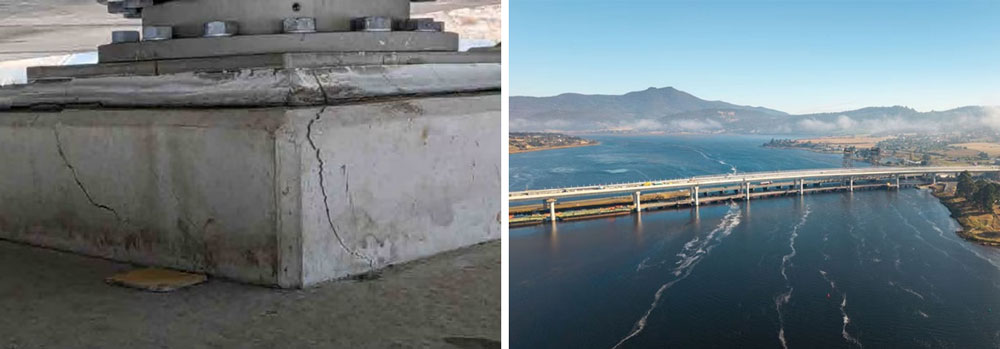
Image: ABC Bridgewater Bridge and previously reported cracks in the concrete plinth of one of the piers. Credit: ABC News Online, 26/5/26
13. Undersea Cables – Global Security Threat
The internet and globalisation itself rests on an invisible physical foundation; undersea cables. MMHN has frequently highlighted the strategic importance of this infrastructure, which is often overlooked despite carrying the vast majority of international data traffic.
RMIT’s Oceania Cyber Security Centre researcher Meridith Primrose Jones notes that a global network of more than 500 submarine cables transmits over 95% of the world’s international data. These cables form the backbone of global communications, enabling everything from financial transactions to cloud computing and real-time logistics.
Several of the world’s most critical submarine routes pass through the Middle East, where narrow waterways such as the Red Sea, Bab el-Mandeb Strait, Suez Canal, and Strait of Hormuz function as ‘digital chokepoints’. In 2024, incidents affecting submarine cables in the Red Sea disrupted approximately 25% of internet traffic between Europe and Asia, underscoring how geographically concentrated vulnerabilities can translate into global disruption.
What was once understood as critical infrastructure—oil pipelines, ports, and power grids—now equally includes data infrastructure. Submarine cables have become strategic assets, essential to national security and economic stability. A single cable cut, whether accidental or deliberate, can degrade connectivity across multiple regions at once.
Although cable faults are not uncommon, repairs are complex and slow, particularly in contested or militarised waters. Repair vessels require safe access, diplomatic coordination, and significant downtime, meaning outages can persist far longer than the initial incident.
The Strait of Hormuz illustrates both the fragility and geopolitics of this system. While it does not directly impact Australia’s domestic connectivity, seven major submarine cables pass through the strait, and Gulf states rely on them for more than 90% of internet, banking, and cloud services. Reports indicate Iran has moved toward asserting tighter sovereign control over this infrastructure, including proposals requiring foreign firms to obtain permits, pay transit fees, and operate under Iranian law, with maintenance potentially restricted to Iranian companies.
Such developments highlight a broader trend; digital infrastructure is increasingly being treated as sovereign territory. In this context, submarine cables are no longer just technical assets, but potential instruments of leverage and targets in geopolitical competition. Stay-tuned.
See: Iran is threatening undersea cables
14. Port of Darwin – International Centre for Settlement of Investment Disputes
In late April, Chinese billionaire Ye Cheng, founder of Landbridge, initiated proceedings against Australia at a World Bank–linked arbitration body, marking a significant escalation in a long-running dispute over national security and foreign investment.
The case has been lodged with the International Centre for Settlement of Investment Disputes (ICSID), a Washington-based institution established in 1966 to facilitate arbitration between foreign investors and states. ICSID operates under the World Bank Group and provides a forum for investor–state dispute settlement under international investment treaties, including those potentially relevant to the China–Australia Free Trade Agreement, which is central to the current claim.
Since 2021, Chinese companies have initiated at least 11 known cases against foreign governments, with eight still pending. While many involve allegations of unfair or discriminatory treatment, others—such as the Landbridge dispute—focus on government actions taken on national security grounds, particularly the exclusion or restriction of foreign-owned infrastructure operators.
A comparable example is Huawei’s 2022 legal action against the Swedish government after Sweden barred Huawei Technologies Co., Ltd. and ZTE Corporation from participating in the country’s 5G telecommunications rollout, citing security concerns.
The Albanese government has confirmed it will vigorously defend the Australian position. These proceedings are expected to take several years to resolve, reflecting the typically lengthy and complex nature of investor–state arbitration.
The dispute also reopens scrutiny of the 2015 decision by the Northern Territory government to grant Landbridge a 99-year lease to operate the Port of Darwin in a deal worth A$506 million. At the time, the federal Turnbull government did not intervene, though the agreement later attracted international attention, including concerns raised by the United States due to the rotational presence of US Marines at the port. Both major Australian political parties have since signalled support for returning the port to Australian ownership.
The case now sits at the intersection of investment law, infrastructure sovereignty, and shifting geopolitical risk—where commercial agreements increasingly collide with national security considerations.
See: Coalition and Labor pledge to retake control of Chinese-controlled Port of Darwin
Also: Chinese companies are increasingly taking on foreign governments. It’s not just the Port of Darwin
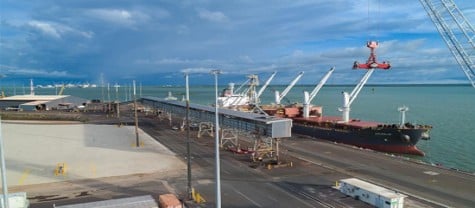
Image: Darwin Port’s cargo wharf in Australia. Photo: Xinhua. Credit: Global Times, 24/10/23
15. Containers Lost at Sea
Every year, the volume of containerised goods in global maritime trade continues to grow, freight costs generally decline, and vessel sizes increase. The largest container ships now carry more than 20,000 TEU (twenty-foot equivalent units). An estimated 250 million containers are transported by sea annually worldwide.
Despite the scale of this system, container loss at sea remains relatively rare but environmentally significant. In 2024, an estimated 576 containers were lost globally out of more than 250 million transported—approximately 0.0002%, well below the ten-year average. There is, however, no consistent official tally or reliable annual average for container losses in Australian waters specifically.
From January 2026, new International Maritime Organization (IMO) regulations introduced mandatory global reporting of lost containers. This change requires all container losses to be recorded and tracked, significantly improving the accuracy and transparency of data, including in the Australian region.
Whether losses are financially recoverable depends on whether marine cargo insurance has been taken out by the shipper or owner.
Changes in global trade routes have also influenced risk exposure. For example, hostilities in the Red Sea have led to a 191% increase in transits around the Cape of Good Hope, one of the world’s most challenging and weather-prone shipping routes. The South African Maritime Safety Authority reports that nearly 200 containers were lost in this region alone in 2024, accounting for around 35% of global container losses that year.
While the proportion of containers lost is extremely small, the environmental consequences can be significant. Lost containers can damage fragile seafloor ecosystems, leach toxic heavy metals from coatings, and release plastics and hazardous chemicals into marine food chains.
The World Shipping Council (WSC) has advocated for mandatory loss reporting and continues to support initiatives aimed at identifying causal factors and reducing incidents. These include improved cargo securing practices and the use of AI-assisted cargo screening to detect undeclared hazardous goods, helping to prevent onboard fires and enhance overall shipping safety.
See: Reducing the number of containers lost at sea
Also: Containers overboard
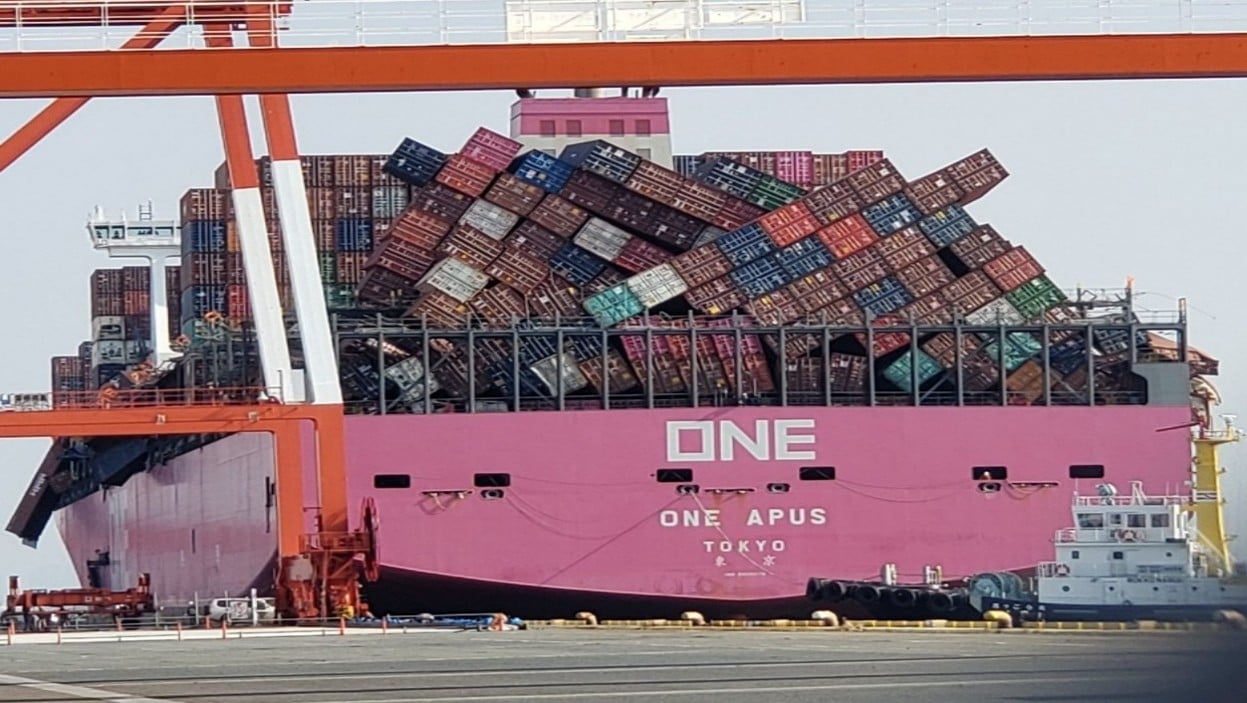
Image: Recovered containers. Credit: Bart Gonnisse, x.com
16. Tall Ship Leeuwin, Collision at Sea – Final Report Australian Analysis
Many maritime enthusiasts will recall the shock when the heritage tall ship STS Leeuwin II was struck in Fremantle by the container ship Maersk Shekou on 30 August 2024. Initial impressions suggested that the containers themselves were the primary issue, but this was not the case.
A more accurate understanding emerges from the Australian Transport Safety Bureau’s Marine Occurrence Investigation Report, released late last year. The forensic analysis shows that containers had broken free from the container ship and subsequently fell onto the Leeuwin II, causing the collision.
See: Collision between Maersk Shekou & STS Leeuwin II
Also: Two men injured after STS Leeuwin is hit by large container ship at Fremantle Port
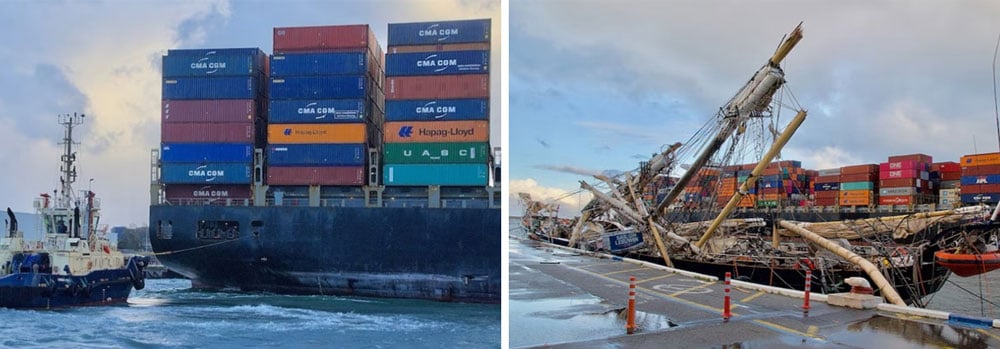
Images: The Maersk Shekou; STS Leeuwin damage. Credit: ABC online 30/8/24
17. Undersea Surveillance – Lombok Strait
One of the few deep-ocean routes that allows submarines to transit between Australian waters and the South China Sea without surfacing is the Lombok Strait. In this strategically significant region, a 3.7-metre torpedo-shaped object was discovered by a fisherman and brought ashore near Gili Trawangan. It has been identified as a deep-sea, real-time transmission mooring system reportedly developed by China’s 710 Research Institute, an organisation associated with underwater attack and defence technologies.
The system is designed to be anchored to the seabed while transmitting data via communication buoys deployed to the surface. Indonesian Navy Rear Admiral Tunggul confirmed that the device was transported to Mataram Naval Base on Lombok for further investigation, including analysis of its origin, function, and any stored data.
The discovery has potential implications for regional maritime security and Australia’s broader defence posture.
See: What the undersea monitoring device found in Indonesia tells us about China’s maritime strategy
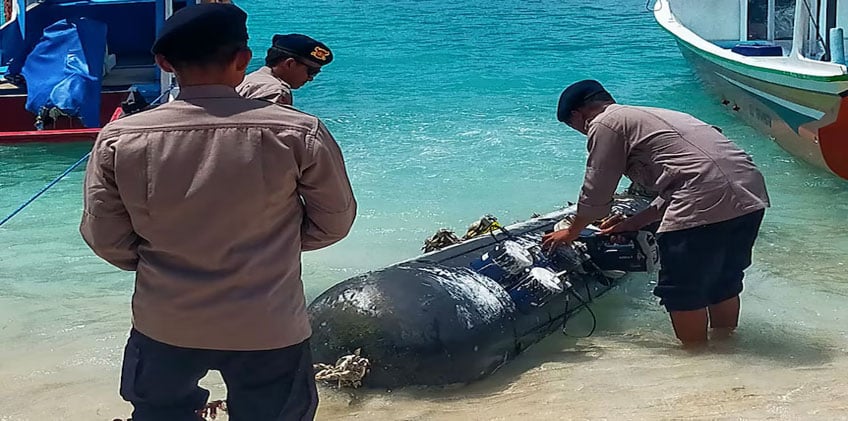
Image: Real-time transmission mooring system. Credit: ABC online, 17/4/26
18. Marvellous Gateway Piers
This will delight you! Something remarkable in this moment of arrival that must stay with so many immigrant Australians. Some beautiful old footage of Greek Migrants arriving at Station Pier and Wharfies at work you may not have seen.
Watch: https://www.youtube.com/watch?v=g1Gta5Jllm0
19. RAN – Collins Class Submarines
On 19 May, the Federal Government announced changes to the planned $11 billion Life-of-Type Extension (LOTE) program for Australia’s Collins-class submarines. The revised approach significantly scales back the originally proposed upgrades. A review found that the submarines could continue operating for up to a decade without full diesel engine replacement, allowing upgrade work to be completed more quickly.
As a result, the planned replacement of all six diesel engines and generators across the fleet has been discontinued. Instead, each submarine will be assessed individually and upgraded as required. Key weapons systems and other critical capabilities will still be modernised, but the vessels will continue operating with their original propulsion systems until their scheduled retirement in the 2040s.
Greater emphasis will now be placed on the fleet’s younger submarines, beginning with HMAS Rankin, which is currently undergoing a full-cycle docking. HMAS Farncomb is expected to require the most complex upgrade, while the remaining newer boats are anticipated to need less extensive work.
Despite the reduced scope, the revised LOTE program is now estimated to cost roughly twice the original projection for the full upgrade program. This increase is likely due not only to earlier cost underestimation, but also to the rising expense of maintaining ageing systems and increasingly obsolete components.
ASPI research fellow Richard Gray has noted that critical elements of the Collins-class fleet, including hulls and propulsion systems, will be approaching or exceeding 40 years of service by 2030, increasing safety risks and driving more intensive maintenance and monitoring requirements.
In the broader strategic context, Australia expects the arrival of Virginia-class nuclear-powered submarines under AUKUS in the 2030s, followed by domestically operated AUKUS submarines in the 2040s. As highlighted in the ASPI report Hedging Our Bets, it may be prudent to prepare contingency options, including the potential rapid acquisition or leasing of conventional submarines from Japan or other partners, should capability gaps emerge.
The scaling back of the LOTE program, and the resulting reduction in planned capability uplift, underscores that such risks are both real and increasingly pressing.
A reminder that the Collins Class project was established by the Royal Australian Navy (RAN) in 1982. The Collins Class submarines are the second largest non-nuclear-powered submarines in the world. In 1985, the newly formed Australian Submarine Corporation (now ASC Pty Ltd), began the task of designing and building the most sophisticated conventional submarine in the world. Construction of the 1st. Collins Class submarine, HMAS Collins, was begun in 1990 and delivered to the RAN in 1996. The 6th and final boat, HMAS Rankin, was delivered to the RAN in 2003.
See: Planned upgrades to Collins Class submarines scaled back
Also: De-scoped Collins LOTE strengthens case for looking to Japan
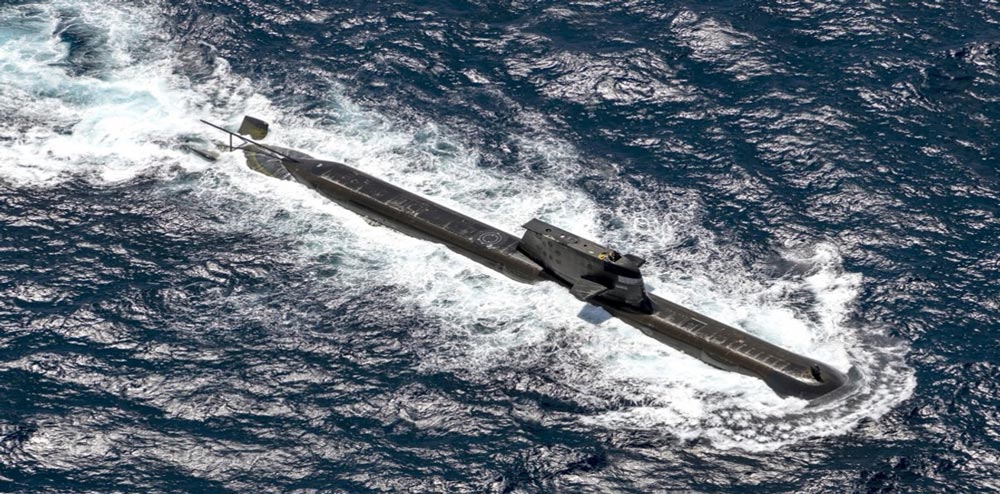
Image: Collins-class submarine HMAS Rankin. Credit: The Strategist
20. Keeping watch on AUKUS
In March 2026, the Federal Government passed legislation establishing the Parliamentary Joint Committee on Defence (PJDC). The committee is tasked with examining Defence policy, capability development, administration, and expenditure, with a strong emphasis on long-term effectiveness and strategic outcomes. It will have access to classified defence and intelligence material to support its work.
The PJDC’s oversight extends beyond the Department of Defence to include other key agencies such as the Department of Veterans’ Affairs and the Australian Submarine Agency. Membership is restricted to Labor and Coalition Members of Parliament and Senators.
The committee held its inaugural meeting on 2 May 2026. Deborah O’Neill was elected Chair, with Dave Sharma serving as Deputy Chair.
See: Inaugural Parliamentary Joint Committee on Defence commences its new oversight role
21. The Alma Doepel – EOFY Appeal
MMHN draws your attention to the timely Alma Doepel ‘Hoist the Sails Fund’ End-of-Financial-Year Appeal, which closes at the end of June 2026.
After years of dedicated restoration, the historic vessel Alma Doepel is nearing completion. The final step in returning her to active service is the purchase of a full set of new sails, with the appeal seeking to raise $80,000. Without sails, the ship cannot fulfil her intended purpose of delivering sail-training and youth development programs at sea. The goal is to see Alma Doepel under sail and bound for the Australian Wooden Boat Festival in February 2027. This voyage will mark her true return to service and provide a tangible demonstration that the project has successfully transitioned from restoration to active operation.
See: Alma Doepel Hoist The Sails Fund
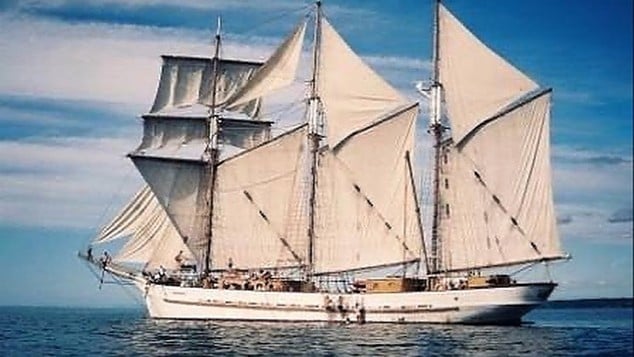
Image: Alma Doepel Project. Credit: Sail and Adventure Ltd
22. Hidden Waters of the Birrarung Exhibition
It is regrettably rare for our river to receive the attention it deserves. MMHN is delighted to note that during Melbourne Design Week, May 23, the exhibition “Hidden Waters of the Birrarung” was launched. A collaboration between the Petrichor Collaborative and the National Trust it marked the 70th Anniversary Heritage Futures program.
Currently recognized as a South Yarra landmark, Como Park was once a billabong—a former path of the river—and one of many concealed waterways that exist throughout Melbourne’s parks and open spaces. The exhibition, presented on the veranda of Como House, features Petrichor’s “Remembered Waters” series, created across sites including Como Park Billabong, Queen Victoria Gardens, Parkville, and Carlton Gardens.
Heritage Futures, the National Trust’s travelling outdoor installation, complements this exploration of hidden landscapes, bringing attention to the often-overlooked waterways of our city.
See: Heritage Futures
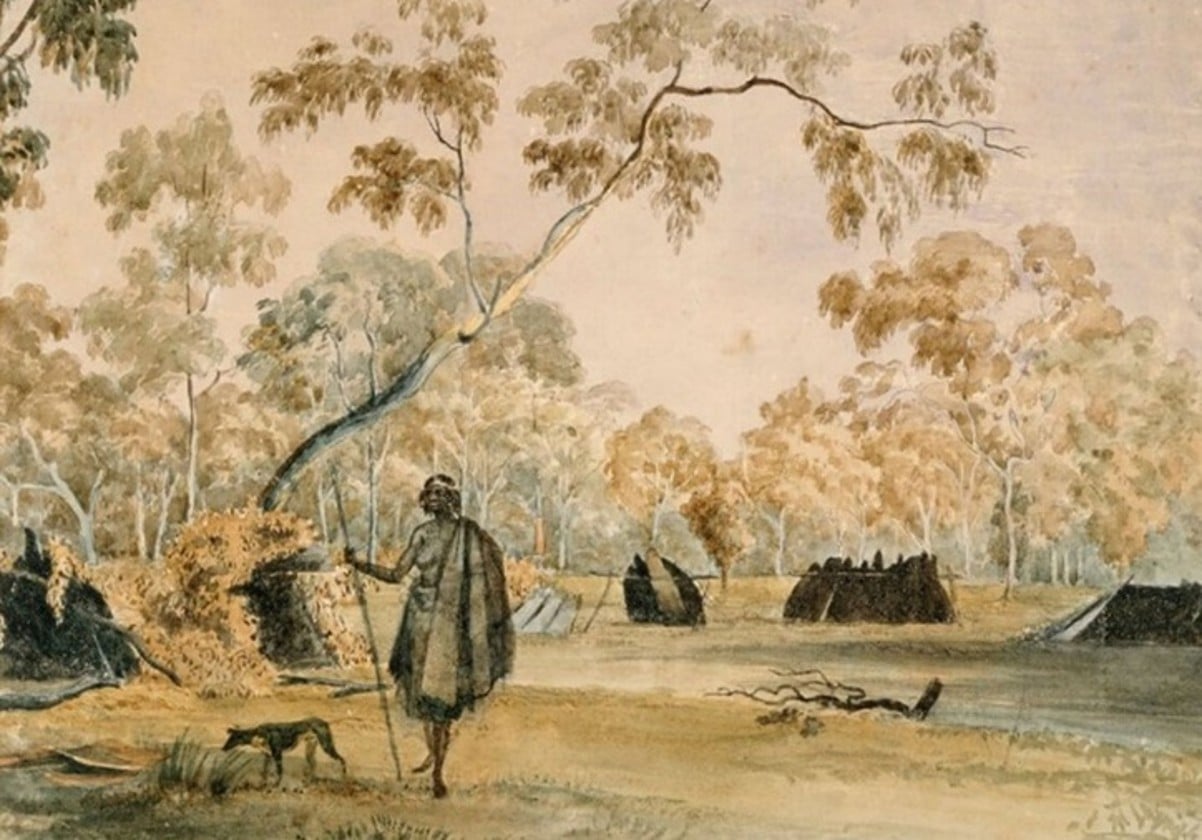
Image: John Cotton, Aboriginal camp on the banks of the Birrarung, c1856. Credit: Pictures Collection, State Library, Victoria
23. River Waterways Heritage
As a source of fresh water and abundant food, the Birrarung/Yarra sustained the peoples of the Kulin Nation for thousands of years. Later, it drew colonial settlers to its northern bank, where the settlement that became Melbourne was established. Melbourne’s river port underpinned much of the colony’s prosperity and continues to contribute to the economic success enjoyed today.
‘An extensive integrated river and billabong system can be found along the south bank of Birrarung/Yarra. Indigenous clans gathered close to the river for fresh water and abundant food found in the wetlands and billabongs. Over millennia the course of Birrarung/Yarra has changed countless times, resulting in seasonal foods for the Boonwurrung and shifting sediment deposits and tidal pools for those negotiating the river.’
If you have not yet explored part of the trail with your phone in hand, accessing the fascinating stories, maps, and historical information along the way, MMHN encourages you to do so on a sunny afternoon. It is a rewarding opportunity to discover the hidden waterways and rich cultural history that continue to shape Melbourne’s landscape.
Also: Southbank Heritage Trail
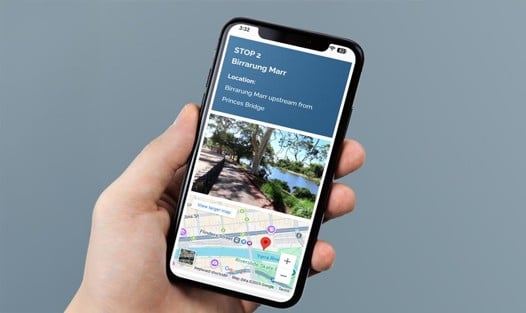
Image: MMHN
24. Birrarung Yarra River – Riparian Zone
Tensions inevitably arise between efforts to restore the Birrarung’s natural landscapes and the desire to preserve the maritime infrastructure that supported Melbourne’s colonial river port. Much of this infrastructure was constructed on, or later expanded into, former wetlands and floodplains that were once integral parts of the river system.
Yet the unique cultural, environmental, and historical significance of the Birrarung/Yarra River and its riparian corridor is beyond dispute. This 242-kilometre river system, extending from the forested Upper Yarra catchment to its tidal estuary and Port Phillip Bay, is bordered by a vital network of vegetated buffer zones, floodplain wetlands, and remnant billabongs. These landscapes filter water, reduce erosion, provide habitat for diverse plant and animal species, and hold profound cultural significance for First Peoples.
Balancing these sometimes competing values is well within our capability. A mature and evolving society should be able to protect both significant natural landscapes and important built heritage. Through stronger planning policies and development controls, we can ensure that the environmental health of the Birrarung is restored and protected while also conserving the maritime and industrial heritage that forms an important part of Melbourne’s story.
See: Planning for Birrarung (the Yarra River)
25. Antelope Reef
The current impasse in the Strait of Hormuz brings another vital maritime chokepoint into sharper focus and one much closer to Australia’s region. It highlights a growing willingness by major powers to reshape maritime geography as a means of consolidating strategic control.
A case in point is Antelope Reef, a contested coral atoll in the Crescent Group of the Paracel Islands in the South China Sea, located approximately 216 nautical miles from Da Nang, Vietnam. While a new Chinese outpost there will not create additional legal rights under international law, it has the potential to strengthen China’s practical control over disputed waters.
China’s island-building campaign during the mid-2010s attracted global attention for both its scale and speed. Reefs were dredged and transformed into artificial islands, some featuring airstrips, deep-water ports, radar systems, and military facilities. Although that activity appeared to slow in subsequent years, China has continued to maintain and develop its network of outposts across both the Paracel and Spratly island groups.
Recent analysis suggests that construction at Antelope Reef could eventually rival the size of China’s largest South China Sea installations. After nearly a decade of relative inactivity, Beijing appears to have resumed large-scale land reclamation and island-building. A feature that was once largely submerged is now being rapidly transformed into what could become one of China’s most significant outposts in the region.
The initial stages of development appear focused on logistics rather than overt military capabilities. Current work includes berthing facilities, access channels for construction vessels, and the creation of stable reclaimed land capable of supporting long-term operations. While military infrastructure may follow, the immediate objective seems to be establishing a durable platform that can be progressively integrated into China’s broader maritime strategy across the South China Sea.
See: Hormuz impasse brings another vital shipping lane into sharper focus
Also: China remaking the South China Sea
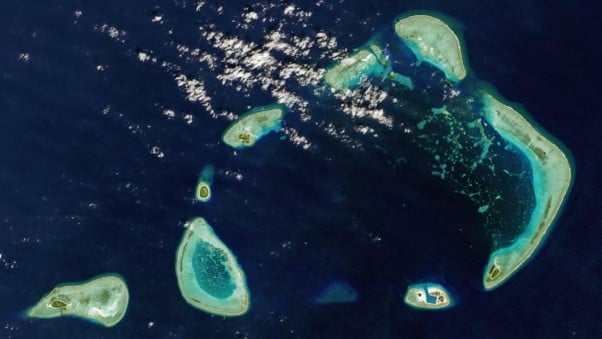
Image: A satellite view including Antelope Reef, Pattle Island, Drummond Island, Duncan Island, Palm Island, Robert Island, Observation Bank and Money Island, part of the disputed Paracel Islands located in the South China Sea, 2016 (USGS via Getty Images). Credit: Lowy Institute, The Interpreter
26. Japanese Navy – ANZAC Connection
Vice Admiral Mark Hammond, the current Chief of Navy and soon to become Chief of the Defence Force, spoke recently aboard HMAS Brisbane during celebrations marking the Royal Australian Navy’s contract to acquire Japanese-built frigates. In his remarks, he reflected on the long history of naval cooperation between Australia and Japan, recalling a little-known but significant connection dating back to the First World War.
In 1914, the Japanese battlecruiser HIJMS Ibuki escorted the first convoy carrying Australian and New Zealand troops (ANZACs) to Egypt. The convoy departed Albany, Western Australia, on 1 November 1914, with Ibuki joining the force two days later to provide additional protection. Serving alongside Australian warships including HMAS Sydney and HMAS Melbourne, the Japanese vessel formed part of the escort under the terms of the Anglo-Japanese Alliance.
The importance of the escort was underscored on 9 November 1914 when HMAS Sydney detached from the convoy to engage and destroy the German cruiser Emden near the Cocos Islands. Throughout this period, Ibuki remained with the convoy, helping to ensure the safe passage of thousands of Australian and New Zealand troops to Egypt.
Those troops would later form part of the forces that landed at Gallipoli on 25 April 1915. The participation of Ibuki in the ANZAC convoy stands as an early example of naval cooperation between Australia and Japan, a relationship that continues to evolve more than a century later.
See: First convoy of Australian troops in World War I
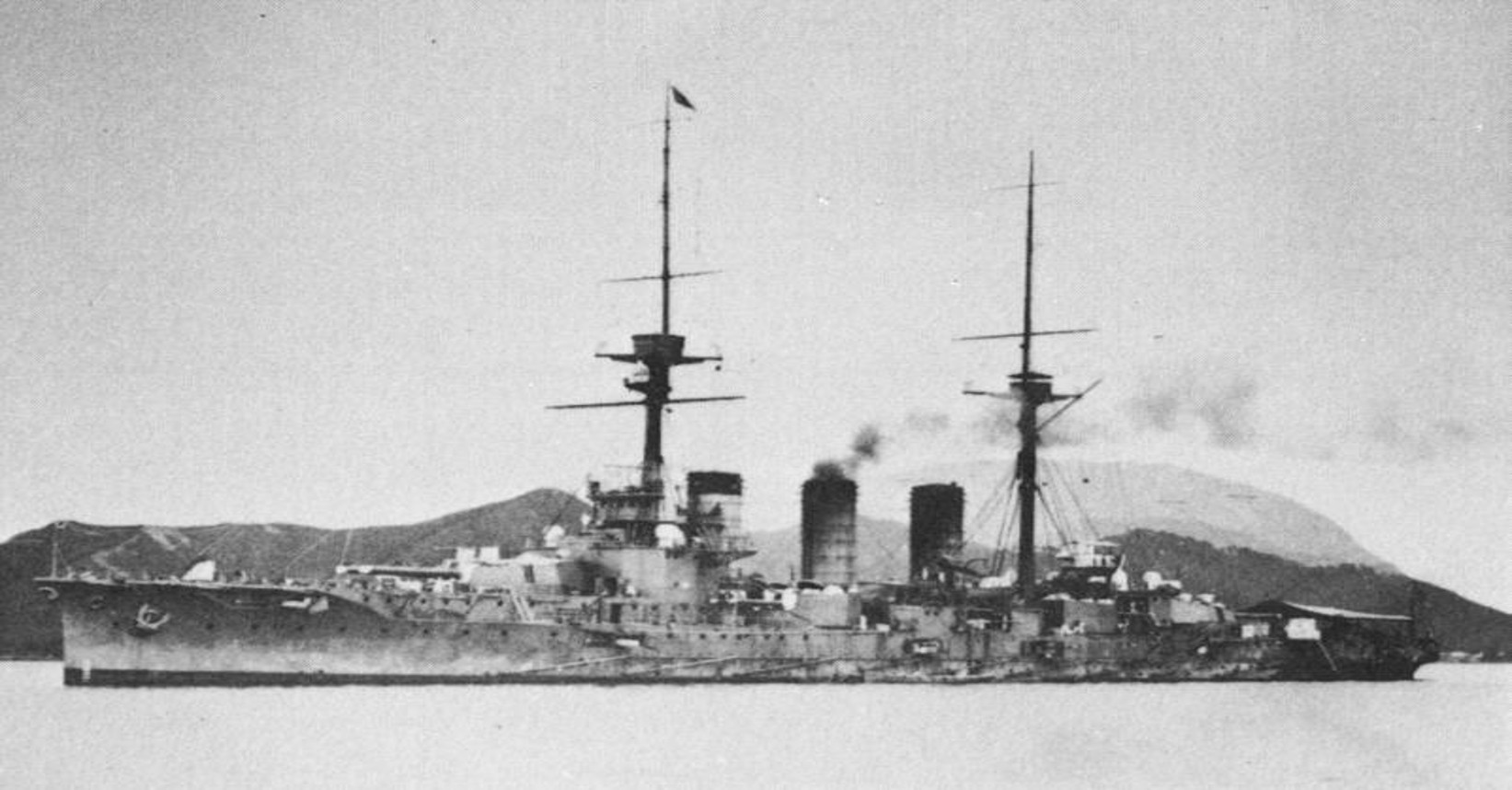
Image: HIJMS Ibuki. Credit: Wikimedia Commons
27. Naval Bell Diplomatic Symbolism
During his much-discussed visit to the United States, King Charles III presented President Donald Trump with the original bell from HMS Trump, a British-built Second World War submarine constructed by Vickers-Armstrongs at Barrow-in-Furness and launched on 25 March 1944. HMS Trump was the only vessel in the Royal Navy to bear that name.
During the war, the submarine saw service in both the North Sea and the Java Sea and spent a considerable period attached to the 4th Submarine Squadron operating from Australia. HMS Trump is notable as the last Royal Navy submarine to be permanently stationed in Australia and the final British submarine to launch a wartime torpedo attack against an enemy vessel. Following the war, she was based in Sydney for more than two decades before being scrapped in 1971.
For those who follow contemporary international politics, there was much to appreciate in both the choice of gift and the King’s accompanying remarks. Michael Koziol, North America correspondent for the Sydney Morning Herald (24 May), described the presentation and speech as ‘clever, droll, diplomatic and highly symbolic’ on several levels. Given recent tensions in the transatlantic relationship, that assessment appears well founded.
In his speech, the King gently challenged President Trump’s assertion that, without American intervention in the Second World War, Britain would be speaking German. He observed that, without Britain’s role in the conflict, Americans might instead be speaking French. Presenting the bell, the King remarked, ‘May it stand as a testimony to our nations’ shared future,’ and suggested that President Trump should ring it whenever he was in need.
The King concluded by describing HMS Trump as an early symbol of the close maritime and defence cooperation that now finds expression in AUKUS, drawing a connection between the enduring alliance represented by NATO and the emerging strategic partnership embodied in the AUKUS agreement.
See: King Charles Gifts Trump Naval Bell From WWII Submarine Bearing His Name
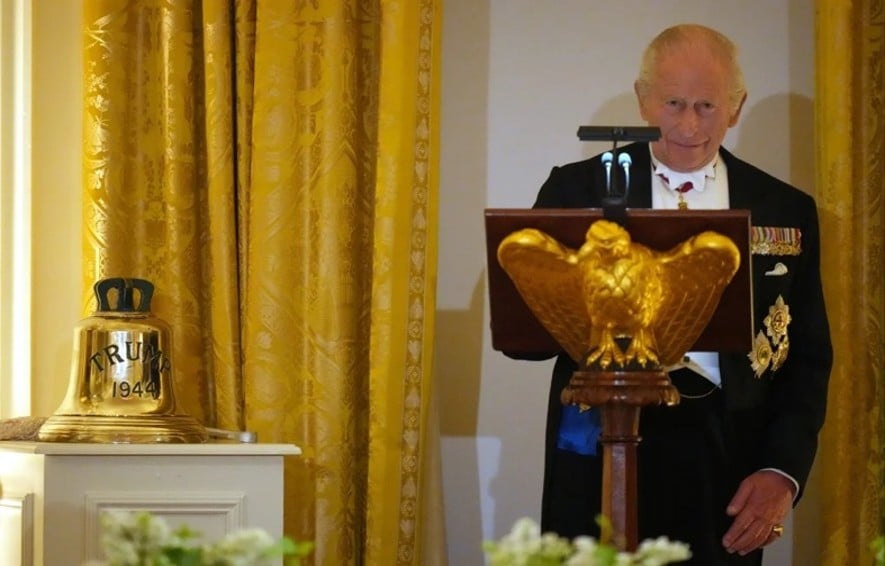
Image: King Charles III presents Trump bell. Credit: South China Morning Post
28. Shipbuilding of the Future
Historically, shipbuilding has been recognised as one of the toughest and most hazardous industrial occupations. Journalist Jijo Malayil reports in Interesting Engineering (23 March) that HD Hyundai has partnered with US robotics company Persona AI to develop humanoid welding robots for future shipyards.
Under a joint development agreement involving HD Hyundai, HD Korea Shipbuilding & Offshore Engineering, HD Hyundai Robotics, and Persona AI, the project aims to address growing labour shortages in heavy industry, particularly in high-risk trades such as welding. The partners note that the increasing difficulty of recruiting and retaining skilled workers has created an urgent need for rugged, autonomous robotic systems capable of operating in demanding industrial environments.
Persona AI is developing a bipedal humanoid platform designed to move safely and efficiently through complex shipyard settings while performing highly skilled tasks such as welding. The robots will combine advanced mobility, perception, precision control, and autonomous operation, with gradual deployment planned across shipyard operations.
A prototype is scheduled for completion and field testing by late 2026, with commercial deployment targeted for 2027. If successful, the project will represent a significant step towards the development of “smart shipyards”, where human workers and advanced robotic systems operate side by side to improve safety, productivity, and efficiency.
See: Hyundai taps US robotics firm to build humanoid welders for future shipyards
Also: Persona AI building industrial humanoid robots

Image: Persona AI bipedal humanoid platform, with phased deployment planned across shipbuilding sites. Credit: Newsroom.posco.com
Until next time,
Jackie
Dr Jackie Watts OAM
Chair,
Melbourne Maritime Heritage Network
info@mmhn.org.au