

Greetings all,
No need to remind maritime enthusiasts that Australia’s socio-economic and geo-political security remains inextricably entwined with the maritime trade sector. The current Middle East conflict is evidence enough as it brings great risk to our shores on many levels. It is obviously impossible for the MMHN Update to report in a timely or comprehensive way on the fast-evolving, multi-faceted, global maritime environment. We hope that you will find the following selected aspects of an immensely complex period in our maritime history, useful.
Contents
1. Strait of Hormuz
2. Pakistan Navy – Strait escort
3. Shadow Fleet – Oil ME Conflict
4. Maritime Insurance Wields Power
5. Force Majeure Declarations – impact
6. Mining the Strait
7. Red Sea Route Option
8. Decoding the Tanker Fleet
9. Marine Fossil Museum
10. ANARE Action (Australian National Antarctic Research Expeditions)
11. Antarctic Infrastructure: Historic Voyage
12. Historic steamship John Oxley
13. Sulphur Content in Marine Fuel – Bleaching Impact
14. RAN Maritime Capability and National Security
15. RAN – 125 Year Anniversary
16. RAN – HMAS Collins
17. RAN – Pacific Patrol Boat Replacement Project
18. AUKUS – Media Reports
19. New Maritime Agreement – the BBNJ
20. International Transport Workers Federation (ITF) – New Rules and Rights
21. War Zone Repurposing – Drone Fishing
22. Victoria Harbour, Docklands: Wharves and Water
23. Ferries Award – Melbourne
24. Anglesea Recreation and Sports Club (AR&S)
25. Convict Ship Hijack – The Frederick
26. Port of Portland
27. Victoria’s First Sea Pilot
28. Maritime Heritage Grants – ANMM
29. Webinar Exploring Maritime Technologies for the Pacific: Existing Solutions and Future Pathways
30. Ocean Decade Australia Releases White Paper, ‘Ocean in the Boardroom’
31. Harbour Esplanade Revitalisation Project MMHN/CBRE
1. Strait of Hormuz
In last month’s MMHN Update we referred to the Panama Canal and Strait of Hormuz as global trade ‘chokepoints’, a prescient reference as it happens. The outbreak of hostilities in the Middle East have confirmed this critical passage as a vulnerable conduit. The world’s vital energy artery was under siege in the first 36 hours of the conflict. GCaptain (3/3) reports, ‘The Strait of Hormuz is now a war zone’; ‘20% of global oil supply hangs in the balance’; ‘War-risk insurance pulled’; ‘Shipping giants halt Gulf transits’; ‘Tankers hit, 3 U.S. troops killed’. ‘Oil markets have reacted sharply’.
Following Israeli and US actions and the deaths of Iran’s Supreme Leader Ayatollah Ali Khamenei and several Iranian senior military commanders, shipping action in or near the Strait has ceased. Many vessels are fleeing to open seas. ‘The impact on commercial shipping has been immediate and severe.’ An update from Poten & Partners indicated Japanese shipping giants Nippon Yusen, Mitsui O.S.K. Lines and Kawasaki Kisen have similarly halted all Hormuz operations, directing vessels to anchor in safe waters. Shipping data indicates hundreds of crude and LNG tankers have dropped anchor outside the chokepoint, clustered off the Gulf and Arabian Sea, in what amounts to a near-standstill in transit. A significant distortion of navigational GNSS or AIS data aka ‘GPS Spoofing’ is occurring in the Strait, creating phantom ship tracks.
We can but stay tuned as this war plays out at sea.
See: The First 36 Hours
Also: GCaptains status
2. Pakistan Navy – Strait escort
SouthAsian Index (11/3) reported that Pakistan deployed NAVY warships in the Strait of Hormuz to escort commercial vessels amid the US-Iran war. Pakistan NAVY says its warships are in Hormuz to ‘ensure the uninterrupted flow of national energy supplies’. Pakistan has become the first country to deploy warships in the Strait of Hormuz to escort its vessels amid the US-Iran war.
3. Shadow Fleet – Oil ME Conflict
Reference must be made to the potential threats to the sanctioned, uninsured and poorly maintained tankers transporting oil around the globe. Reference must also be made to the source of this sanctioned oil and the countries which consume it. Kpler noted in 2025, 251 vessels were loaded with sanctioned Iranian oil – 217 of those vessels (86%) were also sanctioned vessels. The remaining 34 vessels were active in the shadow fleet. The majority of these vessels (96%) transported the sanctioned crude through dark, ship-to-ship transfers; 72% turned off their vessel location beacons for an extended period of time. China and India are the predominant buyers of the cheap crude. Now, with tanker transits both illicit and legal through the Strait of Hormuz, India is a country to watch. Reports are that India reduced Russian crude imports recently, while China increased crude import. Compared to China, India has much smaller reserves or inventory of oil supplies. Similarly, South Korea has a small reserve which is important given that it supplies 90% of the U.S. West Coast jet fuel. A reminder that kpler provides real-time data for global commodity markets, specializing in tracking, analysing and forecasting the movement of physical goods and shipping flow. E.g. oil, gas, and dry bulk.
See: Shadow Fleet Surge
4. Maritime Insurance Wields Power
The actions around the Strait of Hormuz have made the critical role of maritime insurance very clear indeed. Maritime trade (and ultimately profit) is sensitive to and inextricably tied to the availability and cost of insurance. The Financial Times, UK reports that war-risk insurance brokers have commenced issuing policy cancellation notices for vessels moving through the Strait of Hormuz – a chokepoint in the global transportation of oil. Prices will inevitably rise.
Reporter Shanaka Anslkem Perere commented, ‘Twenty million barrels of oil passed through the Strait of Hormuz yesterday. Today the number may be zero. Not because Iran mined the water. Not because a tanker was hit. Because Lloyd’s of London picked up the phone. War risk underwriters began cancelling policies for the Strait. The Financial Times confirmed premiums surging by 50%. Baseline war risk sits at 0.25% of hull value. For a hundred-million-dollar tanker that is 250,000 dollars per voyage. At peak escalation rates, one million per transit. Vessels linked to US or Israeli interests are becoming uninsurable entirely. No price. No policy. No passage.
By day three, the maritime industry insurers acted to restrict coverage in the affected region. Initially the major marine insurers just cancelled ‘war risk’ coverage for the Strait of Hormuz. 150+ ships were stranded at that time. Rates tripled. One seafarer died. Gcaptain reported, ‘The insurance market has moved decisively in response. Steamship Mutual issued a formal Notice of Cancellation of War Risks coverage for the Persian/Arabian Gulf and adjacent waters, with cancellation effective 72 hours after 0000 GMT on March 1, 2026. Insurance market posture now aligns with the JMIC elevation of the regional maritime risk level to CRITICAL.’
The US announced a $20 billion maritime reinsurance facility aimed at restoring confidence in commercial shipping through the Persian Gulf, moving to operationalize a federal insurance backstop as missile and drone attacks and insurance withdrawals triggered a collapse in vessel traffic through the Strait.
The insurance coverage, coordinated with CENTCOM, includes war risk and will insure losses of up to approximately $20 billion on a rolling basis and will initially focus on coverage for hull and machinery as well as cargo. Notably no reference to seafarers.
Maritime insurance cover is a cost of doing business and is still available according to the International Union of Marine Insurance for ships transiting the Persian Gulf. But many owners are staying put. Cover can be arranged on a single-voyage basis, while the Lloyd’s Market Association reports about 1,000 vessels worth more than $25 billion remain anchored in the Gulf as crews and operators weigh the risks of sailing through the Strait of Hormuz.
See: Insurers to Cancel Policies
Also:
Shanaka Anslkem Perere post
The First 36 Hours
$20B maritime insurance plan
War Risk Insurance
Shadow Fleet Dominates Crossing
LLoyd’s Seasearcher List
5. Force Majeure Declarations – impact
Originating from French law, this ‘superior force’, aka Force Majeure (FM) protects parties from liability when extraordinary events make performance impossible, not just more difficult or expensive. FM clauses are essential in shipping contracts, acting as a critical risk management tool. They protect against legal liability and facilitate disaster recovery when unforeseen events disrupt maritime operations.
The Middle East conflict is resulting in a rapidly increasing number of companies declaring ‘Force Majeure’ well beyond the energy sector. QatarEnergy declared FM on LNG, removing 20% of entire global supply. Saudi Aramco cut production at two fields and shut Ras Tanura. Kuwait halted styrene monomer production and Kuwait Petroleum Corporation declared FM on crude oil sales. In Bahrain, Bapco declared FM on its only refinery and Aluminium Bahrain halted shipments from one of the world’s largest smelters. In Singapore, PCS and TPC Singapore declared FM because PCS supplies polyolefin production. In South Korea, Yeochun NCC, its largest ethylene facility, declared FM. In Taiwan, Formosa Petrochemical and Aster Chemicals declared FM.
Each FM declaration triggers the ‘domino’ or cascade effect. Stalled production in a polyethylene plant, stops packaging manufacture which cannot supply to the food, medical, electrical, automotive, construction companies etc. Scarcity causes price increases. Seven insurance companies cancelled War-Risk coverage on vessels making tanker transit commercially unviable. The oil price captures the headlines but the FM cascade effect does not reverse when oil drops. Insurance reinstatement is protracted. The ME conflict has not simply closed a critical global waterway. It closed the industrial supply chain that feeds half the world’s manufacturing base. ‘The Strait carries oil. The oil becomes naphtha. The naphtha becomes plastic. The plastic becomes everything’, quotes Perera.
See: Understanding Force Majeure
Also: The war just hit your supply chain. Not oil. Everything made from oil.
6. Mining the Strait
Conflicting media reports continue on Iran laying mines and using undetected submersible drones in the Strait. Every ship is at risk of hitting a floating mine. Insurance companies will pull coverage. No captain will order a transit. No company will take the liability. Brad Ryan (ABC 11/3) reports U.S. retaliatory threats in response to indications that Iran may deploy 2,000 to 6,000 naval mines, ostensibly of Iranian, Chinese and Russian origin.
See: ABC News – intense day of strikes
Also:
Times of India – naval mines
The Azhdar UUV
CNN report mines laid
7. Red Sea Route Option
As a precaution should the Strait of Hormuz one day be closed, 45 years ago the Saudis and the UAE built an East-West pipeline, a 1200-kilometre conduit criss-crossing the Arabian Peninsula from the Persian Gulf to the Red Sea. Although the Saudi pipeline cannot completely compensate for the lost passage of the 20 million barrels a day of crude and refined products which normally passes through the Strait, it offers some help. An armada of tankers is now rerouting to ports either end of the pipeline.
In The Financial Review (10/3) Xavier Blas reports, ‘prophetic pipelines could end the Iran war oil shock.’ The Baltic and International Maritime Council (BIMCO), the world’s largest international shipping association, warned that vessels with business links to the US or Israeli interests are likely to face elevated risks if Houthi attacks resume. But BIMCO Chief Safety & Security Officer Jakob Larsen cautioned that the threat extends beyond direct affiliations. ‘Ships with business connections to the US or Israeli interests are more likely to be targeted, but other ships may also be targeted deliberately or in error,’ Larsen stated. In the past Houthi attacked ships with no clear Israeli or American business link.
Houthis, officially known as Ansar Allah, is a Zaydi Shia revivalist and Islamist political and military organization that emerged from Yemen in the 1990s. Its leadership is drawn largely from the al-Houthi family.
The Houthi movement is likely to intervene sooner or later in support of Tehran, but the timing and scale of any involvement will depend on how the conflict between Iran, the US and Israel unfold.
See: Middle East Backup Pipelines
Also:
Red Sea Corridor Slips Back into Crisis – Houthi Threats
Houthi Hesitating to Join Iran War
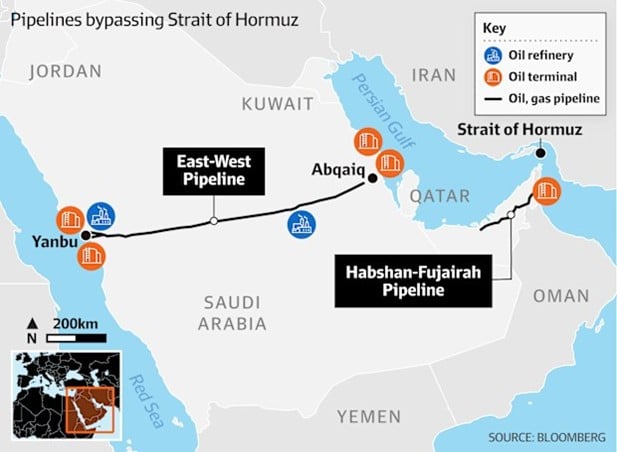
Image: AFR
8. Decoding the Tanker Fleet
There is a lot to consider. For example: size, range, passage capabilities and long-haul storage.
See: Decoding the Tanker Fleet
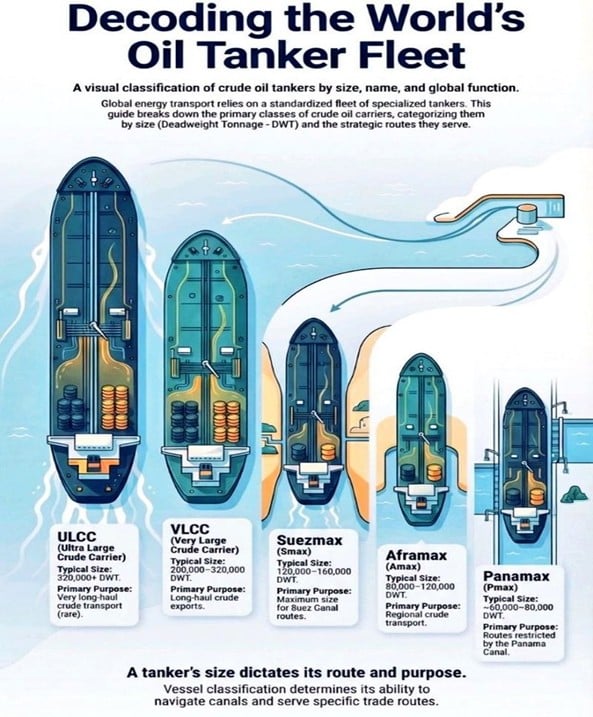
Image: AzizSaphire
9. Marine Fossil Museum
Along a three-kilometre stretch of Port Phillip Bay in Beaumaris and Black Rock, an abundance of prehistoric fossils can be found. Carolyn Webb (The Age 11/3) reports that the Beaumaris Motor Yacht Squadron, will host the Prehistoric Bayside Museum on April 11. Palaeontologist Ben Francischelli and other enthusiasts have collected more than 1000 fossils to be exhibited. Some are five to six million years old. Fossils include wing bones from Pelagornis, a flying bird which had a wingspan of over six metres; a three-kilo tooth of a Livyatan, or killer sperm whale; tusks from beaked whales.
See: Prehistoric Bayside Museum
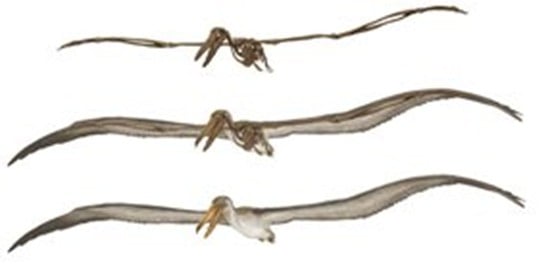
Image: ABC News: Discovery Science 2016
10. ANARE Action (Australian National Antarctic Research Expeditions)
The ANARE Club was formed in 1951 so that members of the Australian National Antarctic Research Expeditions (ANARE, now the Australian Antarctic Program) could celebrate their shared experiences, educate the public and promote interest in Antarctica. Returned expeditioners maintain friendships and stay in touch with what’s happening down south. Today, ANARE is open to anyone interested in the Antarctic.
Sadly, the grave of Captain John King Davis CBE 1884 – 1967, Australia’s most famous Antarctic master mariner expeditioner was unmarked and in disrepair. Australia’s Davis Research Station honours his name. In order to ensure that the significance of Capt. Davis’s contribution to Antarctic history is appropriately commemorated, ANARE undertook to rectify this realm. Before works could occur, ANARE undertook three years of historical research and complex navigation of cemetery regulations to determine ownership and permission to rectify the gravesite. Donations and grants were sought.
On the 142nd anniversary of Captain Davis’s birth (19 February) a rededication ceremony of his grave and memorial was held on Thursday 19 February 2026 in Melbourne General Cemetery. Echoing the granite stone around Davis Station, the memorial design reflects the modest character of Captain Davis and his deep engagement with Antarctica. This successful commemoration project also served to appropriately mark the ANARE Club’s 75th Anniversary in 2026. MMHN was invited to the most interesting and moving graveside service and later to a service of Remembrance at Mariners Chapel at the Mission to Seafarers. We encourage all maritime enthusiasts to seek out this grave.
Captain Davis was Chief Officer on Ernest Shackleton’s 1907 Nimrod expedition. He formed a close friendship with Douglas Mawson and journeyed to the South Magnetic Pole. In 1911, he captained the SY Auroa for the Australian Antarctic Expedition and again in 1916 captained the Ross Sea Relief Expedition to save Shackleton’s stranded men. Between 1920 – 1949 he became the Commonwealh Director of Navigation. During this period, he captained the RS Discovery on a joint British, Australian and New Zealand expedition (BANZARE).
There is so much to admire about this amazing man. We recommend you read his books, ‘High Latitude’ and ‘The Voyages and Works of John Davis, The Navigator’.
See: Anare Club
Also: Unmarked Grave of Capt Davis Found
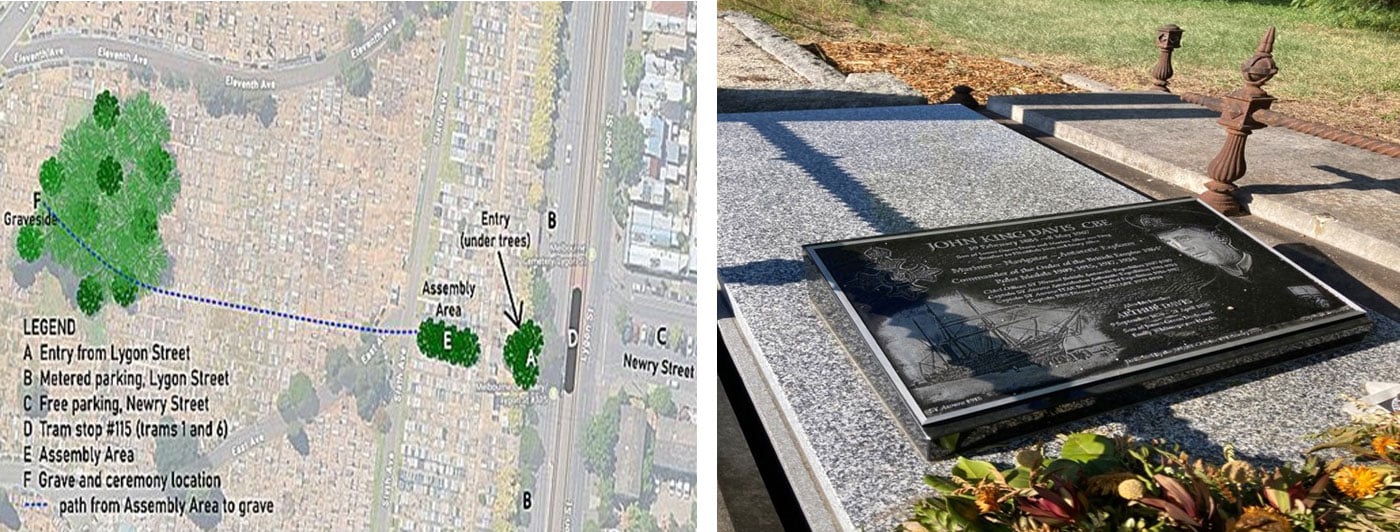
Image: ANARE and Jackie Watts Location Map and Grave
11. Antarctic Infrastructure: Historic Voyage
Quite a voyage! A 100m floating pier/barge has arrived in Antarctica. The US National Science Foundation (NSF) has installed a barge, aka Discovery Pier, a new ice pier at McMurdo Station replacing its long-used and crack-prone pier. Built in Portland, Oregon, the pier was towed by the US tug Rachel, operated by TradeWinds Towing via the Pacific, stopping in Hawaii and American Samoa, then a six-week tow across Port Lyttelton, NZ in January 2026, its final stop before Antarctica.
Barge Skipper Justin Gustafson said, ‘there were some big swells on the way south. As towing a barge goes, she handles fairly well. We were moving at six ½ knots, which is about what we aim for and were able to adapt as needed. The Southern Ocean gave the relatively low freeboard of the barge a bit of a fight during the final leg of the voyage. Crossing safely through 30s seas, with the help of our shoreside team and weather services, we were able to properly plan around the weather for a large portion of the transit – holding position north of an advancing front for approximately four days. With the help of the SKUA Ice Pilots and the US Coast Guard heavy icebreaker, Polar Star we were able to avoid significant contact with sea ice during our final transit into McMurdo, with the Polar Star making a pass through an ice flow 15nm north of McMurdo.’
See: Floating Pier Arrives in Antarctica
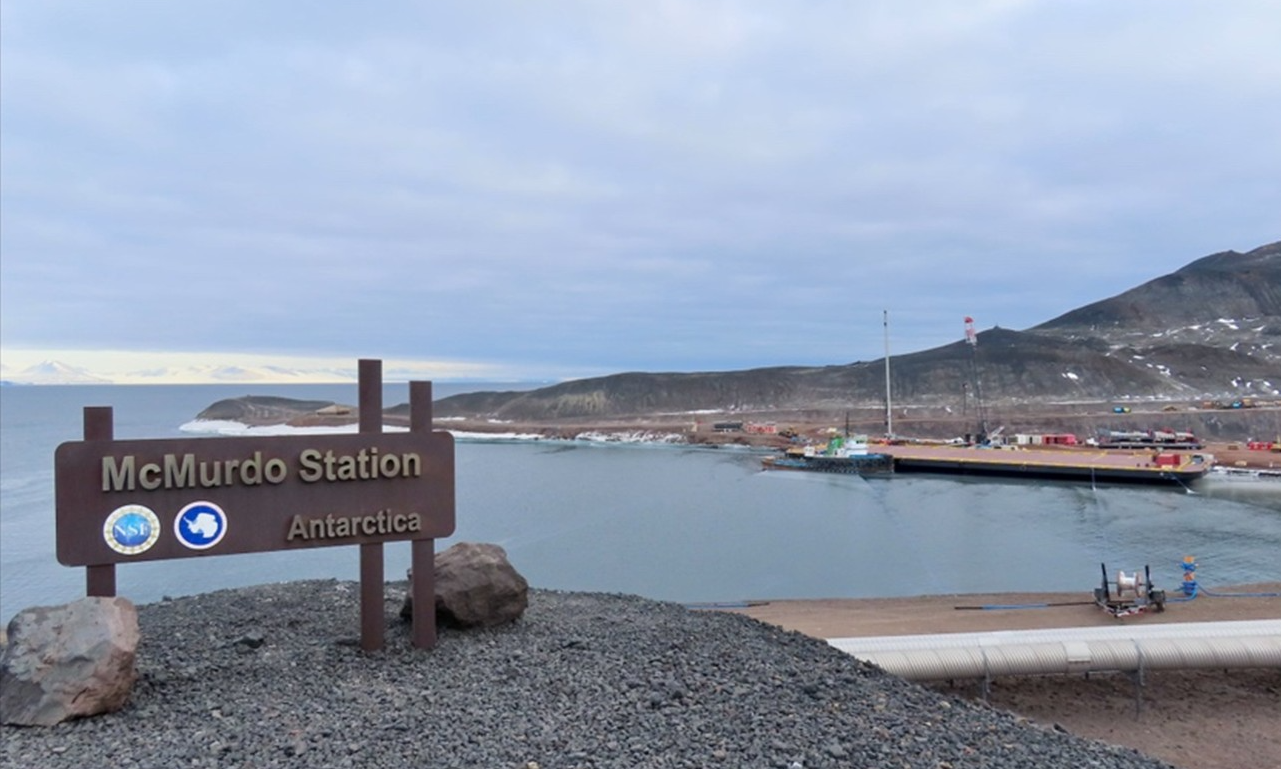
Image: McMurdo Base
12. Historic steamship John Oxley
Comparisons may be drawn between the SS Oxley restoration project and Victoria’s own SS Wattle restoration project. The NSW government recognises the value of maritime heritage whereas the shabby treatment inflicted on the Heritage fleet in Victoria Harbour by Development Victoria representing the State government, regrettably does not. MMHN member Jeff Malley alerts us to this Report 2/2 on the continuing work on the historic steamship John Oxley. Extracts below.
‘A hugely significant development has taken place with the announcement from the NSW government of a new home for the Sydney Heritage Fleet at White Bay, a working harbour precinct. We thank everybody who has worked so hard on our site campaign during this time. The John Oxley team’s very appropriate motto is “Dirty hands and money” which, they claim, is a brutally honest project statement because it captures the two necessities that every working heritage vessel restoration project survives on. i.e. people who show up, and resources that keep the materials flowing. John Oxley was built for the Queensland Harbours and Marine Board. This vessel is the last remaining coastal steamship in Australian waters. Before rail and road networks were built, we relied on many ships like this to carry passengers and cargo around the Australian coast under her own power and served as a pilot steamer for Brisbane and as a buoy and lighthouse tender along the Queensland coast. Forty-three years later, a donated John Oxley would steam down the coast with a crew of volunteers from Brisbane to Sydney to start a new life as a museum ship.
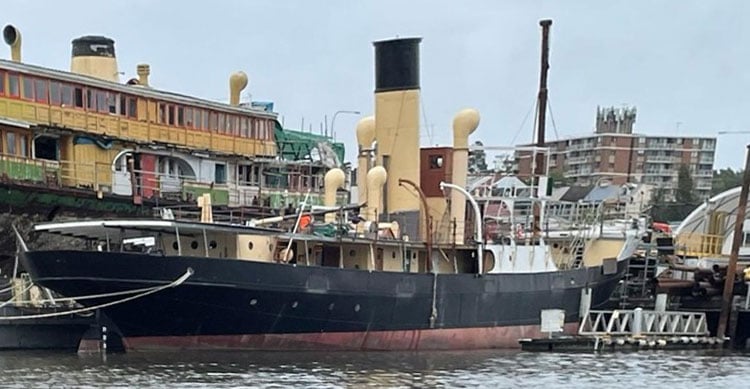
Image: SS John Oxley website
13. Sulphur Content in Marine Fuel – Bleaching Impact
Ship fuel sulphur content regulation may be inadvertently contributing to mass coral bleaching events on the Great Barrier Reef (GBR). A paper led by atmospheric scientist, Dr Robert Ryan from the University of Melbourne, 22 January 2026, alert us to the possibility that by regulating sulphur content, global shipping fuel introduced in 2020 may have also reduced the radiative cooling effects of sulfate aerosol over the ocean. While the removal of sulphur from fuels was necessary, an unforeseen side effect was allowing a lot of extra sunlight onto the reef. Climate change is increasing the frequency of mass coral bleaching events on the Great Barrier Reef, and clear skies are allowing more radiation to reach the reef. ‘While rising ocean temperatures are understood to be the primary cause of mass coral bleaching, enhanced solar radiation has also been associated with GBR bleaching events and research suggests the severity of bleaching events can be mitigated by natural or artificial shade’.
Post-sulfate regulation results, compared with pre-sulfate regulation increases in sea-surface temperature of 0.05 – 0.15 °C, implying additional thermal stress and bleaching conditions. Thermal stress leaves the coral exposed and at high mortality risk. Bleaching events are becoming increasingly frequent, with mass bleaching events occurring in 1998, 2002, 2016, 2017, 2020, 2022 and 2024.
The paper said the reef is under severe threat from climate change. The paper reports, ‘coral bleaching occurs as the symbiotic relationship between corals and their algal symbiont organisms breaks down under thermal stress, leaving the coral exposed.’
See: Cleaner Air Harming Great Barrier Reef
Also: Ship fuels may contribute to Barrier Reef bleaching
14. RAN Maritime Capability and National Security
Some of Australia’s strategic thinkers have always understood a simple truth: the nation’s prosperity and security would rest on the control of its surrounding sea. The underlying reality of this did not, and will not change. MMHN recommends you read The ASPI Strategist (27/2) in which Jennifer Parker writes. ‘At 125, the Royal Australian Navy enters its most consequential decade. Maritime power sits at the centre of Australia’s security. After decades of delayed decisions, Australia now fields one of its smallest and oldest surface combatant fleets since WWII, alongside an ageing Collins-class submarine force and limited surge capacity in the Naval Reserve.
1 March 1901 marked the establishment of Australia’s Commonwealth military and naval forces, the foundation of today’s Royal Australian Navy and Australian Army. The sea service’s initial title was ‘Commonwealth Naval Forces’; a decade later King George V granted the title ‘Royal Australian Navy’. When the new fleet steamed through Sydney Heads in October 1913, Australians lined the harbour to witness a visible expression of sovereignty that had long rested with Britain.’
See: Royal Australian Navy Enters Consequential Phase
Also:
Reinvigorating Naval Reserve
Foundations of an Australian Navy
Australian Army History
1913 Royal Australian Navy
15. RAN – 125 Year Anniversary
When world conflict highlights the vulnerability of our island nation. Narrated by Russell Crowe
Watch: 125 Years of the Australian Navy
16. RAN – HMAS Collins
Modern Navy – MMHN recommends you look at this video showing considerably more comfortable working conditions than experienced by early 20th century submariners.
Watch: Life On Deck – HMAS Collins
17. RAN – Pacific Patrol Boat Replacement Project
AUSTAL has launched Hull 544, the final Guardian-class Patrol Boat for Defence Australia’s Pacific Patrol Boat Replacement Project.
The launch of the 24th Guardian-class Patrol Boat marks the culmination of the $504.5 million project which began in May 2017 with the plate cutting on the first Guardian, HMPNGS Ted Diro.
Austal has delivered 22 vessels so far, to support maritime security across the Pacific. The Guardian‑class fleet is part of Australia’s long‑running Pacific Maritime Security Program, supporting maritime surveillance, fisheries protection, and sovereignty operations across Pacific Island nations. The vessels are modern replacements for the older Pacific‑class fleet.
Vessels are gifted to partner nations including Tuvalu, PNG, Tonga, Samoa, Solomon Islands, Fiji, Palau, Kiribati, Vanuatu, FSM, Cook Islands, Timor‑Leste, and the Maldives.
Each vessel is 39.5 metres long with a speed of 20 knots and a 3000 nautical mile range at 12 knots. They carry a crew of 23.
See: Austal launches final patrol boat in $500 million project
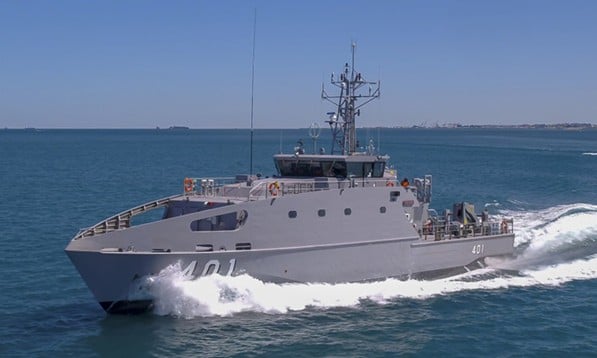
Image: Austal website
18. AUKUS – Media Reports
Reports emerge continually each month on the persistently controversial aspects of this project – the cost, US/UK alliance, skills shortages, interim submarine and nuclear submarine maintenance, fuel disposal etc. But it is progressing.
Australia budgets $310 million for AUKUS components. Key developments include a $3.9 billion down payment for a $30 billion facility in Adelaide, creating a 10,000-strong workforce to build Virginia-class and future SSN-AUKUS construction of Australia’s first two AUKUS submarines.
Under the AUKUS program, the UK will deliver complete, welded nuclear propulsion systems for Australian‑built SSN‑AUKUS boats, with work already underway at the Rolls‑Royce Submarine facility in Derby. Early progress on reactor manufacturing is essential to maintaining program momentum, sustaining specialist skills, and align industrial schedules across the AUKUS partnership. This investment is in addition to Australia’s contribution of GBP 2.4 billion over 10 years to expand the production capacity of Rolls-Royce Submarines.
MMHN has reported before that RAN training in the US fleet has been in progress for many months as part of AUKUS. No doubt without the consultation with RAN, three seamen were regrettably aboard a US submarine which torpedoed an unarmed Iranian vessel which had 180 personnel aboard. The Iranian frigate was sailing in international waters as it returned from a naval exercise organised by India in the Bay of Bengal outside Sri Lanka’s territorial waters, when it sent a distress signal. Sri Lanka responded by sending naval ships and its air force to the endangered vessel. Around 87 bodies and 32 survivors were rescued, with some seriously injured. Under the Geneva Convention, the attacking vessel must search for survivors when a warship is sinking. The captain of the US Navy submarine failed to comply with this well-known seafaring convention.
MMHN highly recommends a legal analysis of the incident.
See: Australia budgets $310 million for AUKUS components
Also:
US Sank Iranian Warship And Didn’t Rescue Survivors
Iranian Warship Hit US Torpedo Defenceless
Australians Onboard US Submarine Sank
US sinking of Iranian navy ship stirs controversy in Australia, India
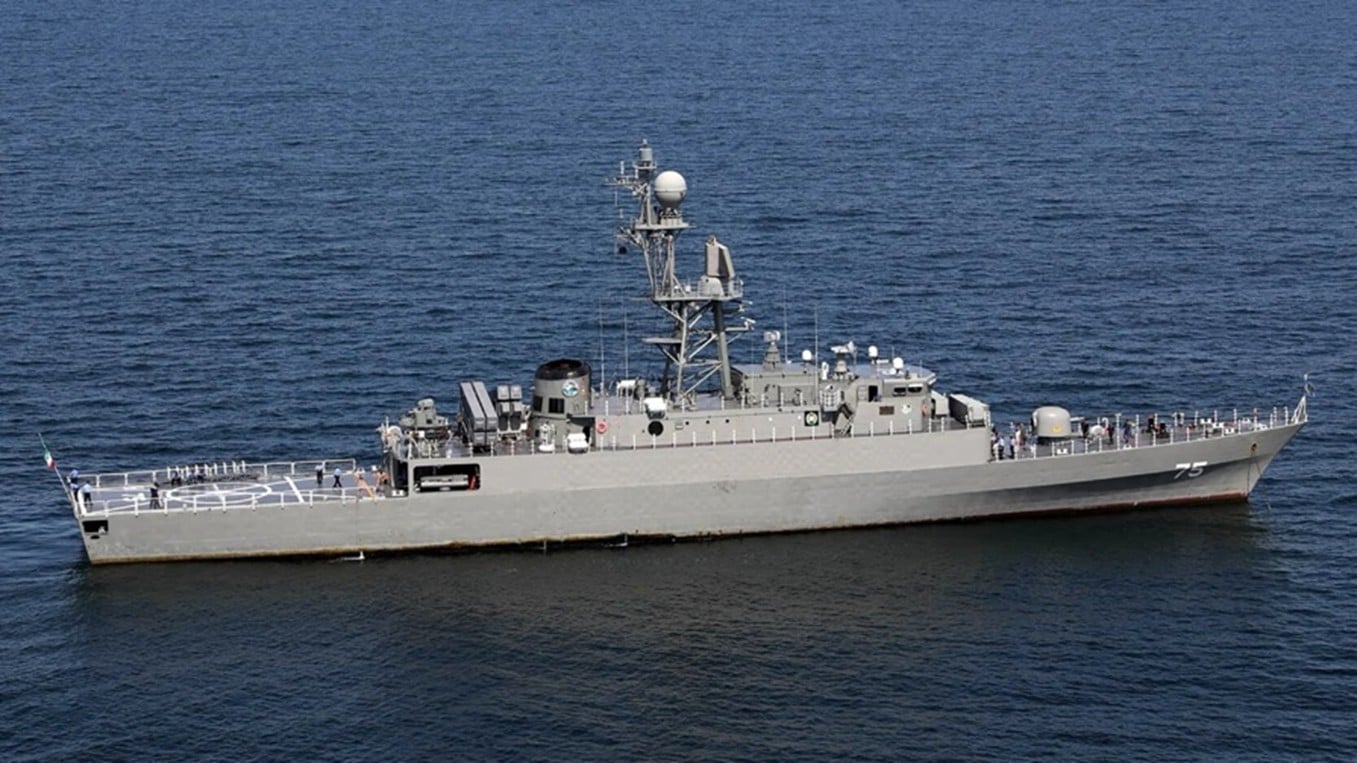
Image: The IRIS Dena, Iranian Navy
19. New Maritime Agreement – the BBNJ
The Biodiversity Beyond National Jurisdiction Agreement (BBNJ) that came into effect in January 2026 is evidence of multilateralism at work, over 20 years of discussions culminating in a final treaty text adopted by consensus. It is a highly progressive treaty, which combines the protection of marine species and their sustainable use and includes diverse stakeholders in the future design of ocean governance, including indigenous peoples and local communities, scientists, industry and environmental activists. It is a significant step towards more regulated protection and use of marine biodiversity in areas beyond national jurisdiction. The agreement is made up of four equally important, interconnected pillars, the so-called package deal. As differing priorities emerged, it became crucial to treat all the agreed-upon themes with equal importance. Eg. area-based management tools and environmental impact assessments intended to contribute to the protection and sustainable use of marine life, as well as the sharing of benefits from marine genetic resources and capacity building and the transfer of marine technology to support an effective implementation of the agreement globally. BBNJ aims to enhance scientific collaborations globally, encouraging more inclusive deep ocean science. It specifies clear and transparent processes for the establishment of marine protected areas and the conduct of environmental impact assessments, addresses global inequalities between developed and developing countries in marine science and technology, and shares the benefits arising from marine genetic resources. Indigenous people and local communities are given an important role in shaping marine biodiversity governance throughout the process.
See: BBNJ and Sharing the Benefits From Marine Resources
20. International Transport Workers Federation (ITF) – New Rules and Rights
Given the dire situation at sea for seafarers on vessels stuck in transit or in danger of attack, it is no surprise that the ITF has announced new rules and rights for seafarers near the Strait of Hormuz, Gulf of Oman and the Persian Gulf. These rules apply to all seafarers aboard ships covered by the International Bargaining Forum (IBF).
See: International Transport Workers Federation
Also: New Rules and Rights for Seafarers
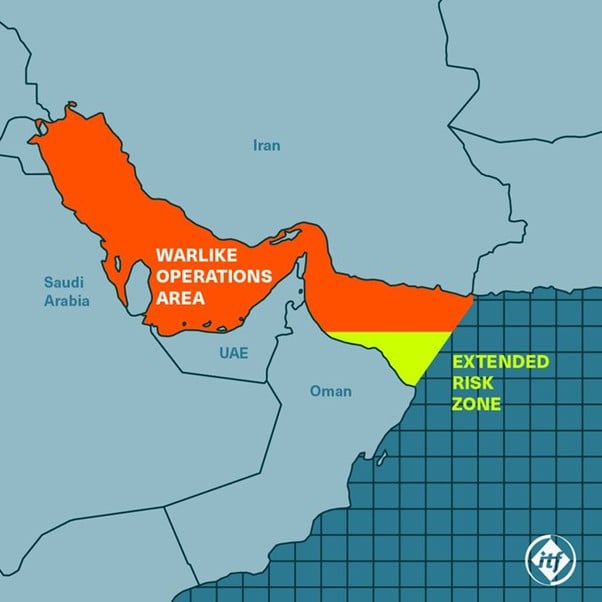
Image: ITF
21. War Zone Repurposing – Drone Fishing
Svitlana Vlasova, Victoria Butenko and Tim Lister (CNN World Feb 1) report that across Europe, farmers and fishermen are collecting discarded fishing nets to be re-deployed against Russian drone attack in the Ukraine city of Kherson. A growing number of nets have been strung up in hospital courtyards, over generators and in shopping streets in the city and open roads and poles are used to provide a canopy of netting. The nets are being trucked across Europe by a variety of volunteer groups. One of the largest, Life Guardians, is run by Klaas Pot in the Netherlands. His team has sent more than 8,000 tons of nets to Ukraine, about half the total received. As the stockpile of surplus nets in the Netherlands and Denmark is depleted, Pot is looking elsewhere to keep the pipeline going. On average, the Russians launch about 2,500 UAVs on these communities every week.
See: Nets Catching Russian Drones

Image: Army Corps/Facebook the road. A Russian drone targeting a car relatively far from the front line is caught in a net
22. Victoria Harbour, Docklands: Wharves and Water
Wharves This heritage-listed waterway is again mired in controversy as a consequence of neglect, according to Sean Car’s report (Docklands News, 4/2). Lurching from merely a precautionary safety concern three months ago is now considered a far more serious problem of wharf deterioration. Investigations reveal problems that are neither isolated nor superficial. The continuous public access to the waterfront is prohibited near Docklands library. The wharf was originally designed to last around 50 years and yet is barely halfway through that period. Pedestrians no longer have access to the water and all boats currently moored along the wharf are to be relocated. As Sean Car accurately states, ‘for a precinct defined by its relationship with water, the implications are significant’.
Water Things are not always what they seem in the waterways. Victoria Harbour is a shallow nine metres deep tidal basin, adjacent to the tidal reaches of Birrarung Yarra River. A distinct layer of murky, top-level water, is often appearing dirty due to river runoff, while the deeper water is surprisingly clear, clean, and supports local fish species. The waterway is a mix of fresh and salt water, with high-density, cleaner saltwater resting beneath the surface layer. But divers and fishermen claim below the surface, the salt water is clean and teeming with 19 species of edible fish.
Docklands and other parts of the Yarra like Abbotsford, South Yarra and Southgate sit in the medium water quality range, indicating the E. coli geometric mean as between 201 – 1000 organisms per 100ml. Any lower E. coli geometric mean indicates high water quality and anything higher indicates low water quality.
See: From Precaution to Crisis on the Wharf
See: Docklands Waterways Are Beautiful – On the Inside
23. Ferries Award – Melbourne
MMHN advocacy around ferries in Melbourne is staunch. We congratulate Port Phillip Ferries on being awarded Gold for Major Tour & Transport Operator for the second year in a row. The award recognizes a service that is increasingly popular for commuters, day-trippers and regional travellers, while strengthening the connection between Melbourne’s Docklands Precinct and Victoria’s coastal destinations. The growing popularity of ferries is evidence they are a key public transport option which is inexplicably ignored by the State government. As a Gold winner, Port Phillip Ferries will now represent Victoria at the 2025 Australian Tourism Awards, to be held at Fremantle Prison in Western Australia on March 6, 2026.
See: Port Phillip Ferries Victorian Tourism Awards
24. Anglesea Recreation and Sports Club (AR&S)
There are many such clubs dotted around our coast but few are likely to have accumulated such meticulous records over the past 100 + years, together with a fascinating collection of historic photographs of locals at play on the Anglesea River, formerly known as Swampy Creek. Activities at the club pre-dated the beach/surfing culture prevailing along the famous surf coast. AR&S Club members Prue and Graeme Weber produced an impressive 350-page book, The Grand Challenge: A History of the Anglesea Recreation and Sport Club 1911-2010.
This extraordinary work details the fundamental pleasure to be had across generations by mucking about in small boats of all sorts on a small river. The invitation to the original challenge in 1911 was issued by folks in the Anglesea township to those at Split Point, Aireys Inlet. Events included a Head of River in pull-boats, relay swimming race, golf, and tennis.
The regatta is operated from a boat shed on the Anglesea River bank that was built by club members in 1916 and houses a treasure trove of historically significant artefacts, including the four original boat’s purpose built in 1913 by Jas Edwards & Sons at Princes Bridge in Melbourne. These boats are registered on the National Maritime Registry and are unique in the world, as well as seven vintage wooden boats.
The Club values the many Honour Boards, not only recording race results back to 1911, but in particular a WWI Honour Board of Members who served but did not return. The Club continues to host one single Regatta on New Years Day each year – the Anglesea Regatta, a true community event which, as always, is open to everyone including Olympians, experienced rowers, first-time rowers, local residents and visitors alike. MMHN understands that Heritage recognition of this wonderful club is imminent.
See: A History of the Anglesea Recreation and Sport Club 1911-2010
Also: Anglesea Regatta
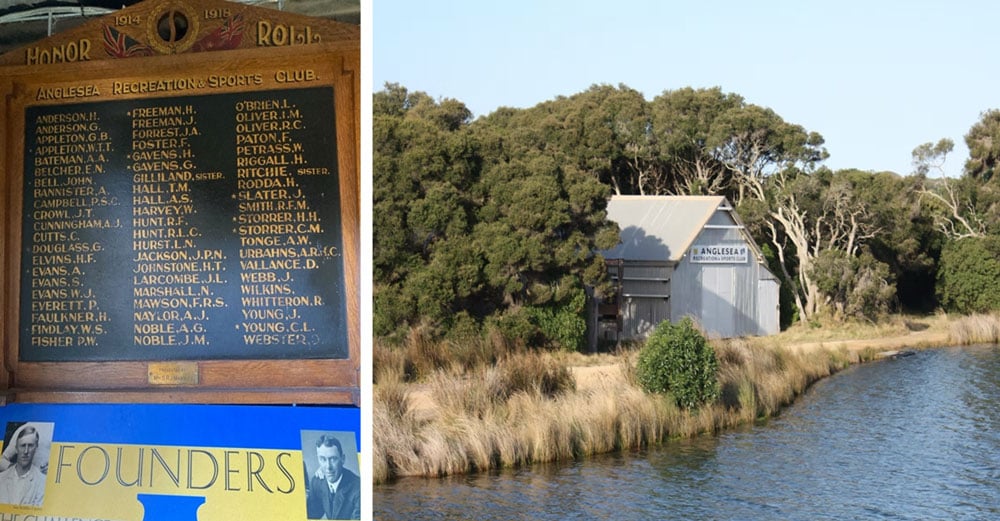
Images: Jackie Watts
25. Convict Ship Hijack – The Frederick
Based on a real event in January 1834 on Sarah Island in Macquarie Harbour, Sarah Island was in close proximity to stands of Huon pine which was an excellent wood for ship building. The Frederick was the last vessel to be constructed in the shipyards at this penal station. In 1833 the penal station was being closed down and its convicts transferred to Port Arthur. However, late in the year only a few convicts remained on Sarah Island, to complete construction of the brig. Four of the remaining convicts were former sailors, and had actually been sent to Sarah Island because of their history of failed escape attempts. Sarah Island was a prison colony within the larger prison colony of Van Dieman’s land.
When the Frederick was finished and about to set sail to a new prison at Port Authur, it was hijacked by ten convict shipwrights. It was the start of an amazing voyage across to Chile where the convicts lived freely for two years. Four of the convicts were later recaptured and returned to Australia, where they escaped the death sentence for piracy through a legal technicality at that time. Today the UN Convention on the Law of the Sea (UNCLOS) Article 101 defines piracy as ‘any illegal acts of violence or detention, or any act of depredation, committed for private ends by the crew of the passengers of a private ship or a private aircraft. . . on the high seas against another ship or aircraft’.
MMHN congratulates playwright Richard Davey and the Round Earth Company who have performed this work in Strahan, Tasmania since 1994.
See: Frederick Escape
Also: Round Earth Performs The Ship That Never Was
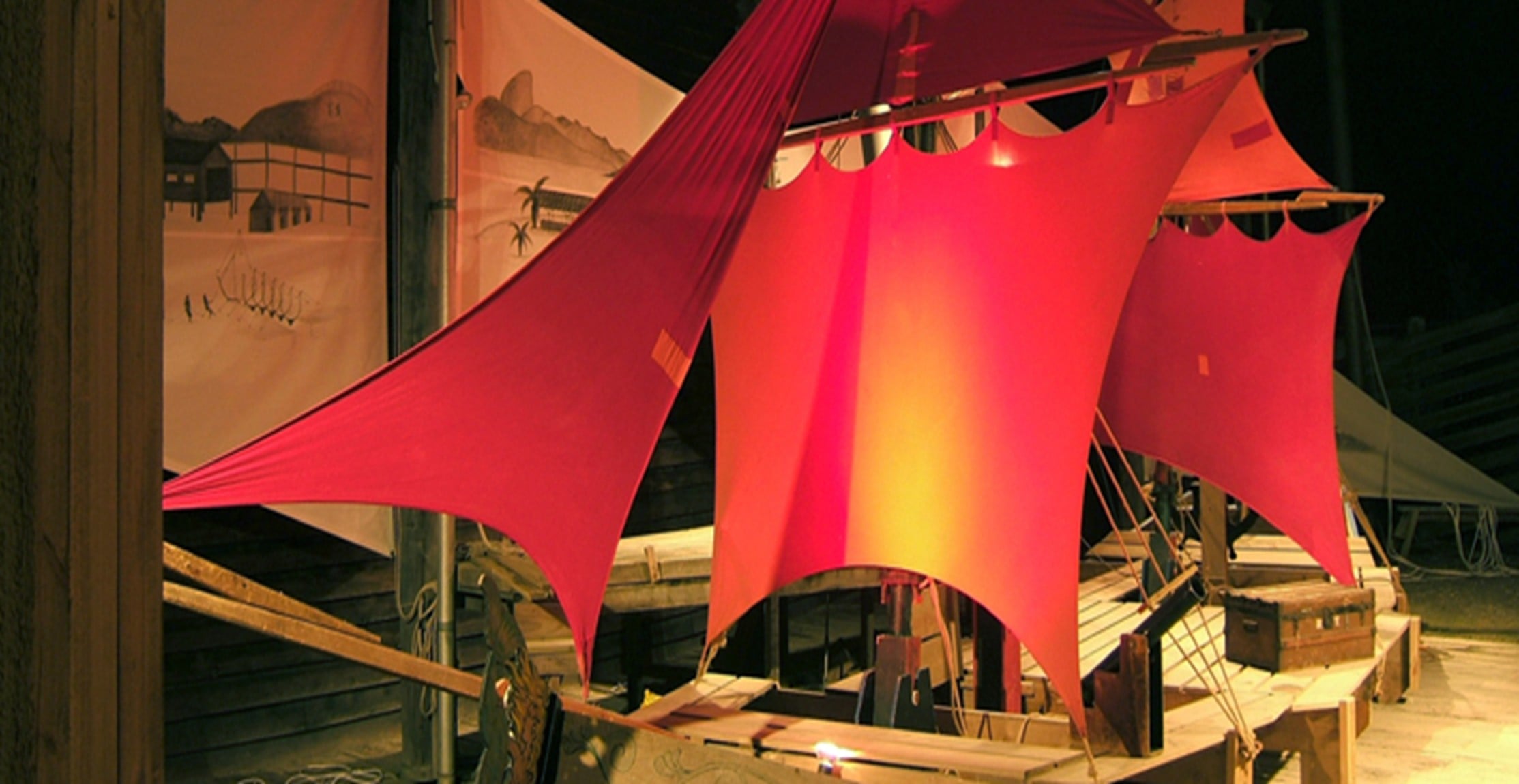
Image: Round Earth Company website
26. Port of Portland
MMHN is grateful to World Ship Society (WSS) member Neil Maclean advising maritime enthusiasts that the Port of Portland (SW Victoria) has an App which shows the current movements in the port.
A reminder that the Port of Portland is an historic colonial deep-water harbour which dates back to 1800 when Lieutenant James Grant sailed the Lady Nelson into what he named Portland Bay. In 1834 the area was settled by the Henty brothers and is considered the first permanent European settlement in Victoria. Originally a whaling and wool trade hub, it evolved by the 1960s into a modern, privatized, multi-commodity port handling grains, forestry products, and minerals.
If you are over that way, do not miss the excellent Maritime Museum.
A key exhibit at the museum is the 1858 Portland lifeboat, one of the oldest surviving shore-based lifeboats in Australia. It served at Portland from 1858 to 1915, and in 1859 it was used to rescue the 19 remaining survivors from the famous and tragic grounding of the steamer Admella near Cape Banks in South Australia.
See: Portland Shipping Movements
Also: Port of Portland & Portland Visitors Centre and Maritime Museum
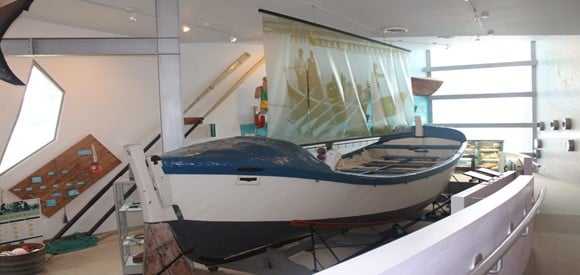
Image: Portland Maritime Museum Website
27. Victoria’s First Sea Pilot
When Master Mariner George Tobin applied to the governor for the position of Port Phillip’s first pilot in January 1839, he had nearly twenty years’ experience as a seaman and shipmaster. In early 1834, he had captained the 160-ton brig Elizabeth to the West Indies, trading to Africa and Russia. The Elizabeth was owned by Manx slaver and privateer Sir John Tobin. In October that year George Tobin was master of the first-class ship Laura bound for Demerara with goods for Joseph Jones of Liverpool. George Tobin arrived at Sydney in December 1836 as a steerage passenger in the William Bryant. By March the following year he was master of James Simpson’s 18-ton sloop Childe Harolde.
Captain Tobin was first engaged as a sea pilot to bring in the schooner Industry from Launceston before his employment as the first government pilot. Licensed to operate the service out of Queenscliff, Captain Tobin’s base was a sheltered beach at Whale Head, now Shortland’s Bluff, the first headland inside the bay after Point Lonsdale, where he and his crew lived. He was rowed out to ships in whaleboats which were often crewed by convicts.
In 1852 the Isabella Watson, a Geelong bound 434-ton emigrant ship, struck Corsair Rock and was swept onto the nearby Nepean Reef. Pilots Tobin, Toby, Taylor and Caught went to the rescue in a whaleboat. Captain Tobin ‘divested himself of his apparel, and fastened a warp round his body, made fast to the shore, and by dint of extraordinary exertion, reached the ship in safety’. He was responsible for saving the sixty passengers and all except eight of the crew. His bravery was recognised when he was presented with an inscribed chronometer watch on behalf of the survivors.
Captain Tobin is featured in a new exhibition curated by MMHN Board Member, Dr Liz Rushen. Titled ‘Hoddle Grid: The Great Land Grab’, the exhibition features 29 people who purchased land in Melbourne’s first sales.
‘Hoddle Grid: The Great Land Grab’ at the Royal Historical Society of Victoria, 239 A’Beckett Street, Melbourne, corner William and A’Beckett Streets, 26 March-11 November 2026, 10am – 5pm weekdays, free entry.
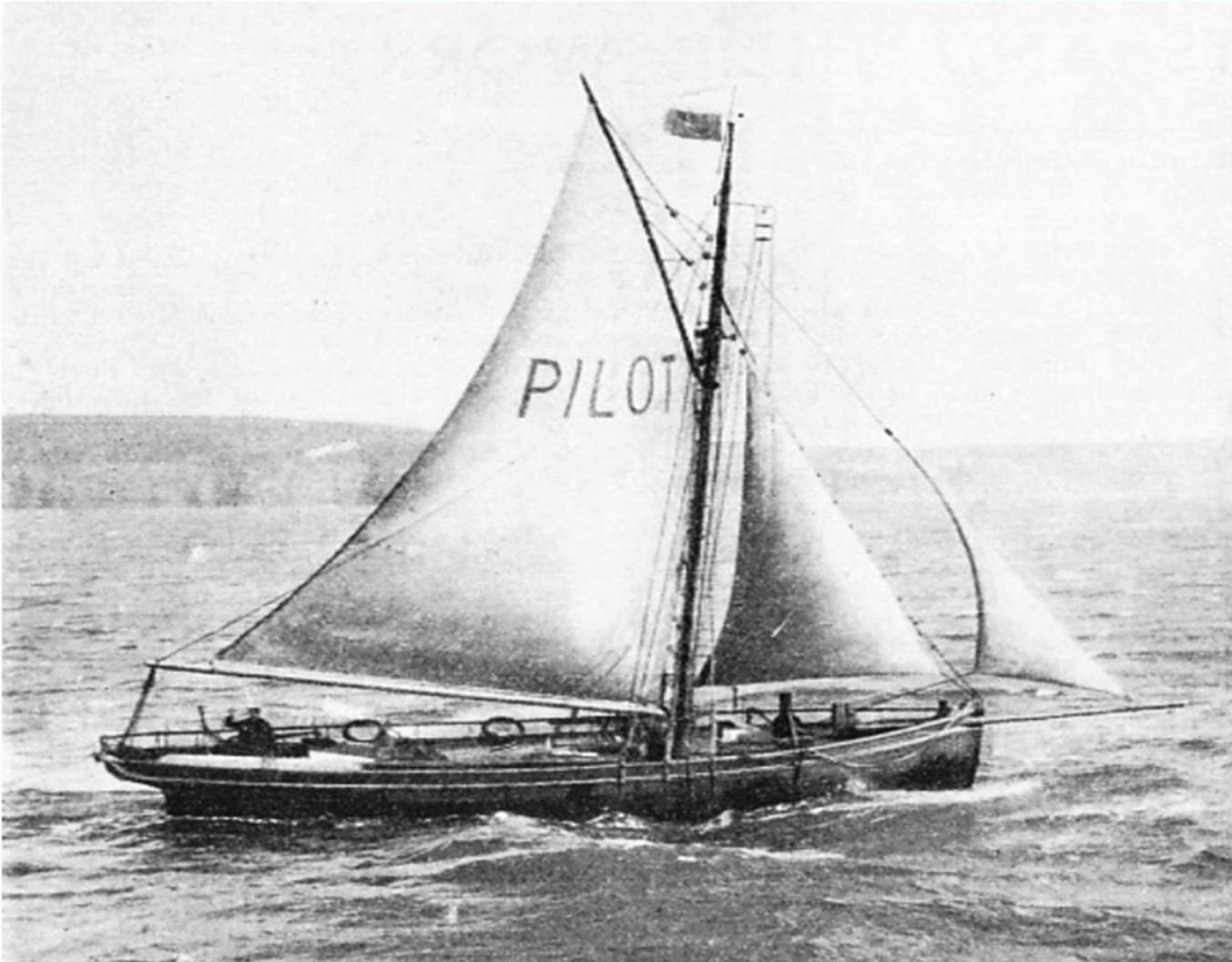
Image: Typical early nineteenth-century pilot cutter, Private Collection
28. Maritime Heritage Grants – ANMM
MMHN frequently laments the paucity of maritime heritage grant opportunities. We strongly encourage all those currently with a maritime heritage project or those with an eye to a future project, to apply this year. The Grant application process closes on Tuesday 24 March, 3pm
See: Maritime Museums of Australia Project Support Scheme
Also: Apply Here
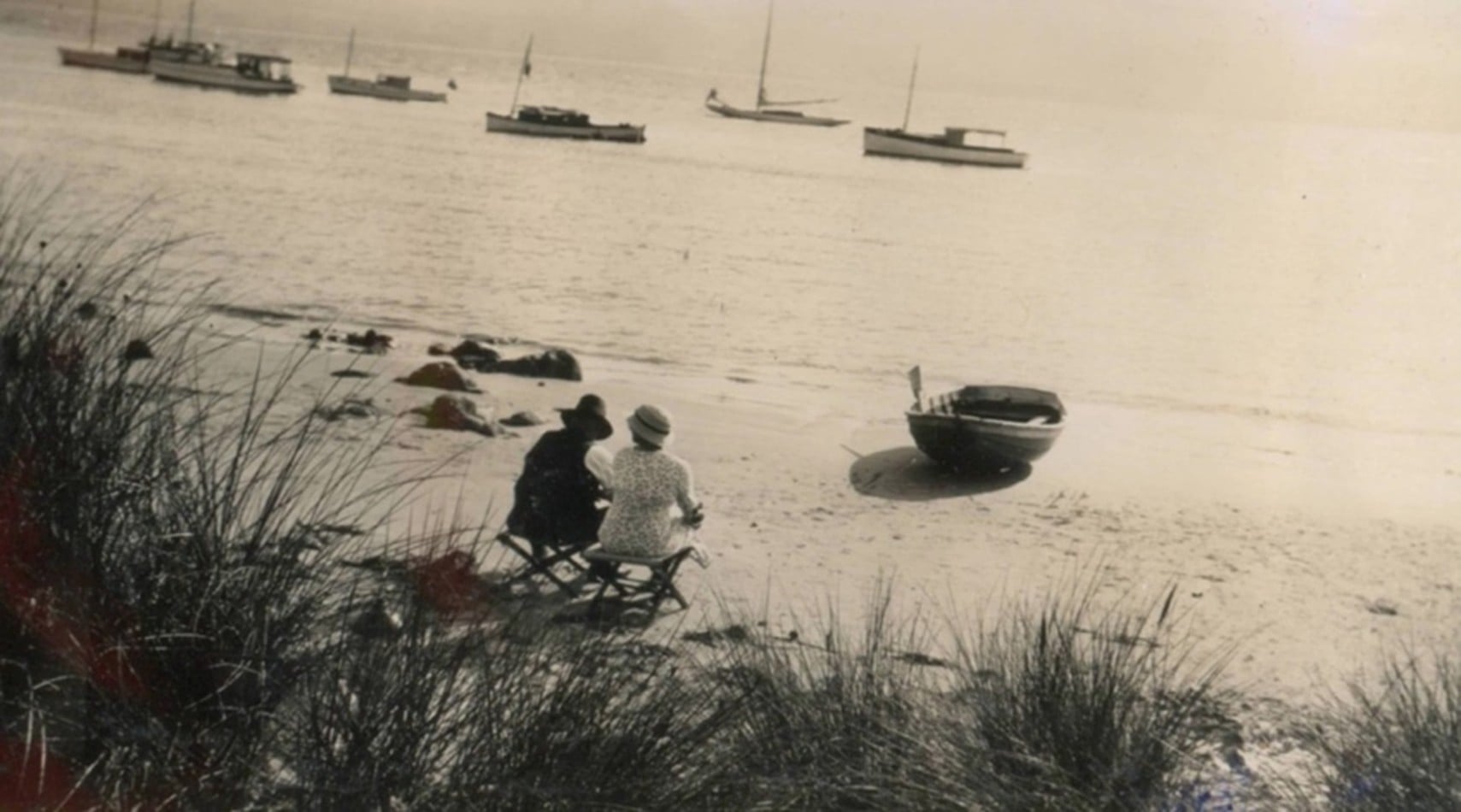
Image: Scene of a beach picnic, from the Maritime Photographic Collection of Maritime Museum Tasmania. Note: This organisation received MMAPSS funding in 2024, to rehouse significant photographic material which documents the maritime life of Hobart during the 19th and 20th centuries
29. Webinar Exploring Maritime Technologies for the Pacific: Existing Solutions and Future Pathways
If you’re interested in this webinar hosted by the Micronesian Center For Sustainable Transport on Wednesday 8 April, 9am EST, register here
30. Ocean Decade Australia Releases White Paper, ‘Ocean in the Boardroom’
Nature and natural capital – across terrestrial, freshwater, atmospheric and ocean systems – are rapidly emerging as material governance, risk and strategic considerations.
Developed in collaboration with the University of Sydney, the paper explores how Australian boards are beginning to respond to these shifts, with a particular focus on ocean systems that underpin national prosperity, resilience and cultural identity.
You can read the white paper and join the growing conversation on how Australia’s boards can contribute to a thriving and sustainable ocean future.
31. Harbour Esplanade Revitalisation Project MMHN/CBRE
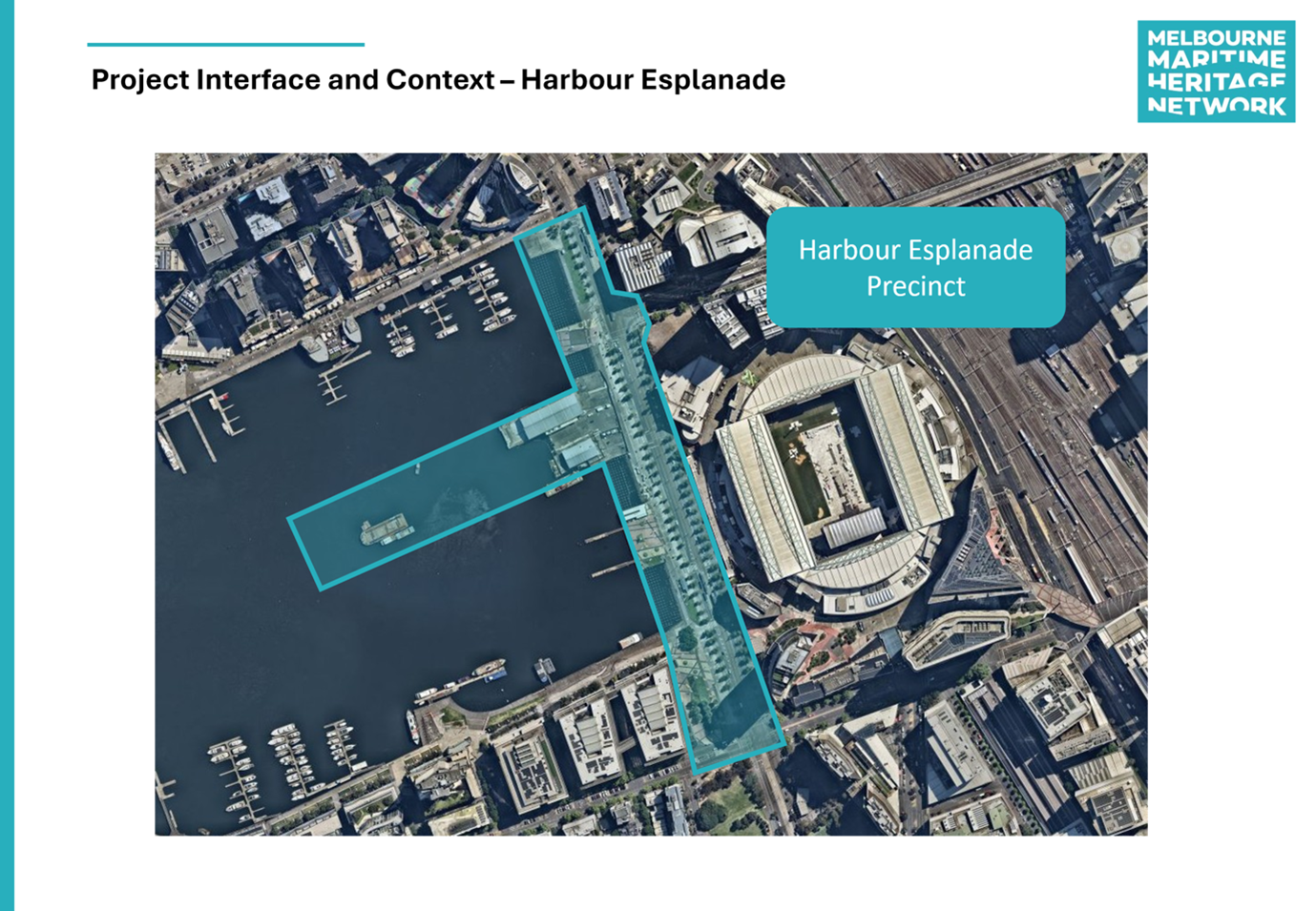
Progress! The Maritime Museum Heritage Network (MMHN) in collaboration with CBRE has proceeded to the next stage of assessment for the Harbour Esplanade Revitalisation Project.
This is an encouraging step forward in reinstating the integrity and status of Harbour Esplanade and in particular its unique capacity to generate longer-term permanent economic activation to benefit the entire Docklands Precinct community.
In mid-2025, MMHN with CBRE property advisory group made a formal submission to the Federal Government’s Urban Precincts and Partnerships Programs (UPPP). The specified aims of the grants program are to revitalise underutilised urban areas, strengthen local economies and create vibrant public places.
Having gained eligibility status, the submission will now be reviewed by an Independent Assessment Panel, which will make recommendations to the Federal Minister for Infrastructure, Transport, Regional Development and Local Government, Catherine King. Decisions on UPPP project funding proposals are expected in mid-2026.
A key element in the Harbour Esplanade Revitalisation Project is a Maritime Experience Centre (MEC) on the site of the demolished Central Pier. Located at the centre of Harbour Esplanade, the MEC will be a new community, cultural and educational destination celebrating Australia’s maritime heritage while showcasing the growing opportunities associated with the Blue Economy, i.e. our maritime past, present and future. The MEC will be a community infrastructure asset and a permanent venue for education, events and engagement with Australia’s maritime industry.
As one Docklands stakeholder recently observed, “Docklands has enormous potential and projects that can bring people, activities and purpose back to Harbour Esplanade can play an important role in shaping the precinct’s next chapter.”
As the UPPP assessment process continues, MMHN encourages the Docklands Precinct residents, businesses and organisations with an interest in the future of Docklands to express their support for the Harbour Esplanade Revitalisation Project and the MEC. You can do this by emailing the office of Minister King at Minister.King@mo.infrastructure.gov.au
Help us strengthen the Docklands Precinct and, importantly, reconnect people with the unique waterfront of Victoria Harbour.
Also: MEC concept
Until next time,
Jackie
Dr Jackie Watts OAM
Chair,
Melbourne Maritime Heritage Network
0400 305 323 or email info@mmhn.org.au