

Greetings all,
As 2025 drew to a sombre close in our island nation, as many of us retreat from our beaches, perhaps it’s time to reflect on what seems to have been an unusually hazardous summer of dangerous coastal weather conditions, resulting in beach-related drama and death. Serious coastal incidents unfolded around the coastline. Fatalities and ongoing search and rescue operations have arisen from the ever-present risks faced by beachgoers. It is instructive to remember our society was not always competent on, or in, the water. History tells us so. See below.
Contents
1. Event Invitation – Brig Cyprus
2. Beach Culture
3. Indigenous Ocean Prowess
4. Fishing Really Matters
5. Fishing Bans
6. Spirit of Tasmania – Sorry Saga
7. Maritime Folklore/Superstition
8. Panama Canal – Strife with Critical Waterway
9. Strait of Hormuz – Strife at Critical Waterway
10. HMAS Stirling Base – US Submarines
11. UK Submarine Deployment in WA
12. US Co-Dependency – AUKUS
13. Taiwan – AUKUS Security Pact Pillar II
14. Danish Data on Shadow Fleet
15. French Naval Action with the Shadow Fleet
16. Indian Action on the Dark Fleet
17. MarineTraffic Intelligence
18. Abandoned Seafarer Crews
19. Mission to Seafarers
20. Banana Alley
21. Offshore Wind Energy
22. Offshore Wind – Security Risk
23. Williamstown Alfred Graving Dock
1. Event Invitation – Brig Cyprus
Tim Stone in conversation with MMHN: The fate of the Cyprus and its pirate crew
A reminder that you are invited to join us on March 4 at 5 pm to hear more of the improbable, dramatic, evolving tale of the brig Cyprus — from colonial supply ship to pirate ship. Seizure, disappearance, rediscovery: the search goes on, the tale unfolds.
Late in 2025, news arrived of a remarkable gathering at Tokushima, on the southern coast of Japan, commemorating the 195th anniversary of Australia’s astonishing first contact with Japan in 1830, at a time when Japan was effectively ‘closed’ to the world under its strict isolationist policy (1639–1853), restricting foreign trade, banning most foreigners and prohibiting Japanese citizens from leaving.
When: 5 pm, Wednesday March 4 2026
Where: Waterways Branch, City of Melbourne, Suite 120 (upstairs), 425 Docklands Drive, New Quay Docklands.
How to get there: Tram routes 96, 70 or 30 to Docklands (last stop). Walk directly towards the water to the last building on the right. Use the lift or external stairs to the first floor (there will be signs).
2. Beach Culture
MMHN acknowledges the fascinating research by Anna Clark, Professor in Public History at UTS, as reported in The Conversation, ‘Beach swimming was once banned in Australia’.
Strangely, in our island nation ‘girt by sea’ in the 19th century, public perception was that ‘the beach was perilous’. Indeed, 19th century arrivals into Australia involved a hazardous, extended ocean voyage. ‘The ocean was a place where you drowned when ships went down, got taken by sharks, or simply succumbed to its depths. It took people.’
In 1810, Governor Lachlan Macquarie banned public bathing in and around Sydney Cove. The colonial bathing prohibition was extended in 1838 to all towns in NSW ‘for the maintenance of the public peace and good order’. It was incorporated into the Colony’s Police Act: ‘It shall not be lawful for any person to bathe near to or within view of any public wharf, quay, bridge, street, road or other place of public resort within the limits of any of the towns aforesaid between the hours of six o’clock in the morning and eight in the evening.’
Lawful sea-bathing occurred off beaches or piers, took place behind privacy screens and in segregated areas away from public gaze, or at dawn and dusk during the middle decades of the 1800s. Swimming races and demonstrations were held in places designated for segregated swimming, like Robinson’s Baths in Sydney’s Woolloomooloo Bay, or St Kilda Baths in Melbourne.
Australia’s swimming culture did not evolve by accident: it was actively nurtured by swimming advocates and public education programs. ‘Our attitudes to swimming and beach-going have shifted according to social values and politics.’ In relation to beaches, our behaviour continues to evolve. A recent study by Royal Life Saving Australia points to a beach swimming culture in decline.
See: Children’s Swimming & Water Safety Skills: Teacher and Parent Perceptions
Also: Beach swimming was once banned in Australia. How did it become a treasured pastime?
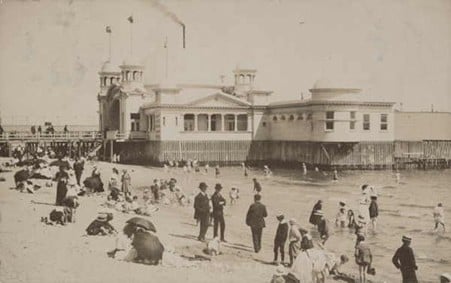
Image: Swimming races and demonstrations were held at places like the St Kilda Baths (pictured in 1910). Credit: State Library Victoria.
3. Indigenous Ocean Prowess
No surprise that First Nations coastal people in warm tropical northern waters engaged closely with the sea. Yet Indigenous coastal people living close to the chilly southern ocean also demonstrated prowess evident to colonial settlers.
In 1836 William Govett wrote in the Saturday Magazine, ‘The swimming and diving feats of First Nations men and women were frequently commented on by colonists and observers. Aboriginal people are bold and surprisingly expert, both in swimming and diving.’
In 1843, the missionary James Backhouse described Aboriginal women in Lutruwita (Tasmania) diving for crayfish, ‘often using the long stems of the kelp to enable them to reach the bottom; these they handle as dextrously as a sailor would a rope in descending’.
And in Lieutenant William Dawes’ famous Dharug wordlist from 1790–91, he recorded the term ‘bóg’i’ meaning to bathe or swim, which is still in use.
See: William Dawes’ Notebooks on the Aboriginal Language Sydney, 1790-1791
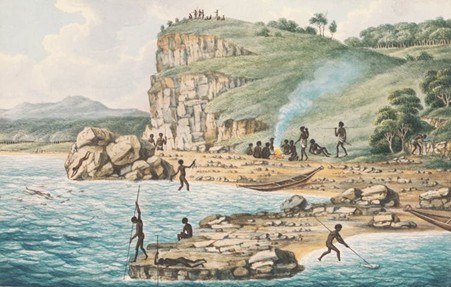
Image: Aboriginal Australians spearing fish and diving for shellfish, New South Wales, ca. 1817. Credit: Joseph Lycett, National Library of Australia
4. Fishing Really Matters
Fishing carries significant economic clout. Alarm is warranted. Illegal overfishing is a real threat to the fisheries ecosystem.
Journalists Rosanne Maloney and Adam Stephen report ‘Never [before] seen magnitude’ of foreign vessels in Far North Queensland, as government defends border security. In the last two weeks, Australian Border Force has intercepted at least five alleged Indonesian fishing vessels in the Torres Strait Islands.
Regional Council Mayor Phillemon Mosby points to an escalation of illegal foreign fishing and border breaches over the past 18 months. Breaches by PNG fishers have increased, resulting in island residents feeling increasingly unsafe.
Prime Minister Anthony Albanese claims that the Federal Government is devoting ‘record funding’ to tackle the problem of illegal foreign fishing. Federal investment and surveillance have increased. Two operations, Leedstrum (launched 2023 in WA northern waters) and Lunar (launched in 2024 in NT waters), are already targeting illegal fishing across northern Australia. Many landings by illegal fishers are occurring amid growing concern in remote communities. Phillemon Mosby says locals need to be better equipped to tackle fishing threats. ‘This is not just about safety and security of people — this is about the preservation of our culture. This is the preservation of our marine resources … what sustains my people living in the islands.’
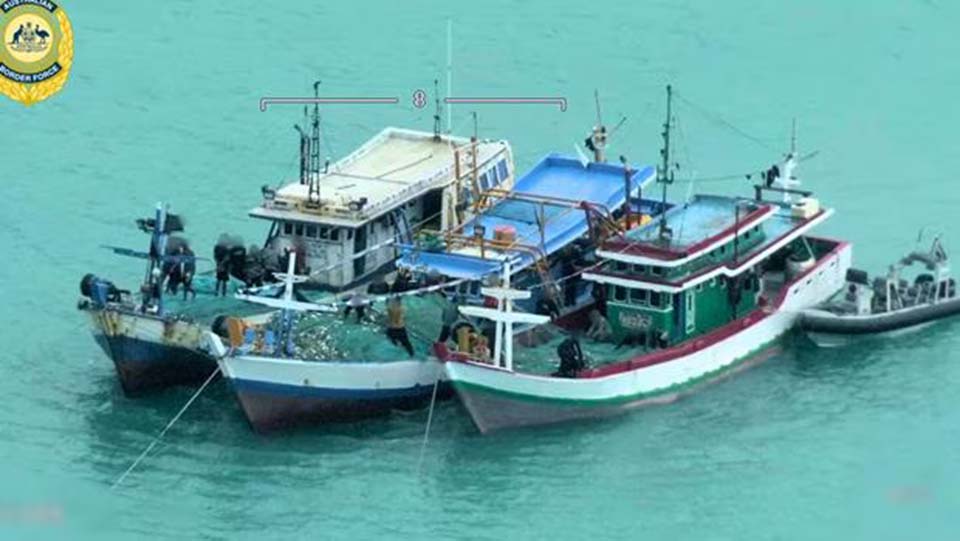
Image: ABF intercepted four Indonesian fishing vessels on January 24. Credit: ABC News.
5. Fishing Bans
WA’s demersal fish species are under serious threat. Statewide management changes have been announced for demersal scale fish. Such is the alarm that the WA Government recently announced the controversial closure of commercial and recreational fishing to prevent a collapse in the populations of under-threat species, such as popular dhufish and pink snapper.
Fishing for these demersal (bottom-dwelling) species has been closed along a 900-kilometre stretch of south-west coastline. Reopening the area is planned for spring 2027, but for recreational fishing only. One additional measure stands out: once the fishery opens, large ‘no-take’ demersal recovery zones are proposed where all bottom fishing will be banned.
While no-take zones are a key part of Australia’s conservation strategy, they are more often used to create marine parks rather than to improve fisheries. Recent research suggests that creating ‘no-take’ areas, combined with standard fisheries management in the areas that remain open to fishing, can increase overall numbers of spawning fish. This means greater catch rates for fishers in surrounding areas.
See: Plummeting fish numbers triggered controversial fishing bans in WA
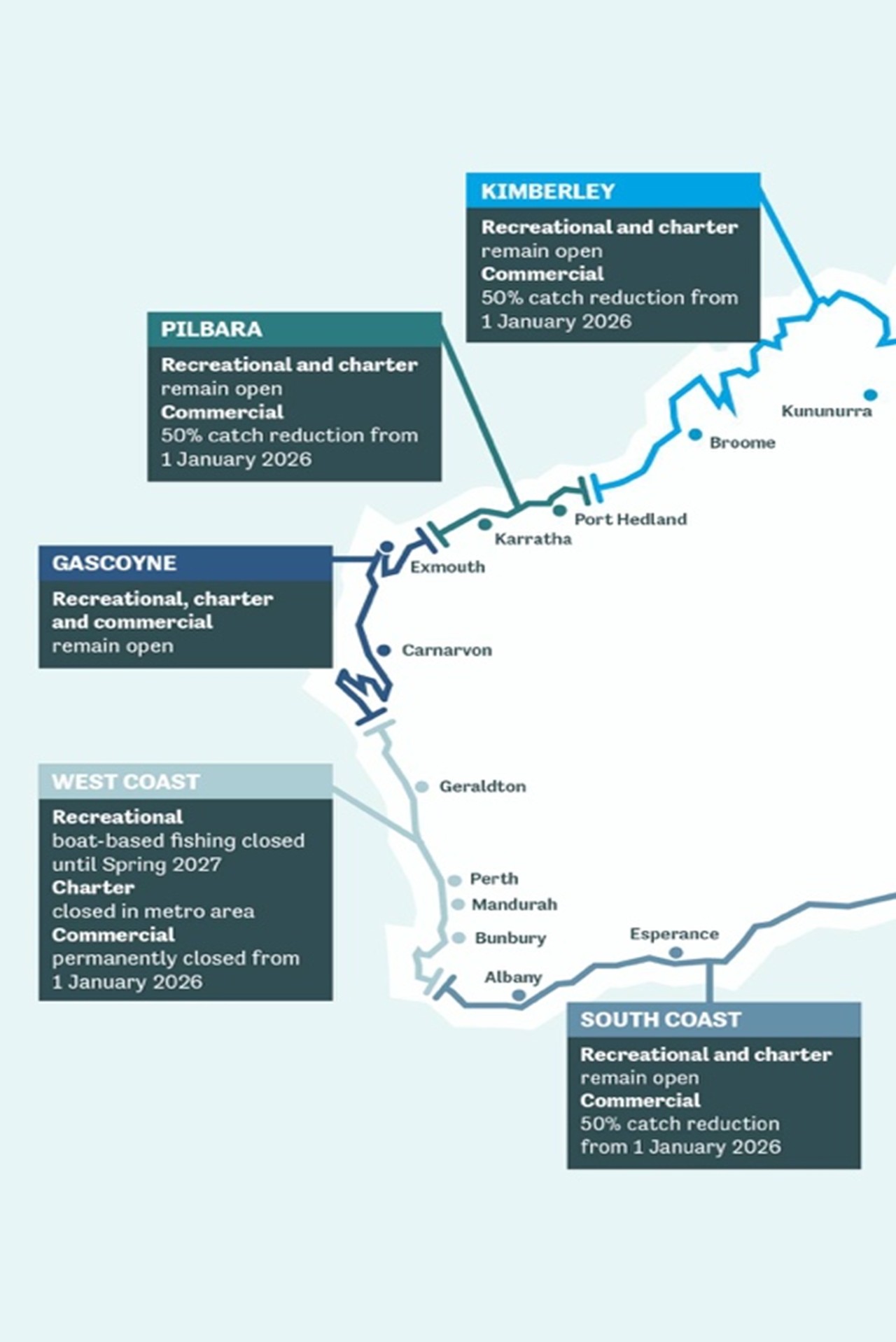
Image: WA government website
6. Spirit of Tasmania – Sorry Saga
This is an excellent but depressing analysis. As the years pass, most of us will have lost track of the TT-Line implausible saga. Reporter Nick Feik of The Monthly presents an in-depth analysis of ‘How the Spirit of Tasmania became the greatest infrastructure disaster in the state’s history’.
Feik describes the unique relationship embodied in the ferry service: it is a lifeline for Tasmanians, an umbilical cord across Bass Strait transporting tourists and goods that keep the state functioning.
In June 2024, with the new ships already almost three years overdue, ‘despite the assurances of close collaboration with TasPorts, TT-Line radically underestimated the extent of the necessary work’. Not until seven years after commencing the project did TT-Line and the Tasmanian Government finally grasp the reality that the ships they ordered were too big for the port’s berths.
The litany of woe continues. Once completed, where would the vessels go until Tasmanian berths were available? Initially the vessel was sent to Scotland, incurring an eventual cost of $800,000 per month in port fees. TT-Line appointed a shipbroker to investigate possible lease options. The delays, now six years, were estimated to cost the Tasmanian economy $3 billion.
In May 2025, significant acceleration of Devonport berth work was reported and was expected to be completed by October 2026, 14 months sooner than previously announced. The tally of cost blowouts has been both confusing and eye-watering — from $375 million to $493 million.
But there is more – a technical fault relating to liquefied natural gas systems on board both new ships emerged. TT-Line had planned to sail the completed Spirit IV to Hobart for a final fit-out. However, during a weather-related delay, the fault became evident.
In August 2025, Spirit of Tasmania IV finally arrived in Tasmania. The fit-out took place in Hobart; the vessel then moved to Point Henry in Geelong. Regrettably, another new problem emerged: Feik describes ‘a mismatch between the ships’ hulls and the new wharf fenders in Devonport’.
To rectify this new problem, ‘TT-Line had made changes to the specifications for fenders at the Devonport wharf in 2023 without proper consultation with TasPorts’.
Feik concludes, ‘At the time of writing, it is impossible to envisage what new catastrophes will befall the Spirit of Tasmania replacement project.’ Spirit IV remains in Geelong, while Spirit V is berthed in Scotland. TT-Line remains confident that they will have their first sailings in October.
See: Ships of fools
Also: How did Tasmania’s Spirit ferry operator make a $9 million mistake?
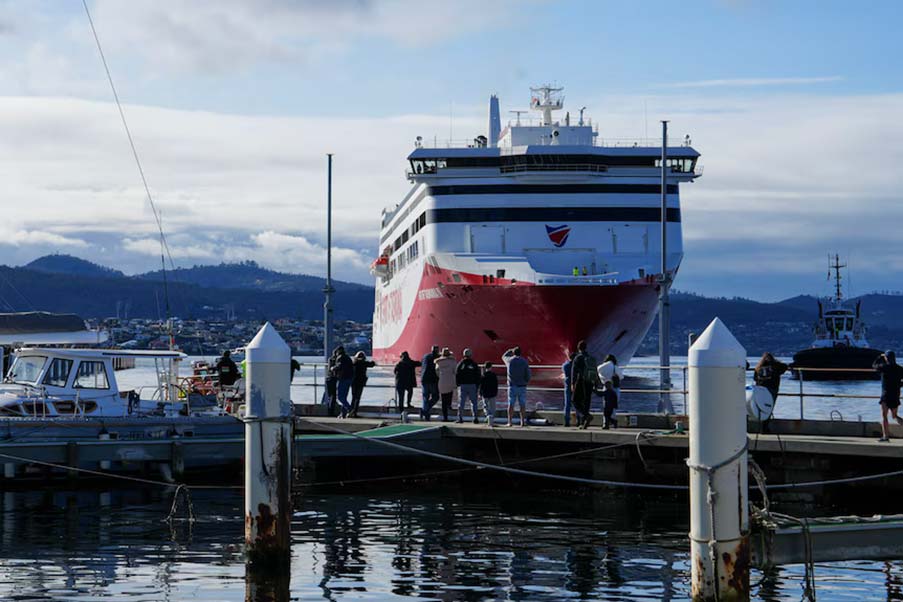
Image: People gather to watch Spirit of Tasmania IV dock. Credit: ABC News (Monty Jacks).
7. Maritime Folklore/Superstition
Seafaring is inherently hazardous, and human capacity to exert control is illusory. It is perhaps no surprise that superstition, and/or an appeal to a ‘higher power’, has been ever present in the characteristics of seafarers over the ages.
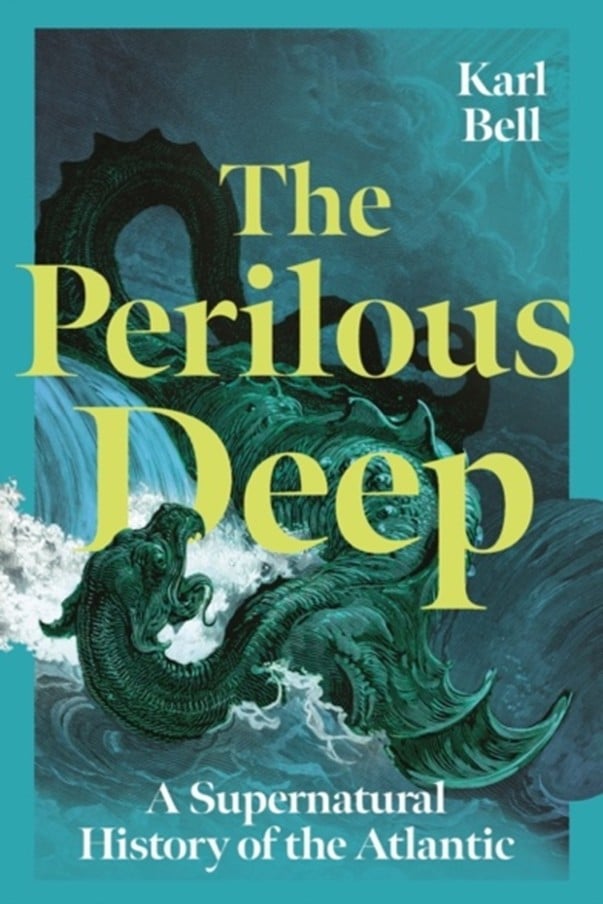
An academic at Portsmouth University (UK), Dr Karl Bell, explains in The Conversation, ‘The 19th-century maritime superstitions that were believed to protect men at sea’. Maritime folklore is defined as a body of beliefs, practices and stories offering insights into how seafarers of the 19th century viewed (and who knows, perhaps today?) and related to working in the ocean environment.
Much of maritime folklore spoke to anxieties about the temperamental ocean and storms, which boiled down to a fear of disaster and drowning. According to Bell, folklore was exchanged between multinational crews as a way of addressing fears, longings and hopes.
By way of protection against fate, 18th- and 19th-century seafarers armoured themselves with magical charms. For example, possessing a caul (the membrane that protects a baby in the womb) while on board was believed to protect a seafarer from drowning. Nineteenth century newspapers advertised such items. ‘Three advertised in the Liverpool Mercury in 1873 were priced from 30 shillings to four guineas’, no small amount for a common mariner to pay for an idle ‘superstition’.
A rich system of omens and predictions emerged in seafaring relating to behaviour and even words. For example, ‘pig’ and ‘rabbit’ might provoke the ocean or attract bad luck. Whistling aboard ships was believed to stir winds or gales. Maritime ghost stories and tales of ghost ships – most famously The Flying Dutchman – served as reminders of the haunting prospect of death at sea.
Bell has a new book on this topic, The Perilous Deep: A Supernatural History of the Atlantic, a study of the imaginative and supernatural world of seafarers.
See: The 19th-century maritime superstitions that were believed to protect men at sea
8. Panama Canal – Strife with Critical Waterway
You may recall recent reports referring to climatic, political and commercial changes adversely affecting use of this critical global maritime infrastructure. The ‘game’ changes once again.
Climate change: In some months, water supplies necessary to operate the locks were inadequate. So much so that a freight rail link was proposed to transfer freight unloaded from ships on one side of the canal to be reloaded onto ships on the other side. Now flooding appears to be causing strife.
Mike Schuler of gCaptain reports an abrupt reversal of the drought conditions which required vessel draft limits and constrained the number of shipping passages throughout 2023–24. This ended as a dangerous oversupply of water threatened canal operations.
The Panama Canal Authority promptly initiated preventive water discharge from the Gatún Dam. Gatún Lake reached 88.93 feet, well above the five-year February average of 85.3 feet. Influx of water to the canal is essential, but excess creates operational risks.
See: Panama Canal Opens Floodgates as Gatun Lake Reservoir Hits Maximum Capacity
Political tension mounts: The Panama Canal has become front-line terrain in the US–China trade confrontation. Last month, Panamanian courts voided the CK Hutchison (Hong Kong) contract, aligning with US President Donald Trump’s campaign to curb Chinese influence over the Canal. CK Hutchison invests heavily in Panama and is a large employer in the region.
CK Hutchison’s control of Balboa (Pacific entrance) and Cristobal (Atlantic entrance) is considered strategic in relation to the Canal, the main seaborne trading route into the US. The Panamanian court found that the contract contravened Panama’s Constitution.
The implications of this decision are politically and commercially murky. The contract represents only 5% of CK Hutchison’s port holdings but appears increasingly critical as the company negotiates sale of assets to BlackRock. Stay tuned.
See: Implications of Panama Court Ruling to Quash CK Hutchison Port Concessions
9. Strait of Hormuz – Strife at Critical Waterway
The Strait of Hormuz lies between the Persian Gulf and the Gulf of Oman. It is the only sea passage from the Persian Gulf to the open ocean and has, over centuries, been one of the world’s most strategically important choke points.
During a second round of talks between the US and Iran about Iran’s nuclear program, Jamey Keaten and Stephanie Liechtenstein of AP News reported that Iran announced a temporary closure of the Strait of Hormuz — the first time Iran has formally announced closure of the key international waterway through which 20% of the world’s oil passes.
Iran said its Revolutionary Guard began a drill early Monday in the Strait of Hormuz, the Persian Gulf and the Gulf of Oman — crucial international shipping routes. Iran often carries out military drills in the Strait that can impede maritime traffic, but the announced closure went a step further for ‘safety and maritime concerns’. During the war with Iraq in the 1980s, Iran mined the waterway.
See: Iran says it temporarily closed the Strait of Hormuz as it held more indirect talks with the US
10. HMAS Stirling Base – US Submarines
Australia is investing approximately $5.6 billion in HMAS Stirling to develop a training centre, housing, upgrades to the submarine pier, a facility for handling radioactive waste, and supporting power infrastructure.
The expansion of HMAS Stirling naval base in Western Australia is set to host US nuclear submarines in the event of, for example, armed conflict with China over Taiwan. According to the Wall Street Journal, up to four submarines are planned to be stationed at the base in coming years, with the first expected to arrive in 2027.
This deployment forms part of the defence pact under the UK–Australia–US trilateral alliance (AUKUS) in the Indo-Pacific region.
See: WSJ: US secures backup base in Australia amid potential China conflict
In late 2025, USS Vermont, a US Virginia-class attack submarine, docked at the base for around four weeks, during which US and Australian personnel collaborated on maintenance tasks.
From 2027, up to four US nuclear-powered submarines will be deployed at the naval base on a rotational basis under AUKUS Pillar I, while Australia awaits its own nuclear submarines ordered from the US. Currently, US submarines are based on Guam.
11. UK Submarine Deployment in WA
Signalling a historic step in Australia’s capacity to operate and maintain conventionally armed, nuclear-powered submarines, HMS Anson arrived at HMAS Stirling on February 22 for the first-ever month-long maintenance activity on a UK nuclear-powered submarine in Australia.
The ABC reports that UK officials are hailing this as proof of their ‘unwavering’ and ‘water-tight’ commitment to the AUKUS pact. HMS Anson is reportedly the Royal Navy’s only fully operational Astute-class attack submarine; others are undergoing maintenance elsewhere.
See: British nuclear-powered attack sub HMS Anson arrives in Perth for training exercises
Watch: UK Submarine Docks In Western Australia As Part Of Major AUKUS Project | 10 News
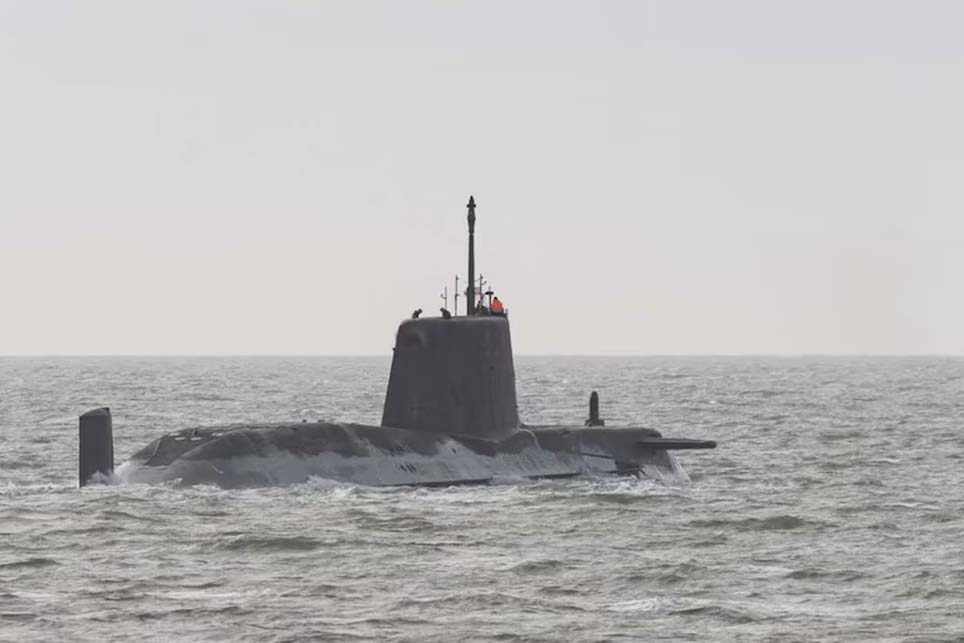
Image: The HMS Anson. Credit: British Royal Navy
12. US Co-Dependency – AUKUS
Co-dependency is key to AUKUS. The Sydney Morning Herald reporter Matthew Knott quotes US Democratic Senator Tim Kaine, who expressed confidence in AUKUS and US provision of nuclear-powered submarines: ‘No other choice’: ‘100 per cent’ chance Australia and US will deliver on AUKUS.
He suggested this provision is a necessity for US security — an essential response to strengthening Chinese maritime capability. However, to increase submarine production rates, skills shortages must be addressed.
The Australian reports ‘Worker shortage will bite AUKUS amid $55b spend’. Australia has committed an initial $3.9 billion contribution towards a proposed $30 billion shipyard for nuclear-powered submarines at Osborne in South Australia, creating 4,000 jobs during construction and employment for 5,500 people to build the fleet of AUKUS-class submarines.
Infrastructure Partnerships Australia has warned that the shipyard project is likely to be hindered by labour shortages, competing with other major infrastructure projects.
See: Worker shortage will bite AUKUS amid $55bn spend
13. Taiwan – AUKUS Security Pact Pillar II
Journalist Michael Read of the Australian Financial Review reports that Lowy Institute non-resident fellow Jennifer Parker says it is unlikely that Taiwan’s request to join AUKUS Security Pact Pillar II will be successful.
The request has come from Taiwan’s de facto ambassador to Australia, Douglas Hsu, who warns that China’s coercive behaviour should ring ‘alarm bells’.
Mr Hsu notes: ‘Last year, they [China] launched long-range missiles into the South Pacific, and earlier this year they sent naval vessels surrounding Australia in February and March.’ He continued, ‘I don’t think they have any business ties with Antarctica. So why do they send their naval ship here in this region? … that is certainly alarming to all the countries in the region.’
In early 2025, multiple Chinese People’s Liberation Army Navy vessels – including frigates, cruisers and intelligence-gathering ships – operated within Australia’s Exclusive Economic Zone, particularly off the east coast, near Tasmania and the north-west shelf. These operations, including live-fire exercises in the Tasman Sea, are consistent with international law but closely monitored by the Australian Defence Force.
Parker says Australia and the UK have indicated that AUKUS is not a club that can be joined, and Australia’s adherence to a ‘One China’ policy makes Taiwan joining AUKUS unrealistic.
See: Taiwan asks to join AUKUS, warns on China coercion
Note: Pillar II of AUKUS – the technology stream – commits Australia, the UK and the US to jointly accelerate development of advanced capabilities including quantum computing, artificial intelligence, undersea warfare and hypersonic missiles. Taiwan is not seeking nuclear-powered submarines, the focus of Pillar I.
14. Danish Data on Shadow Fleet
At the entrance to the Baltic Sea, Denmark is at the ‘front line’ of EU enforcement action on a number of concrete measures to strengthen maritime safety and the protection of the marine environment and seafarers.
In 2025, there were 292 voyages by EU-sanctioned shadow fleet tankers in Danish waters. Clearly, global sanctions aimed at choking off Russian revenue for its war economy have not been totally successful. Crude and refined products continue to transit crucial maritime corridors.
See: Denmark Records 292 Russian ‘Shadow Fleet’ Tankers Passing Through Danish Straits
15. French Naval Action with the Shadow Fleet
See video of French forces seizing Russian shadow tanker ‘Grinch’ off the coast of Spain recently. At the current rate of about three seized tankers per week, it would still take seven years to detain Russia’s entire fleet.
France says it has released an oil tanker suspected of being part of Russia’s sanctions-busting ‘shadow fleet’ after its owner paid a fine.
French Foreign Minister Jean-Noël Barrot said the vessel, Grinch, was ‘leaving French waters’ on Tuesday having paid a penalty of ‘several million euros’.
The tanker was seized by French forces in the Mediterranean in January and then diverted to the port city of Marseille.
See: France releases suspected Russian ‘shadow fleet’ tanker after fine paid
16. Indian Action on the Dark Fleet
In waters off Mumbai, there has been the first sign of Indian direct action in relation to the Russian shadow fleet. Reported via gCaptain, The Indian Coast Guard seized three tankers said to be internationally involved in oil smuggling and known to ‘frequently change identity’.
Many dark fleet tankers have sub-standard documentation, improper or fake flag registrations and poor maintenance, posing security and maritime safety risks.
Although the seized vessels were not officially named, photos identified the Chiltern, Asphalt Star and Stellar Ruby on the ship-tracking MarineTraffic intelligence platform.
See: India Seizes Three Tankers in First Action Against Dark Fleet
17. MarineTraffic Intelligence
Originally developed as an academic project at the University of the Aegean in Ermoupoli, Greece, and first trialled in late 2007 by Professor Dimitris Lekkas, MarineTraffic has grown significantly.
In 2022, MarineTraffic made available a free AIS processing tool under a Creative Commons licence. In February 2023, it was sold to data and analytics company Kpler.
MarineTraffic is a maritime analytics provider offering real-time information on ship movements and vessel locations in harbours and ports. Its database includes details such as where vessels were built, dimensions, gross tonnage and International Maritime Organization (IMO) number.
Users can submit photographs of vessels, which other users can rate. The basic MarineTraffic service can be used at no cost; more advanced functions, such as satellite-based tracking, are available subject to payment. The site has six million unique visitors each month.
See: MarineTraffic
Also: kpler
18. Abandoned Seafarer Crews
Leaving aside the global political significance of shadow fleet operations, they generate disaster on a human scale. They are consistently linked to poor seafarers suffering acute disadvantage.
David Waddell, Business Reporter for the BBC, describes ‘The shadowy world of abandoned oil tankers’. Crew members are left without passports, money, food or means of return home — a modern version of slave labour. Sometimes ships are abandoned in port; others are left at sea.
In 2025, reports state: ‘Over the past year there has been a big rise in the number of oil tankers and other commercial ships being abandoned around the world by their owners.’
In 2016, 20 ships were abandoned globally, according to the International Transport Workers’ Federation (ITF). By 2025 that number had ballooned to 410, with 6,223 merchant seamen affected.
The growing prevalence of so-called shadow fleets may be contributing to the increase. Shadow fleet vessels attempt to stay ‘under the radar’ to help countries such as Russia, Iran and Venezuela contravene Western oil sanctions.
In 2025, 1,125 Indian seafarers (18%), 539 Filipino seafarers and 309 Syrian seafarers were affected. In September 2025, the Indian government blacklisted 86 foreign vessels over seafarer abandonment and rights violation issues. Investigations found many had untraceable owners or received no response from flag states.
See: The shadowy world of abandoned oil tankers
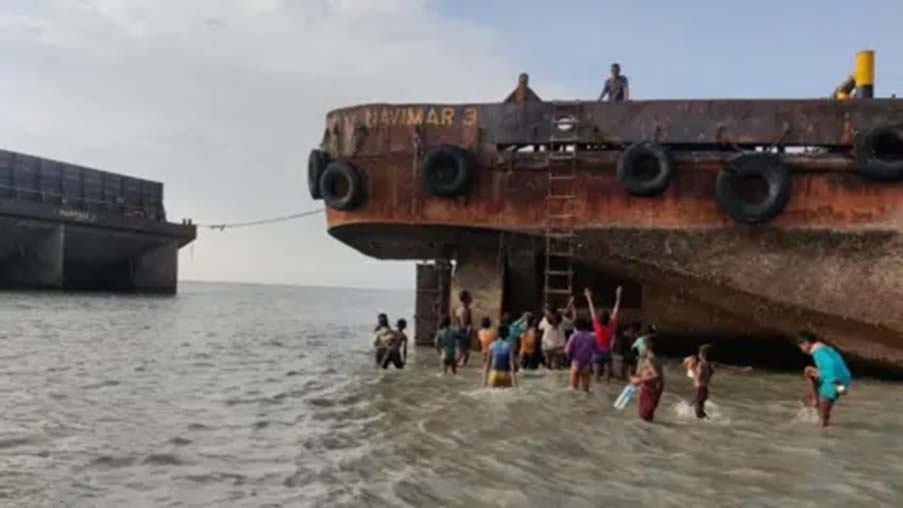
Image: An oil tanker. Credit: BBC
19. Mission to Seafarers
Helping such seafarers in need around the globe are the many Mission to Seafarers services. MMHN is delighted to find the ABC reporting on the excellent work of the Mission to Seafarers continuing on Northbank in the iconic premises between the Birrarung (Yarra) and Flinders Street.
Worldwide, 1.89 million people are employed on marine vessels sustaining maritime trade upon which Australia is utterly dependent.
At the Port of Melbourne, Australia’s largest container port, an estimated 30,000 seafarers dock each year – often for days or even hours – unlike 19th century seafarers who stayed in port as long as it took to unload, load and set sail again.
Mechanisation and escalating berthage fees reducing time in port, sometimes to merely three hours, has not diminished the hardship for seafarers working around the globe. ‘If things go wrong, who do you go to?’
See: At Melbourne’s Mission to Seafarers, a small team keeps an invisible global workforce afloat
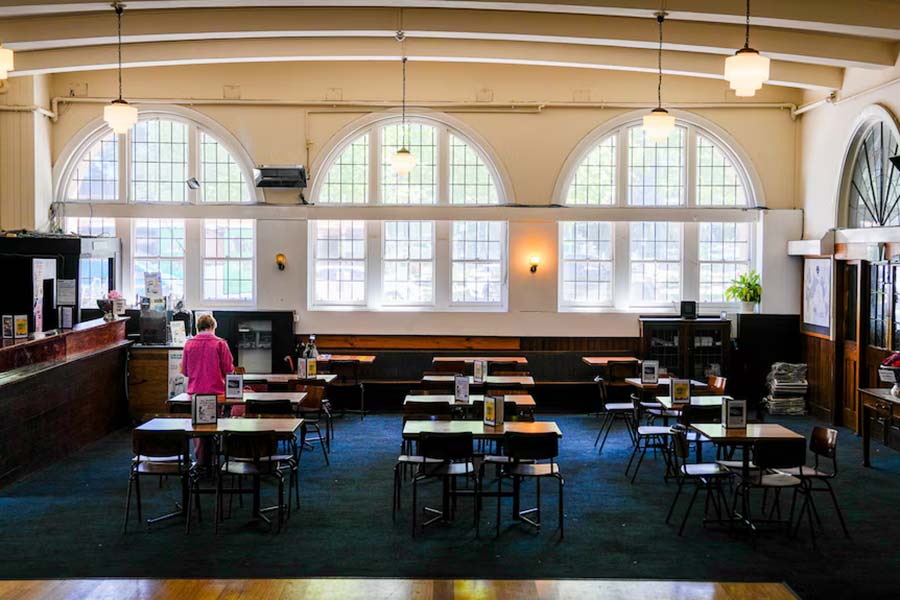
Image: View inside the Mission to Seafarers. The Flying Angel Club is committed to the welfare of those who live and work on the seas. Credit: ABC News Danielle Bonica.
20. Banana Alley
Have you ever wondered why the group of vaults between the Birrarung/Yarra River and Flinders Street, near the corner of the Queen Street Bridge, is called ‘Banana Alley’? It is Stop 6 on the Northbank Heritage Trail.
For further information, see: https://mmhn.org.au/heritage-trails/northbank/stop6/
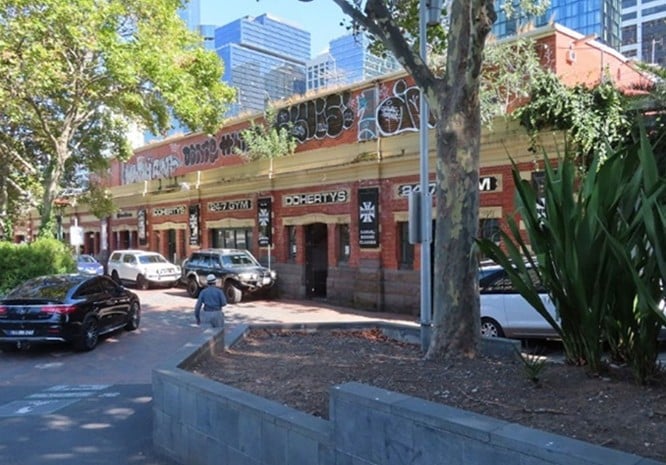
Image: Banana Alley from the river. Credit: MMHN Member Jeff Malley 2022.
A reminder that you can now access information on all Melbourne’s major maritime heritage sites along Northbank, Southbank and Victoria Harbour.
21. Offshore Wind Energy
Breaking new ground in Australia’s first offshore wind industry auction, due in August 2026, follows a meticulous process including development of the regulatory framework and selection of zones in 2022.
In December 2025, Australia’s Energy Ministers provided in principle support for the Electricity Services Entry Mechanism (ESEM), providing a pathway for new renewable energy projects, including offshore wind, to support Victoria meeting renewable energy targets.
Minister for Energy and Resources Lily D’Ambrosio announced the Request for Tender (RFP) as the first step toward reaching 2 GW of installed offshore capacity by 2032, 4 GW by 2035, and 9 GW by 2040.
Minister D’Ambrosio stated: ‘We’ve always said Victoria will host the country’s first offshore wind industry and that’s why Victoria pushed for the ESEM to accommodate technologies including offshore wind.’
The Star of the South project, which first proposed 2.2 GW, is poised to be an early leader. Challenges in this new energy sector continue. While several key projects have been offered feasibility licences, others – including plans from RWE, AGL and BlueFloat – have been withdrawn.
The Federal Government announced in 2022 that Gippsland would become the nation’s first offshore wind zone and has since awarded feasibility licences to 11 offshore wind projects off the coast of Gippsland.
Federal Minister for Climate Change and Energy Chris Bowen has announced a preliminary decision not to offer feasibility licences in the Bass Strait due to a lack of competitive bids.
See: Victoria’s First Offshore Wind Auction To Go Live In August
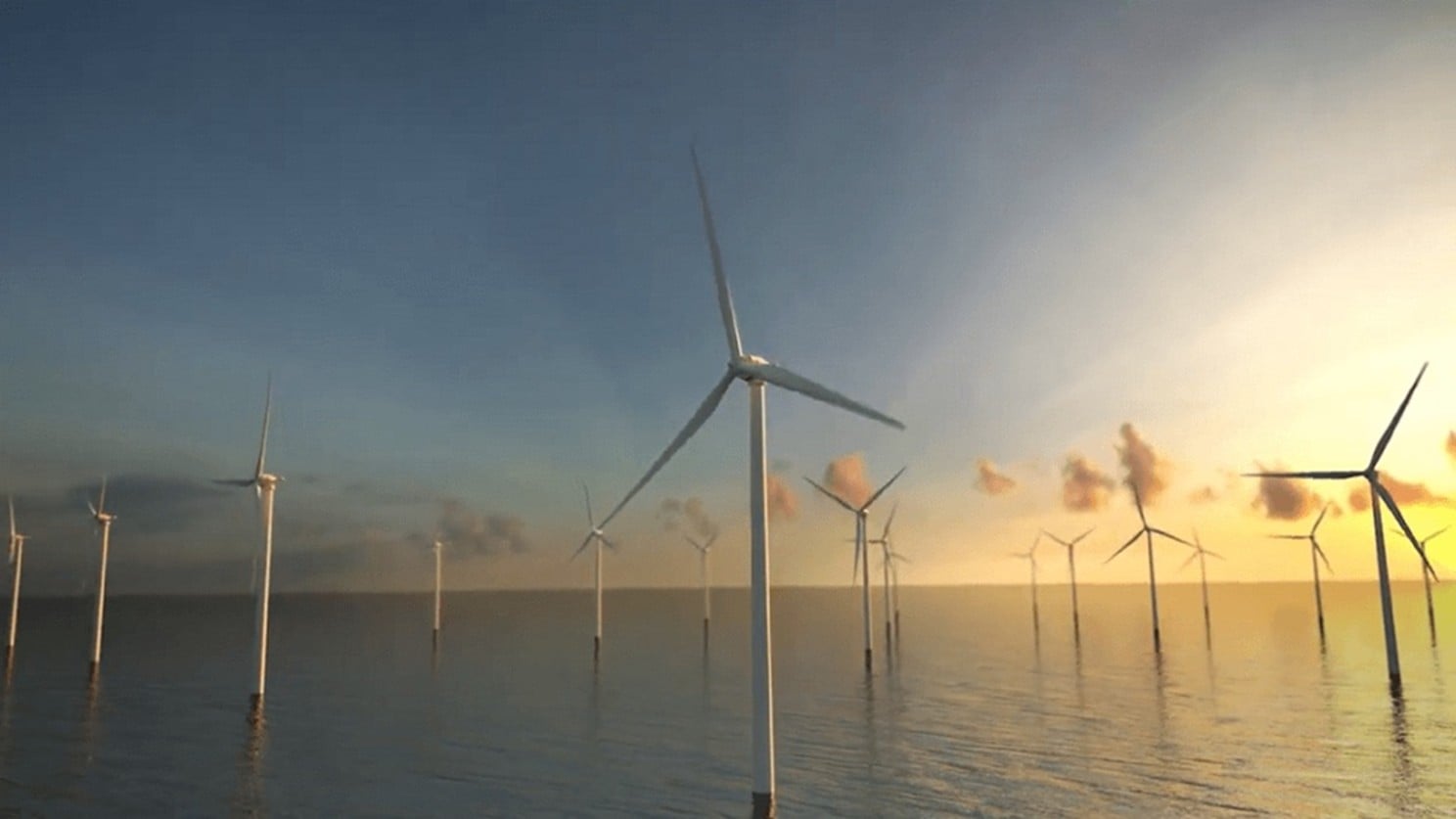
Image: Star of the South
22. Offshore Wind – Security Risk
This is a disturbing aspect of what many perceive as important new energy progress. This is not an argument against offshore wind in principle. It is an argument against fragmented decision-making.
Maritime domain awareness is a recurrent security issue with offshore wind farms. Turbine towers and rotating blades generate radar clutter that can degrade detection and tracking of surface vessels and low-flying aircraft.
Alex O’Brien warns in The Strategist: ‘Projects involving systems made or controlled by Chinese companies should be prohibited near critical ports and undersea infrastructure, naval facilities and places where Australian and allied submarines are most likely to operate. Australia should pause offshore wind developments until it completes a comprehensive national security risk assessment of them.’
Across the US and Europe, offshore wind is increasingly being reassessed as strategic infrastructure, with implications for defence, intelligence, cybersecurity and alliance operations. Sweden cancelled 13 offshore wind projects after its armed forces assessed risks to national defence as unacceptable. Germany has raised concerns about projects involving China-made turbines operating near NATO waters and critical infrastructure.
It cited surveillance and supply-chain vulnerabilities. Keeping turbines going requires granting their manufacturers – typically Chinese firms – ongoing physical and digital access. This includes sub-system manufacturers and also applies to onshore windfarms. In the US, offshore wind construction has been paused and reassessed on national security grounds. Again, interference with surveillance sensors was a factor. Australia needs to fully understand what has driven the US decision.
A worldwide security concern about offshore windfarms relates to acoustic environments. Defence commentary and scientific research have repeatedly raised the issue of offshore wind infrastructure altering ambient noise conditions and potentially affecting sonar-based detection systems. Studies of operational turbine noise and passive acoustic surveillance show that wind farms introduce persistent sound into the marine environment, which may complicate the performance of seabed sensors and the acoustic systems used by submarines when monitoring surface and undersea activity. This concern appears consistently in naval-acoustics research, policy analysis, and security commentary, particularly in the context of growing undersea threats (including autonomous submarines), the strategic focus on submarine warfare and the increasing need to protect offshore and subsea infrastructure from sabotage.
See: Offshore wind can be a security hazard. Australia needs a risk assessment
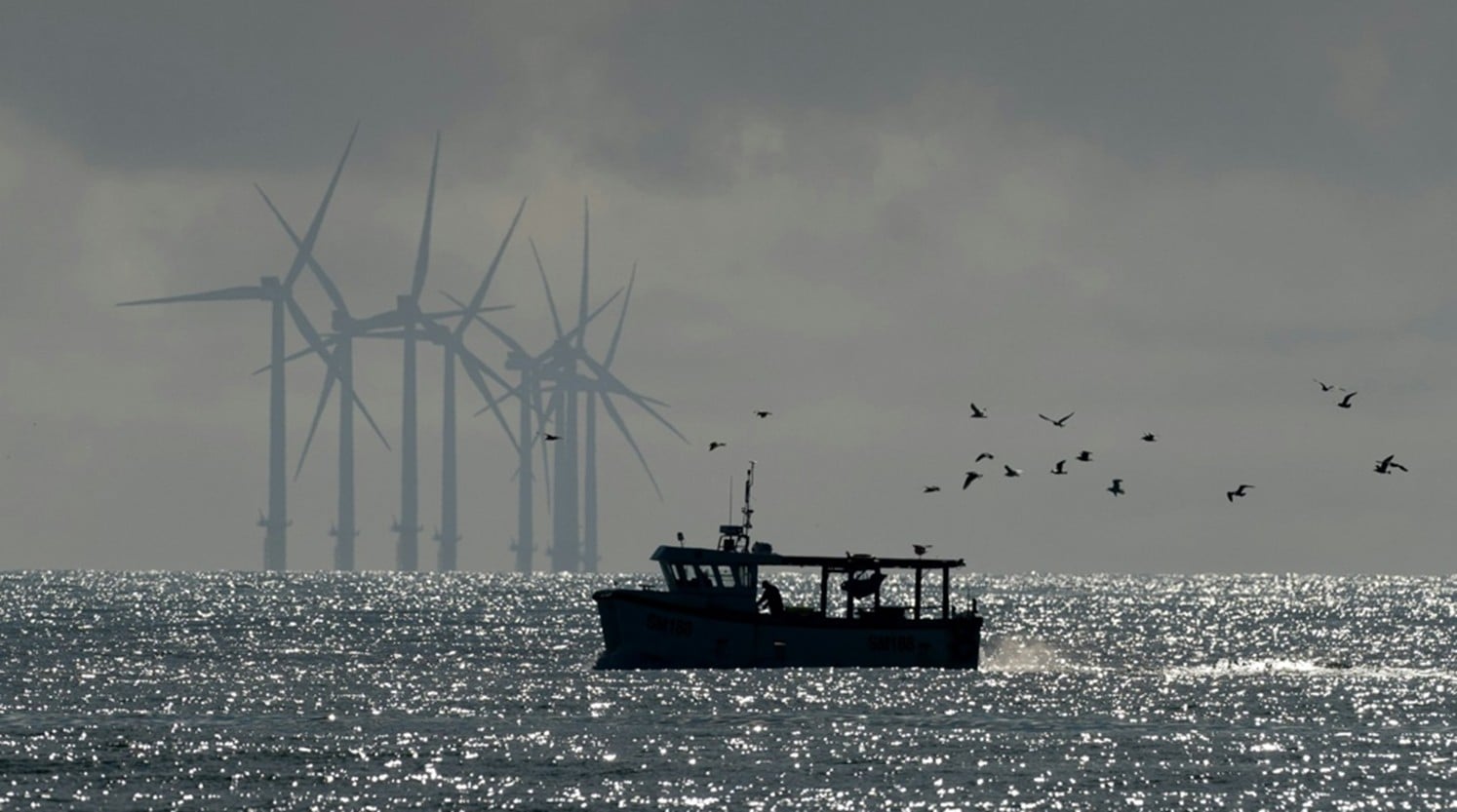
Image: Offshore wind turbines. Credit: ASPI The Strategist.
23. Williamstown Alfred Graving Dock
MMHN highly recommends that, even if you are familiar with the Alfred Graving Dock, you view this splendid YouTube video again and wonder anew.
This is a remarkable example of 19th century precision maritime infrastructure engineering. It serves to remind us of Victoria’s optimism and ambition in times gone by.
Our thanks to MMHN Member Tim Horton and Andrew Cohen for alerting us to this work.
See: History of the Alfred Graving Dock, Williamstown, Victoria
Until next time,
Jackie
Dr Jackie Watts OAM
Chair,
Melbourne Maritime Heritage Network