
Seasons Greetings from the MMHN Board
As 2025 draws to a close, we hope that you have enjoyed reading the MMHN Updates during the past year. We aim to present information on an astonishing breadth of maritime heritage and other related maritime sector topics – past, present and future.
Maritime enthusiasts and stakeholders support the work of MMHN through annual membership. If you are not already an MMHN member, we hope that you will become a member in 2026. The MMHN membership fee remains at $30 for Individuals, $50 for Associations and $300 for Corporates.
You may join online: https://mmhn.org.au/membership/membership-form/
A reminder that if you have a particular interest in a stated MMHN Objective or other maritime matter, please let us know.
See: https://mmhn.org.au/maritime-action/#objectives
Contents
1. Salmon Heritage
2. Norway’s Way with Salmon
3. Chinese Threat: Fishing Southern Ocean
4. Antarctic Krill Under Threat
5. Commission for the Conservation of Antarctic Marine Living Resources
(CCAMLR)
6. Container Evolution
7. Geelong Maritime Museum and Osborne House
8. Station Pier Cruise Operations
9. RSV Nuyina Hull Scrape Incident
10. Australia Re-elected to IMO
11. Mariana Trench – Earth’s Deepest Point
12. Ship Registration Issues – Seafaring capability
13. Wyuna Project Progress Report
14. UK Heritage Lottery – Maritime Heritage project funding
15. World Ocean Summit & EXPO
16. MMHN Gathering at Christmas
17. Seafarers at Christmas
1. Salmon Heritage
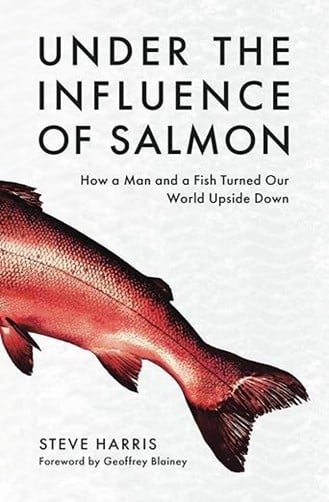
As the saying goes, ‘Where there is a will there is a way’, and in relation to introducing salmon fishing into colonial Australia, the ‘way’ proved to be arduous as well as successful. Given that recreational fishing is a circa $11 billion industry, a recent book should attract every recreational fishing enthusiast. Author Steve Harris writes in his book, entitled Under the Influence of Salmon, a tale of imagination, grand ambition, disappointment and perseverance which happened long before the vexed matter of commercial salmon farms in Tasmania arose. Over many years, 876,000 salmon eggs were shipped under sail from the UK to Tasmania, packed in ice and moss. The endeavour failed many times. In 1854, after many disappointments, the clipper Norfolk reached Melbourne after sailing for 85 days. Eighty percent of the eggs survived this first leg of the journey and then promptly sailed off across Bass Strait on a steam-powered naval vessel to Hobart!
See: Under the Influence of Salmon
2. Norway’s Way with Salmon
We are all familiar with the as yet unresolved environmental furore around the modern salmon farming in Tasmania. Interesting, perhaps, to contrast the latest efforts of industrial-scale fish farming in Norway. Norway operates the world’s largest fish farms, primarily for salmon, with major players like Mowi (world’s largest) and SalMar. Notably, these ‘plants’ raise 10,000 fish. Such ‘plants’ are not located in bays but out where ocean currents cleanse and fish are protected by mesh walls and lasers. The salmon pens are giant underwater net bags held by a floating ring typically 50 m in diameter (160 m circumference) and 20 – 40 m deep. Norway operates with the Maximum Allowable Biomass (MAB) regime, capping the total live weight at each site. After harvest, sites are ‘fallowed’ (left empty) for at least two months to break pathogen and lice cycles. The diagram below presents the life cycle of salmon and potential threats.
See: Video of Norway’s Fish Farm on X
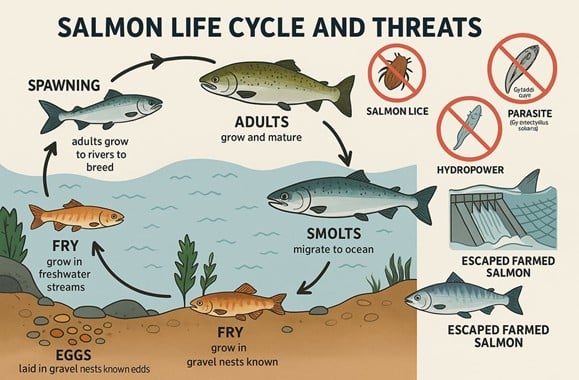
Image: Salmon life cycles. Source: ChatGPT / OpenAI, based on ecological sources (Norwegian Directorate of Fisheries, ICES, FAO reports on Atlantic salmon), August 2025.
3. Chinese Threat: Fishing Southern Ocean
MMHN recommends that you see the Australian Strategic Research Institute’s (ASPI) alarming report from 2024, entitled ‘China’s fishy behaviour demands a rethink on Southern Ocean’.
ASPI researcher Elizabeth Buchanan reports: “A new element of strategic competition is emerging in the Southern Ocean—in Australia’s backyard—in the form of Beijing’s push to control and exploit fisheries. The situation demands that we bolster capability while also cultivating consensus on the need to revise agreements to match the strategic realities of today.”
No new fisheries agreements, or new protected marine zones in the Southern Ocean, have been agreed or determined since 2016. Further, there has been a failure even to renew management Agreements already in place.
“CCAMLR was established in 1982 with an objective to conserve Antarctic and Southern Ocean marine life. It isa central component of the Antarctic Treaty system. Australia proudly publicises its role, beyond hosting the CCAMLR secretariat, as chasing the ‘important related goal [of enhancing] Australia’s influence in the Antarctic Treaty system [and maintaining] Australia’s reputation as a responsible manager of marine resources’.”
“But with food security a rising strategic priority for Beijing, it is looking to more fully exploit the waters of the Southern Ocean. Recent court rulings in China underscore the central role [of its] so-called ‘distant water fisheries’ (DWF) have in Beijing’s long-term security strategy and considers that fishing in international waters a strategic national priority’.”
“China has the largest distant water fishing fleet on earth. According to its own 2022 White Paper on the Development of Distant Water Fisheries, China has 177 approved enterprises and 2551 vessels in the DWF sector operating on the high seas around the world” – as far as we know! China appears to be deliberately blurring the lines between using and protecting living resources in the Southern Ocean. It is consistently vetoing or blocking new marine protection efforts in CCAMLR by stating it needs to undertake more research.
See: China’s fishy behaviour demands a rethink on Southern Ocean
See: Convention on the Conservation of Antarctic Marine Living Resources
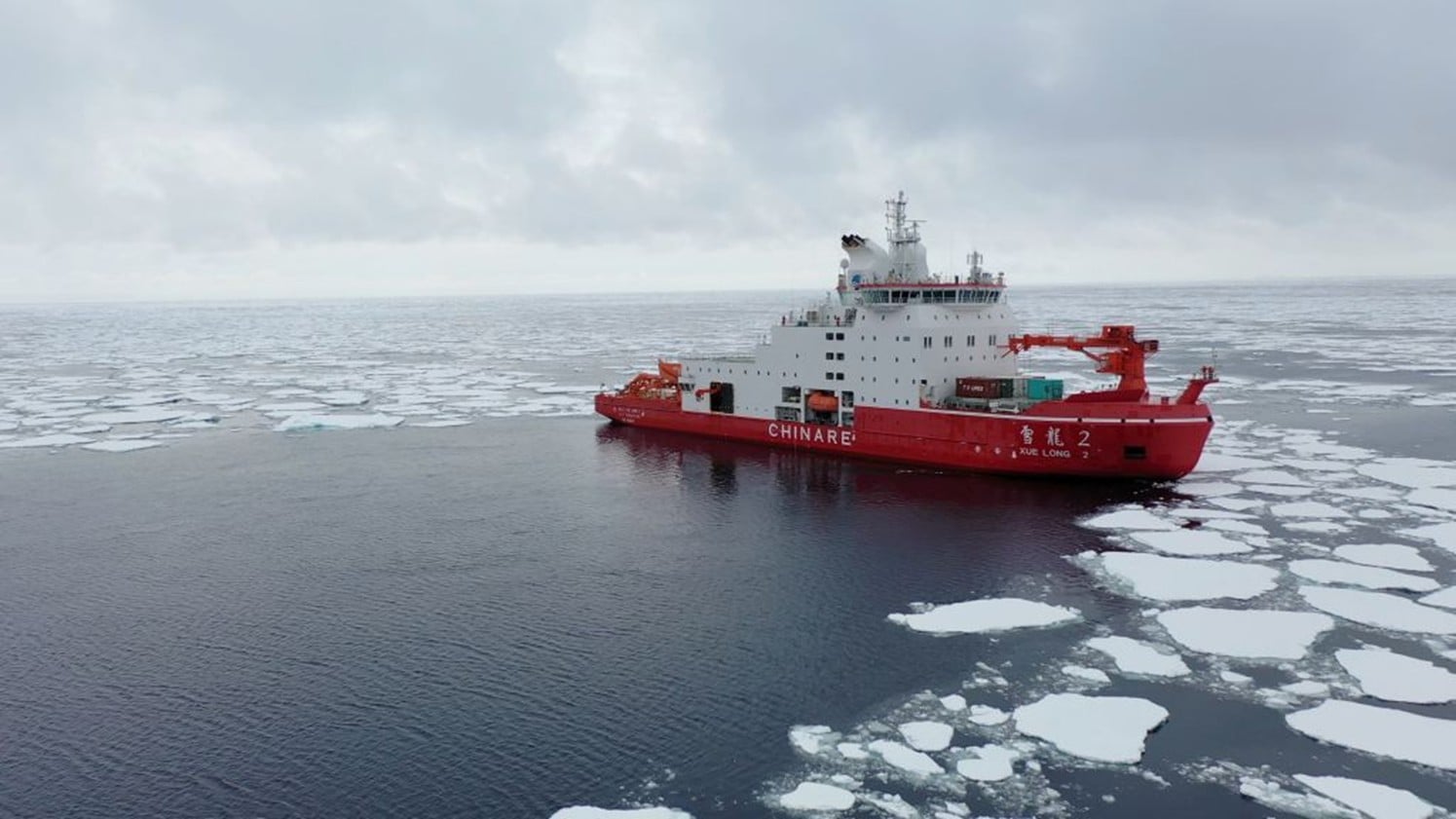
Image: A Chinese ‘super-trawler’. Source: ASPI
4. Antarctic Krill Under Threat
Antarctic krill is understood as the most important animal in its Antarctic ecosystem. Not surprising then, that it is at the centre of the resource race in the Southern Ocean. Krill – tiny, shrimp-like crustaceans – are foundational to Antarctic and Southern Ocean marine life and indeed are a key component of the global food chain. In recent years, the economic value of krill has been (re)discovered thanks to the boom in the global health supplement sector. Krill is a general term used to describe a group of about 86 species of crustaceans found throughout the world’s open oceans. While they may be small (generally about the size of your thumb), they play an important role in the food web. For example, Euphausia superba, or Antarctic krill, is a species only found in the Southern Ocean and is arguably the most important animal in its ecosystem.
As a keystone species, Antarctic krill provide the basis of the diet for most marine mammals and seabirds in the region and play a critical role in drawing down and storing vast quantities of carbon in the Southern Ocean. Antarctic krill are also economically important, as they are the focus of the largest fishery in the Southern Ocean. However, Antarctic krill are under threat. The combined effects of ocean warming, sea ice loss and ocean acidification are negatively impacting krill survival and reproduction. Krill have a complex life cycle that requires a balance of conditions. To survive winter, they need sea ice for shelter and the food it provides, as they feed on the algae that live on and inside the ice. With the Western Antarctic Peninsula warming at a rate faster than most places on Earth, Antarctic krill are being affected during their earliest life stage when they are most vulnerable to environmental conditions. There are many research projects on Antarctic krill, reflecting their ecological importance in the Southern Ocean.
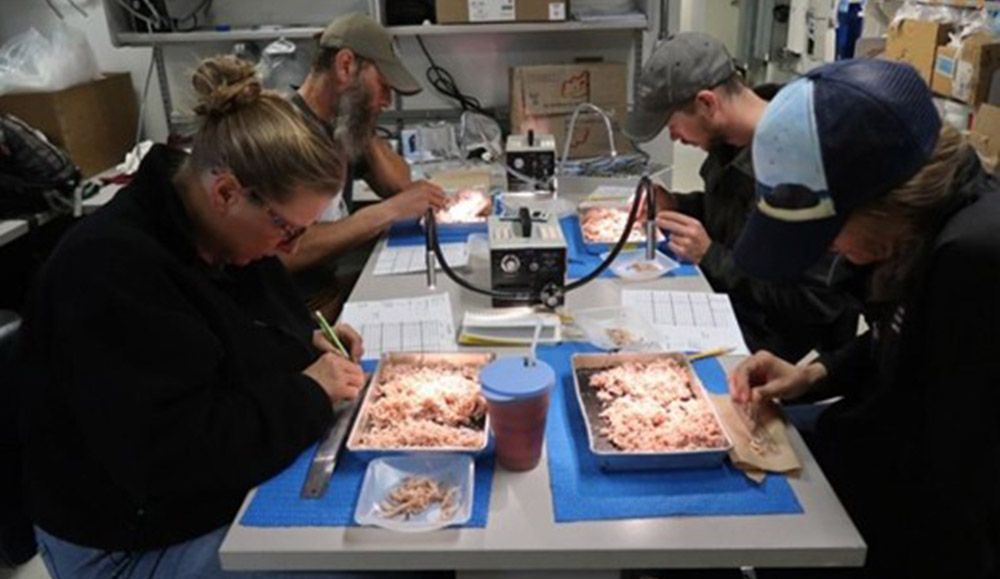
Image: Keri Nelson, NSF/ Researchers study krill at Palmer Station as part of the work being conducted to understand environmental impacts on the marine ecosystem. Source: U.S National Science Foundation website.
5. Commission for the Conservation of Antarctic Marine Living Resources (CCAMLR)
The CCAMLR takes a very far-sighted and unprecedented approach. Critically, it relates to the goal of enhancing Australia’s influence in the Antarctic Treaty. It also serves to maintain Australia’s reputation as a responsible manager of marine resources, complementing the Agreement on the Conservation of Albatrosses and Petrels – ACAP. Both relate to managing living marine resources in the Convention Area. Decisions must be based on an ecosystem approach, with consideration given to all species, ecological relationships and ecosystems. The Convention defines 3 principles of conservation with which any harvesting activities must comply:
- Prevention of the decrease in the size of any harvested population to levels below those that ensure its stable recruitment.
- Maintenance of the ecological relationships between harvested, dependent and related populations, and the restoration of depleted populations.
- Prevention of changes or the minimisation of the risk of changes in the marine ecosystem, which are not potentially reversible over two or three decades.
See: Australia’s primary goal within CCAMLR
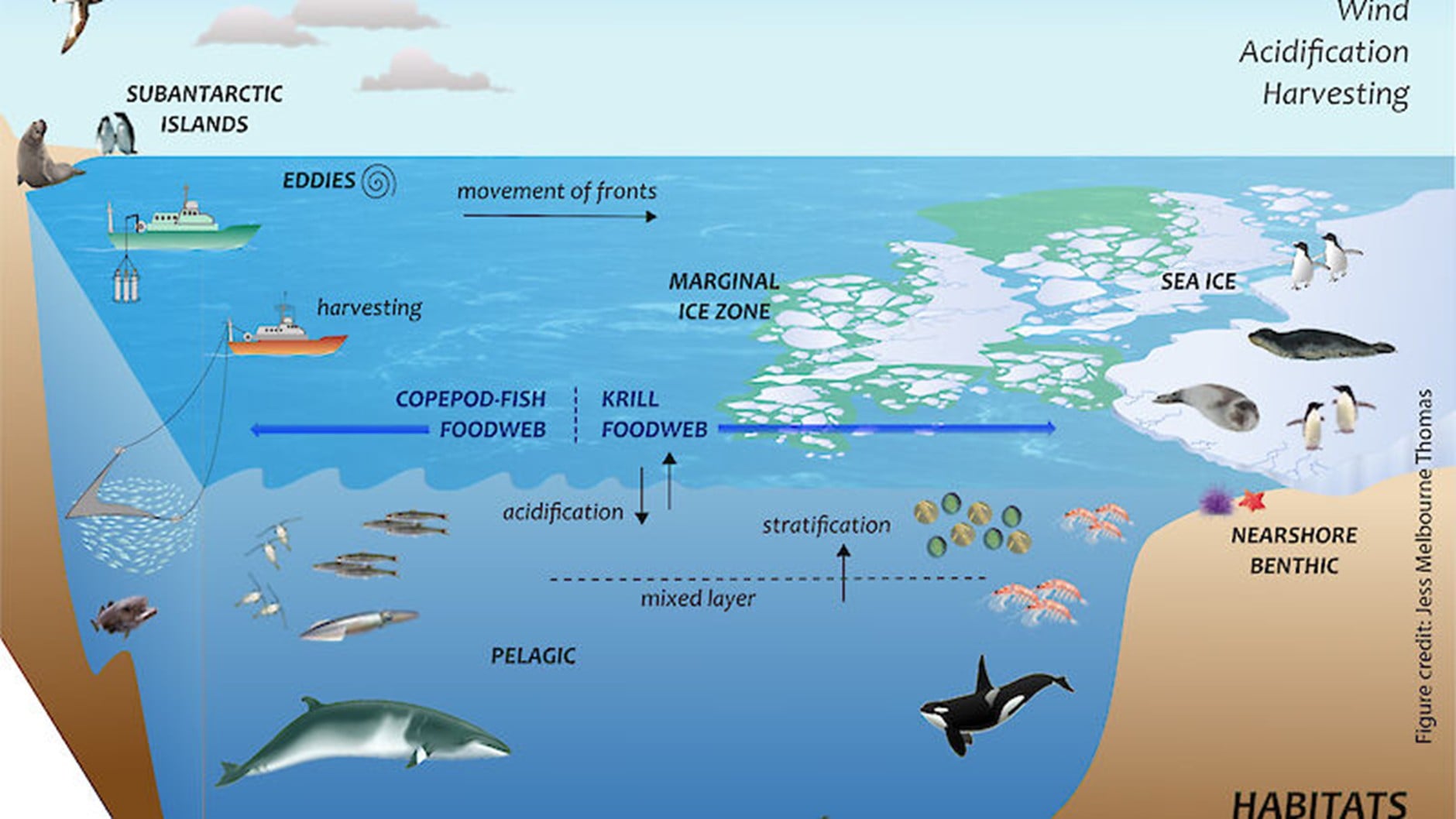
Image: Australian Antarctic research treats krill, finfish and other living resources of the Southern Ocean as an integrated system. Source: Australian Antarctic Program website.
6. Container Evolution
No surprise, given that Australia is utterly dependent on maritime trade, that MMHN is fascinated by the relentless evolution of port infrastructure. The advent of containers in the 1950s revolutionised maritime trade as an industry. A reminder that Australia’s largest port for containerised cargo is the Port of Melbourne, which handles 79 million tons of cargo and 3.28 million TEUs annually. The port has 34 cargo handling facilities, alongside 5 river docks, 2 container terminals and 3 multipurpose terminals. Containers REALLY matter to us. The table below graphically captures this container ‘phenomenon’.
See: Evolution of containerships on X
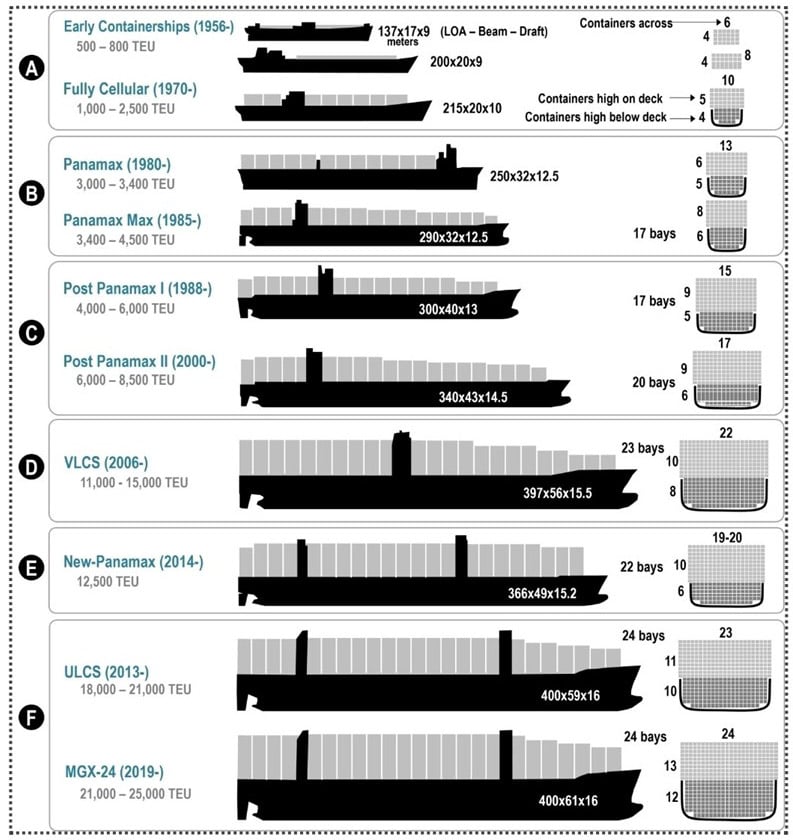
Image: The evolution of containerships. Source: @BartGonnissen on X.
7. Geelong Maritime Museum and Osborne House
Some good news, and some slightly less so. MMHN is grateful for this report from the Peninsula Ship Society (PSS) based at the Westernport for this report:
“The redevelopment of Osborne House confirms the end of the Geelong Maritime Museum Osborne House, North Geelong, with the outlook to Corio Bay. It was recently announced by the Geelong Council that the luxury property developer, Tim Gurner, had been named to redevelop the Council owned Osborne House precinct. While this is good news in regard to the future of the historic and now out-of-use main building, it does mean that the closed Geelong Maritime Museum will never reopen. This museum, which was housed in the Stables of Osborne House, was forced to close in 1917 when it was found that the building was riddled with black mould. The Museum was opened in 1989 and had a good collection of historic artefacts and documents related to the Maritime History of Geelong and Victoria, and the history of the Victorian and Australian Navy’s. Osborne House was built in 1858 for the local squatter, Robert Muirhead, who name the mansion after Osborne House, Queen Victoria’s summer residence on the Isle of Wight, England. Later, the house was purchased by the State of Victoria and served as a country house for the Governor of Victoria, and later an officer training college and military hospital. The site was used during the First World War as a submarine base for the Royal Australian Navy and during the Second World War as an army training centre. It served as the offices for the former Shire of Corio until the amalgamation that resulted in the formation of the City of Greater Geelong in 1993. From that time on the building has not had a permanent use”.
See: A new future for iconic Osborne House
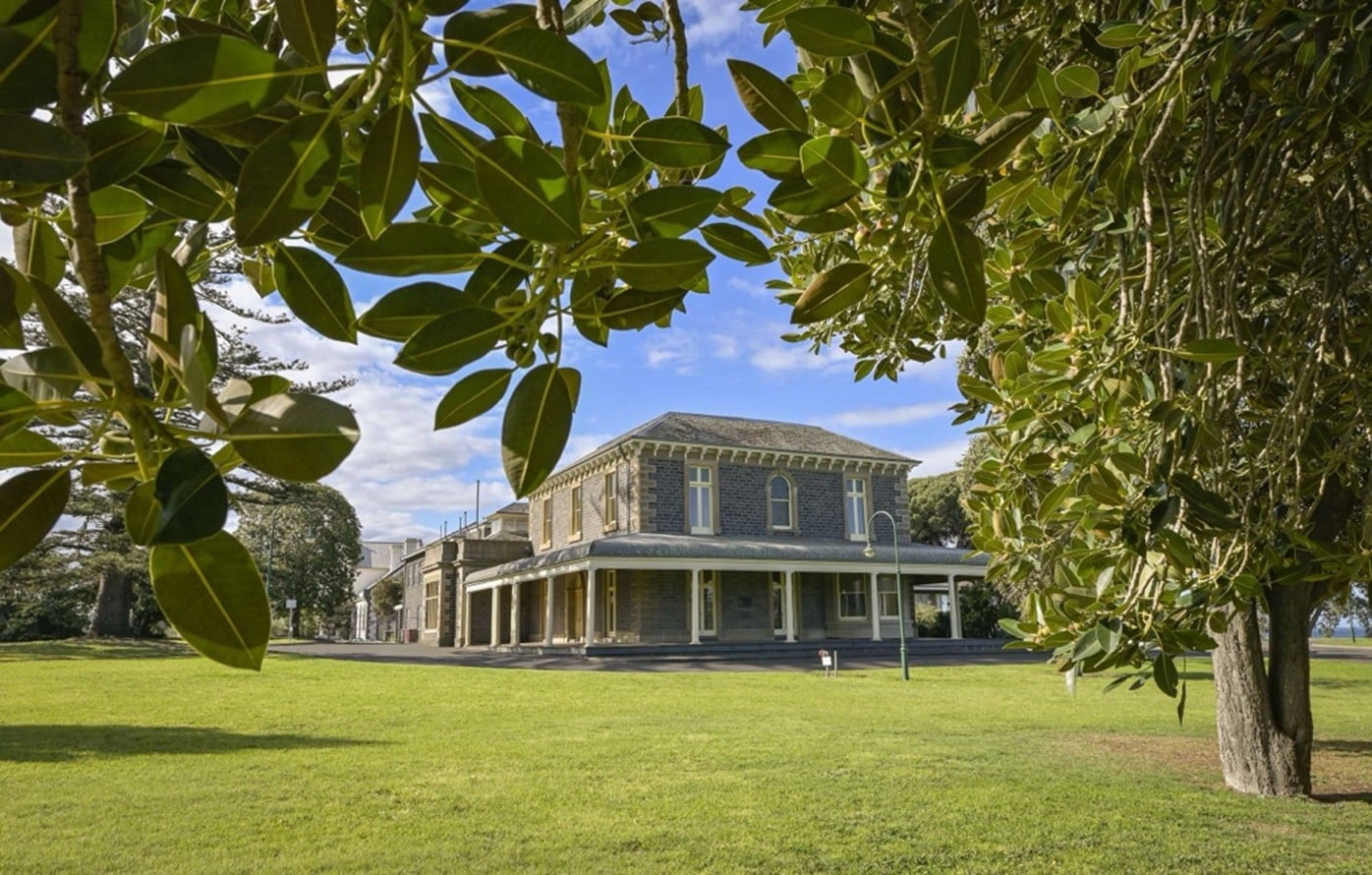
Image: Osborne House in North Geelong. Source: City of Geelong
8. Station Pier Cruise Operations
Again, MMHN thanks PSS for this report:
“After a difficult period triggered by an increase in port fees and subsequent negotiations in 2023, the future of cruise activity in Melbourne seemed clouded. Ports Victoria then announced a 15% increase in passenger fees (from $28.50 to $32 per person, effective from 1st January 2024), the first increase since 21st July 2021. As a consequence, Carnival announced it was withdrawing group brands, Cunard and Princes, from using Melbourne as home port – a grim prospect.
Happily, Carnival have now decided to continue cruising from Station Pier, Melbourne and plan to undertake 4 cruises from March 2027, before returning for another season in 2028. The 2028 Carnival cruise lineup from Melbourne will include 8 departures. Given the complex corporate world of cruise shipping, names and owners are often changing. For example, the vessels Carnival Adventure and Carnival Encounter were previously owned by P&0 Cruises Australia (which in turn was owned by the Carnival Corporation) and previously sailed under the names Pacific Adventure and Pacific Encounter. During 2025, both vessels berthed simultaneously on either side of Station Pier while undergoing ‘rebadging’ (aka acquiring new ‘livery’). Few, if any, piers in Australia have the capacity to have such work undertaken in such close proximity. Both vessels were built by the Italian shipbuilder, Fincantieri, as the Golden Princess (which was delivered in May 2001) and the Star Princess (delivered in January 2002).
9. RSV Nuyina Hull Scrape Incident
Currently, the RSV Nuyina is undertaking a research and resupply mission to Heard Island and Antarctica. Unfortunately, in October 2025, on its first voyage this season, the vessel was involved in a hull scrape incident while undertaking seabed mapping off Heard island in remote Australian territory, 4,100 kms south-west of Perth. The vessel moved off to deeper water to assess hull damage and temporarily halted research operations.
“Expeditioners on board Nuyina felt a small vibration through the ship when the contact occurred.” There were no injuries, no pollution and no ongoing risks to the safety of the 99 expeditioners and 40 crew on board the vessel and the ship is now back on its critical tasks. The major 25-day mission (V2) at Heard Island resupplying Casey Station will continue as planned with extensive marine and terrestrial science projects collecting data and samples, and testing for H5 bird flu in wildlife. The RSV Nuyina is operated by the British company Serco who are presumably responsible for such mishaps. The vessel will continue on to resupply Davis research station, where trucks and tractors will be used to travel over the final kilometre of pack ice.
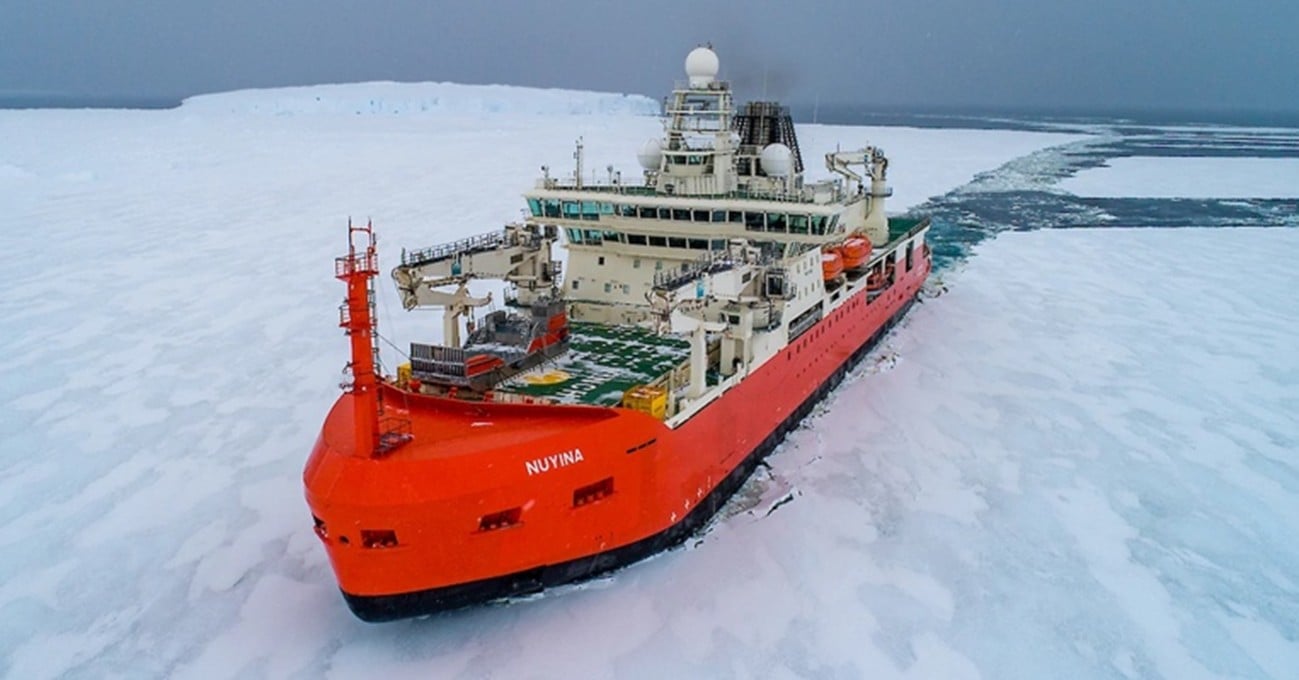
Image: The RSV Nuyina. Source: ABC website.
10. Australia Re-elected to IMO
A recent announcement from The Hon, Catherine King: “Australia has been successfully re-elected to the International Maritime Organization (IMO) Council, reinforcing the Albanese Government’s commitment to advancing international maritime standards. Elected under Category B for the 2026-27 biennium, this will allow work to continue on improving global maritime safety, environmental protection and innovation. Australia is a founding member of the IMO Council and currently the only representative from the South Pacific region. In recent years, Australia has demonstrated leadership through regional cooperation to improve ship safety, maritime incident response, and communications and information services to support our Pacific and Indian Ocean neighbours. Australia also actively supported the establishment of the IMO’s Pacific Regional Presence Office in Fiji, strengthening capacity-building across the region The Government has made strong commitments to the maritime sector, including by advocating for seafarers’ welfare, fair treatment of workers and the elimination of exploitation and modern slavery”.
While obviously pleased to have such critical international engagement, we at MMHN remain dismayed at the minimal attention, as well as the paucity of necessary investment in growing our national seafaring capability.
See: Australia successfully re-elected to IMO Council

11. Mariana Trench – Earth’s Deepest Point
Much of the aquatic life inhabiting our ‘blue planet’ remains unexplored. However, technology is changing this. A remote camera developed by Triton is capable of being lowered to the 11,000-meter depth of the Mariana Trench, the deepest point on earth. The trench is so deep that Mount Everest would fit inside it. Up to 90% of the trench is in darkness, as no light reaches further than 1000 metres.
Other deep submersible technology involves HOVs (Human Occupied Vehicles), ROVs (Remotely Operated Vehicles), and AUVs (Autonomous Underwater Vehicles), featuring titanium/acrylic hulls, advanced propulsion, sophisticated sensors (sonar, lights), and robotic manipulators for data collection and sampling in dark, high-pressure environments, enabling discoveries in previously inaccessible zones.
See: Ultra-Deep Submersibles
See: Descending Into The Mariana Trench: James Cameron’s Odyssey
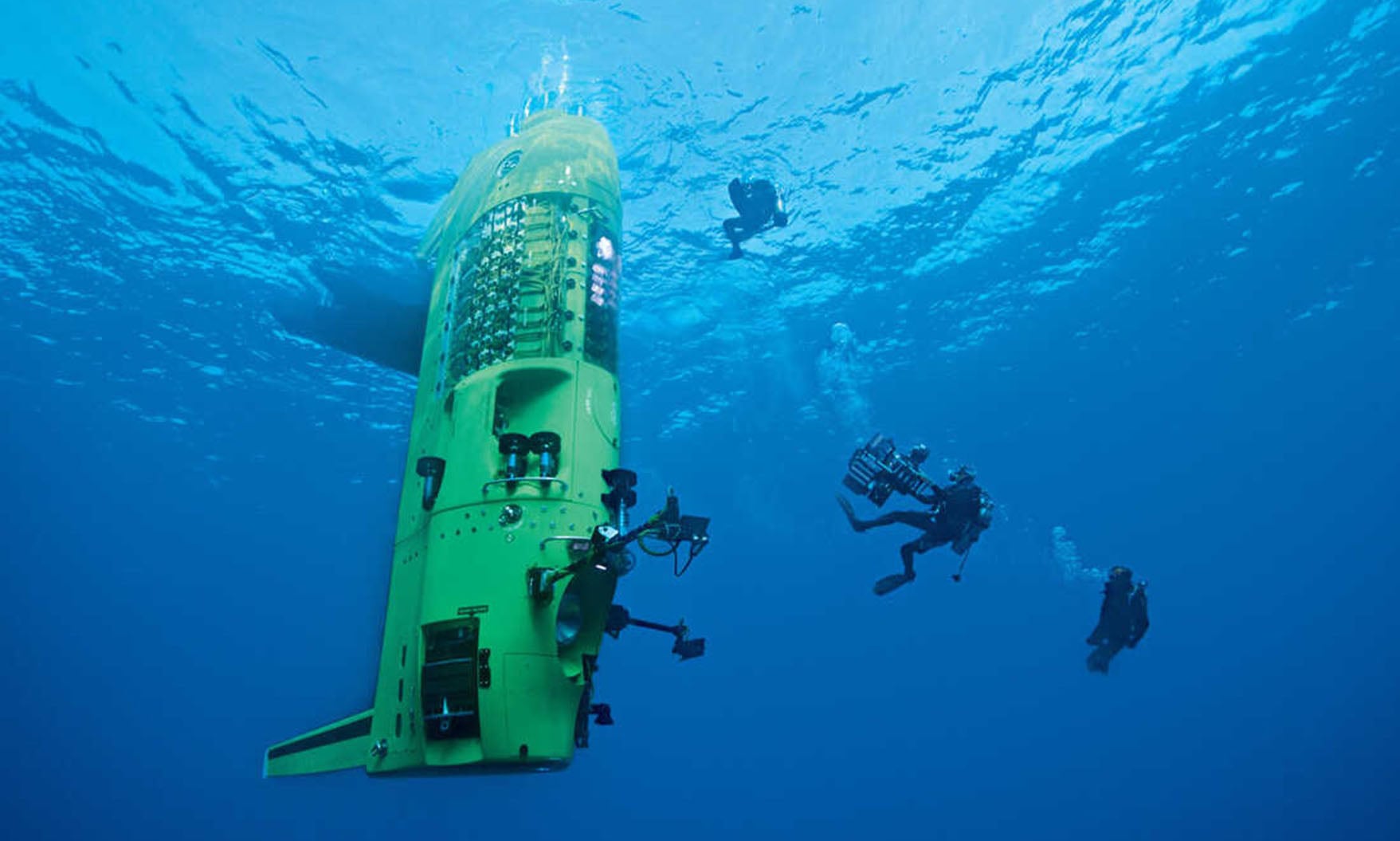
Image: Deepsea Challenger aka Camerons Odyssey. At 24 feet long, the submersible vehicle the Deepsea Challenger was designed to descend faster than more rotund submersibles. Source: Mark Thiessen/National Geographic via NRP website.
12. Ship Registration Issues – Seafaring capability
Currently, there are alarmingly few Australian registered vessels, presenting a complex matter for Australia. MMHN is aware that Offshore and Specialist Ships Australia (OSSA) has been advocating for this issue to be addressed by the Federal Government as a matter of urgency. It is important that maritime enthusiasts consider the option currently being explored by the USA to enhance its seafaring capability. MMHN Board Member and OSSA Board Member Ross Brewer alerts us to a recent article, ‘Proposal to Base U.S. Ship Registry in Virgin Islands Gets Governor Support’.
See: Proposal to Base U.S. Ship Registry in Virgin Islands Gets Governor Support
As part of a Revitalization Plan for US Maritime Trade, Commerce and Strategic Competition, the Northeast Maritime Institute’s Centre for Ocean Policy and Economics (COPE), “advised by an array of leading thinkers in the maritime industry”, proposed establishing an international registry which has now launched in the U.S. Virgin Islands. Maritime unions issued a joint statement condemning the proposal. OSSA advocates for Australia to adopt such a strategy in establishing an Australian International Ship Register (AISR). In essence, Australian officers would sail with foreign crew on international trade shipping routes but not coastal shipping routes, which would continue to be manned by Australian crew.
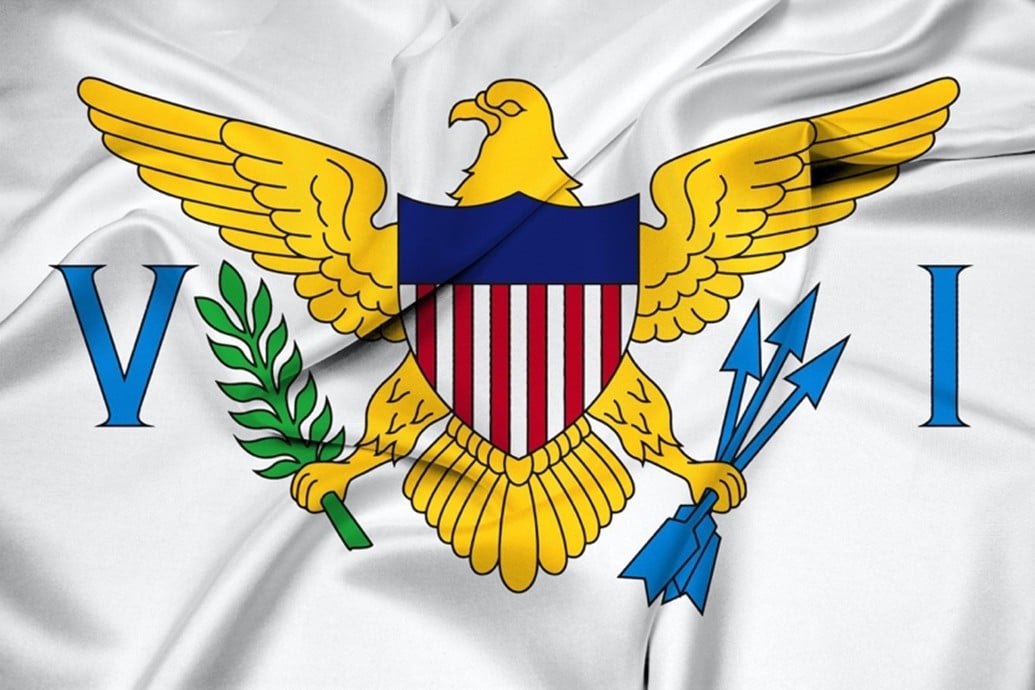
Image: Official logo of the Virgin Islands Open Registry. Source: gCaptain Daily website.
13. Wyuna Project Progress Report
Restoration continues of the historic pilot cutter Wyuna located at Bell Bay in Tasmania, Australia. Could this be a case of friends in high places?
Max Bryant reports from the recent reception at Government House in honour of Her Royal Highness, The Princess Royal, “We were among the very few males not in military uniform, as HRH is the Patron of the Army Signal Corps.”
Although not scheduled for a formal meeting with HRH, Wyuna volunteers Max Bryant, Bobby Stone, Sean Stone and Phil Leaven met the Princess Royal as she left the dais. Note that the Wyuna is a scaled-down replica of the Royal Yacht Britannia. HRH discussed the progress of the Wyuna project. Stark comparisons emerge between the arduous volunteer struggle to restore the Wyuna and the condition of the Royal Yacht Britannia, now permanently berthed in Leith, Edinburgh and operating as a five-star visitor attraction. This museum ship, maintained by the Royal Yacht Britannia Trust, is funded by public donations, trusts, and lottery grants.
Note that the Wyuna Project is in dire need of support and has recently joined forces with GiveNow, making it easier and simpler for maritime enthusiasts to donate.
See: Donate to the Wyuna Project
See: The Royal Yacht Britannia
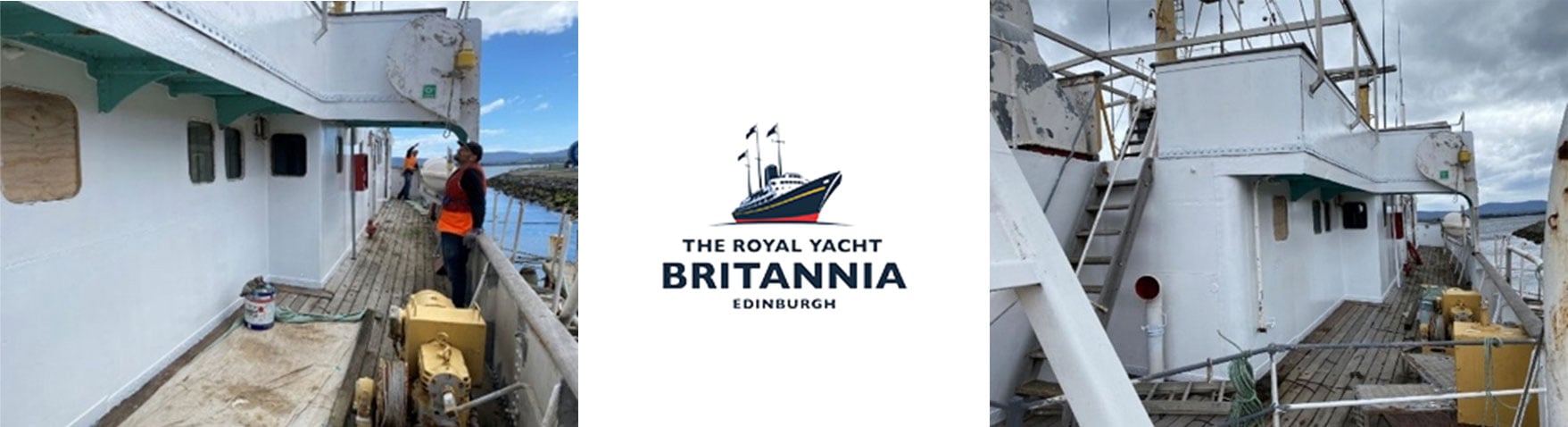
Images: Progress on the Wyuna as of November 2025. Source: Max Bryant.
14. UK Heritage Lottery – Maritime Heritage project funding
MMHN bemoans the constant battle to salvage and conserve our maritime heritage – both vessels and infrastructure. We contrast this to the situation in the UK where there is a long-established funding stream accumulating through the Heritage Lottery, available for heritage projects (which obviously includes maritime heritage projects)!
See: https://www.heritagefund.org.uk
Funding bodies such as the Royal Yacht Britannia Fund (see the above item) also support maritime heritage projects. MMHN notes with envy and admiration that the WA State Government’s Lotterywest grants deliver heritage project funding. Gambling addiction is real, but are lotteries dedicated to funding the plethora of worthy heritage projects in Victoria a social evil? Our maritime heritage – vessels and infrastructure currently ignored by government – would be a serious loss to us all.
Should a percentage of funds available through the existing lotteries in Victoria be directed towards heritage projects? Thoughts anyone? Email info@mmhn.org.au with your ideas.
See: Royal Yacht Britannia Trust
See: WA Lotterywest Grant
15. World Ocean Summit & EXPO
MMHN is delighted to see any such evidence of collaborative endeavour around preserving the ocean upon which we all depend. You may wish to follow proceedings online of the 13th Annual Summit, running March 4th – 5th, in Montréal, Canada (800+ attendees and 120+ global speakers from across the ocean community). Key matters raised will include:
- High Seas Biodiversity Treaty (BBNJ) – now ratified
- WTO Fisheries Subsidies Agreement – reshaping seafood supply chains, ocean acidification (new threat)
- Philanthropic and Financial investment – supporting and exploring ocean economy
The question is no longer why act, but how.
See: 13th Annual World Ocean Summit
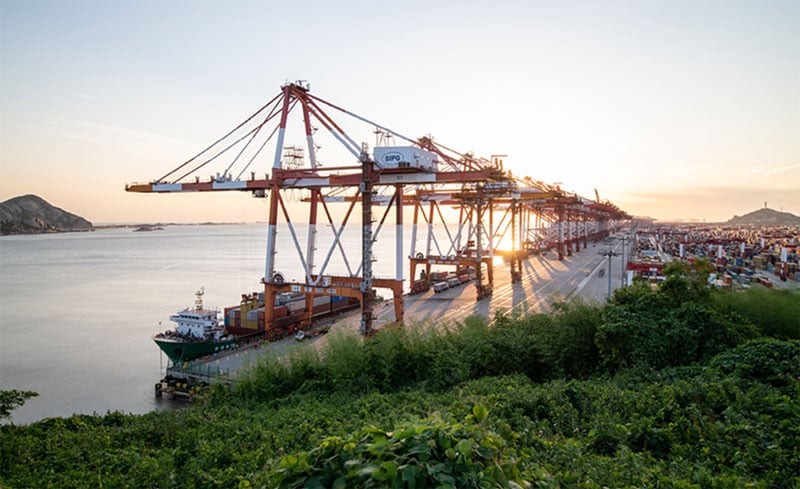
Image: World Ocean Summit website
16. MMHN Gathering at Christmas
As we conclude another eventful year at MMHN, we gratefully acknowledge the staunch support of the Waterways Branch, City of Melbourne in hosting the MMHN Christmas Gathering at their premises overlooking the splendid Victoria Harbour. Below, MMHN Board Member Ross Brewer captured photographer Bill McAuley presenting the extraordinary photography from his book, Last Light on Victoria Dock 1999, while accompanied by renowned saxophonist Paul Williamson. These rare, evocative images are the only evidence we have of the final days of Docklands Precinct, the powerhouse that drove Victoria’s economy for decades.
A 65-page compilation of these rare images is available for $45 plus postage by emailing info@mmhn.org.au.
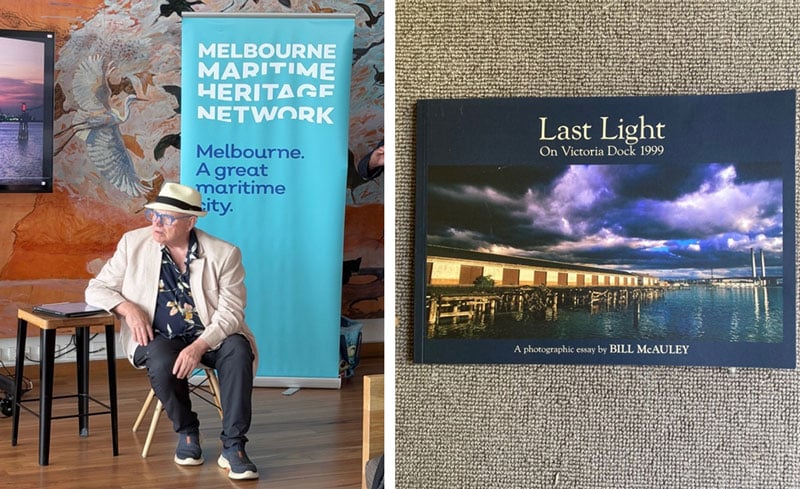
Image: Bill McAuley and his book at the MMHN Christmas event. Source: Ross Brewer, MMHN.
17. Seafarers at Christmas
It seems fitting to conclude this final MMHN Update for 2025 with a sobering thought of the seafarers working to benefit us all on the perilous oceans, away from home and often at risk. Christmas for seafarers can be a very difficult time, whether they are at sea or in a foreign port. They are away from their loved ones, and it is especially challenging for those who have children back at home.
The MMHN Board wishes all maritime enthusiasts and stakeholders a safe and enjoyable Christmas.
Until next time,
Jackie
Dr Jackie Watts OAM
Chair,
Melbourne Maritime Heritage Network