

Greetings all,
We are all aware of the geopolitical turbulence all around the globe – turbulence that is perhaps edging closer via our oceans. So, it seems both timely and appropriate to open with a quote from the RAN Sea Power Centre.
“As an island nation, the sea is Australia’s lifeblood. Our national anthem reminds us that ‘our home is girt by sea’. We are dependent upon the sea. Our trade travels by sea, and thus our economy, our prosperity and our way of life count on the sea. Good order at sea is vital to our nation’s economic and environmental welfare and vital to our national security. The Royal Australian Navy protects Australian interests, and reduces the prospect of threat to our nation, and to our allies and like-minded partners.”
Good to know!
Contents
1. RAN Sea Power Centre
2. Heritage Fleet – Waterways Presence
3. Ports Victoria – Station Pier
4. Bass Strait Land Bridge
5. Moonee Ponds Creek Heritage
6. Moonee Ponds Creek/Docklands Precinct Trail
7. Dudley Flats
8. Panama Canal – Strategic Flashpoint
9. Chancay – Peruvian Megaport
10. Ocean Warming
11. Indo-Pacific Research – China and Russia
12. Seaworks Museum – Ocean Photography
13. Scrimshaw Art – the Agony & the Ivory
14. Australian Society of Marine Artists (ASMA)
15. Antarctica – Megaberg
16. Yachting
17. Lucky for the Docklands Precinct
18. Microplastics – Yachting
19. Bayside Sculpture – Tommy’s Story
20. Parks Victoria Review
1. RAN Sea Power Centre
The aims of the RAN Sea Power Centre very closely align with the future-oriented concerns of MMHN: “Promoting the study, discussion and awareness of maritime issues relevant to Australia”.
Definition of the term ‘sea power’ is still debated, but two men are credited with coining the term: American Alfred Thayer Mahan and Englishman Sir Julian Corbett. Both men wrote their main works in the late 19th to early 20th century. Historically, unlike other arms of national defence, naval security concerns and national commercial concerns have been inseparable. A modern example would be naval defence of critically important undersea cables.
“Sea power is fundamentally concerned with the relationship between the state and economics. Commerce, particularly sea-based commerce, is central to sea power. It is for this reason that the term sea power can encompass military and non-military capabilities like maritime industries, shipbuilding, fishing fleets and even marine insurance. States seek sea power for three broad reasons: to protect seaborne trade, to secure marine resources and for force projection and strategic deterrence.”
To learn more about the Sea Power Centre, see: https://seapower.navy.gov.au/
Sea Power Centre Publications: https://seapower.navy.gov.au/publications-and-research
Also see: https://seapower.navy.gov.au/aspects-sea-power/what-sea-power
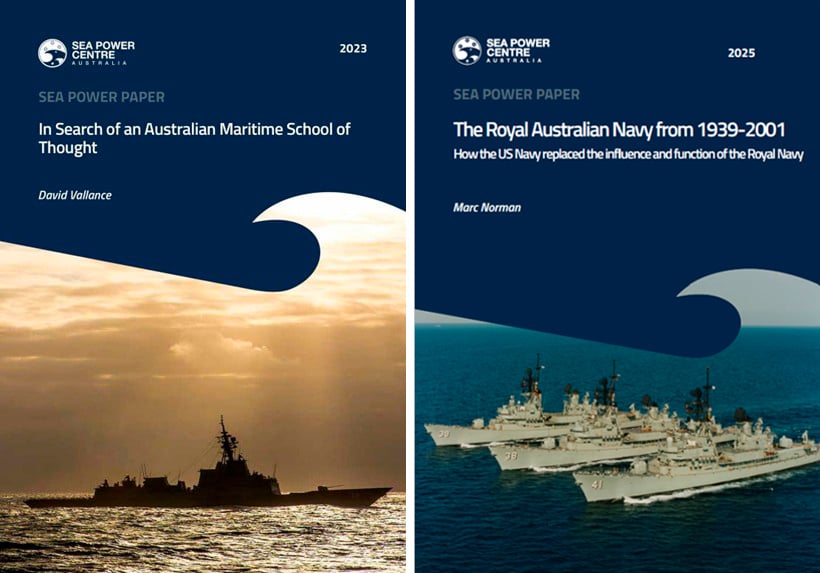
Images: Sea Power Centre Publications
2. Heritage Fleet – Waterways Presence
Invitation: Heritage Fleet – Waterways Presence Discussion
MMHN is convening this Forum /Panel Discussion around the dire situation facing the Heritage fleet in Victoria Harbour.
Key stakeholders invited will include – Development Victoria, Lendlease Developers, City of Melbourne, relevant State Ministers, Heritage Fleet Teams restoring or operating the vessels: Wattle, Alma Doepel, Enterprise, Grower, Lady Cutler. maritime heritage, the Docklands Precinct Community and maritime enthusiasts everywhere.
When: Tuesday 25th March at 6pm
At: Docklands Library Performance Space
Directions: Take Collins St Tram to the last tram stop in Docklands Precinct. Walk towards the large Trees Sculpture on Buluk, the Library is in front of you, the entrance in near the water.
RSVP: info@mmhn.org.au
MMHN is seriously dismayed at recent actions by Development Victoria (DV) to, in effect, oust the Heritage Fleet from Victoria Harbour. DV continues to ignore strong Docklands Precinct community support for the presence of the Heritage Fleet in Victoria Harbour. Instead, DV continues to pander to the accelerating demands of commercial property developer, Lendlease, on North Wharf. The modest needs of the Heritage Fleet, valiantly restoring vessels in the unique heritage site of Victoria Harbour, have been constantly overlooked. MMHN understands that discussions continue between the Heritage Fleet and DV. We live in hope that common sense and respect for heritage prevail.
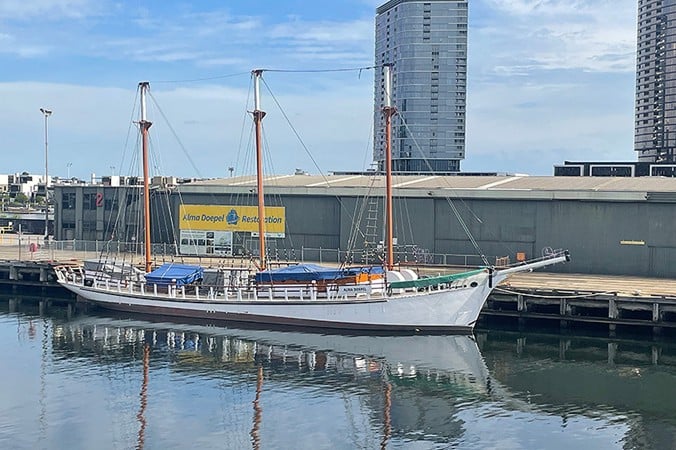
Image: Sheds essential to the heritage fleet restoration works on North Wharf. Docklands News.
3. Ports Victoria – Station Pier
Invitation: National Trust’s Australian Heritage Festival – MMHN / Ports Victoria heritage presentation about Station Pier
An early alert for the 10th of May. MMHN is delighted to be collaborating for the first time with Ports Victoria (Station Pier) in presenting an event during the National Trust’s Australian Heritage Festival. A splendid opportunity to raise awareness about our rich maritime heritage and inform the public not only about Station Pier infrastructure but also its heritage significance to Victoria.
For more information about the event, see: https://www.nationaltrust.org.au/ahf_event/station-pier-hear-about-the-remarkable-backstory-or-understory-of-this-heritage-listed-pier/
RSVP: info@mmhn.org.au
A reminder that MMHN has, since its establishment, staunchly advocated for a Re-imagining of Station Pier.
See MMHN’s website: https://mmhn.org.au/wp-content/uploads/2023/07/MMHN-Opportunity-7-Station-Pier.pdf
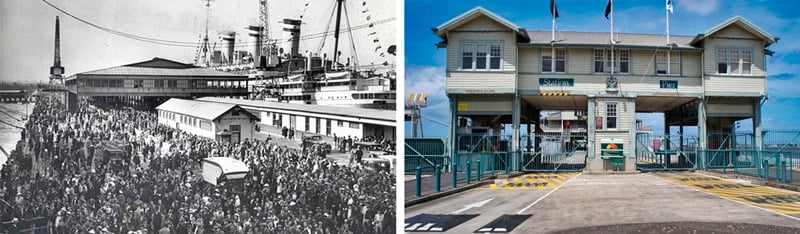
Image: Station Pier website
4. Bass Strait Land Bridge
MMHN recommends that you have a look at a newly launched digital project: The Land Bridge. A fascinating free online community education resource, telling the story of the ice age land bridge which once connected Tasmania and Victoria across what is now Bass Strait. This short documentary features photo essays and other education resources of interest to maritime heritage stakeholders. It explores cultural traditions and vestiges of the bridge that link us to our deep past and the landscape, both above and beneath the water. Produced by Wind & Sky Productions, The Land Bridge digital project was funded by the Federal Government’s Our Marine Parks Grant Program.
See: https://thelandbridge.au/
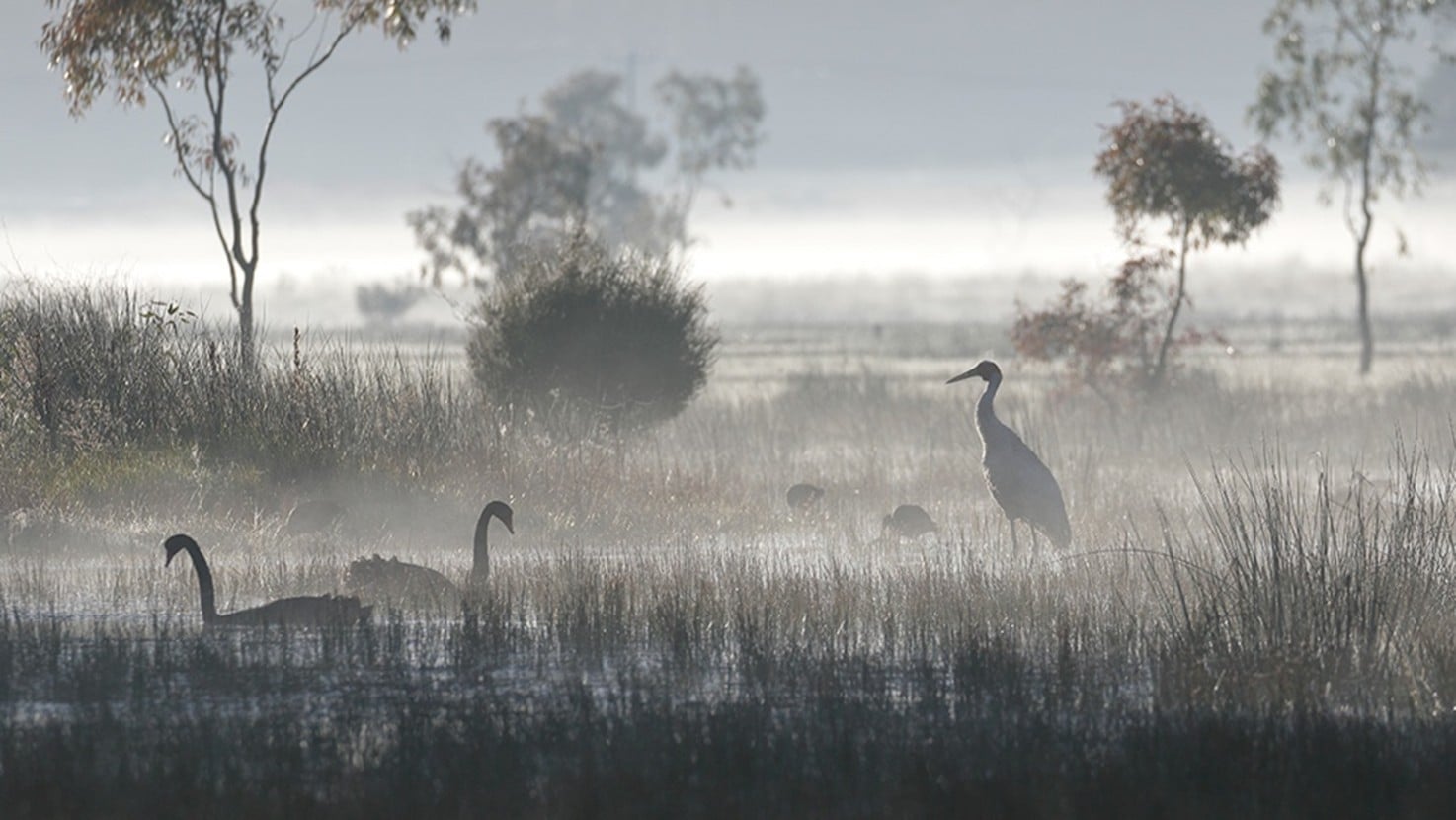
Image: Wind and Sky Productions
5. Moonee Ponds Creek Heritage
Moonee Ponds Creek has significant maritime heritage value. Many creeks flow into the Birrarung (Yarra) and Port Phillip Bay, but this particular creek formed a series of marshes and swamps at its entry point, known as Batman’s Lagoon. In the 1850s, the swamp quickly became a catchment for waste waters from nearby Flemington, North Melbourne and Parkville. In 1879, it was drained and filled to make way for the North Melbourne railway yards at its northern end. In the 1890s, the southern end of the Moonee Ponds Creek was widened, and a canal was excavated to enable transport of coal on barges. This coal, of course, was necessary to the nearby city and port for generating steam power for lighting, railways and steam-powered vessels. The excavated earth was dumped either side of the canal and became known as Dudley Flats, a ‘free’ area where the destitute and impoverished congregated and eked out an existence. When the economy improved, the Melbourne Harbour Trust turned their attention to Dudley Flats in an effort to further expand the port. Slum dwellings were demolished, remaining swamp areas were drained, and the vast, yet shallow Victoria Dock (now known as Victoria Harbour) was excavated.
See: The Age – City creek continues to fight for survival
6. Moonee Ponds Creek/Docklands Precinct Trail
MMHN notes that concerns about the Moonee Ponds Creek Advocacy Plan, adopted in March 2024, were raised at the Future Melbourne Committee. It was suggested that the City of Melbourne Council is not adequately following up on the matter with Development Victoria (DV), a view that MMHN shares. Deputy Lord Mayor, Roshena Campbell (Planning Portfolio Lead), responded, stating that discussions with DV about reinstating the shared path trail in Docklands were pending state budget approval. Former Minister for Precincts, Colin Brooks, had confirmed ongoing investigations into options and costs for the trail. A joint statement was published to show community support, and Council continues to advocate for funding.
But when and how much?
A reminder that a functioning trail existed until its closure in November 2020 to enable the construction of Sound Stage 6 at Docklands Studios. Five years of construction seems excessive. Has the shared trail along the Moonee Ponds Creek and Victoria Harbour (constituting immense community benefit) simply fallen off the ‘to-do list’? How expensive can it be to reinstate a trail which primarily involves moving a fence?
In June 2024, Minister for Planning, Sonia Kilkenny, confirmed that the Implementation Plan was a priority. In September 2024, a Premier’s Media release addressed issues relating to the far upper reaches of the creek––not the Docklands Precinct at all. MMHN would urge the City of Melbourne Council to revisit the matter with the new Minister for Precincts, Harriet Shing.
See: https://www.premier.vic.gov.au/moonee-ponds-creek-double-size
7. Dudley Flats
The story of the long gone and complex Dudley Flats is inextricably entwined with Melbourne’s port heritage and the evolution of today’s Docklands Precinct. Located directly to the west, in past times it was known for its notoriously dark underbelly. Think waterways, flooding, swamps and lagoons. Think commercial pressures and pollution emanating from the burgeoning port city that dramatically reshaped both the land and the waterways. Think coal power and steam power and cargo on land and at sea. Think extraordinary port infrastructure investment by government (Coode Canal, Railway Coal Canal, and the vast world-renowned Victoria Harbour). The story of Dudley Flats is integral to all of these.
To read further, see: Docklands News: Evidence of Melbourne’s maritime heritage is everywhere in Docklands
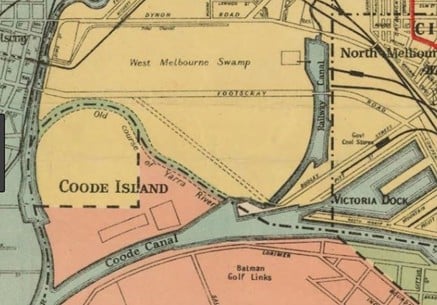
Image: State Library Victoria
8. Panama Canal – Strategic Flashpoint
In the Sunday Age on the 2nd of February, academic Flavia Bellieni Zimmermann, discusses the global importance of the Panama Canal and its geographic location. She describes it as a global “strategic flashpoint”, capable of impacting commerce which in turn impacts military action.
Brief background: Historically, the US has played a pivotal role in the construction and administration of the Panama Canal, which links the Atlantic and Pacific oceans.
In 1869, a diplomat and developer named Ferdinand Marie, Comte de Lesseps, successfully built the Suez Canal, linking the Mediterranean and the Red Sea.
In a plan to replicate the Suez success, the French commissioned De Lesseps to construct a sea-level link between the Atlantic and Pacific oceans. After 9 years, his project design had failed, disease had ravaged the workforce, (malaria, yellow fever and other tropical diseases had resulted in 20,000 deaths) and the construction effort ended in bankruptcy. The US stepped in to secure the project, addressing the threat of disease and changing the canal design to incorporate locks. They completed works in 1914 and held control of the canal until 1977, when President Jimmy Carter signed a Treaty to gradually hand it over to Panama. Since 1999, the Panama Canal Authority has held exclusive control over the operations of the waterway.
Current situation: The crucial importance of the Panama Canal is well known in global maritime trade operations. There have been environmental concerns arising from diminished fresh water for the locks, but currently there is concern that Chinese presence is growing in areas that the US considers its ‘sphere of influence’. Numbers tell the story. The Panama Canal is a key transit passage for US trade and military vessels. US shipping accounts for 52% of the 14,000 ships and 74% of the cargo that annually pass through the waterway. China, the 2nd largest user of the canal, accounts for 21.4% of the cargo volume.
While there is no public evidence confirming that the Chinese government or its military currently exercise any control over the canal, Chinese companies certainly have a significant presence there. Panama was the first Latin American country to initially endorse the Chinese Belt and Road Initiative. In recent years, Chinese company CK Hutchinson has invested heavily in ports and terminals at both ends of the canal. It is worth noting that in 2017, Panama cut diplomatic ties with Taiwan and established formal relations with China.
Trump regime: The US is demanding “immediate changes” to what President Donald Trump calls the “influence and control” of China over the canal, warning that the US would take necessary measures to protect its rights under a Treaty between the US and Panama. Panama has responded:
On the 3rd of February 2025, Panama withdrew from the Belts and Roads Initiative. The next day, local lawyers urged Panama’s Supreme Court to cancel the concession granted to Hong Kong-based CK Hutchison Holdings, which allows it to operate the two ports at either end of the canal. The Supreme Court was also urged to end the significant land and tax breaks afforded to CK Hutchison. The Panamanian authorities are reportedly still considering this.
See: The Conversation – Panama to quit China’s belt and road initiative
See: BBC World: Panama country profile
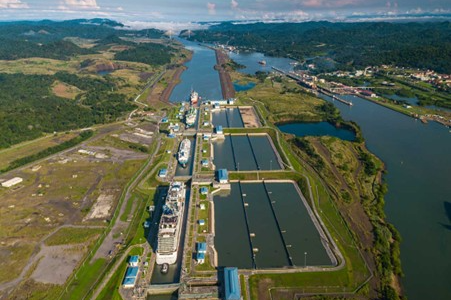
Image: Cana de Panama website
9. Chancay – Peruvian Megaport
An amazing new port concept. Is this related to the US-China conflict brewing in the region?
In November 2024, BBC journalist Robert Plummer reported that President Xi Jinping himself attended the inauguration of the Peruvian Chancay port, indicating the port’s immense importance to China’s growing assertiveness in a region that the US has traditionally seen as being within the American ‘sphere of influence’.
“The US has been absent from Latin America for so long, and China has moved in so rapidly, that things have really reconfigured in the past decade,” says Monica de Bolle, senior fellow at the Peterson Institute for International Economics in Washington. In 2019, work commenced on the largest deepwater port on the western coast of South America, developed by China’s state-owned Cosco Shipping and estimated at $3.5bn. The port is set to transform the Peruvian economy, turning Chancay into the ‘Singapore’ or ‘Shanghai’ of South America. Chancay megaport includes a 1.8km tunnel connecting the port to the Pan-American Highway to facilitate trade from Chile, Ecuador, Colombia and even Brazil. Chancay port’s location will reduce shipping times from China from 35 day to 23 and will have the capacity to accommodate larger ships, ultra-large container vessels, and (as the US military has already noted) Chinese warships. The port is jointly owned by the Peruvian mining company Volcan (40%) and Chinese-owned Cosco Shipping (60%). Peruvian Congress controversially passed a law granting Cosco exclusive use of the port, effectively supporting China.
See: BBC – Megaport opens up Latin America to Chinese trade as US looks on
See also: Aid Data – Chancay port opens as China’s gateway to South America And: Lowy Institute – Peru’s new megaport reveals refined belt road
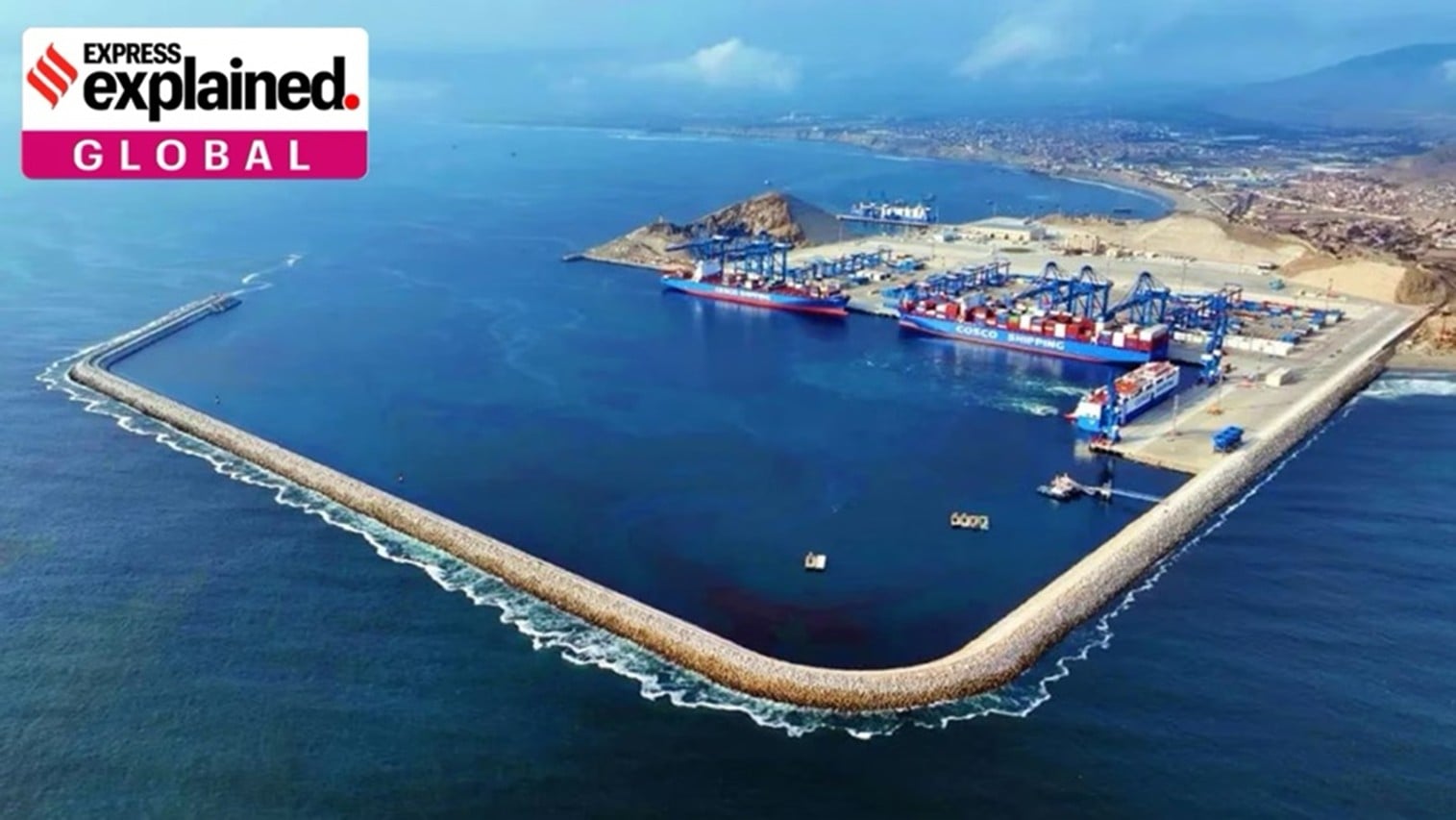
Image: Express Explained website
10. Ocean Warming
According to the Bureau of Meteorology’s 2024 Annual Climate Statement, Australia’s sea surface temperatures were the warmest on record last year – an alarming 0.89°C above average.
Oceans cover more than 70% of Earth’s surface. Consequently, their warming is a serious matter. Warming causes sea levels to rise, coral to bleach, and Earth’s ice sheet melt-rate to increase. Apart from making weather on land more extreme, marine life, which underpins vital ocean ecosystems, are at risk of permanent damage. The extent of Antarctic sea-ice was far below average (or close to record lows) for much of the year but returned to average in December.
“Water can store a lot more heat than air. In fact, just the top few metres of the ocean store as much heat as Earth’s entire atmosphere. Oceans take a long time to heat up and a long time to cool. Heat at the ocean’s surface eventually gets pushed deeper into the water column and spreads across Earth’s surface in currents.” It can lead to nutrient loss in surface waters, leading to fewer fish and other species migrating elsewhere. This trend threatens the food security and livelihoods of millions of people around the world.
See: The Conversation – It’s official: Australia’s ocean surface was the hottest on record in 2024
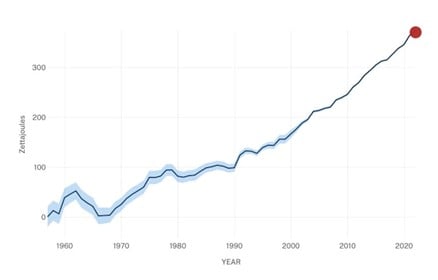
Image: Changes in the world’s ocean heat content since 1955 via NOAA/NCEI World Ocean Database
11. Indo-Pacific Research – China and Russia
What an extremely topical and challenging area of research!
Colonel (Ret) Robert E Hamilton, PhD and Head of Foreign Policy Research Institute’s Eurasia Program, presents an analysis in Setting the Stage: an overview of Chinese and Russian Interests in the Indo Pacific.
Founded in 2015, the Eurasia Program aims to examine the political, security, economic, and social trends shaping Europe and Eurasia, including the Democracy at Risk rubric, which examines the trends of democratization and authoritarian pushback in the region.
This analysis concludes, “While Chinese and Russian interests in the Indo-Pacific are not perfectly aligned, there are no obvious dealbreakers between them. Their interests align over the issues of Taiwan and the East China Sea, although not always for the same reasons. Russia’s courting of North Korean assistance for its war in Ukraine and suspicions about what the regime in Pyongyang may demand in return threaten to upset the tenuous balance on the Korean Peninsula. […] as its relationship with the US has eroded, Russia’s support for China’s position has increased, implying that there is an instrumentalism in Moscow’s stance. In the South China Sea, Russia supports China’s position rhetorically but cooperates militarily and economically with Vietnam in ways that undermine it. […] Two major factors are driving a convergence between China and Russia, one global and one regional. The global factor is their shared conviction that the US threatens their internal stability and external freedom of action. The regional factor is the accelerating bifurcation of the Indo-Pacific into opposing and mutually exclusive security blocs, one centred on China and the other on the US. These two factors combine to make it less likely that Russia would sit out any confrontation between the US and China. […] But, in the context of a looming—and potentially existential—showdown with the US and its allies in the Indo-Pacific, Beijing would have to set these concerns aside. In this case, a true alliance between China and Russia directed against the US becomes more likely.”
And Australia? In a nutshell (to an extent predicably), world order is shifting.
What is less predictable is where this leaves the vast island continent of Australia.
“Outside of Taiwan, a detached assessment of China’s interests in the Indo-Pacific suggests they are important but not vital. However, Beijing often insists that some of these other interests are also vital and to take action to back this claim. This is especially true in the South and East China Seas. Here Beijing insists the issue at stake is one of its sovereignty and territorial integrity when, in reality, its claims are more about maximizing its own freedom of action, limiting that of its neighbours, and minimizing US presence and influence. In the South China Sea, China’s claims revolve around the so-called ‘nine-dash line’ which extends from southern China throughout most of the region.
Inside the nine-dash line, China claims and occupies the Paracel Islands, which Vietnam also claims. Beijing also lays claim to the entire Spratley Island chain, as do Taiwan and Vietnam; the Philippines, Malaysia, and Brunei each make partial claims. Since 2013, China has been building artificial islands and setting up military bases in both island chains, hoping to operationalize its claims and coerce its competitors into giving up theirs. Finally, China has occupied the Scarborough Shoal in the South China Sea since 2012; although, Taiwan and the Philippines also claim it. Of these claims, the Paracels are the most important to China; despite Vietnam’s claim to them, China insists they are not in dispute and has deployed a significant military presence there.
In the East China Sea, Beijing claims the Senkaku Islands, which Japan administers. China’s claim here is more instrumental than emotional: the goal is to weaken the US-Japan alliance and establish itself as the regional hegemon rather than control important territory, since the islands bring no real military or economic benefit.”
See: FPRI – Russian and Chinese Influence and Interests
12. Seaworks Museum – Ocean Photography
MMHN highly recommends that you see the Ocean Photographer of the Year Exhibition at Seaworks. The impressive number and diversity of stunning images will astound you. You can have a look at the wonderful Maritime Heritage Precinct at Williamstown at the same time.
See: https://seaworks.com.au/events/ocean-photographer/
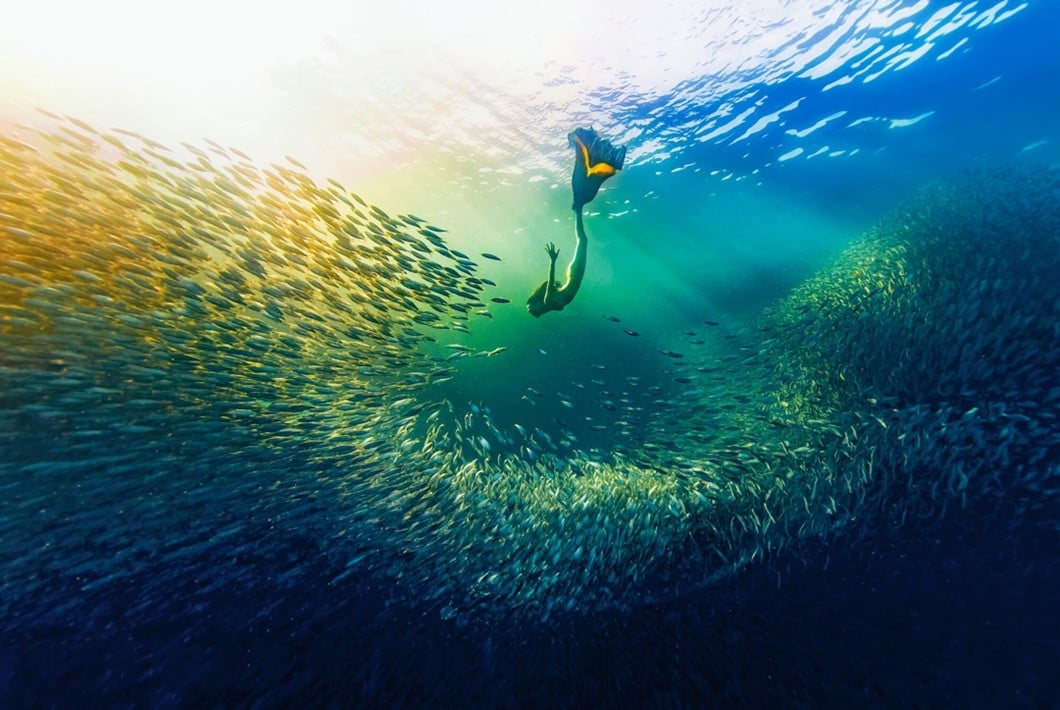
Image: Seaworks website
13. Scrimshaw Art – the Agony & the Ivory
Exponents of this art form were known as ‘scrimshanders’ and scrimshaw art known as ‘scrimshonting’. On the 25th of January, Sarah Holland-Batt of The Australian Weekend Review reported on this fascinating pastime at sea which revealed much more than artistic talent. It also illustrates the loneliness, boredom and tedium that alternated with frenzy during a life at sea on 17th and 18th century commercial whaling voyages.
While bringing a whale aboard required 20-30 men, the running of the ship in between sightings did not, and many were left to their own devices and took up this obscure art to pass the time. Carving relied upon plentiful byproducts of whaling – teeth, bones and baleen. The inspiration for the art arose from longings, religion and superstitions. Some captains encouraged scrimshonting to counter the potentially problematic idleness. However, the more superstitious captains prohibited the activity, believing that it tempted fate.
The most well-known and talented scrimshander in Australian history is Alfred Evans. Evans worked as a cooper while onshore. When whaling ships sailed, wooden barrels were stored in a disassembled state to save on space. When the barrels were required, it was Evans’ job to reassemble them, and in the quiet times, he carved whale bone.
The artform is still practised today!
Read more: The Powerhouse – Art, Idleness and Leviathans
See: ABC News – 30-year artwork etched on a sperm whale jaw bone
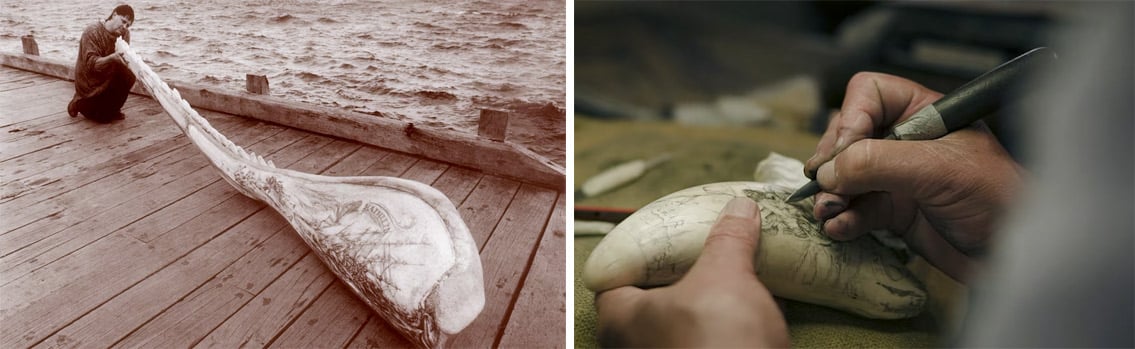
Image: ABC website. Scrimshander, Gary Tonkin, took 30 years to carve the magnificent work.
14. Australian Society of Marine Artists (ASMA)
MMHN is delighted to have forged an ongoing engagement with the Australian Society of Marine Artists in 2024. The ASMA was officially formed and incorporated in Sydney in 1996. Its mission statement, as set out in the Constitution, is to, “support the interests of members by promoting maritime and marine art in Australia”. Given the historical significance of maritime art and its capacity to record, inform and delight so many maritime afficionados, MMHN is now pleased to share the news that ASMA has recently updated their Facebook and Instagram pages with information about their latest exhibitions. Follow them on social media to stay up to date with their offerings for 2025.
Website: www.marineartists.au
IG: @marineartistsaustralia
FB: marineartistsaustralia
15. Antarctica – Megaberg
Stand in wonder and be awestruck! On the 24th of January, ABC News reported on the world’s biggest iceberg. The slab of ice, named A23a, is described as a ‘megaberg’; a 40m tall wall of ice weighing around a trillion tonnes and larger in area than the ACT. Six weeks after breaking loose from its grounding on the seafloor far down in the Southern Ocean, A23a is steadily drifting towards South Georgia, the magnificent island off the tip of Antarctica. Moving at the glacial pace of a metre every 3-7 seconds, the iceberg is mind-bogglingly massive when one considers that whatever can be viewed above the water line, 10 times that mass exists below. Wave and winds erode the magnificent iceberg which is large enough to disrupt wildlife habits in its vicinity.
See: ABC – World’s biggest iceberg A23a drifting towards South Georgia island
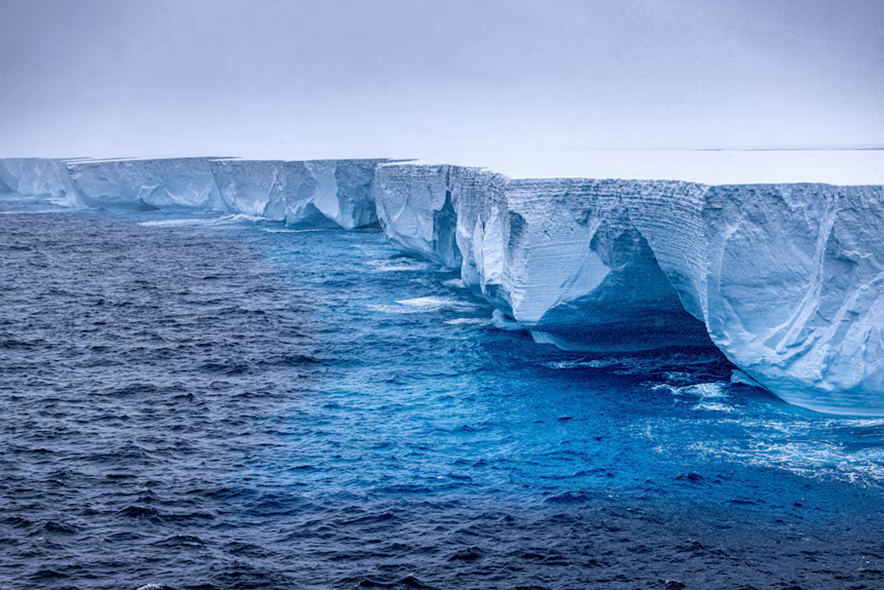
Image: Per ABC, A23a is 40 metres tall, bigger in area than the size of the Australian Capital Territory and weighs almost one trillion tonnes. (Reuters: Rob Suisted/social media)
16. Yachting
Make no mistake, ocean sailing is in our DNA. Melbourne, as we know it, would not have been established without vessels under sail. Imagine the fear when surging through the treacherous turbulence of the heads, past the reefs, followed by the comparative calm and wonder of exploring the magnificent Port Phillip Bay. Imagine finding the meandering Birrarung (Yarra) estuary – and upstream, fresh water!
Around 150 years later, the world-renowned Victoria Port (now known as Victoria Harbour) provides safe haven to a variety of magnificent vessels built for harnessing the wind and waves, sailing across the vast oceans, navigating the notorious conditions of Bass Strait, and negotiating the narrow entry to Port Phillip Bay, which at the Heads measures only 1 nautical mile across (1.6 km). Modern yachting continues this epic tradition.
Later in March, MMHN anticipates with delight the Melbourne-Osaka two-handed yacht race (M2O), a serious 5,500 nautical mile challenge. Given that the Heads are distant from Melbourne, competing yachts gather and actually leave from Portsea Pier in staggered starts between the 9th – 28th March. The intervals are calculated to enable competing yachts to, in theory, arrive in Osaka on the same day! The race is a wild, physically and mentally challenging voyage – who can tell what the journey will bring! This is the 9th incarnation of this unique race between port sister cities, Melbourne and Osaka. The first was held in 1987 to commemorate the 120th anniversary of the opening of the Port of Osaka. Former City of Melbourne Lord Mayor, the late Trevor Huggard, sailed in the first race. This is Australia’s longest Category 1 yacht race, the equivalent of 8 back-to-back Sydney to Hobart races but with only 2 crew on board. Double-handed yacht races commenced in the UK in the 60s and 70s.
See: https://melbourneosakacup.com/en/about-the-race/
17. Lucky for the Docklands Precinct
The magnificent mini-maxi yacht Alive is the largest competitor in the M2O race. It sails out on the 28th of March, the last yacht to leave Portsea. In the meantime, Alive will sail to Victoria Harbour to moor at Melbourne City Marina at New Quay, Docklands Precinct. Its entry into Victoria Harbour, beneath the Bolte Bridge, promises to be an exciting logistical feat before the race even starts! The mast on Alive is technically higher than the Bolte, so it will need to be tilted at low tide to pass under the bridge – we’re hoping for a smooth operation! We recommend that all in Docklands try to watch this rare event. Details of this dramatic entry and other M2O departures commencing March 9th will appear in the media.
About Alive: Alive is a very successful racing yacht, normally crewed by 12 people. The Tasmanian yachtsmen competing in the M2O, Duncan Hine and Glen Myler, will be tested in handling the 66ft vessel! An amusing aside: Duncan Hine’s fitting nickname is “Dunk”. Let’s hope not!
For more details on Alive and its various races, see: Aliveyachting.com
Perhaps we will see you at the festivities around the various M2O start times.
See: https://melbourneosakacup.com/en/2025-race-start-times/
18. Microplastics – Yachting
MMHN is impressed to discover that a competing M2O yacht, Trekkee, crewed by Hajime Nitta (Nitta-san) and Sonosuke Noda (Noda-san) will be engaging in ‘citizen science’ as they race from Melbourne to Osaka. The pair plan to collect samples of insidious and dangerous microplastics along of the route. Committee Chair, George Shaw, spoke about the project while presenting at an MMHN event at Waterways Branch, Docklands on the 28th of February. MMHN Member George Show, Chair of the M2O) organising committee writes: Skipper Hajime Niita of 1122 Trekkee has long been committed to ocean conservation, spearheading the Microplastic Collection Program alongside the Palau Youth Sailing Club. Their goal is to collect and analyse microplastics in the ocean— environmental concerns tied to United Nations Sustainable Development Goals (SDG) #14. Over the past few years, they developed a unique, non-powered microplastic collection device, which can be towed behind a yacht to gather plastics from the ocean surface. Rather than relying on polluting research vessels, this eco-friendly approach aligns with their mission to protect the seas for future generations. Read here the summary Trekkee’s involvement and the full report in great detail at the bottom.
See: https://melbourneosakacup.com/news/on-a-mission/
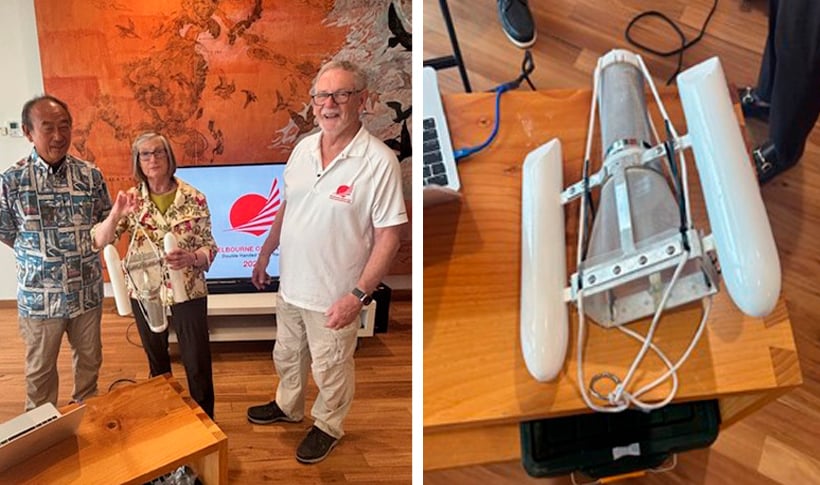
Image: Hajime Nitta (Nitta-san) Jackie Watts, George Shaw, the microplastic collection device. Photo credit: Lillian Sclater
19. Bayside Sculpture – Tommy’s Story
An evocative bronze sculpture entitled Tommy’s Story by sculptor Bill Perin sits on the sea wall in the bayside suburb of Middle Park. It has a powerful a back story.
In 1930, during the Great Depression, a local chap named Tommy worked on the wharves of Port Melbourne as a wharfie. Money was tight – possibly too tight for bathing or using public transport to get to work. So, Tommy would strip off his clothes, leave them on the beach, and then swim to where he left his work clothes. After a full day of physical work, Tommy would strip off his work clothes, swim all the way back, dress in his civies again, and head home.
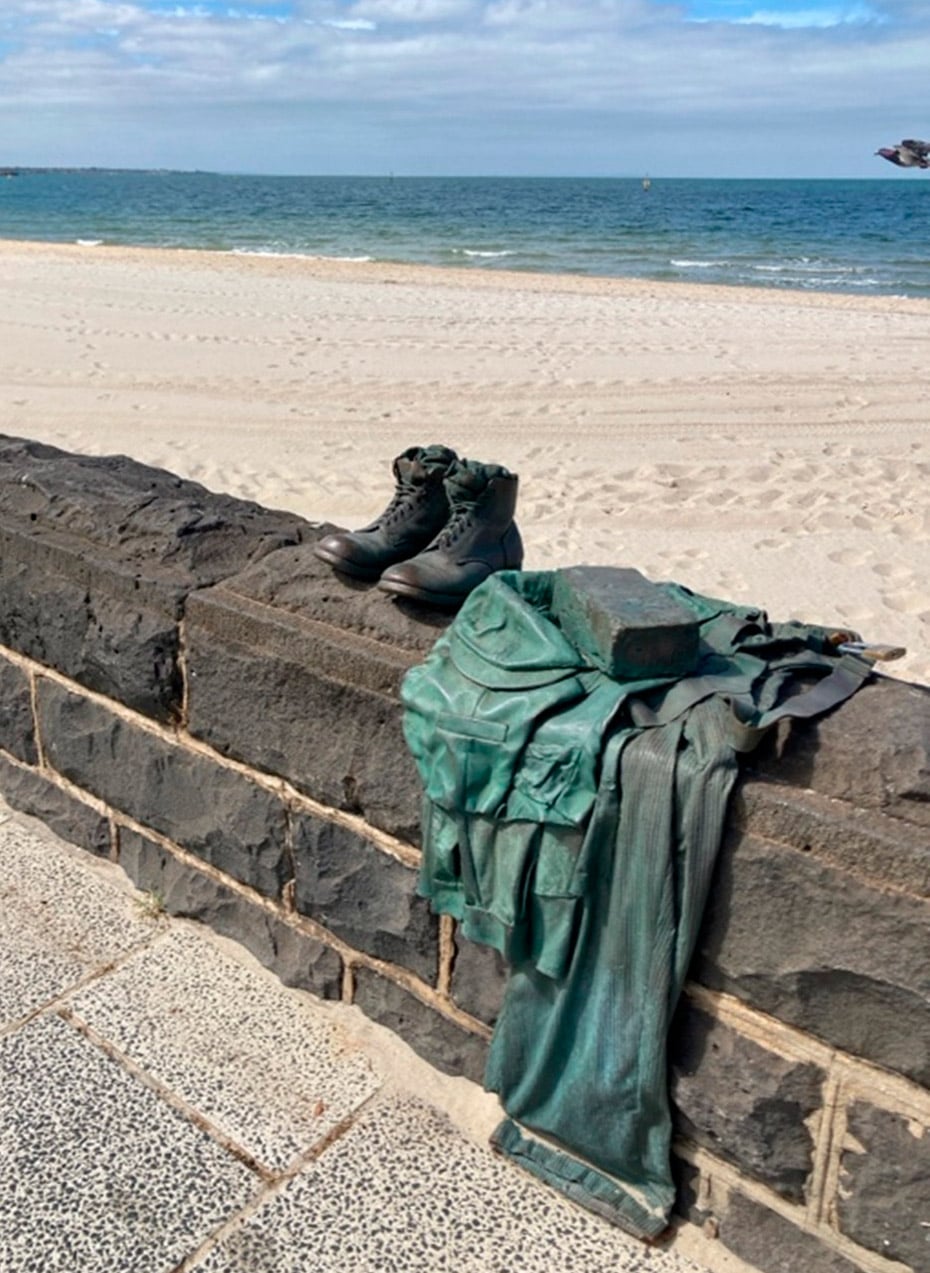
Image: Tommy’s Story sculpture, photo by Jackie Watts
20. Parks Victoria Review
A review of a government agency would not normally catch our attention, but a comprehensive review of Parks Victoria is some cause for concern to MMHN.
A reminder that Parks Victoria controls the on-water activity and infrastructure of the river and waterways. For example, the Quarantine Station at Port Nepean. Interim Parks Victoria CEO is Graeme Dear, formerly of Fisheries Victoria.
MMHN advocates for a change in the management of our waterways. Back in 2015/2016, a state committee was formed to consider how best to manage the lower reaches of the Birrarung (Yarra River). Many at the time believed reform was necessary and that a bureaucratic tangle (indeed competition) between a plethora of agencies was impeding optimum development. Regrettably, the Minister rejected the committee’s recommendations. Parks Victoria outmaneuvered the major contender, City of Melbourne, which continues to advocate for better management of its extensive waterways yet languishing waters. PV ascended the bureaucratic ranks, but the inefficiencies in management continue – as does the complete disregard for maritime heritage.
There is no reference to “water” or “heritage” in either the comments from the Premier or the statement from the Minister for the Environment, Steve Dimopoulos, during the announcement of the Parks Victoria review.
See: https://www.premier.vic.gov.au/statement-minister-environment
MMHN Social Media
Between MMHN Updates and the MMHN Docklands News monthly column, you may wish to check MMHN news on social platforms.
Facebook: https://www.facebook.com/profile.php?id=100090742014848
LinkedIn: https://www.linkedin.com/groups/14549598/
—
Best wishes,
Jackie
Dr Jackie Watts OAM
Chair,
Melbourne Maritime Heritage Network
info@mmhn.org.au