

Welcome to 2025!
Anchors aweigh!
A fitting term to start the year referring to an order that a ship’s anchors be raised. To ‘weigh anchor’ is to bring all anchor(s) aboard the vessel in preparation for departure. In response to the order, the phrase ‘anchors aweigh’ reports back that all anchors are clear of the sea bottom, meaning the ship is officially under way.
So, MMHN is once again setting sail, casting off, embarking, putting to sea, and hoping for progress in 2025.
Contents
1. Invitation to the first MMHN Event for 2025
2. Timely Reminders and Invitations for Maritime Enthusiasts Everywhere
3. Blessing of the Waters
4. Survival in the Single-Handed, Round-the-World Yacht Race
5. Ocean Racing Club of Victoria
6. Fighting Bushfires with Seawater
7. Werribee South Boat Sheds – Threat
8. Electric Vehicles in Freight Operations
9. World Ship Society
10. Warming Oceans – Threats and Opportunities
11. New Mapping Methodology
12. Australian Sea Lions
13. Illegal Fishing Around Australia
14. Kelp Matters – a lot!
15. Shadow Fleet – Russian Oil Cargo
16. Shadow Fleet – Multilateral International Action
17. Undersea Cables – Risk
18. Submarine Woe for Australia – Skills Shortage
19. Twelve Apostles Precinct Redevelopment
1. Invitation to the first MMHN Event for 2025
Presentation: The Melbourne / Osaka Cup
George Shaw, chairperson of the Melbourne to Osaka Yacht Race executive committee, veteran yachtsman, member of the Sandringham Yacht Club, and will discuss aspects of this 5500 nautical mile, two-handed yacht race starting in Melbourne (Sandringham YC 9/3) and finishing in Osaka. It is one of the only south-north, long distance ocean races in the world. The route passes through multiple weather systems and seasons across the Pacific Ocean. It is held every four years on average, organised through the collaborative effort of three yacht clubs; Sandringham Yacht Club (SYC), Hokko Yacht Club (OHYC) in Osaka, and the Ocean Racing Club of Victoria (ORCV).
When: Wednesday 26 February, 6pm – 7.30pm
At: The Lounge, Level 1, Waterways Branch, City of Melbourne, Docklands
Free Tram Zone, Stop D11 (last stop). Tram Nos 86, 70 and 35 and City Circle tram. Car parking available in Waterfront Way and Pearl River Road.
Directions: From the last stop in the Free Tram Zone for Tram Nos 86, 70 and 35, and the City Circle Tram, turn left at the end of the tram stop and walk down Glenti Place towards the marinas in Victoria Harbour. Just before you reach NewQuay Esplanade, take the external stairs, or the lift to the first floor of Waterways Branch.
2. Timely Reminders and Invitations for Maritime Enthusiasts Everywhere
January 29th – July 13th
Major Exhibition: Ocean Photographer of the Year
Time: 10am – 5pm at Seaworks, Williamstown
This is the 5th year of this London-based global photographic competition, established by Oceanographic Magazine.
See: https://seaworks.com.au/events/ocean-photographer/
February 7th – 10th
Australian Wooden Boat Festival in Hobart, TAS
It’s not too late to catch this must-see event! The largest celebration of wooden boats and maritime culture in the Southern Hemisphere.
See: https://australianwoodenboatfestival.com.au

February 27th
Lunchtime Presentation: Submarine Cables – a hidden weakness
Time: 12pm arrival for 12.30pm start at ANZAC House, 4 Collins St, Melbourne. Presented by Royal United Services Institute of Victoria (RUSI) and entry fee for non-RUSI members is $10.
About the presenter
Samuel Bashfield is an Australian expert on Indo-Pacific security and defence policy. Sam speaks and publishes on national security and defence issues in leading international disciplinary journals and influential media outlets. In his current role as Research Fellow in Defence at the MU Australia India Institute, he studies and interprets geopolitical and defence trends across the Indo-Pacific, with a particular focus on India, the Indian Ocean Region, maritime security and seabed issues. He is lead researcher on two Australian Government-funded research projects examining submarine cable security issues. Sam is in the final stages of his PhD in national security policy at the ANU National Security College.
3. Blessing of the Waters
Maritime enthusiasts and Orthodox Christian communities alike converged on piers, jetties and beaches over the festive season for the annual Blessing of the Waters and Holy Epiphany ceremonies. Held in many places, including Rye, Frankston, Rosebud and Geelong, the annual Greek Orthodox Blessing of the Waters ceremony was to be held on Princes Pier, Port Melbourne. For the lay spectator, the event involves a cross being cast into the water. Divers leap in afterwards and, amidst great thrashing about, compete to save the cross, and in doing so receive a full year of blessings. The historic background:
“Orthodox Christians commemorate the baptism of Christ in the Jordan River by John the Baptist. Traditions and customs related to the Epiphany date from the 2nd century. Epiphany also incorporates elements of ancient Greek customs. In regions of Western Macedonia, it is considered the most important celebration of the year, with people wearing new clothes for the occasion to symbolise renewal and illumination. Epiphany has been celebrated as a Festival of Light in the Eastern Church celebrating ‘enlightenment’ through baptism, earning it the name “The Great Blessing of the Waters, central to the celebration, involves the casting of the cross into seas, rivers, or lakes. In Greece and Greek communities abroad, children sing traditional carols, swimmers compete to retrieve the cross, and those who catch it receive blessings and gifts”.
January 6 marks the third and final feast of the Christmas season, an event that symbolises the revelation of the Holy Trinity, as recounted in the Gospels, and is also referred to as the Feast of Lights.
See: https://neoskosmos.com/en/2025/01/06/news/community/blessing…
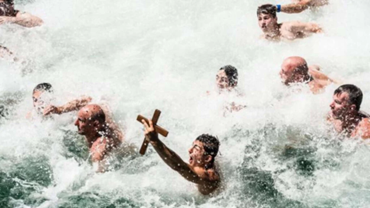
Image: Neo Kosmos website
4. Survival in the Single-Handed, Round-the-World Yacht Race
MMHN applauds the ORCA for not only rendering assistance to the courageous and skilled yachtswoman, Pip Hare, who limped into Port Phillip Bay on Dec 28th after surviving a disaster at sea, but for also generously enabling maritime enthusiasts the opportunity to share in this unusual adventure (or perhaps misadventure might be more accurate) by facilitating two public events in Docklands, while Pip and her vessel were recovering in the safety of Victoria Harbour.
In case you missed the context: During the 2024 Vendée Globe single-handed (solo) non-stop, unassisted round-the-world yacht race, disaster struck. Pip Hare’s vessel, Medallia, was de-masted. Fortunately, Pip was able to create a jury-rig arrangement from what components she could salvage. She then sailed on to Melbourne. MMHN also acknowledges the wonderful folks at the City of Melbourne Waterways Branch for hosting Pip Hare’s “Slow Boat to Melbourne”, arriving nearly two weeks later.
MMHN recommends that you see the video (link below) which shows this extraordinary woman, her courage, seamanship and humility. A true inspiration for any sailor. Pip reminds us all that more men have stepped on the moon than have completed the Vendee Globe race.
Website: https://www.piphare.com/
YouTube: https://www.youtube.com/@PipHareOceanRacinghttps://www.youtube.com/@PipHareOceanRacing
Facebook: https://www.facebook.com/PipHareOceanRacing
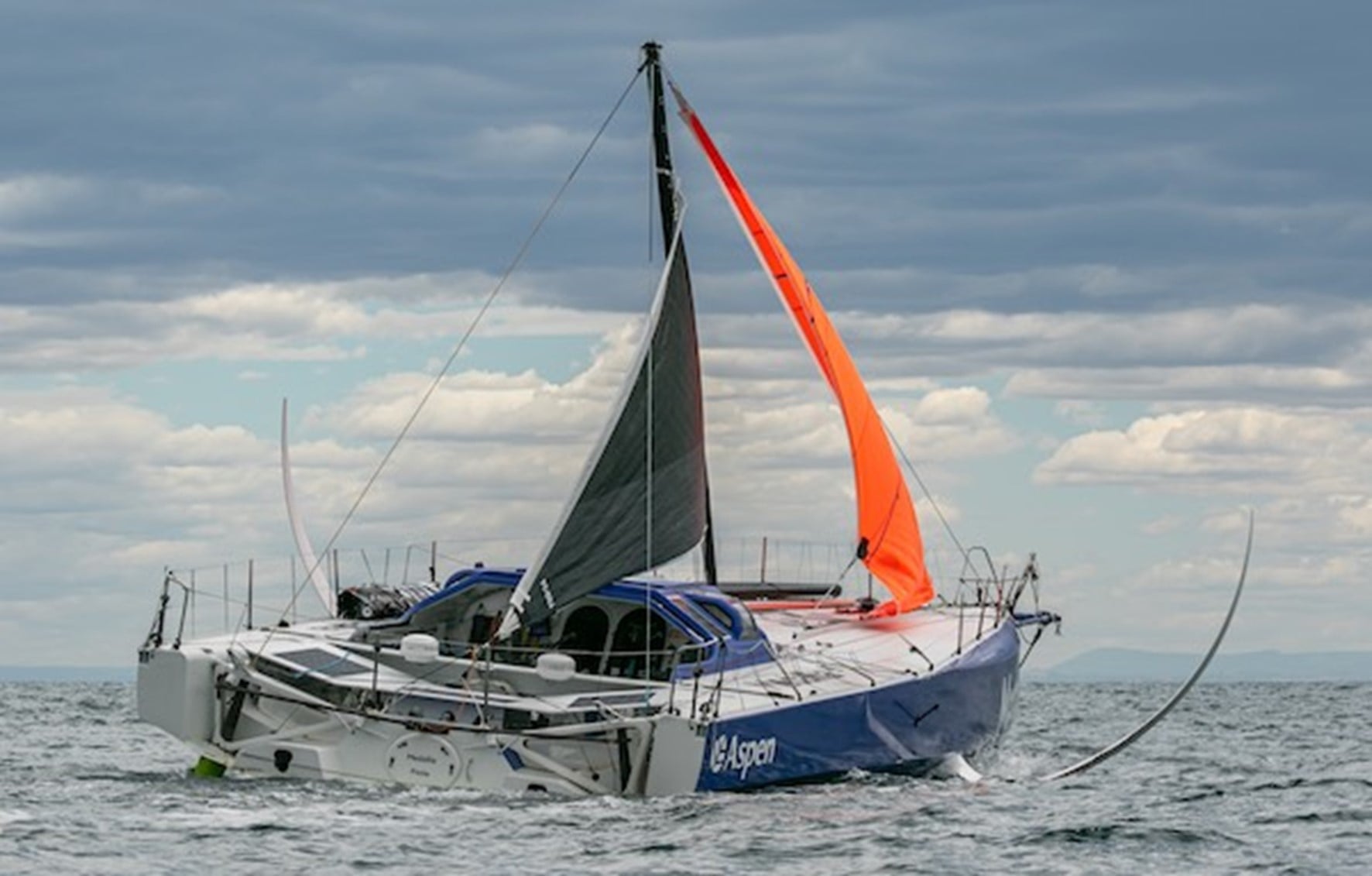
Image: ORCA Vessel Medallia off Mornington Yacht Club. Photo courtesy of Al Dillon.
5. Ocean Racing Club of Victoria
The Ocean Racing Club of Victoria (ORCV) was formed as the Cruising Yacht Club of Victoria by a group of sailors in 1949 and renamed in 1972. The ORCV was incorporated in 1986. The club was formed so that ocean races in Victorian waters could be efficiently developed and run by an organisation focusing specifically on the needs of ocean racers. ORCV is a not-for-profit organisation that draws its membership from major yacht clubs in Victoria. However, they do not compete with other yacht clubs by operating a clubhouse or marina facility.
What’s ahead for ORCV:
- February 14th – Melbourne to Port Fairy (135 nautical miles)
- March 7th – Melbourne to King Island (114 nautical miles)
- March 9th (of course) – The Osaka Cup, a 5,500 nautical mile, 2-handed yacht race starting in Melbourne and finishing in Osaka.
See: https://www.orcv.org.au/club-blog/5655-2025pip

6. Fighting Bushfires with Seawater
Given that we are an island nation, harvesting seawater seems an obvious solution to combating bushfires. However, in an article for The Conversation titled ‘Firefighting planes are dumping ocean water on the Los Angeles fires − why using saltwater is typically a last resort’, Patrick Megonigal explains why this isn’t the grand answer it seems to be. Environmental research indicates that dumping ocean water on fires may be the quickest option, but seawater can have long-term effects on equipment and ecosystems. Gardeners know that small amounts of salt – added, say, as fertilizer – does not harm plants, but excessive salts can stress and kill plants. While the consequences of adding seawater to ecosystems are not yet well understood, research is underway on what to expect by considering the effects of sea-level rise. A Smithsonian Environmental Research Centre project called TEMPEST is investigating how and why historically salt-free coastal forests react to their first exposures to saltwater. Further downsides to the use of saltwater include the corrosion of firefighting equipment and the dangers of collection amid ocean swells compared to flat freshwater lakes and reservoirs.
Commander Luke Patterson of Aviation Victoria explains; “Fresh is best. Salt water, while sometimes readily available for firefighting, is not ideal. Fresh is best for the fire ground, best for the equipment, and best for the pastures.” But tracking down the best fresh water sources can be difficult and time consuming. The CFA now relies on data from Digital Earth Australia (DEA) Waterbodies which uses satellites to detect the wet surface area of almost 300,000 waterbodies across Australia. The tool uses data from the NASA/USGS Landsat program to map waterbodies larger than five pixels. This metric indicates that a body of water is large enough to be used as a source for helicopters and planes refilling to fight fires.
See: https://theconversation.com/firefighting-planes-are-dumping-ocean-water
Also: https://www.ga.gov.au/scientific-topics/dea/news/finding-water-to-fight-fire
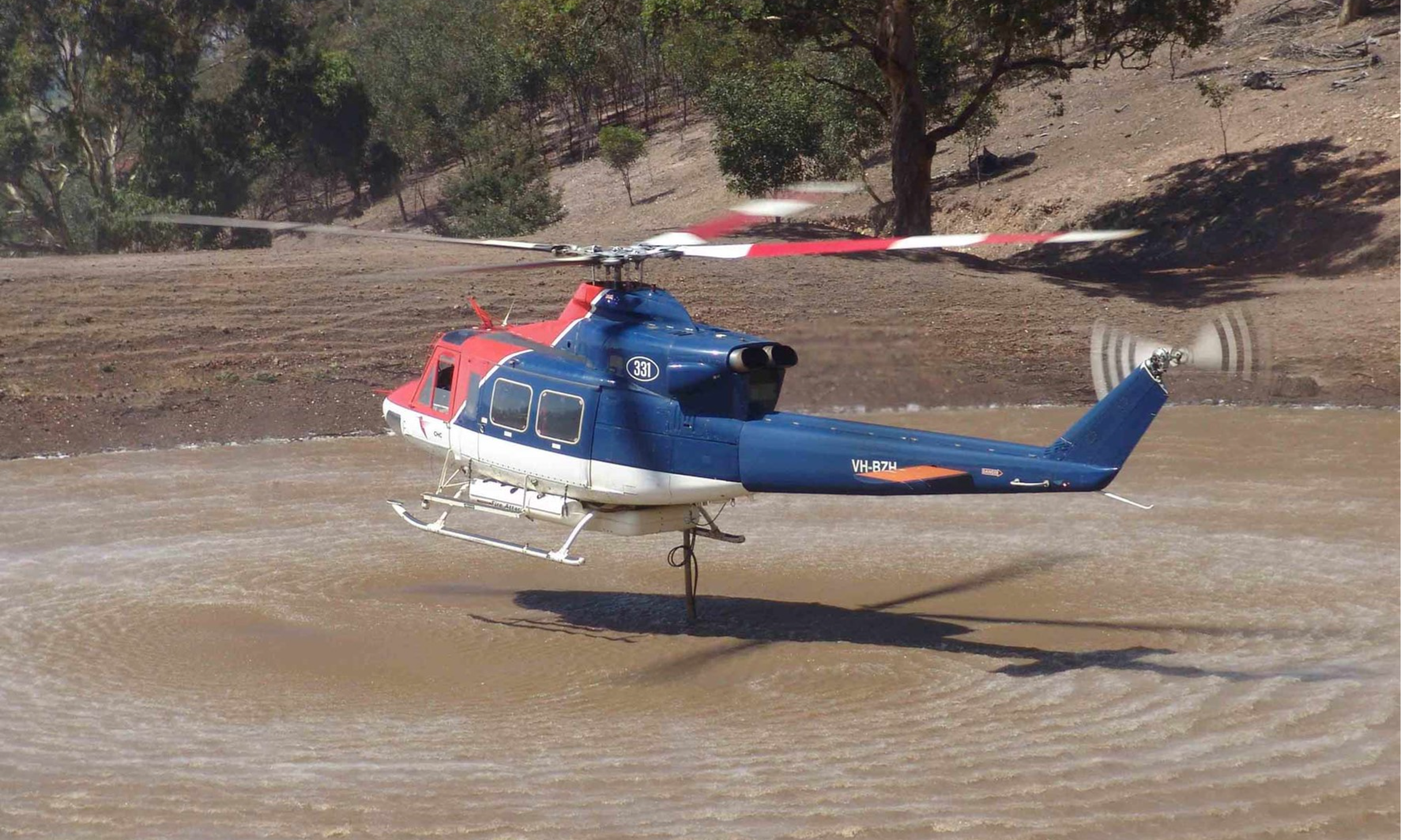
Image: Courtesy of CFA
7. Werribee South Boat Sheds – Threat
Often over-looked maritime infrastructure. Adam Carey (The Age 6/1) reports a threat to the historic Werribee South Boat Sheds.
“No sand, swimming or running water: The modest bayside beach sheds with a quiet cult following. Since the 1930s these sheds with no power or running water and very little in the way of beach on the narrow, weed-strewn foreshore on Melbourne’s south-western fringe, are being assessed for heritage protection. […]
Maltese, Italian, Macedonian and Greek post-war migrants who moved to Werribee South to work in the market gardens built many of the earliest sheds, constructing them out of timber, sheet metal, masonry, concrete and stone. Built on dunes or into the cliff face, the sheds are modest, with a ‘functional and often improvised form’ dictated by their owners’ limited budgets, a heritage review for the City of Wyndham says. […]
There are 144 boat sheds in Werribee South, dozens more than the 96 bathing boxes that have lined Brighton beach since the 1840s. The sheds [at Werribee] survived a campaign for their demolition after a scandalised Port Phillip Authority inspected them in 1967 and found the foreshore ‘in a disgraceful condition’. […]
City of Wyndham has since conducted a heritage review. It is reported that last year that 75 per cent of the Werribee South sheds were owned by people who now live outside Wyndham. The proposed heritage overlay would give the sheds the same protected status as Brighton’s bathing boxes. […]
‘There is a lot of history down there,’ said long-time boat shed owner and Wyndham Boatshed Association president Bruce McLeod.”
See: https://www.theage.com.au/national/victoria/heritage-push-for-werribee-south
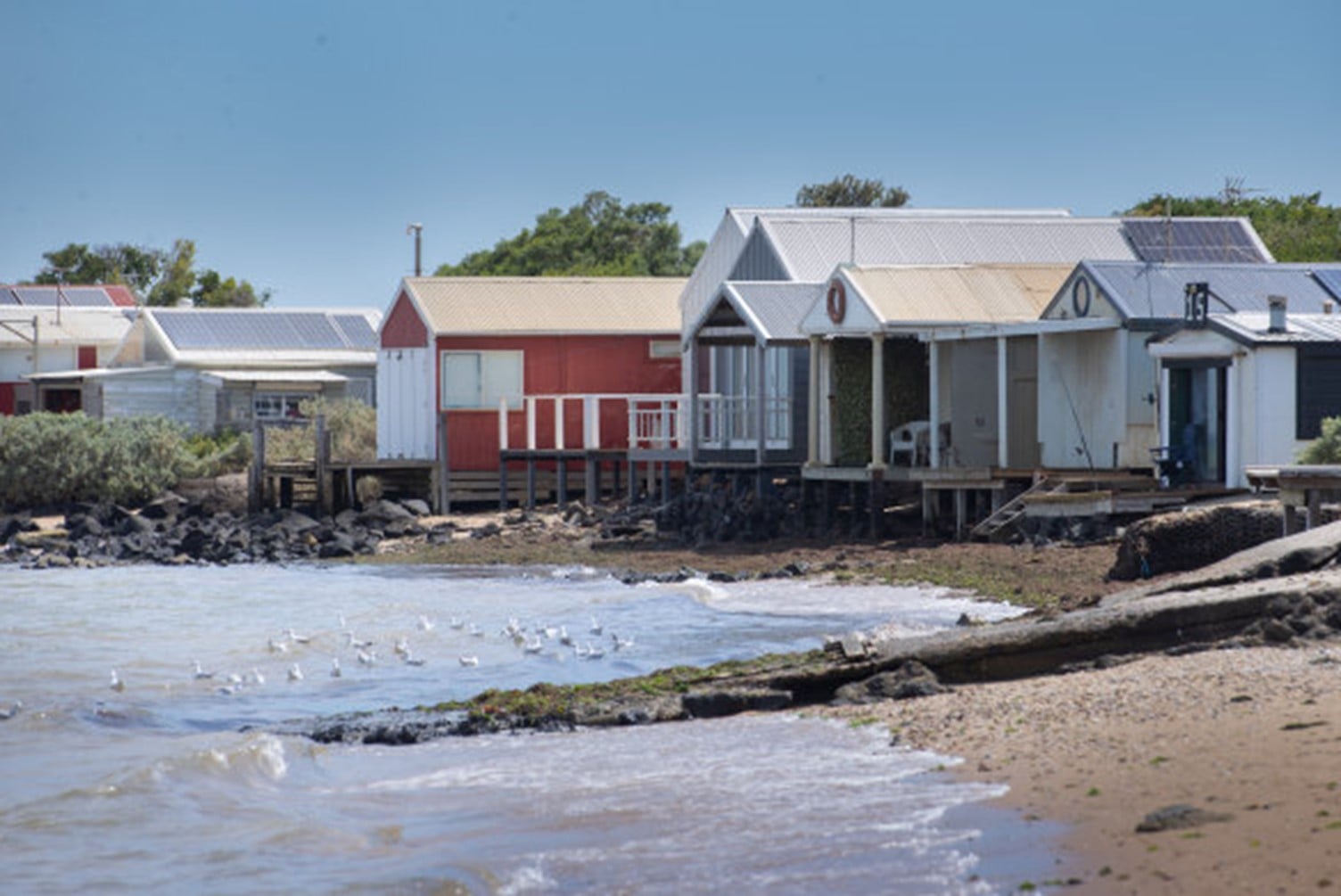
Image: THE AGE, photograph by Simon Schluter. The boat sheds district of Werribee South which is being considered for heritage protection.
8. Electric Vehicles in Freight Operations
Port operations are constantly evolving. It is pleasing to note that DP World, the terminal and supply chain operator in the Port of Brisbane, has introduced an electric internal transfer vehicle to its fleet – a first for DP World in Australia. This transition is projected to eliminate more than 120,000 litres of diesel fuel consumption annually. The electric ITV is designed to carry containers that can weigh as much as 88 tonnes within the port, replacing diesel-powered ITVs and reducing carbon emissions. This initiative is part of DP World’s sustainability strategy to build an efficient and sustainable supply chain for the future, which includes targets to achieve net-zero emissions by 2050, with a near-term target of 42 per cent reduction of carbon footprint by 2030.
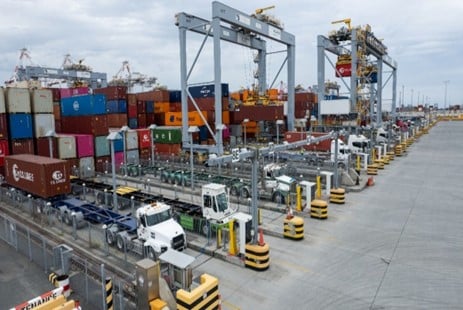
Image: MHD Supply Chain News
9. World Ship Society
MMHN congratulates and commends WSS members Peter Grunberg and John Nunn who have both ‘retired’ from editing the invaluable WSS Report, issued each month for the past 20 years. What a remarkable effort! The images and information they have shared with the wider maritime stakeholder community have been a source of wonder and we are assured that it will continue as volunteers hopefully step forward. It is fascinating to note the variety of global maritime trade passing by our coast. A reminder that the Victoria branch of the World Ship Society meets on the first Saturday of each month at the Port Education Centre in Lorimer St, Port Melbourne at 10:00am.
Sea pilot, Toby Shelton, will speak on Saturday 1st February. As well as the presentation, the splendid view of vessels passing so far up the Yarra estuary is well worth the effort. Secretary at PO Box 5038 Middle Park Victoria 3206. MMHN thanks WSS for the images which follow:
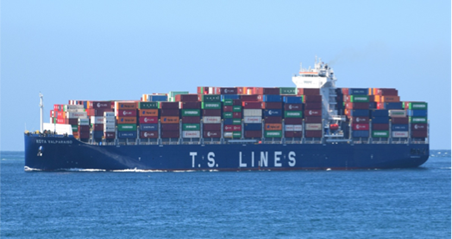
Image: WSS Photo by Bjorn Bjornesjo. The Milos IMO9967641. Maltese flag. Ultramax bulk carrier. 199m x 31m. Owned by Greece’s TMS Bulkers. Arrived on 11/12/2024 to load 50,000mt of wheat for Subic Bay, Philippines at Appleton Dock for shippers Louis Dreyfus Commodities.
Choc-a-block! How do such laden cargo vessels actually float?
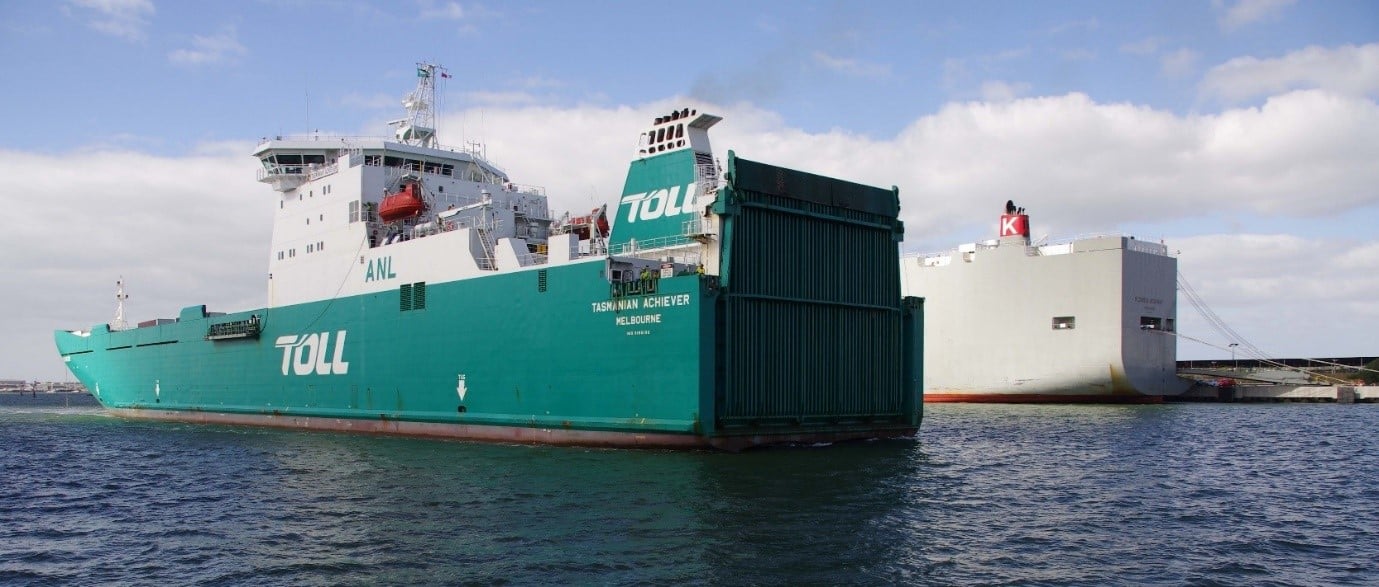
Image: Photo by Dale Crisp. Tasmanian Achiever IMO9812468. RoRo Ferry. Australian flag. Built in Nanjing, China 2018. 15,606dwt. 211m x 28m. A ‘local’ owned by Strait Link and operating on the Melbourne to Burnie run. When launched, she was claimed to be the largest Australian cargo ship. Pictured at Webb Dock with ‘Florida Highway’ in the background.
10. Warming Oceans – Threats and Opportunities
MMHN acknowledges that this is not fresh news, but inevitable change may generate unforeseen opportunities. Cape Town University researchers Andreas Schwarz Meyer and Christopher Trisos describe survival options for marine organisms within their specific ‘Thermal Safety Margins”. In an article for The Conversation on 5th Dec, the researchers explain that warmer ocean temperatures have upsides and downsides for marine life. “One option is for them to migrate to greater depths, which is not always possible… This will affect their ability to survive and reproduce, causing their numbers to decline, even to the point of local extinction.”
“At the same time, a warming ocean could make it possible for some species to colonise regions that were previously too cold for them. This is known as a ‘thermal opportunity’.”
The research project sought to create ecological forecasts examining the effects of warmer seas on 21,000 marine species. The research is extremely complex and inevitably speculative but continues to be an essential inquiry. Humans around the global coasts and beyond depend on marine food resources. We need to understand as much as we can before we are confronted with consequences we cannot undo.
11. New Mapping Methodology
On a related note, the University of WA has developed a new mapping method for critical marine habitat. Traditional remote sensing methods have struggled to track changes in key underwater flora such as kelp and seagrass. These habitats are foundational to marine ecosystems and vital for the survival and health of commercial fishery species. A team of researchers explain:
“By integrating onsite data with information gathered through underwater imagery, and satellite remote sensing, we formulated a novel remote sensing vegetation index.”
This index could be applied across diverse sites, depths, and habitat types.
12. Australian Sea Lions
And now, an entirely new insight. A pilot study conducted more than 100km offshore in the Southern Ocean analysed Australian sea lion numbers, which have declined alarmingly over the past 40 years. With a population estimated at 14,730 animals, the Wildlife Conservation Act of Western Australia (1950) has listed them as “in need of special protection”.
The Australian sea lion is the only endemic pinniped in Australia. MMHN recommends you watch this fascinating footage of sea lions fitted with recording devices, linked below.
See: https://www.youtube.com/watch?v=uWx_ZMqAOtU
Also: https://www.marineconservation.org.au/australian-sea-lions
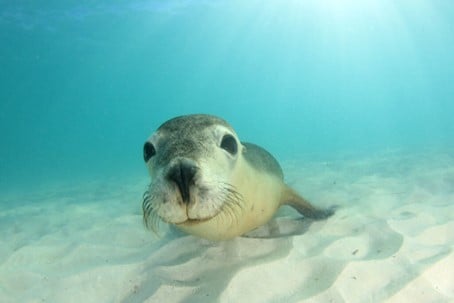
Image: Australian Marine Conservation Society website.
13. Illegal Fishing Around Australia
The ABC reports on the 15th of January, “Authorities investigate ‘unprecedented surge’ in foreign boats entering Australian waters.” Australian Fisheries Management Authority (AFMA) describes the current influx of boats as “unprecedented”.
The phenomenon is labelled as a “wicked” multifaceted problem enmeshed in intersecting policies and agendas (environment, national security, foreign relations, and politics). “There’s a real concern for the welfare of impoverished young fishermen — some of whom are dying in Australian waters in their desperation for a lucrative catch.”
“People from South-East Asia have had a presence on the northern coast of what’s now called Australia for hundreds of years, with Makassan crews setting up camp long before British settlement. It wasn’t until the 1970s and 80s that the current maritime boundaries were established. The number of boats has fluctuated in the decades since, but they have never stopped entirely.
Policies need to evolve beyond a ‘stop the boats’ approach to tackle the inexorable supply and demand factors driving this trade. ‘It’s going to be near-impossible to stop all of the illegal Indonesian fishing in Australian waters, as we have some of the best managed fisheries in the world — that’s always going to be very tempting to fishers on the other side of the border to access,’ [researcher, Natasha Stacey] says.
Officials are investigating whether organised crime is behind a wave of illegal foreign fishing boats in Australian waters, which locals say are more sophisticated than ever before. ‘I think it’s correct to say it’s unprecedented — since 2023 the numbers have been very high,’ AFMA’s general manager of fisheries, Justin Bathurst, says. ‘The factor driving the overall increase is financial. ‘There is an economic and a safety risk involved with illegal fishing, but unfortunately what we’re seeing is that the financial benefits outweigh that risk — that’s the feedback we’ve received from the Indonesian fishermen’.”
Read the full story: here.
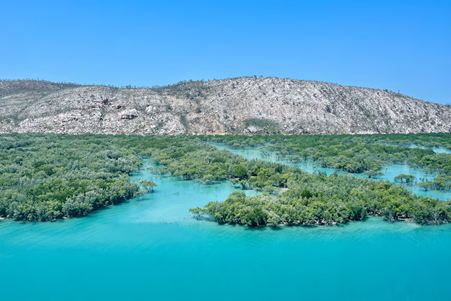
Image: ABC, Erin Parke. An aerial surveillance flight from Broome towards Koolan Island.
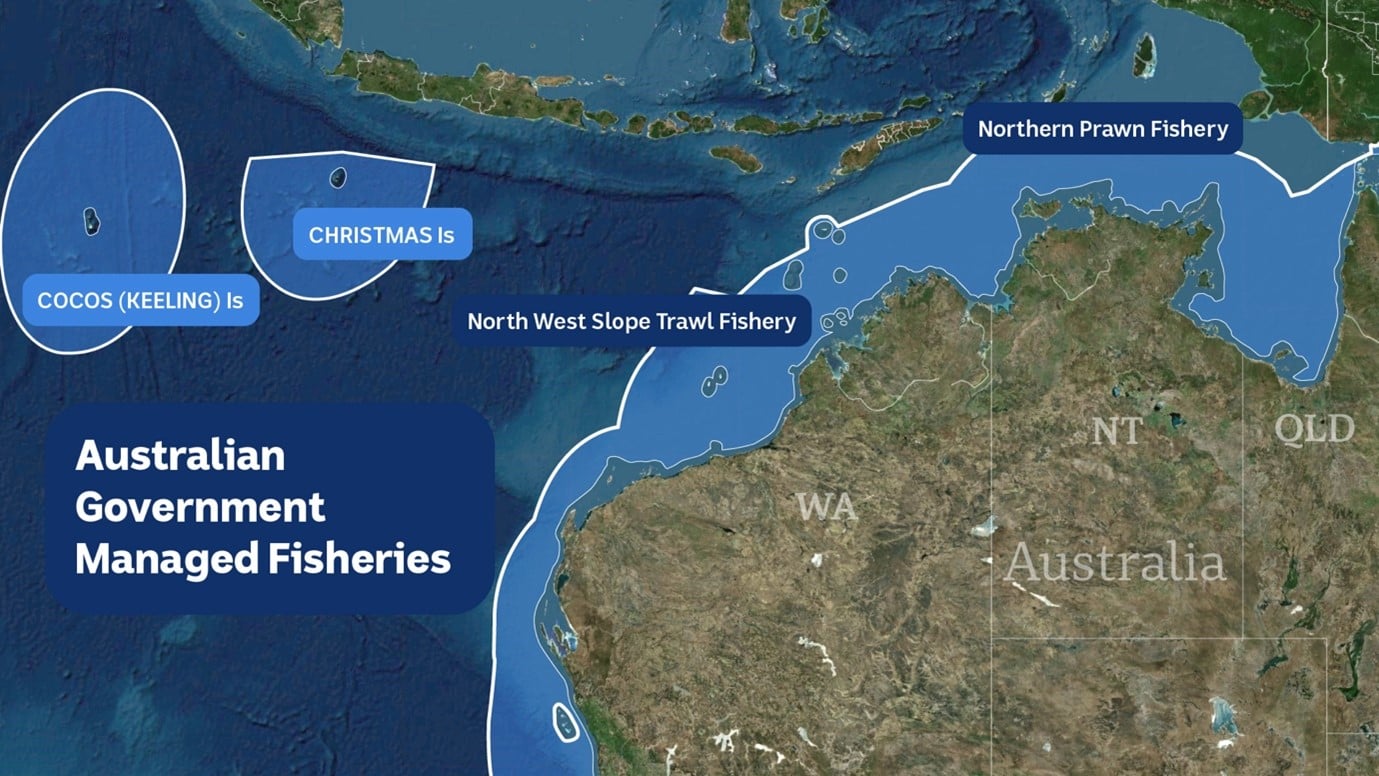
Image: ABC News/ABARES. In some areas, the Australian maritime border sits closer to Indonesia than the mainland.
14. Kelp Matters – a lot!
Kelp seaweed species are vital to underwater life, yet a dramatic rise in sea urchin numbers in the bay has decimated the golden kelp forests that should be present. An estimated 130 million sea urchins in the waters have created what is known as “urchin barrens”. Kelp forests host a greater diversity of plants and animals than almost any other ocean community. So, to alleviate this urchin-induced crisis, kelp is being planted as part of a project to restore kelp forests in Port Phillip Bay. On the 11th of January, ABC journalist Natalie Whiting reported on a collaborative project involving The Nature Conservancy Australia, Deakin University, the University of Melbourne, and Parks Victoria. The project involves culling urchins at sites in the Jawbone Marine Sanctuary and the Ricketts Point Sanctuary within the bay, and the planting of 400,000 kelp, over two years. It has involved growing baby kelp in a lab and then transplanting it into the bay, changing the seafloor from a ‘desert’ to a ‘forest’. Paradoxically, improved water quality in the bay is thought to have caused urchins to seek new sources of food – and they turned to kelp and thrived!
For excellent underwater images, see:
https://www.abc.net.au/news/2025-01-11/kelp-forests-sea-urchins-port-phillip-bay/104740450
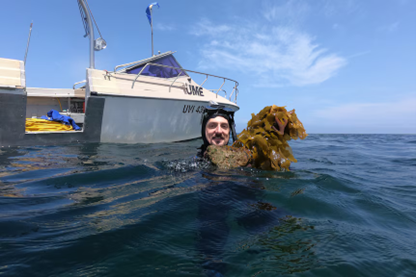
Image: Scott Breschkin is a marine scientist working on the program designed to revitalise the seafloor near Melbourne. (ABC News: Natalie Whiting)
15. Shadow Fleet – Russian Oil Cargo
Where politics and maritime trade intersect.
A ‘shadow fleet’, also referred to as a ‘dark fleet’ is a “ship or vessel that uses concealing tactics to smuggle sanctioned goods”. Shadow fleets are a direct response to international or unilateral economic sanctions. Oil exports are critical to the Russian economy and consequently the conflict with Ukraine.
Journalist for The Age, Stephen Bartholomeuwz, describes significant changes by the US Treasury as “sweeping action” to reduce Russia’s energy revenues. This includes sanctions on 2 of Russia’s biggest oil companies, 2 companies which insure Russian oil cargoes LNG and oil projects, energy exporters, oilfield service providers, and more than 180 ships (including 160 oil tankers). Russia has a vast aging oil cargo fleet which it self-insures. US oil changes also impact on China’s role through the Shandong United Energy Pipeline Transportation Company which facilitates port transfers and discharge of Russian oil.
The impact is evident. Reuters reports 65 oil tankers paused operations in various places around the world following the recent US and UK sanctions against Russia’s oil industry and shadow fleet. Reuters cited maritime tracking data on the 13th
of January, reporting that 5 of those tankers were anchoring off China and Singapore, while others were idling in the Baltic Sea near Russia’s far east. The latest sanctions targeted more than 180 oil-carrying vessels of Russia’s so-called ‘shadow fleet’, a group of aging tankers routinely used for sanction evasion. Several of these vessels are also reportedly involved in transporting sanctioned Iranian oil. Experts cited by Reuters said the latest measures drove up prices of tankers as demand for non-sanctioned vessels grew.
Also: https://www.smh.com.au/business/the-economy/biden-tightens-the-noose-on-putin
16. Shadow Fleet – Multilateral International Action
The US State Department reports: On Friday January 10, 2025, in Copenhagen, Denmark convened a multilateral group of experts to develop concrete plans to further counter Russia’s shadow fleet including its high-risk activities in the Baltic Sea. Already, officials have built on that in-person engagement with follow-on virtual consultations to identify next steps and establish strong working relations.
“The Russian shadow fleet has led to an increased risk of an environmental disaster in the Baltic Sea as well as globally. Obfuscating vessel positions through GPS interference and AIS manipulation has increased the risk of an accident. Recent events have shown that the shadow fleet used by Russia may also pose a risk to critical maritime infrastructure”.
See: https://www.state.gov/multilateral-experts-group-initiates-joint-actions
17. Undersea Cables – Risk
Reliable and legitimate insurance is, of course, related to cable disruption or mishaps around the globe. Not surprising then, given the ‘shadow fleet’ operating in the Baltic Sea, that, “Finnish investigators find an anchor drag mark on the Baltic seabed after suspicious cable damage.”
“Finnish investigators probing the damage to a Baltic Sea power cable and several data cables said they found an anchor drag mark on the seabed, apparently from a Russia-linked vessel that has already been seized. The discovery heightened concerns about suspected sabotage by Russia’s ‘shadow fleet’ of fuel tankers — aging vessels with obscure ownership acquired to evade Western sanctions amid the war in Ukraine and operating without Western-regulated insurance. The Estlink-2 power cable, which transmits energy from Finland to Estonia across the Baltic Sea, went down on Dec. 25 after a rupture. It had little impact on services but followed damage to two data cables and the Nord Stream gas pipelines, both of which have been termed sabotage.
Finnish police chief investigator, Sami Paila, said late Sunday the anchor drag trail continued for ‘dozens of kilometers (miles) … if not almost 100 kilometers (62 miles).’”
See: https://apnews.com/article/finland-estonia-russia-cable-undersea-sabotage-nato
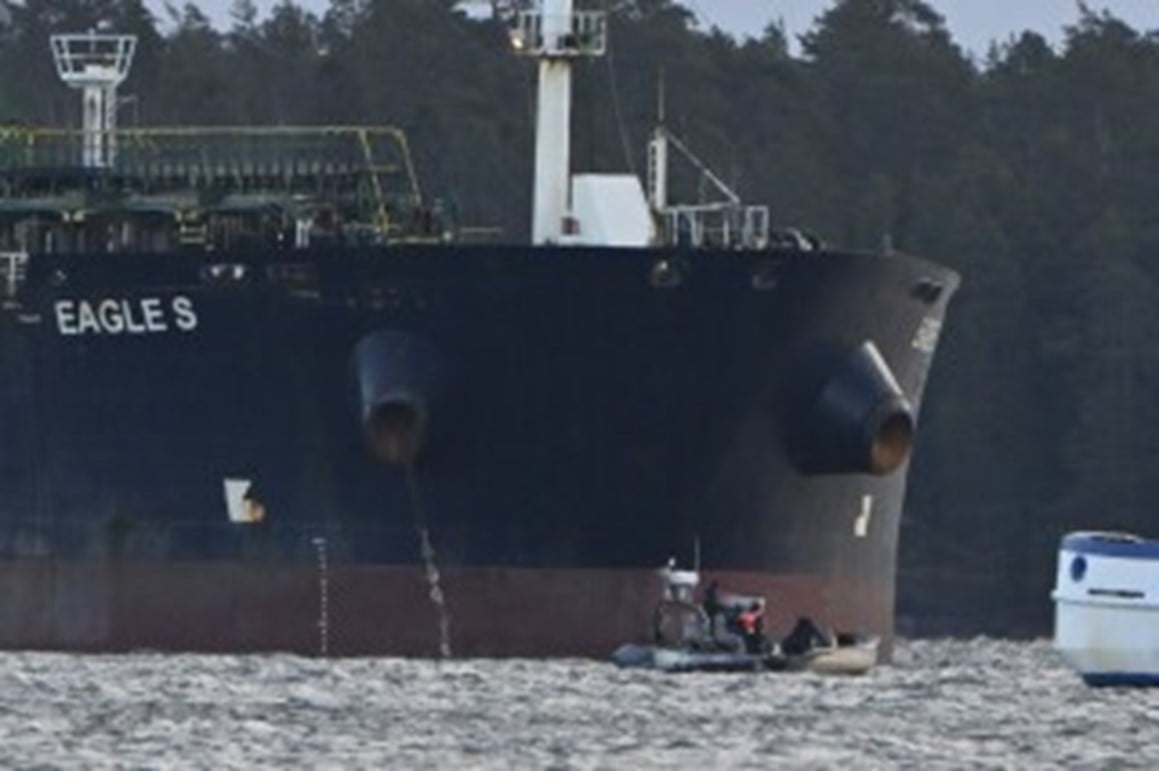
Image: Finnish Coast Guard stopped a small boat which tried to reach the Cook Islands, registered as oil tanker Eagle S, which was anchored near the Kilpilahti port in Porvoo, on the Gulf of Finland. Monday, Dec. 30, 2024. (Jussi Nukari/Lehtikuva via AP)
18. Submarine Woe for Australia – Skills Shortage
A shortage of skilled maritime workers is not merely Australia’s problem.
Peter Briggs, a retired submarine specialist and a past president of the Submarine Institute of Australia writes for the Australian Strategic Planning Institute (ASPI) on the 14th of January: “Australia’s plan to acquire Virginia-class submarines from the United State is looking increasingly improbable. The US building program is slipping too badly. This heightens the need for Australia to begin looking at other options, including acquiring Suffren-class nuclear attack submarines (SSNs) from France. The Covid-19 pandemic dramatically disrupted work at the two shipyards that build Virginias, General Dynamics Electric Boat at Groton, Connecticut, and Huntington Ingalls Industries’ yard at Newport News, Virginia. It badly hindered output at many companies in the supply chain, too. With too few workers, the industry has built up a backlog, and yards are filling with incomplete submarines. The situation in the shipyards is stark. The industry laid down only one SSN in 2021. It delivered none from April 2020 to May 2022. The USN has requested funding for only one Virginia in fiscal year 2025, breaking the two-a-year drumbeat, ‘due to limits on Navy’s budget topline and the growing Virginia class production backlog’.”
See: https://www.aspistrategist.org.au/virginia-we-have-a-problem/
19. Twelve Apostles Precinct Redevelopment
On the 12th of December 2024, Victorian Minister for Regional Development Gayle Tierney announced the redevelopment contract for $126 million investment by State and Federal government in a Tourism Centre, through the Geelong City Deal. The Geelong City Deal is a partnership between all three levels of government that aims to revitalise the city and regional economy while encouraging people to spend more time in the region.
“Following the engagement with the community, the project will also upgrade the parking spaces and pedestrian access, create a Welcome Garden that celebrates the rich bio-cultural heritage of the Eastern Maar community, as well as a garden rooftop lookout with breathtaking views over the ocean.”
Road infrastructure will also be upgraded with visitor numbers to the Great Ocean Road and Shipwreck Coast continuing to rise. Construction is projected to create up to 70 jobs in the planning, project management and design process, as well as 90 full-time construction jobs and 50 ongoing roles.
MMHN applauds infrastructure investment in this facility to increase visitation and generate longer regional stays. However, a question remains as to whether such numbers will further enhance this marvellous place.
See: https://minister.infrastructure.gov.au/mcbain/media-release/builder-announced
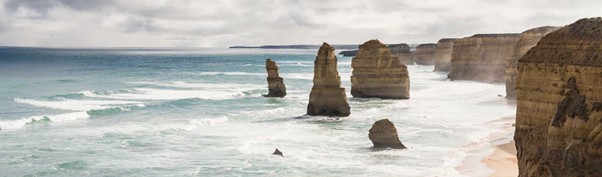
Image: The Twelve Apostles, Great Ocean Road.
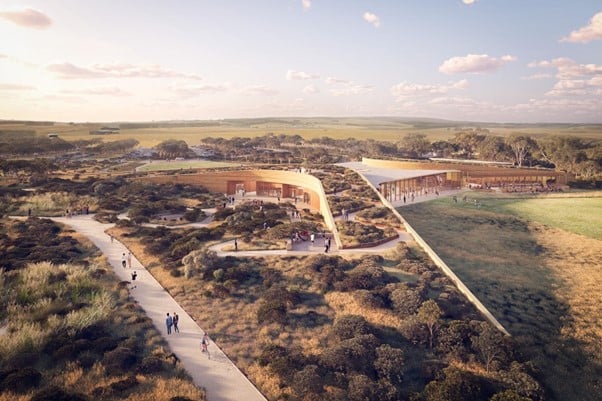
Image: Parks Victoria. Artist rendition.
MMHN Membership
If you have enjoyed the MMHN Updates in 2024, we invite you to please consider joining MMHN so that together we can continue to staunchly support due recognition of the unique maritime heritage of the Docklands precinct.
Register online at: https://mmhn.org.au/membership/
Best wishes,
Jackie
Dr Jackie Watts OAM
Chair,
Melbourne Maritime Heritage Network