

Greetings,
Given that Australia is an island continent, media coverage of naval action around the globe seems to be heightened recently (RAN, USA, UK, China, etc). While MMHN finds the recent plethora of strategic and global naval ‘cruising operations’ fascinating, such activity is not, as the saying goes, ‘new news’ in that Melbourne has a long history of being deemed a globally strategic port to visit in the far south. For example, see the first item below.
Contents
1. The 1925 Visit of the United States Fleet – 100th Anniversary
2. Shipping Control Tower, Victoria Harbour – Excellent News… Nearly
3. Ship Breaking – Misery Writ Large
4. Russian Shadow Fleet – Australia Acts
5. Japanese Ship Building – Mogami
6. The German-Japanese Commercial Competition
7. Talisman Sabre Project – Maritime Engagement
8. Toxic Algae: South Australia’s Unfolding Marine Horror
9. Port of Darwin Ownership
10. HMAS Arafura – Finally Commissioned
11. Undersea Cables – Risk
12. Panama Canal – Wrangle Continues
13. From Steam to Green
14. A Closer Look: Cruise Economy in Victoria
15. Swakopmund Maritime Museum, Namibia
16. Upwellings Closer to Home
17. Australia’s Maritime Strategic Fleet – MIAL
18. Invitation: Last Light on Victoria Dock Exhibition
1. The 1925 Visit of the United States Fleet – 100th Anniversary
MMHN Board Member, Michael O’Brien, invites you to imagine the excitement 100 years ago at the 1925 Visit of the United States Fleet. A naval spectacle that called at Port Melbourne and Victoria Dock (now Harbour), it was the largest peacetime visit by a naval force in Australia’s history. This visit was, by any measure, a spectacular event. Fifty-six US Navy warships, including 11 battleships and all painted grey, visited both Melbourne and Sydney, along with 11,470 men in the Melbourne squadron (including 26 destroyers), and 13 ships with 13,350 men in the Sydney squadron. Imagine such a fleet in the Port of Melbourne. While 4 battleships berthed at the now demolished Princes Pier, all 26 destroyers docked spectacularly at Victoria Harbour. Quite a sight. The visit lasted from 23rd July to 6th August.
Melbourne enthusiastically greeted and entertained the US Navy. As the fleet approached Melbourne, the YMCA called out for families willing to host a US sailor for dinner and overnight accommodation. Thousands of spectators lined the bay to watch the arrival. Others boarded the excursion paddle steamers, Weerona and Hygeia, to greet the fleet as it entered Port Phillip Bay, sailed to Hobsons Bay and docked at Victoria Dock and Port Melbourne’s piers. An estimated half a million people visited the ships in port. Entertainment associated with the event included baseball matches at the MCG and Albert Park; receptions at Queens Hall and Government House for admirals, captains, and officers; a Lord Mayor’s Ball for 3000 guests at the Exhibition Building; race meetings; performances at theatres and cinemas; day trips by train or bus; a parade through the city and fireworks! Wow!
Certainly this ‘goodwill cruise’ was a very popular public event but, as was noted by some, it also served as a signal to Japan and UK of the rising capability of the US Navy after WWI. Conscious that the possibility of conflict with Japan might require the US fleet to deploy across the vast distance of the Pacific Ocean, the US Navy used this ‘goodwill cruise’ to Australia to increase their understanding of the logistics involved in sailing this arena. Had the US undertaken such a ‘goodwill cruise’ to the Philippines or elsewhere in East Asia, tension with Japan may have increased.
Sadly, conflict with Japan eventuated anyway.
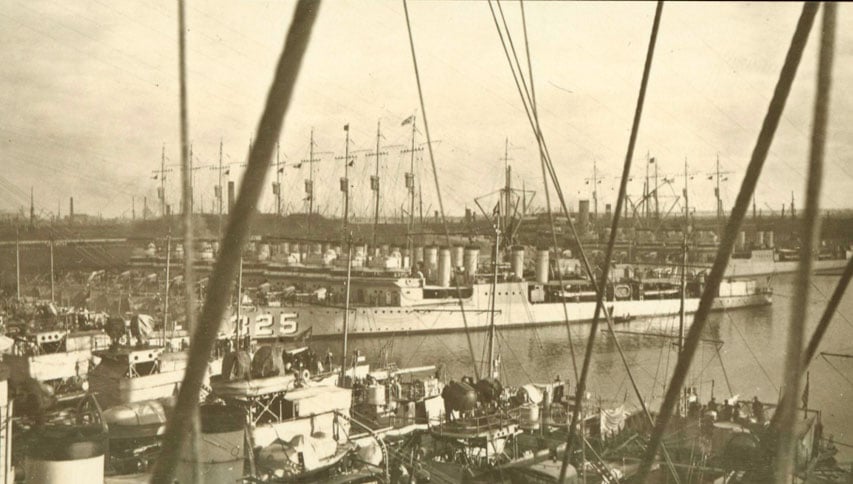
Image: Destroyers of the US Fleet at Victoria Harbour (SLV, 2097513)
2. Shipping Control Tower, Victoria Harbour – Excellent News… Nearly
Heritage Victoria have recommended that the Shipping Control Tower be included in the Victorian Heritage Register as a Registered Place. MMHN is indeed delighted to support the HV recommendation, having long advocated for this protection. MMHN considers this a major, and all too rare, win (or progress towards a win, anyway) for maritime heritage in Docklands Precinct. But the threat is not over yet. Close reading of the HV documents indicates a lot of wriggle room for property developers who do not support heritage preservation. The Heritage Council makes the final decision in due course. Meanwhile, maritime heritage stakeholders have an opportunity to make a supporting submission.
MMHN encourages you to respond to the recommendation, addressing any comments you perceive as potentially problematic within the recommendation. Submissions will be accepted online for a period of 60 days and will factor in the Heritage Council decision. MMHN invites you to;
- Read the HV report. It provides an excellent summary of the significance of this unique port infrastructure asset and includes wonderful images. https://assets.heritagecouncil.vic.gov.au/assets/ED-recommendation-Include-Shipping-control-tower.pdf
- Submit your response online:
https://heritagecouncil.vic.gov.au/decisions/executive-director-recommendations
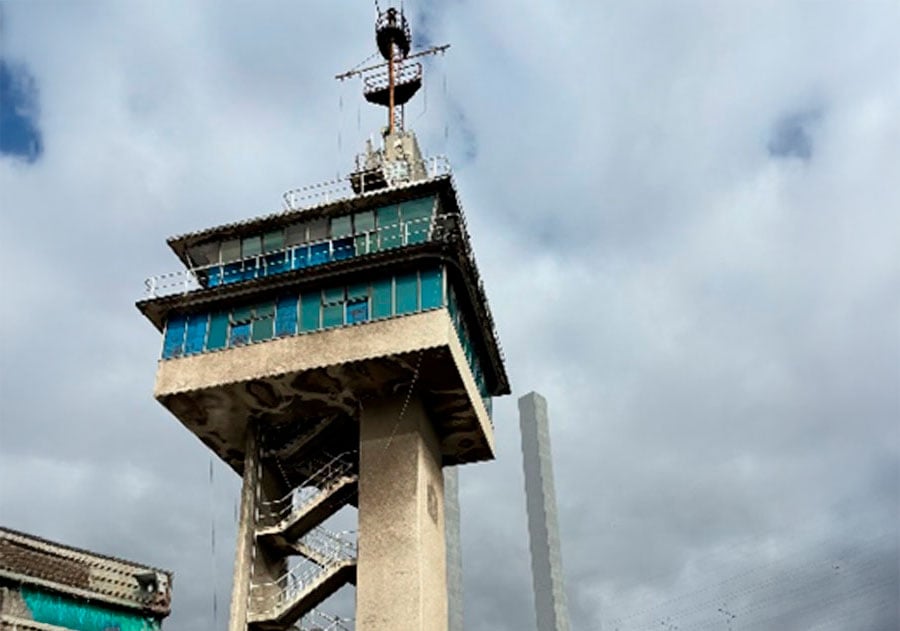
Image: The Shipping Control Tower, via Docklands News.
3. Ship Breaking – Misery Writ Large
MMHN thanks the Peninsula Ship Society for alerting us to this fascinating TV program, ‘The World’s Most Dangerous Job’. It details the extremely dangerous work practices encountered in the shipbreaking industry in Bangladesh and elsewhere. This program concludes with the mysterious circumstances that led to the breaking up of the Australian vessel Searoad Tamar which was sold to be used on the Mediterranean. Unregulated and in constant demand, the shipbreaking industry in many third world countries creates generational human misery. Most of us who enjoy ships, the economic benefits associated with maritime trade, and (dare we admit it) cruise tourism, are oblivious to the extent of this oppressive industry.
See: SBS Dateline: The World’s Most Dangerous Job
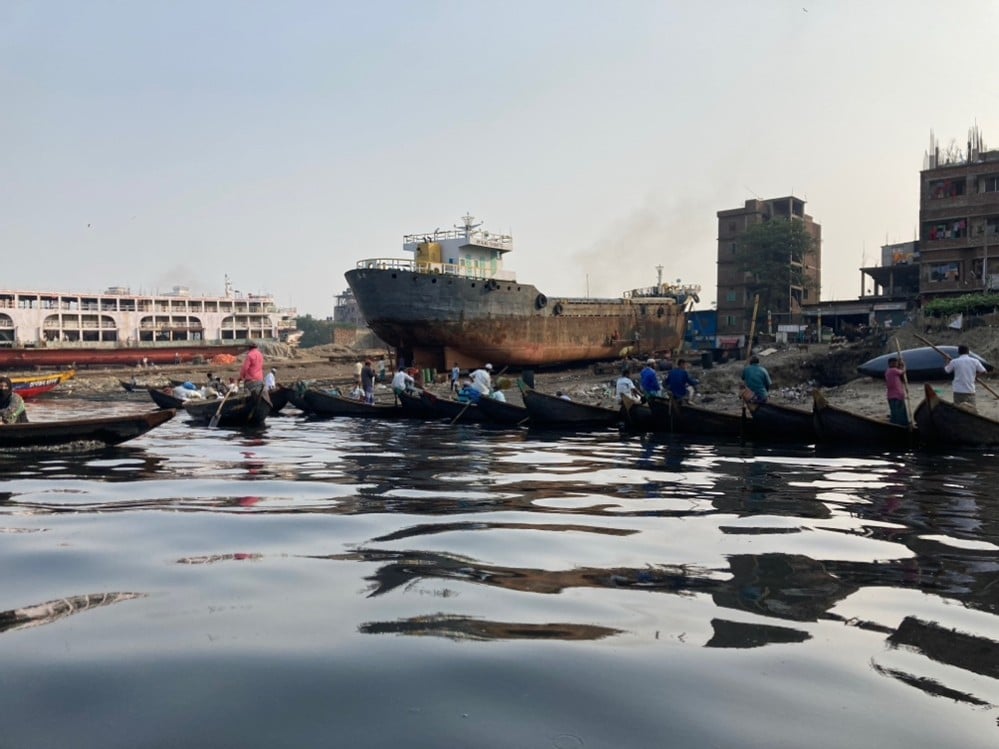
Image: Dahkarm, Bangladesh via Jackie Watts.
4. Russian Shadow Fleet – Australia Acts
Given the environmental and economic risk attached to Russian shadow fleet operations, it is pleasing to note the headline, “Australia imposes sanctions on Russian shadow fleet vessels”. The Federal Government has now imposed targeted sanctions on 60 vessels linked to Russia’s shadow fleet which continually, “circumvent international sanctions and sustain its illegal and immoral war against Ukraine. Operating under deceptive practices, including flag-hopping, disabling tracking systems, and operating with inadequate insurance, the shadow fleet enables the illicit trade of Russian oil and other sanctioned goods.”
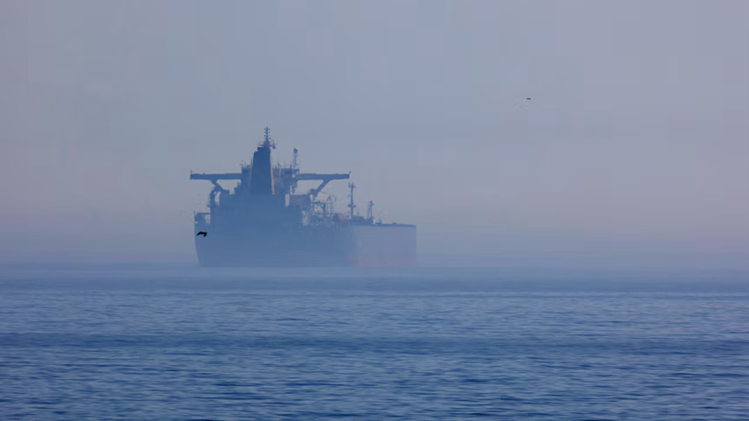
Image: A Russian ship, via ABC.
5. Japanese Ship Building – Mogami
Since the mid-1850s, Nagasaki Shipyards has built and launched ships, including those for the Japanese Navy. As reported by David King in the Sydney Morning Herald, its productive shipbuilding and munitions factories were the reason the city was targeted by the US Fat Man nuclear bomb in 1945. In July, Mitsubishi Heavy Industries (MHI) will launch Japan’s 11th Mogami frigate – a high-tech warship with eerily slick, smooth surfaces. These vessels will add to the Japanese Maritime Self-Defence Force (i.e. the Japanese Navy). The Mogami needs only 90 crew, while other frigates require about 120. The ‘nerve centre’ within the ship, the onboard Combat Information Centre (CIC), controls a number of functions that used to be shared among many teams and locations. “It can be a mine sweeper and a mine layer, largely automated and equipped with unmanned surface and underwater vehicles”. The Mogami’s weapons systems include surface-to-surface missiles (SSM), a missile self-defence system (SEARAM) and an optional 32 vertical launch system missile cells (VLS). It also fits a Seahawk helicopter. Each crew member wears a sensor, like a smartwatch, that monitors their locations and vital signs. Between 2019 and 2034, Japan will build and deliver 24 ships, indicating that within about 10 years, Japan will have moved from a from largely pacifist approach to a military technology exporter.
See: ASPI Strategist: Mogami class offers strong technical advantages in Australia’s frigate competition
See: SMH: Inside the futuristic Japanese Warship that could change the Australian Navy
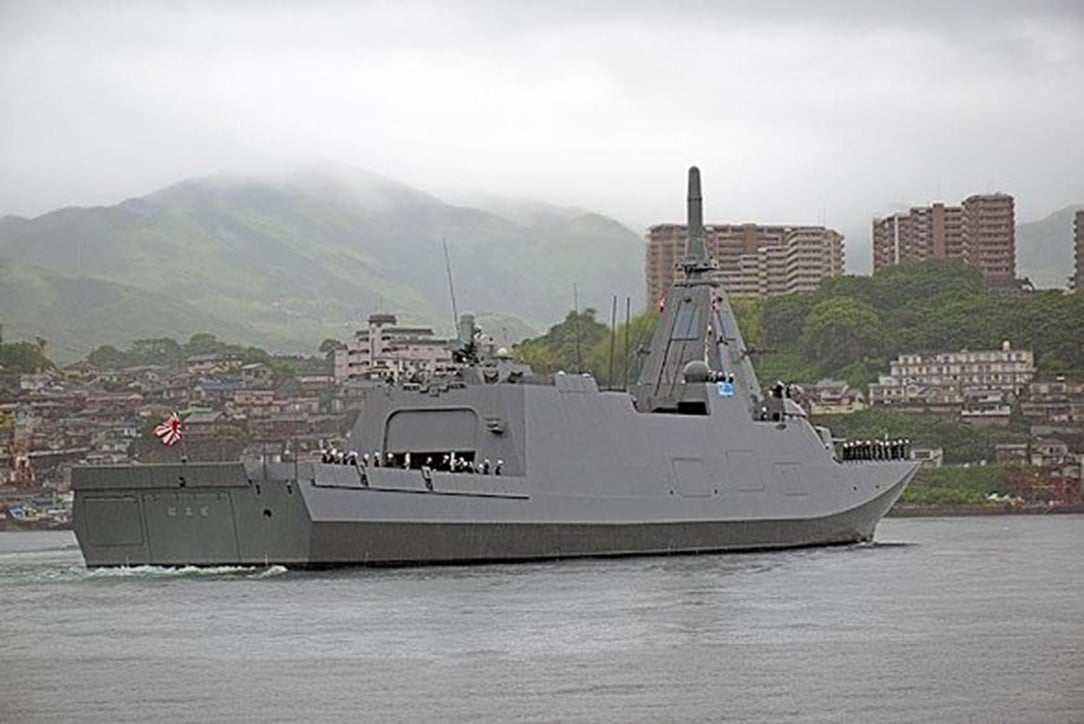
Image: The Niyodo Mogami frigate in Nagasaki in May this year via Mitsubishi Heavy Industries.
6. The German-Japanese Commercial Competition
The RAN’s intense interest in Japan’s Mogami has come about because Australia intends to spend $10 billion on a new fleet of 11 general-purpose frigates, known as Project Sea 3000. Australia’s plan is to acquire this fleet of frigates quickly to help replace the Anzac-class frigates which are approaching the end of their service, and to fill the gap before the eventual arrival of Australia’s larger Hunter-class heavy frigates, expected in 2032. The decision on whether to go with the Japanese Mogami or the German MEKO A-200 will be made by the Albanese Government by the end of this year. To keep the timeline tight the first 3 ships will be made overseas with the next 8 to be built in Australia. The first ship will be delivered in 2029. The Japanese MHI company is competing with German boatbuilder Thyssenkrupp Marine Systems (TKMS) to be the provider. TKMS is already deeply experienced in naval shipbuilding in Australia, with the current Anzac-class fleet based on its design. TKMS has also signed a memorandum of understanding with Saab, which makes the combat system already used by Australian warships. The German ship, the MEKO A-200 frigate, is the option competing with the Mogami. In coming months, the Australian military and government will make the decision, choosing between ships designed by Australia’s WWII adversaries.
See: The Age: Shots fired in bid to build new warships for Australia
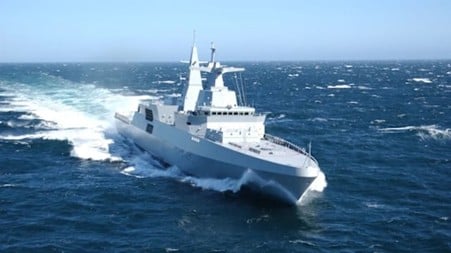
Image: German shipbuilder TKMS’ Meko A-200 frigate via The Age.
7. Talisman Sabre Project – Maritime Engagement
The media has reported on the Talisman Sabre exercises happening during July of this year, but perhaps not so well known is the extent of maritime engagement, with the naval forces of multiple nations participating in the Talisman exercises and training activities. Participating naval vessels include HMAS Adelaide, HMAS Choules, USS America, USS New Orleans, USS Green Bay, JS Izumo, JS Shimokita, and ROKS Marado. Japan sent many Japanese marines (members of the Amphibious Rapid Deployment Brigade) for operations in Queensland. The exercise involves amphibious landings, maritime strike operations, and joint logistics planning. Forces from Australia, the US, UK, Indonesia, South Korea, and Germany will participate. Key aspects include the integration of diverse capabilities, search and rescue operations, and the demonstration of the ability to project power from the sea. US Army demonstrated its land-based maritime strike capabilities by successfully firing a missile against a target at sea. Maritime forces are integrated with land and air components, including the use of HIMARS (High Mobility Artillery Rocket System).
See: Australian Government Defence Activities: Talisman Sabre

8. Toxic Algae: South Australia’s Unfolding Marine Horror
It is impossible for MMHN to ignore this catastrophic event which is now being described as an “underwater bushfire”, causing mass destruction along the SA coastline. Some argue it is time to declare the algal bloom a “national disaster”. In 2020, federal law was passed to allow the Governor-General to declare a national emergency if the PM was satisfied that an event was “causing harm that is nationally significant in Australia or in an Australian offshore area”. For the South Australian Government, a “national disaster” declaration could unlock federal funding through the National Emergency Management Agency’s “Disaster Recovery Funding Arrangements”. These cost-sharing arrangements between the Commonwealth and State Governments provide financial assistance to disaster-affected communities. Funding could come in the form of clean-up and recovery grants, personal hardship assistance, community recovery funds, or concessional loans for small businesses and primary producers.
See: ABC News: Algal bloom prompts national disaster call
See: ABC News: Declaring national disaster for SA toxic bloom
See: ABC News: Yorke Peninsula Community call for support
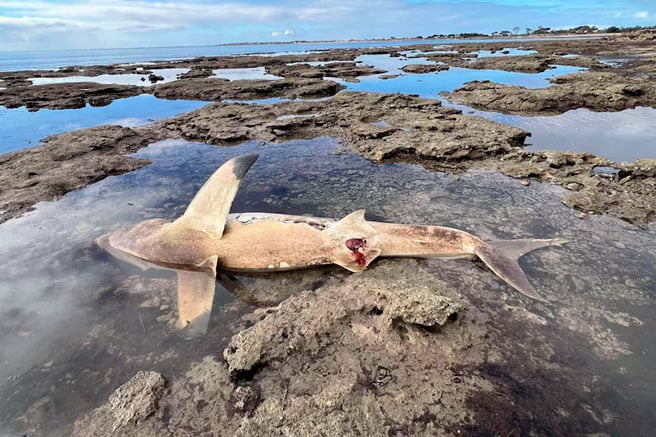
Image: Sharks are among the marine life found washed up on the Yorke Peninsula since the algal bloom was first reported, via the ABC (Supplied: Shark Watch SA).
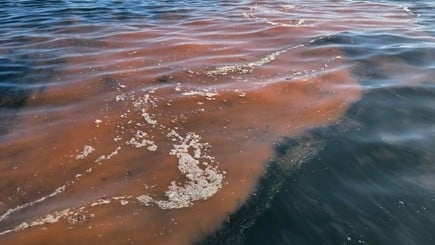
Image: Squid fisherman Nathan Eatts captured images of what ecologists believe to be bioluminescent algae, via the ABC. (Supplied: Nathan Eatts)
9. Port of Darwin Ownership
A reminder that since 2015, the Port of Darwin has been controlled by the Chinese-owned Landbridge Group, having been granted a 99-year lease by the Federal and Territory Governments. MMHN is pleased to share this recent report from the Parliamentary Library (Australia). The matter is far from settled.
“The 99-year Port of Darwin lease to a Chinese subsidiary in 2015 has been one of the most contentious decisions in recent Australian foreign policy. Despite government reviews finding no national security reasons to terminate the agreement, intensifying global and regional strategic environments have renewed debate. This brief outlines the context, continuing doubts and what’s next.”
See: Analysis and Policy Observatory (APO)
See: ABC News: Australian government negotiates deal for Darwin Port as Landbridge defends lease
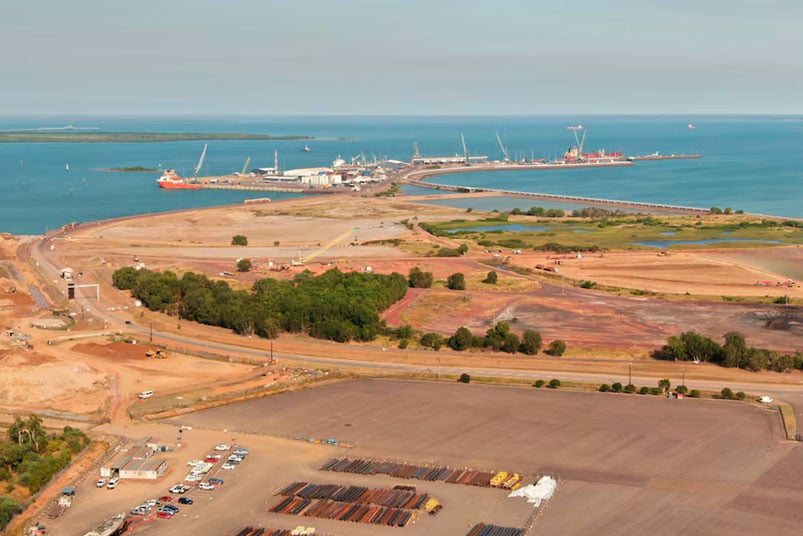
Image: Landbridge Group holds a 99-year lease on the Port of Darwin via Dane Hirst, ABC News.
10. HMAS Arafura – Finally Commissioned
HMAS Arafura was built by German shipbuilder Luerssen Australia at the Osborne Shipyard in South Australia. More than 6 years after the ship’s keel was laid down and more than 3 years after she was launched, the HMAS Arafura has finally been commissioned into the RAN. This marks an important milestone in the implementation of the Federal Government’s Surface Fleet Review. The vessel has a range of 4000 nautical miles, and its roles will include regional engagement, patrol duties and employment of uncrewed systems. The government’s independent analysis into Navy’s Surface Combatant Fleet reaffirmed the need for the Arafura-class OPV’s while also recommending they operate alongside the evolved Cape-class patrol boats.
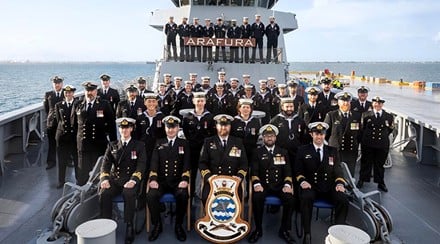
Image: HMAS Arafura
The Luerssen group is headquartered in Bremen, Germany and has a strong heritage. Together, the shipyards of Naval Vessels Lürssen (NVL) have completed more than 1,000 naval and coastguard vessels since their beginnings in the late 1870s and have built and repaired ships for both the German Navy and fleets in over 50 countries. In addition to the design and manufacture of naval vessels and coastguard vessels, NVL also provides extensive lifetime support through NVL Services.

11. Undersea Cables – Risk
To address growing concerns over threats to submarine cables as well as cyber and physical threats enabled by foreign adversary ownership, the US Federal Communications Commission says it plans to, “adopt rules to bar companies from connecting any undersea submarine communication cables to the USA that include Chinese technology or equipment.”
“The United States has for years expressed concerns about China’s role in handling network traffic and the potential for espionage. The U.S. has broad data security concerns about the network of more than 400 subsea cables that handle 99% of international internet traffic. Since 2020, U.S. regulators have been instrumental in the cancellation of four cables whose backers had wanted to link the United States with Hong Kong”.
“The FCC will also seek comment on additional measures to protect submarine cable security against foreign adversary equipment. The alleged cutting of two fiber-optic undersea telecommunication cables in the Baltic Sea prompted investigations of possible sabotage.”
See: gCaptain: US aims to ban Chinese technology in undersea cables
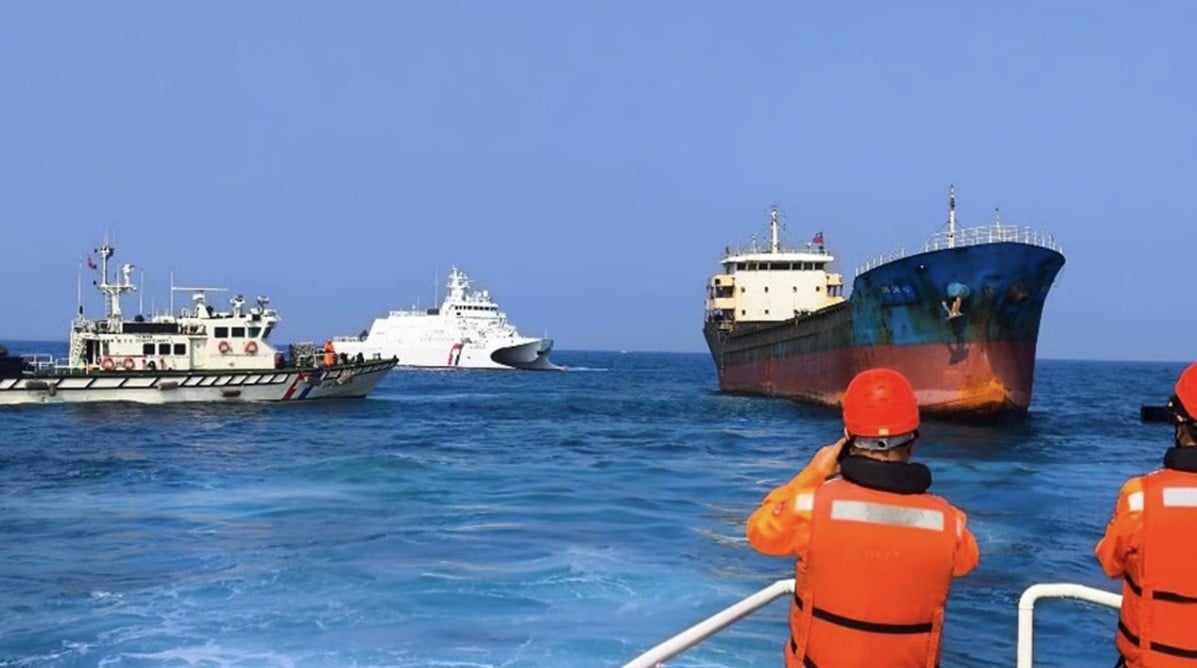
Image: The Hong Tai 58, a Togolese freighter, allegedly damaged a submarine cable between Taiwan and Pengzhou. Photo: Taiwan Coast Guard Administration via GCaptain.
12. Panama Canal – Wrangle Continues
Citing unnamed sources, Wall Street Journal reporters Angela Christy and Mrinmay Dey claim China is again threatening to block the sale of more than 40 ports owned by Hong Kong-based CK Hutchison, to BlackRock and Mediterranean Shipping Company (MSC) unless Chinese shipping company Cosco gets a stake. CK Hutchison announced in March 2025 that it would sell its 80% holding in the ports business, which encompasses 43 ports in 23 countries. US President Donald Trump, repeatedly expressed his desire to reduce Chinese influence around the Panama Canal and termed the deal a “reclaiming” of the waterway after it was first announced.
See: gCaptain: China threatens to block Panama ports deal
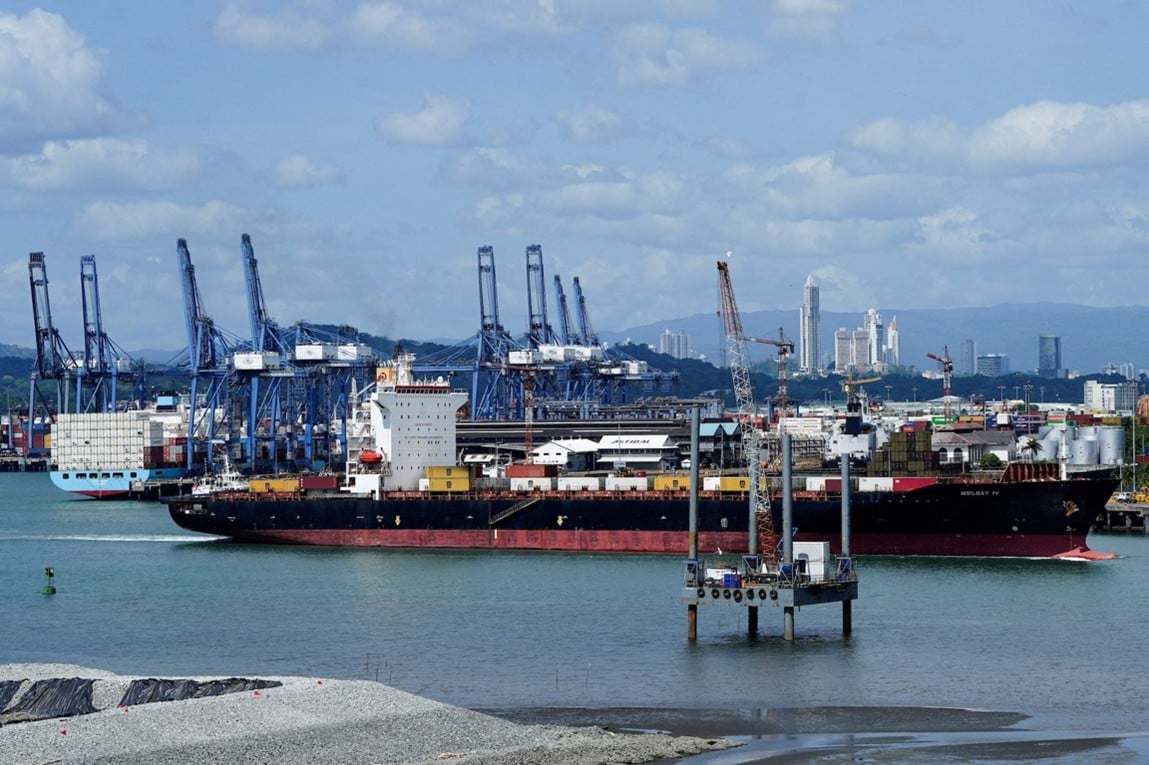
Image: A ship sails near the Balboa Port via Enea Lebrun, REUTERS.
13. From Steam to Green
Innovation and transformation have been constant forces in maritime trade throughout history. The dominant transformation today relates to energy. This is one of the major themes of the Lloyd’s Register Foundation: Learning from the Past and Widening Participation in Maritime Heritage.
In order to learn lessons from past maritime energy transitions, Lloyd’s Foundation has awarded a grant of £635,000 to the University of Portsmouth for a six-year project titled ‘Sail to Steam, Carbon to Green: Empowering Port Communities in the Global South’. The project will involve research conducted by 4 PhD students and post-doctoral scholars. Alex Stitt, Director of Heritage and Education Centre at Lloyd’s Register Foundation, states, “We are pleased to be working with the Centre for Port Cities and Maritime Cultures on this new six-year project to build on our Learning from the Past programme. It is an exciting opportunity to demonstrate the past technological and cultural changes the Global South has experienced and how we can use those learnings to inform and influence future thinking.” Recruitment of scholars and awarding of scholarships continues.

14. A Closer Look: Cruise Economy in Victoria
Why exactly are cruise companies abandoning the Port of Melbourne? It is way too simple and obvious to cite the recent inconsequential increase in port fees ($4 per passenger) or the shabby neglect of Station Pier. What then can it be?
In response to a State Opposition report (wait for it!), it is not ALL about numbers. However, when maritime matters are raised with Tourism Victoria, the disinterest is palpable. The State Government appetite for tourism investment is clear when it comes to sports events, regional Victoria, or arts and culture (note: always excluding anything related to heritage).
Persistently associating the decline in cruise industry revenue with port fees is simplistic and false. The main issue is that thinking analytically about the actual reason for the cruise revenue decline requires analysis and probably changes to policy direction which have been long avoided. While the SA, WA, NSW and QLD Governments are proactively fostering the potentially lucrative cruise business, the Allan Government seems comfortably and inexplicably oblivious to this lost opportunity for Victoria. Cruisecritic reports that in excess of $11 billion has been invested by the Victorian Government across the aviation (Tulla) and accommodation sector. Compare this with the allocation of $70 million to the Victorian state capital city’s cruise terminal at Station Pier; the minimum funding needed to sustain operational and public safety, and to preserve the structure of this heritage-listed maritime asset. Such squandering of opportunities by those managing tourism in Victoria must change.
See: Cruise Critic: Why cruise tourism is declining in Melbourne
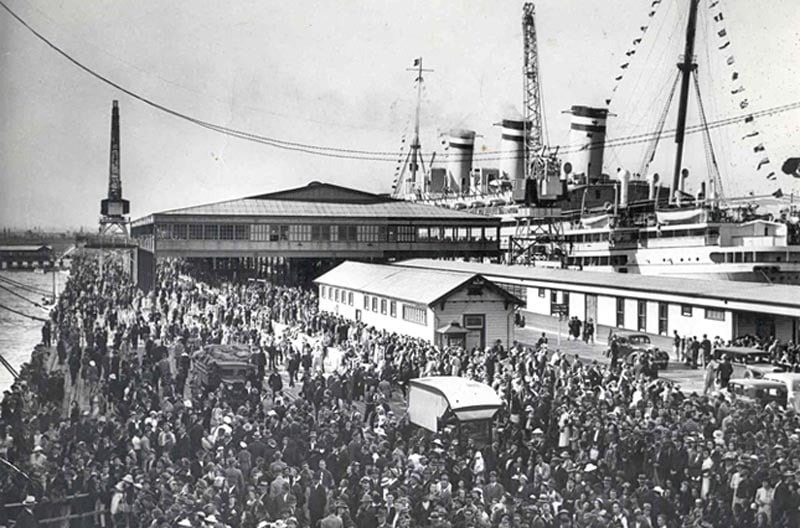
Image: Historic Station Pier, beloved by many via Ports Victoria.
15. Swakopmund Maritime Museum, Namibia
MMHN Chair Jackie Watts recently visited Swakopmund, a coastal city in Namibia on the Atlantic Ocean. Established by German colonists in 1892, the city’s colonial landmarks include the Swakopmund Lighthouse and the Mole, a heritage sea wall jutting out into the Atlantic. Swakopmund Museum exhibits a small but fascinating collection of maritime artefacts located on the edge of the infamous Skeleton Coast. Infamous for fog, strong winds, heavy swells and shifting sands, the Namibian coastline has, for centuries, been extremely hazardous for ships and deadly for crew. Reputed to be the largest ship graveyard in the world, many of the wrecks are clustered in hazardous areas. Seafarers who did survive the strong ocean currents and made it to shore inevitably died of thirst in this remote, arid desert. Vast saltpans and high sand dunes stretch far inland. Jackie notes that Swakopmund (unlike Melbourne) takes advantage of heritage port infrastructure. Its best restaurant, The Jetty, sits on the tip of a long pier accessed by a wooden walkway, beneath which huge Atlantic waves crash and masses of black cormorants cluster after fishing all day. Not far north of the township is the extraordinary Cape Cross Seal Colony. Though technically small sea lions, the animals are absolutely jammed together, frolicking or fighting in and out of the water. All sizes, odorous and very loud. Food is abundant at this point due to an intense coastal upwelling. Persistent southerly winds create one of the most biologically productive marine ecosystems in the world. Nutrient-rich, cold water comes to the surface, fuelling phytoplankton blooms that support a rich food web, including fish, seabirds, and marine mammals.
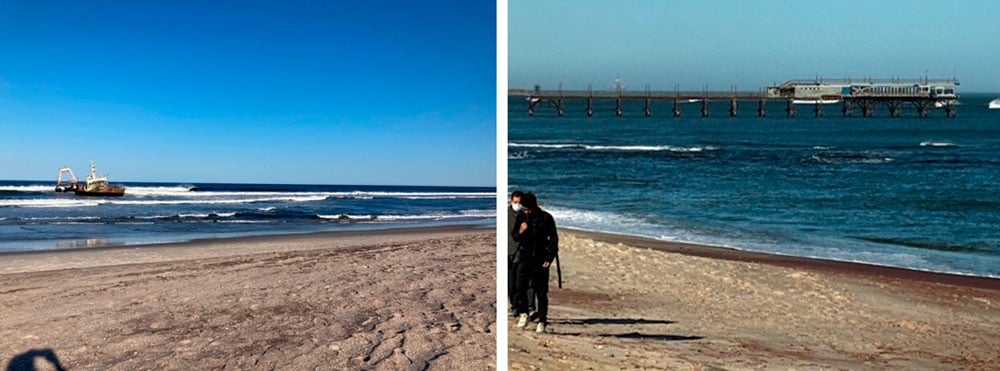
Image: Cape Cross Sealion Colony (left) and lighthouse at Swakopmund (right) via Jackie Watts.
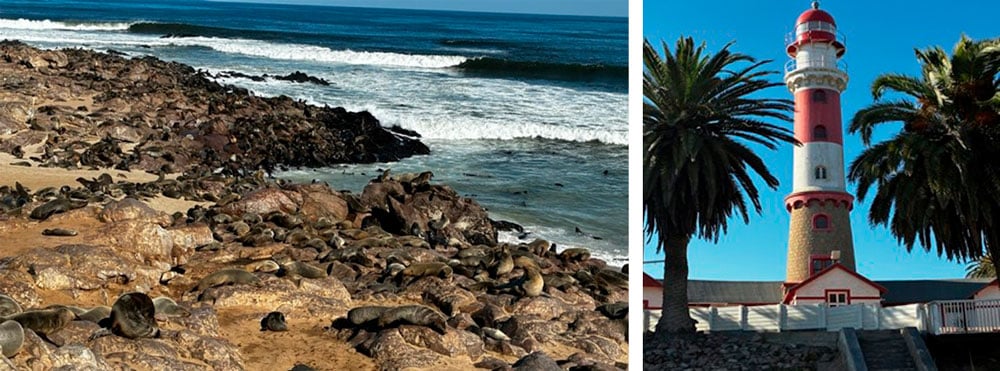
Image: Cape Cross Sealion Colony (left) and lighthouse at Swakopmund (right) via Jackie Watts.
16. Upwellings Closer to Home
The Great South Australian Coastal Upwelling System is a seasonal system in the eastern Great Australian Bight, extending from Ceduna, South Australia to Portland, Victoria over a distance of about 800 kms (500 mi). Upwelling events occur in the austral summer (from November to May) when seasonal winds blow from the southeast. These winds blow parallel to the shoreline at certain areas of the coast, which forces coastal waters offshore via Ekman transport and draws up cold, nutrient-rich waters from the ocean floor.
Because the deep water carries abundant nutrients up from the ocean floor, the upwelling area differs from the rest of the Great Australian Bight, especially the areas offshore of Western Australia and the Nullarbor Plain in South Australia, which are generally nutrient-poor. Every summer, the upwelling sustains a bountiful ecosystem.
The Bonney Upwelling is the largest and most predictable upwelling in the GSACUS. It stretches from Portland, Victoria to Robe, South Australia. The continental shelf is narrow offshore of the ‘Bonney Coast’ – only about 20 kms (12 mi) from the shore to the continental slope. Deep water is funnelled to the surface through a series of submarine canyons.
See: ABC News: Ocean Upwelling brings deep sea visitors
See: Blue Whale Study: The Bonney Upwelling
See: Wikipedia: Great South Australian Coastal Upwelling System
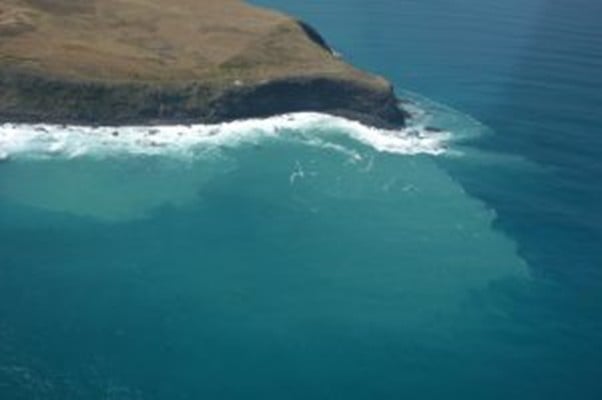
Image: Freshly upwelled (green) water at Cape Bridgewater, VIC via Blue Whale Study.
17. Australia’s Maritime Strategic Fleet – MIAL
MMHN is in staunch support of urgent action by the Federal Government to press this matter. We recommend that you find time to listen to this podcast featuring Angela Gillham, CEO of Maritime Industry Australia Ltd. The Saltwater Strategists podcast provides insightful and considered discussion on maritime issues in the Indo-Pacific. It is a product of the Australian Naval Institute (ANI), a non-profit encouraging the promotion and advancement of knowledge related to the maritime profession.
See: Australian Naval Institute (ANI) Podcasts: Saltwater Strategists
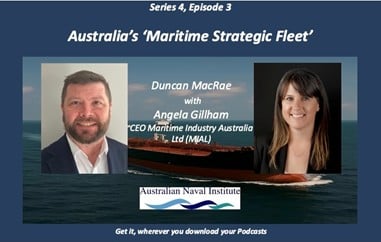
Image: The Saltwater Strategists podcast via Soundcloud.
We conclude this month with an invitation:
18. Invitation: Last Light on Victoria Dock Exhibition
Victoria Harbour played a significant role in Melbourne’s maritime history.
MMHN is delighted to invite you to this exceptionally significant photographic exhibition, entitled Last Light on Victoria Dock. This unique collection of images illuminates, in a melancholy way, the historic, economic and social significance of Victoria Dock as it was in the 1990s. The photos capture Docklands Precinct just prior to its sad demolition. Photographer William McCauley will speak about his project and MMHN will speak on its connection to the heritage of Victoria.
When: September 4 at 6.30pm
Where: Magnet Gallery, The District Shopping Centre, G19 Wharf St, Docklands 3008. Take the Bourke Street tram to Waterfront City (the last stop).
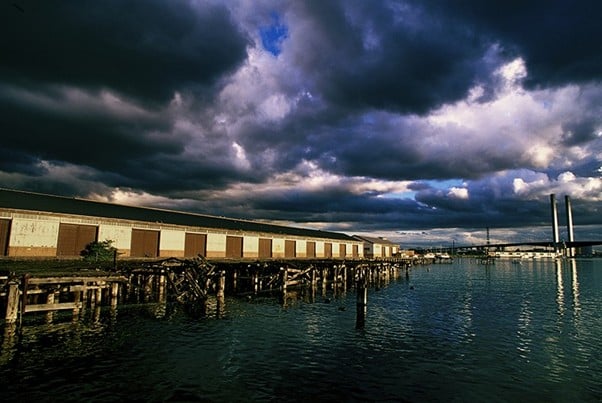
Image: A sample of the photography from Last Light on Victoria Dock via William McCauley.
Until next time,
Jackie
Dr Jackie Watts OAM
Chair,
Melbourne Maritime Heritage Network