

Greetings all,
To quote recent research, “Port cities are, and always have been, hubs for the international exchange of people, goods and ideas.” (See below)
MMHN can but agree! But first, please consider the June event invitations below.
Contents
1. Invitation: Growing the ‘Blue Economy’ into the Future
2. Invitation: 100th Anniversary of the US NAVY fleet visit to Melbourne
3. Centre for Port Cities & Maritime Cultures (CPCMC) – Portsmouth University
4. Australian Maritime Strike 1890
5. Archives – Global Maritime Resource
6. Chinese Port Visit: Tensions
7. Chinese Sensors and Mapping Seabed
8. New Chinese Underwater Tool Sparks ‘Jitters’
9. WWII Japanese Submarine Wreck off Darwin
10. Maritime Emissions Regulations: An Unintended Consequence
11. Emitting in Our Waters
12. Docklands Precinct – Development Victoria
13. Port of Melbourne Plan – A Threat to Melbourne Waterways
14. RAN Tugboats
15. Fairmile Launches – RAN in WWII and Beyond
16. Spirits of Tasmania Berths: The Saga Continues
17. Lloyds Register Foundation – Heritage & Education Centre
18. Historical Floating Static Vessels Guide
19. Osborne House and Geelong Naval & Maritime Museum (GNMM) Collection
20. Maritime Protection and Environment Committee
21. Offshore Wind Energy – Southerly Ten
22. Aquaculture
23. Kelp – Vanishing Future
24. Salmon Industry –Tax
25. Sea Heritage Foundation and the Commonwealth Lighthouse Service (CLS) Ship MV Cape Don
26. RAN NEWS: HMAS Sydney joins Bersama Shield
27. Colossal Squid Observed
28. Ocean Depths – Enduring Mystery and Resilience
29. Princes Bridge Restoration Works
30. Beyond Greenline
31. Blue Economy – City of Melbourne
32. UK Aircraft Carriers: Operation Highmast
33. Deep See Mining
34. Port of Los Angeles – Global Trade Tension
35. Mexican Navy Training Ship
36. Bhagwan Marine
37. Station Pier Project Overview
38. Proof That Station Pier Really Matters
Invitations
1. Growing the ‘Blue Economy’ into the Future
MMHN’s first exciting collaboration with the Royal Society of Victoria (RSV) and the marine science community. Join us for an entertaining panel discussion on some of Victoria’s unique natural resources and treasures as well as strategies we might adopt to sustain these while participating in the global ‘Blue Economy’. MMHN Director, Dr Gregory Harper, will chair the panel. President of the RSV, Rob Gell AM, will deliver introductory comments. Panellists will include Dr Christiaan de Beukelaer and Dr Kate Robb. Refreshments will be provided after the panel session.
When: Thursday 12th of June, 5:45pm arrival. Event from 6:00pm – 7:00pm.
Where: Royal Society of Victoria, 8 La Trobe St, Melbourne VIC 3000
Admission: Free
RSVP: Please RSVP to greg@MMHNVIC.onmicrosoft.com for catering purposes.
Notes: Heritage premises restricts disability access. Some onsite parking available.
Flyer: https://drive.google.com/file/d/1I7Me67ZUrTTI4DUT1sBW6LJ5xcRFayg1/view?usp=drive_webas
2. 100th Anniversary of the US NAVY fleet visit to Melbourne in 1908
MMHN Director, Michael O’Brien, is presenting at the Naval Historical Society of Australia. The visit of the Great White Fleet, as it came to be known, was the start of Australia’s defence relationship with the US. Commencing with the visit of a smaller Great White Fleet to Sydney in 1908, Melbourne (as the official capital of Australia and temporary seat of Federal Parliament at the time) later received a larger contingent of 43 vessels in 1925. Many US Navy battleships, cruisers and destroyers arrived on a voyage designed to impress Japan about American sea power and to cement the relationship with Australia and New Zealand. It became known as the largest foreign naval fleet to visit Australian shores, and the Australian public gave them a tremendous welcome.
When: Monday 23rd June, 7:00pm. A note that members of the Naval Historical Society often gather for dinner at the RSL before hand from 5:30pm.
Where: Waverly RSL, 161 Coleman Parade, Glen Waverly.
Admission: Free
3. Centre for Port Cities & Maritime Cultures (CPCMC) – Portsmouth University
Oh, that a local university would establish such a centre as the CPCMC in Melbourne! MMHN wonders whether any Victorian maritime higher education institution has a maritime focus comparable to this.
Can our readers assist with this question? Suggestions, anyone?
Melbourne is Australia’s largest container port, home to its most efficient freight terminal, Patricks. It seems fitting that a great port city might host a great maritime institution. The Centre for Port Cities and Maritime Cultures at the University of Portsmouth focuses on the past, present and future importance of urban-maritime cultures and communities within a global context. MMHN is closely alighted with this focus, and we are obviously very pleased to have recently forged a connection with the CPCMC. You may wish to look at various CPCMC research projects.
See: University of Portsmouth – Centre for Port Cities and Maritime Cultures
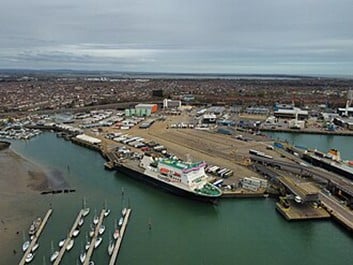
Image: Port of Portsmouth website
4. Australian Maritime Strike 1890
Dr Guy Collender from the Centre for Port Cities and Maritime Cultures shared this fascinating report: Hands across the sea: Strikes, solidarity and diverging outcomes in port cities in Britain and Australia in the late nineteenth century. It highlights the early global and intellectual connections underpinning wharf labour in Australia. The Australian Maritime Strike of 1890 was not primarily a dispute about pay but about ideas and it was not successful. Yet it has been described as “by far the most serious industrial dispute in Australian history” and a “turning point in labour history”. Defeat led to new political tactics, served as a catalyst for the formation of the Australian Labor Party, and contributed to the international “employer counterattack” against employees. It provides a fascinating insight into collective endeavour or worker solidarity present in the colony. It is estimated that £70,000 was raised
to support the wharfies during the 12-week strike with the vast majority (£60,000) contributed by Australian trade unionists. The rest came from British trade unionists and the Australian public. Many trade unionists in Australia at the time emigrated from Britain and had “feelings of solidarity” with dock workers in Britain but this alone does not account for such public generosity. Of perhaps greater significance is that a group of British Amalgamated Society of Engineers formed a new branch when they emigrated to Australia aboard the Frances Walker. The long voyage to Australia provided a rare opportunity for discussion and collaboration which was “one of the most powerful influences on the Australian Labour Movement” before 1890. Wharf workers engaged in long-distance solidarity with each other. Imperial solidarity was also present in the remote colonies. They shared the common experience of hard and dangerous manual work – handling the same goods, albeit at different ends of a long voyage.
Innovation in the telegraph system meant wharfies in Australian received up-to-date union news and, importantly, were able to send remittances to support the striking workers. For example, after news arrived of shipowners objecting to Melbourne’s branch of the Mercantile Marine Officers’ Association affiliating with Melbourne’s Trades Hall Council, marine officers staged a walkout. Global wharf solidarity and Australia’s economic boom from 1872 – 1889 meant timely support from trade unionists and public.
See: https://journals.sagepub.com/doi/full/10.1177/26349817241238275
5. Archives – Global Maritime Resource
Naval and military historians will be pleased to hear that the British Newspaper Archives have recently digitised the Naval & Military Record and Royal Dockyards’ Gazette for many of the years between 1886 and 1936. Reporting on military and naval news from across the globe, the publication claimed to be “the only weekly service newspaper with correspondents in all the royal dockyards, naval and military centres, and on all the foreign stations.’
Access is through the British Library, Find My Past, or the State library.
See: The British Newspaper Archive
6. Chinese Port Visit: Tensions
The Philippines, Vietnam and Indonesia all have acute maritime disputes with China, but they continue to welcome naval visits. Should Australia do the same? Reporting in The Interpreter, James Laurenceson and Xi Chen raise concerns about the Chinese icebreaker, Xue Long 2, recently visiting Hobart with “the clear purpose of [utilising] the Port of Hobart as part of their Antarctic Program”. The Tasmanian State Government were in support of the visit however the Federal Government was not so sure. The Prime Minister, commenting on Chinese vessels in southern waters and Australian ports, said “it is difficult to imagine that today’s domestic politics would allow Canberra to contemplate approving a Chinese naval task group visit to an Australian port like the one that Sydney Harbour hosted in 2019. With China’s activities in Antarctica having become more contested in Australia’s public debate, it cannot be discounted that even a future visit by a Chinese icebreaker might be contentious.”
See: The Interpreter – Australia China Port visits can manage tensions
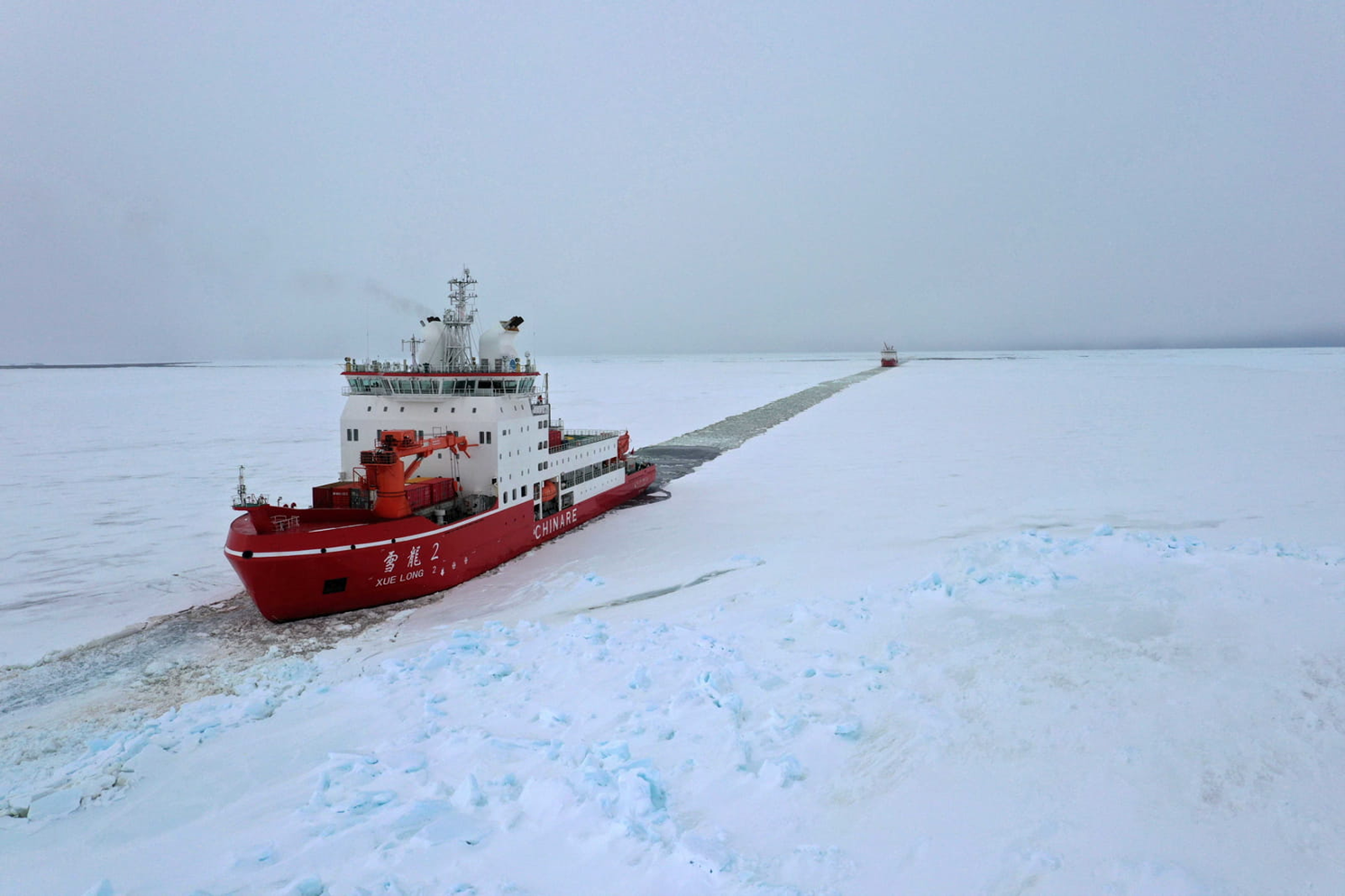
Image: China’s research icebreakers, Xue long and Xue long 2, on a November 2024 expedition in Antarctica (Chen Dongbin/Xinhua via Getty Images).
7. Chinese Sensors and Mapping Seabed
Australian Strategic Policy Institute researchers, Euan Graham and Ray Powell, pose a difficult question in The Strategist this month: What could China’s survey ship be up to? Civilian exploration may be the official mission of a Chinese deep-sea research ship which recently sailed clockwise around Australia and is currently loitering west of the Australian continent. But maybe it’s also attending to naval duties. These could have included laying or servicing seabed acoustic sensors and possibly detailed mapping of parts of the ocean floor to support future submarine operations.
“Open-source tracking data enables such educated guesses to be made, without discounting the possibilities of economic and scientific data-gathering. The vessel, Tansuo Yi Hao (Exploration 1), took a similar route around Australia in January 2023, investigating 1100 km of the Diamantina Trench over 34 days. China’s state media later said this was the first time the bottom of the trench had been reached. The ship carries a crewed submersible, the Fendouzhe (Striver), capable of long-duration forays to the seabed in depths exceeding 10,000 metres. As in 2023, rather than proceeding directly home from NZ where it was conducting joint activities with a partner institution, the ship has again undertaken a long deviation around Australia. Its transitory presence in the Bass Strait and inside Australia’s 200 nautical mile exclusive economic zone (EEZ) was nonetheless permissible under international law, as long as the ship undertook no commercial survey activity and maintained continuous passage, showing ‘due regard’ to the coastal state.”
MMHN recommends a close read of this extended article: ASPI The Strategist – Seabed Sensors and Mapping – Chinese Survey Ship
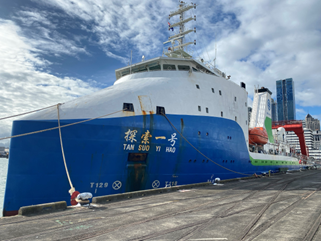
Image: ASPI, The Strategist website.
8. New Chinese Underwater Tool Sparks ‘Jitters’
“China’s new underwater tool cuts deep, exposing vulnerability of vital network of subsea cables,” writes John Calabrese for The Conversation.
China has unveiled a new deep-sea tool capable of cutting through the world’s most secure and crucially important subsea cables − and it has many in the West feeling tense. That is because undersea cables sustain the world’s international internet traffic, financial transactions, and diplomatic exchanges. Undersea cables form the backbone of modern communication systems. Stretching around 870,000 miles (over 1.4 million km) across every ocean, these cables transmit almost 100% of global internet communication. US academic Professor John Callebrese reports that the Chinese-language journal Mechanical Engineering described advances in this capability as a tool for civilian salvage and seabed mining. But the ability to sever communication lines 13,000 feet deep suggest that the technology could be used for other purposes. Recent incidents of cable damage near Taiwan and in northern Europe have already raised concerns about these global cable vulnerabilities. Australia is served by three such undersea cables.
Cables rupture in various ways; natural causes and otherwise. Communication lines 13,000 feet (4,000 meters) below the sea’s surface are far beyond the operational range of most existing infrastructure and could be presumed safe from accidental maritime interference. Currently, a significant global vulnerability stems from the overreliance on Chinese repair ships.
See: The Conversation – Chinas New Underwater Tool
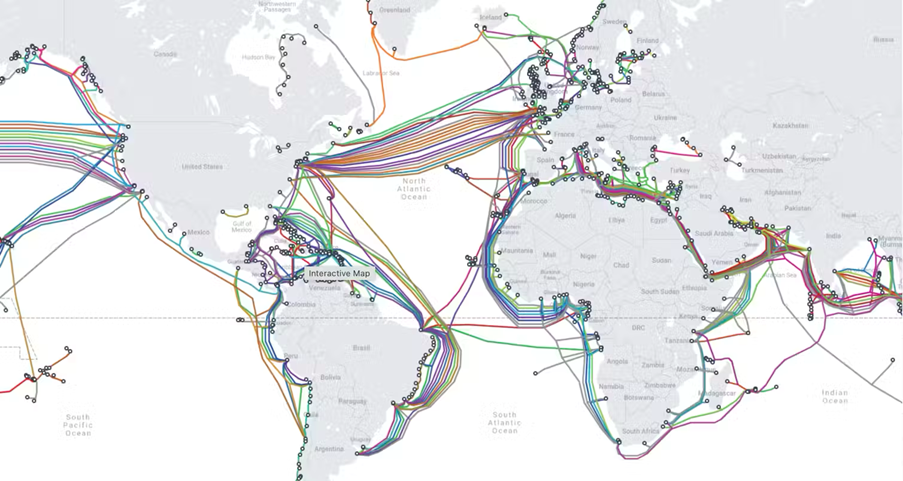
Image: The Conversation Underwater cables unite the world.
TeleGeography/submarinecablemap.com, CC BY-SA
9. WWII Japanese Submarine Wreck off Darwin
MMHN recommends this fascinating ‘wreck’ video by MMHN member, filmmaker Kasimir Zierl:
“In World War II Japan and Australia fought for control of the seas north of Australia. The I-124 Japanese submarine was laying mines and hunting ships outside Darwin Harbour when it was engaged by Australian forces. It was attacked and sunk to the seafloor. All 80 submariners perished. Lying 53 metres below the surface, the wreck is highly significant. But the Top End’s strong tides, murky waters and the submarine’s depth have made it impossible to visit. Until now. The Northern Territory Government led a team of archaeologists and technical divers to inspect the iconic submarine, using the latest in technical diving equipment and innovative site recording tools. Armed with rebreathers and underwater scooters, watch the divers attempt to record the wreck, and experts build detailed 3D models. Follow the effort to record and understand one of the most significant wartime wrecks in Australian waters.”
See: YouTube – Survey of the I-124 Submarine
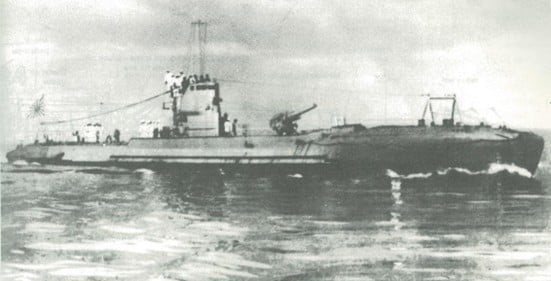
Image: I-124 Japanese submarine via Australasian Underwater Cultural Heritage Database
10. Maritime Emissions Regulations: An Unintended Consequence
In August of last year, Scientific American reported disturbing research indicating that “new shipping regulations set limits on sulfur in maritime fuel, reducing harmful pollution but inadvertently ceasing a cooling effect on Earth’s climate”. In 2020, the International Maritime Organization (IMO), acting to reduce the amount of sulphur pumped out by ships worldwide, may have inadvertently raised global temperatures by as much as 0.04°C because sulphur clouds serve to cool the earth. New shipping regulations set limits on sulphur in maritime fuel, reducing harmful pollution but also reducing the cooling effect of sulphur emissions on Earth’s climate.
See: Scientific American – Cleaned Up Shipping Emissions Have Revealed Additional Global Warming
11. Emitting in Our Waters
MMHN recommends this fascinating live update on vessels waiting – and emitting – in Victoria’s ports.
See: Vessel Finder – Port of Melbourne
Also see: Vic Ports – Ship Movements
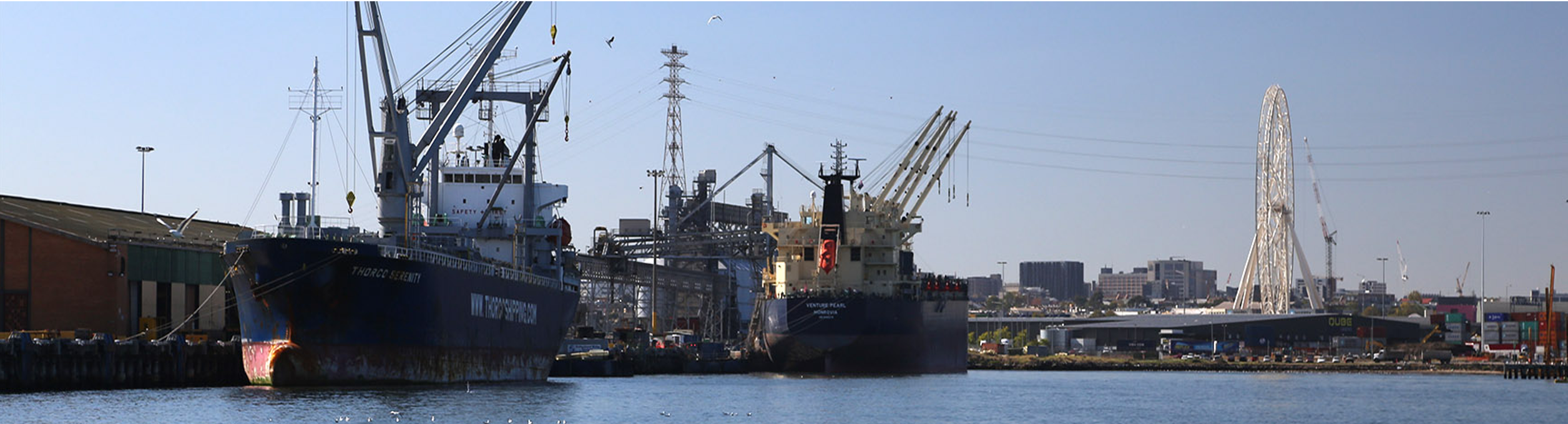
Image: Mission to Seafarers website
12. Docklands Precinct – Development Victoria
MMHN has often expressed dismay at the continued disregard for maritime heritage displayed by Development Victoria (DV) who are ostensibly the state responsible authority tasked with ‘place-making’ in this unique port. We are not alone in our criticism of recent plans to evict the Heritage Fleet from Victoria Harbour.
Docklands News: “its interest in activating the precinct has whittled away to next to nothing over the years [but] no-one could ever have imagined Development Victoria (DV) could treat these treasured maritime assets in this way. DV’s agenda for the area seems to have become solely centred around ‘building homes’ and leaving ‘placemaking’ headaches for others to worry about later. While there are still people in the government agency who maintain a genuine interest in doing the Docklands project justice, they seem to have become overrun by real estate agents masquerading as public servants”. The DV Community and Place plan clearly states: Facilitate the development of berths for heritage vessels. Anyone who attended the crisis meeting convened by the Melbourne Maritime Heritage Network (MMHN) on March the 25th might have left the discussion feeling a sense of helplessness.
Access the MMHN forum report here: MMHN Heritage Fleet Forum Report
Also see: Docklands News – Development Victoria: How has it come to this
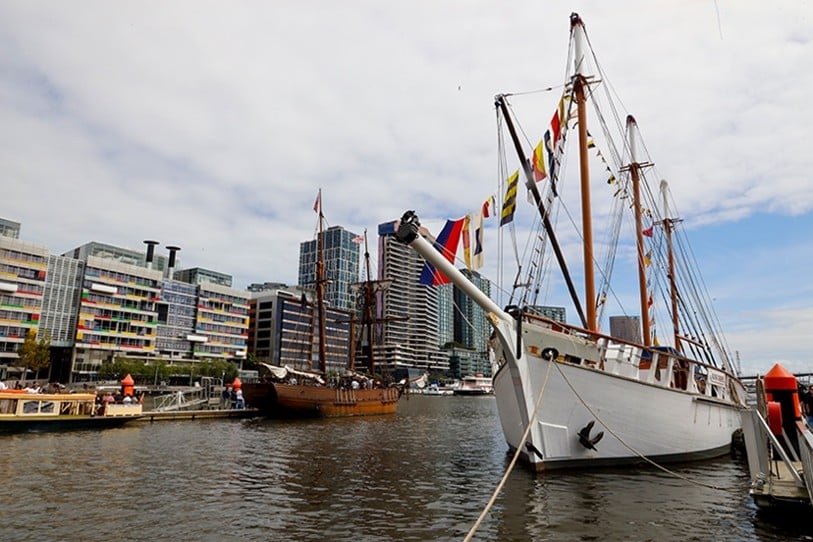
Image: Docklands News
13. Port of Melbourne Plan – A Threat to Melbourne Waterways
The catastrophic PoM plan to create an at-grade rail freight crossing adjacent to the Bolte Bridge, effectively closing Victoria Harbour, looms once again. Threatening to “suffocate Victoria Harbour”, the latest draft of the Port of Melbourne Strategy Plan (10th April 2025) proposes that the freight line be included in the new City of Melbourne Municipal Planning Strategy (MPS), delayed until November 2026. City of Melbourne Council management requested that the Minister for Planning, Sonya Kilkenny, appoint an independent planning panel and refer all submissions to the panel for consideration and that to include this highly contentious freight link would be “premature”. It is pleasing to see the CoM appears to understand the damage to community amenities and the waterways economy that is being promoted by a corporate entity.
See: Docklands News – Port of Melbourne presses council
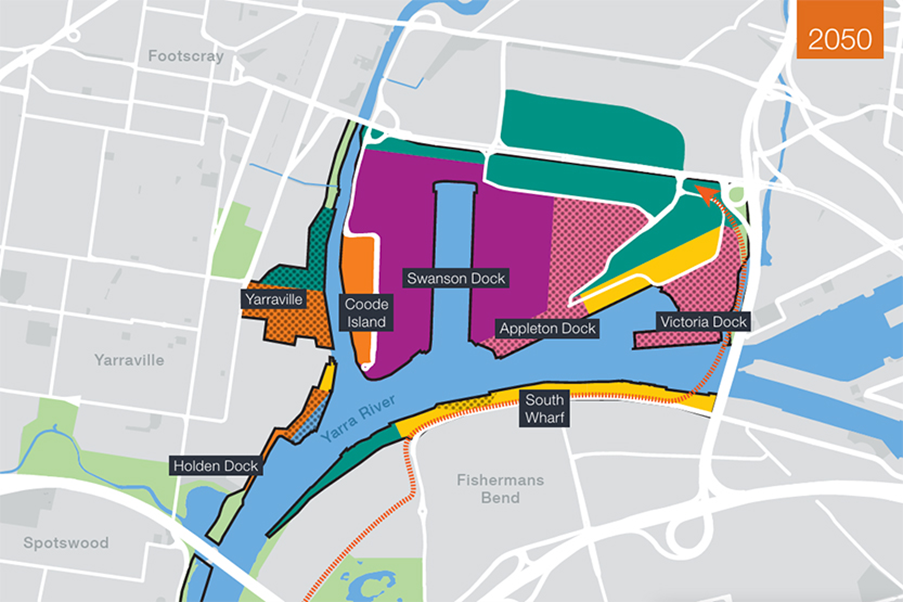
Image: Docklands News
14. RAN Tugboats
The RAN has commissioned the construction of new tugboats in China, given the tasks and operations that the boats will be required to perform will be mainly civilian. The $28M contract was awarded to a Dutch company, Damen. ABC reports reveal the first of three “harbour tugs” was completed in late December 2024 at the Damen company’s “state-of-the-art” Changde facility in Hunan province, before being delivered to Darwin earlier this year.
“It is firmly understood that the Commonwealth of Australia needs a partner with this endeavour who has significant shipbuilding and sustainment experience and is willing to share knowledge, appropriate intellectual property and individual skills.”
In a statement, Defence confirmed the tugboats are being built in China with a subsequent ‘fit out’ occurring in Vietnam but insisted they were not Royal Australian Navy vessels and will be operated and crewed by civilian vessel operators.
“Last year, a Damen design was selected as the preferred option for the Australian Defence Force’s new Landing Craft Heavy fleet, with eight of the vessels to be constructed in Western Australia by Austal”.
See: ABC News – Australian navy’s newest boats made in China
Also see this video: ABC Video: RAN tugboats have been built in China
15. Fairmile Launches – RAN in WWII and Beyond
MMHN is grateful to the Naval Historical Society (Vic) for this interesting information about ‘brave little ships’ and their RAN VR crews who patrolled around our coastline and fought in enemy occupied waters amongst the islands to our north. They had short naval lifespans (mostly from 1943-46), but a considerable number were sold off once the navy began downsizing. With some modifications, they formed the early backbone of the Barrier Reef cruising industry in the 1950s. Thanks to our video recordist and webmaster, the presentation is now available for those wishing to view it on the NVN website.
See: https://navyvic.net/associations/nhs/recordings.html
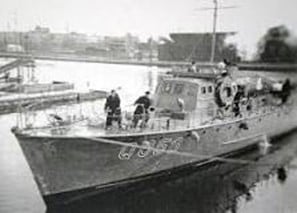
Image: RAN
16. Spirits of Tasmania Berths: The Saga Continues
MMHN is grateful for this report from Ian Anderson at the Peninsula Ship Society (PSS):
“This saga has gone fairly quiet in recent times, but a lot has yet to be achieved before the two new ships are sailing nightly across Bass Strait. Spirit of Tasmania IV has now been tied up in the Scottish port of Leith for five months and the Tasmanian Govt. has announced that this has cost them $3,554,552 so far. But they have also announced that this vessel will leave Leith on 26th May to undertake the 6-to-8-week voyage to Hobart. Her sister ship, Spirit of Tasmania V, undertook sea trials in Finland in April and should be ready to sail to Hobart before the middle of the year. Where the new vessels will be located in Hobart has not yet been announced, but the TT-Line acting CEO, Kym Sayers, has said that the vessels could anchor in Hobart’s River Derwent. The real reason for all of these issues is the lack of a completed berth in the River Mersey at Devonport. Progress is being made on this work, which had previously not been expected to be completed before February 2027. But the Tasmanian Govt. has recently announced that Berth 3 is now expected to be completed by October 2026. However, this earlier completion date has come at a cost as the price of construction has now gone up from $375 million to $493 million. This is a very large amount, particularly when you consider that TT-Line previously thought that they could build it for $90 million. This is all the more remarkable when you consider that TT-Line has previously built an almost identical berth at Geelong. The Tasmanian Govt. has also announced that the new vessels had received the approval of the Devonport Harbour Master to operate in the Mersey River. This approval confirms that the vessels will be able to safely enter the port, swing in the Swing Basin, and then berth at and depart from the new berth. At 212 metres in length, they are 18 metres longer than the current vessels. If the Harbour Master had declined approval that would have been the absolute last straw”.
The cost increase is mind-boggling. Stay tuned.
17. Lloyds Register Foundation – Heritage & Education Centre
What a marvellous resource for all maritime enthusiasts! No surprise that Lloyds Register Foundation is broadly concerned with increasing the understanding of the importance of safety in the past, present and future ocean economy (aka the Blue Economy).
Lloyd’s Heritage & Education Centre is intent upon leveraging its expertise to amplify the LR Foundation’s impact across three interconnected priority areas: Safer Maritime Systems, Skilled People for Safer Engineering, and Safer Sustainable Infrastructure. Its heritage collections are extensive, comprising over 1.1 million documents, chronicling the construction, maintenance, and evolution of ships and maritime trade since the 1830s. These specialist collections are freely accessible both online and in-person at the Lloyd’s Register building in London. Its heritage team collaborates with a diverse array of global partners to unlock the value of this archive, promoting a ‘Learning From the Past’ approach to maritime safety, technical transitions, equity, and transparency. By uncovering historical insights, we can enhance our understanding of the challenges facing the maritime sector, both past and present, and contribute to building a safer, more sustainable, and resilient ocean economy for future generations.
For key themes, see:
https://hec.lrfoundation.org.uk/about-us/key-themes-2025-2029
18. Historical Floating Static Vessels Guide
Repurposing historic vessels is great to see, but often technically risky. Many historic vessels have been given a second life as static floating assets, often undergoing significant transformations into museums, restaurants, office spaces, hotels and other publicly accessible spaces. Yet, until now, there were no policies, procedures or guidance available for vessels once they ceased being operational and became static floating assets.
Produced as part of the Lloyd’s Register Foundation project, a 67-page document, aptly entitled ‘Don’t Rock the Boat’, highlights the regulatory requirements and sets standards for best-practice in regard to stability aboard static floating vessels. This project sought to create a suite of specialist guidance materials on stability that would be accessible and usable by custodians of these vessels, as well as contractors and service providers to the industry.
See: National Historic Ships – Don’t rock the boat
19. Osborne House and Geelong Naval & Maritime Museum (GNMM) Collection
MMHN thanks Captain, CSC, RAN (Ret) Andrew Mackinnon, President of Naval Historical Society of Australia (Victorian chapter) for his work on this important matter.
Heritage stakeholders will be aware that the GNMM (a member of Maritime Museums Victoria) together with Osborne House and Stables (former Naval College) has been closed to the public for several years. Both Osborne House and the GNMM collection are now in the care of the City of Greater Geelong (CoGG). Although the operational future of the GNMM is unclear, MMHN is pleased to report staunch support for this important collection and this unique building. The Director of the National Wool Museum has responsibility for museum collection matters for CoGG. Regarding the Osborne House and Stables redevelopment and following an EOI process, CoGG has now short-listed two proponents. Both are aware of the significant naval heritage of Osborne House and Stables that must be incorporated in any redevelopment proposals. The entire collection has been audited, listed, valued and a conservation needs assessment has been undertaken. The collection includes around 7800 objects, 3300 of which belong to the Maritime Museum Association Inc and 3500 to the CoGG, while 75 are on long term loan. MMHN is pleased to learn that there is no intention at this stage to disperse the collection. Items belonging to the CoGG have been relocated into Osborne House to benefit from better security and climate control, however there are no plans for the rest.
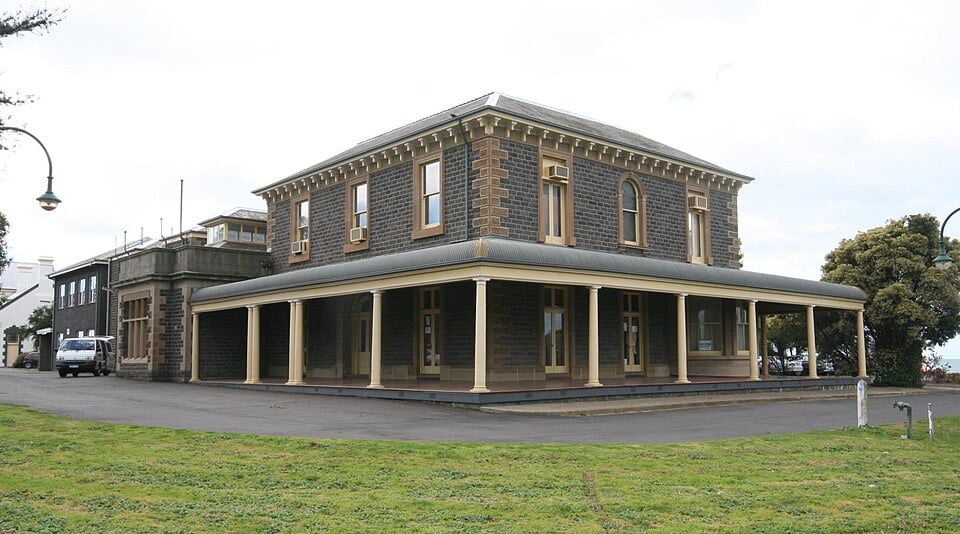
Image: Wikipedia
20. Maritime Protection and Environment Committee
Recent negotiations taking place amidst a challenging geopolitical situation have been described as a “triumph for multilateralism and a failure for climate”. On the 11th of April, countries voted 63-16 in favour of a compromise plan that “Pacific Islands and green groups lambasted as too weak to meet IMO green targets, and petrostates decried as too onerous”. Pacific Island states abstained from the vote. The measures include a new fuel standard for ships and a global pricing mechanism for emissions. The regulation will go on to final adoption by the Marine Environment Protection Committee in October.

21. Offshore Wind Energy – Southerly Ten
MMHN recommends that you read the latest comprehensive Implementation Statement No. 4, released in April by the Victorian Government. It outlines progress to date and the next steps in delivering offshore wind energy for Victoria, including transmission, ports, jobs, and opportunities for communities, etc. An ROI process has commenced towards an Auction Process to select which Gippsland projects will supply the first offshore wind energy followed by a Request for Proposal process later this year. Contracts will be awarded in 2026.
See: Offshore-Wind-Energy-Victoria-Implementation-Statement-4.pdf
A crucial element of the process has been the Benthic Ecology Study of the seabed conducted using underwater cameras to examine the ocean floor at 80 locations and an analysis of 200 samples of sand, sediment and other materials from the seabed. Around 90% of the seabed is soft sandy sediment along with small areas of rocky reef and patchy seagrass. No protected species, communities or key ecological values were found. This information will guide the wind farm design. High-profile reefs will be avoided when positioning turbines and cables to protect the important habitat they provide.
See: Star of the South – Project Investigations
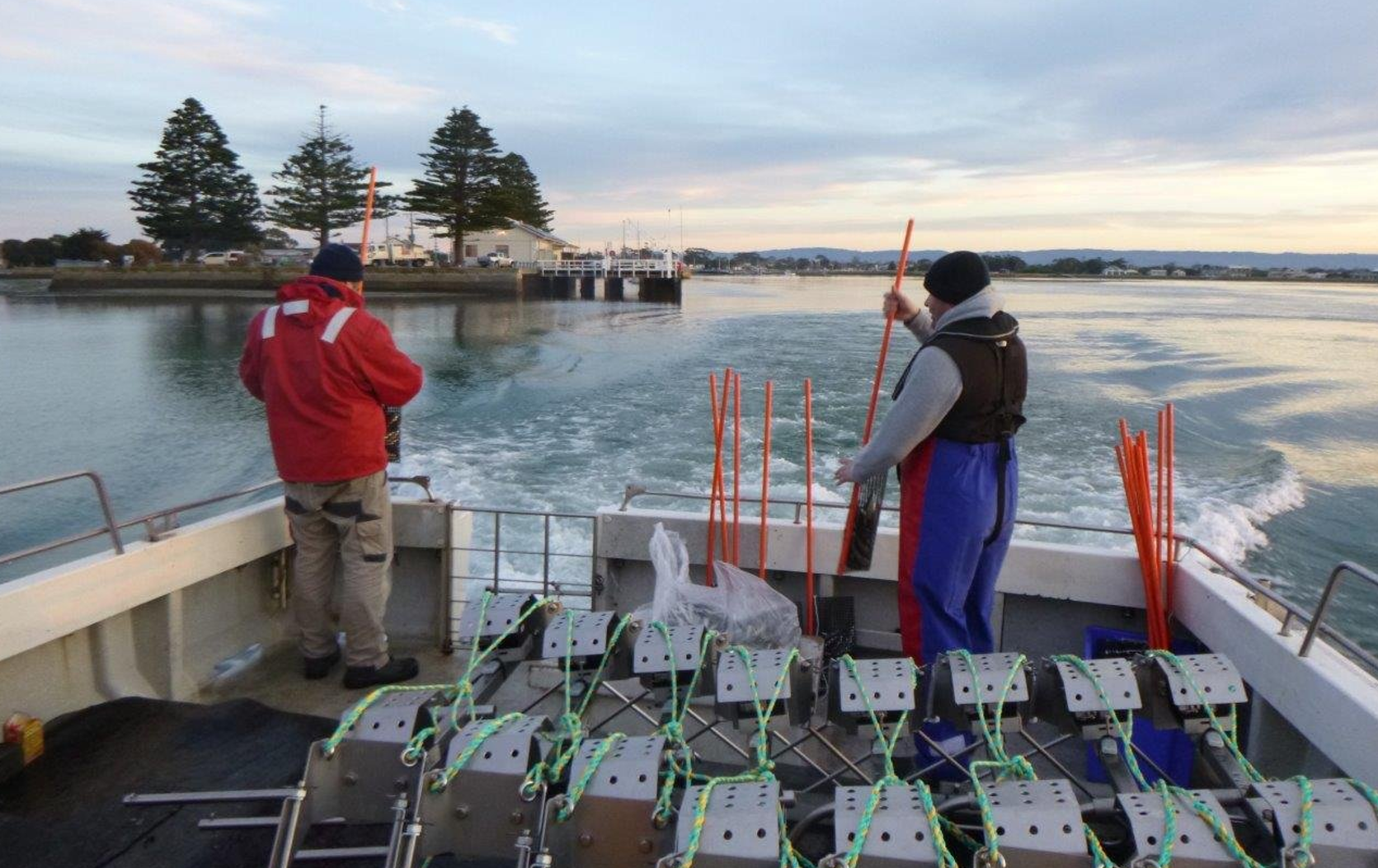
Image: Port Albert surveying fish with underwater cameras via Southerly Ten
22. Aquaculture
Headline puns continue to amuse: “Shellfish farmer Yumbah on spending spree amid Huon cry”.
Brad Thompson reports in the Australian Financial Review that Yumbah Aquaculture, owned by billionaire Anthony Hall, has acquired a number of seafood-producing companies in recent years including Sydney rock oyster producer East 33 for $6 million last year. Yumbah, which has onshore abalone farms in Victoria, South Australia and Tasmania, hadn’t been affected by the trade dispute with China and demand remained strong in its key markets of North America, Japan and other parts of Asia. Yumbah Aquaculture’s current target is Clean Seas Seafoods, which farms kingfish. Yumbah is seeking to purchase the company for $28 million. Yumbah aims to raise $40 million to help fund its expansion plans with company Chair Garry Higgins telling potential investors that it is trying to develop the same kind of profile that salmon farming companies like Tassal and Huon Aquaculture have developed.
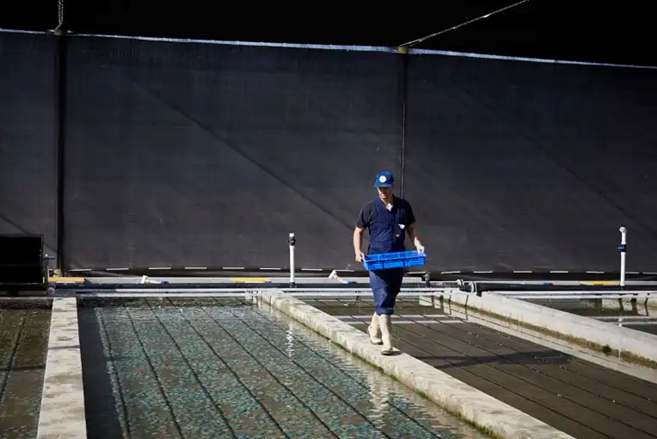
Image: AFR via Igor Sapina
23. Kelp – Vanishing Future
Reports multiply about the gradual disappearance of the marvellous bull kelp and the ‘kelpers’ gathering beach kelp on King Island in Bass Strait. Kelpers are prohibited from diving to harvest kelp from the ocean floor. Only the thick brown bull kelp the ocean has cast onto the shore can be collected. Bull kelp, or Durvillaea potatorum, is harvested to extract alginate which is used for many products from gels and pastes to shampoos and even salad dressing. Locations where kelp was once plentiful are now empty. “Now it’s bare, it’s like a forest that’s been cut down.” Where there used to be 50 full-time kelpers, only 5 – 6 remain. Why is this so? Research is underway.
See: ABC News – Bull Kelp is vanishing on King Island
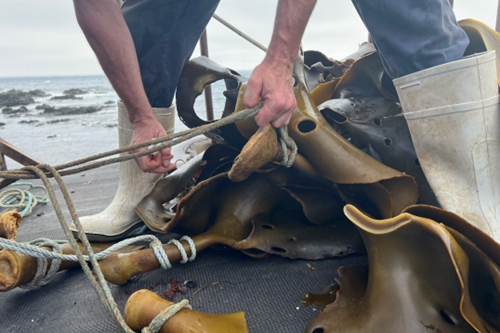
Image: ABC website
24. Salmon Industry – Tax
Leaving aside – if we should – the sustainability and environmental impact of this proliferating Tasmanian industry, let’s consider the economic aspects of farming. Reporter Caitlin Fitzsimmons undertook a fact check for The Age.
See: The Age – Does the Tasmanian Salmon Industry pay tax
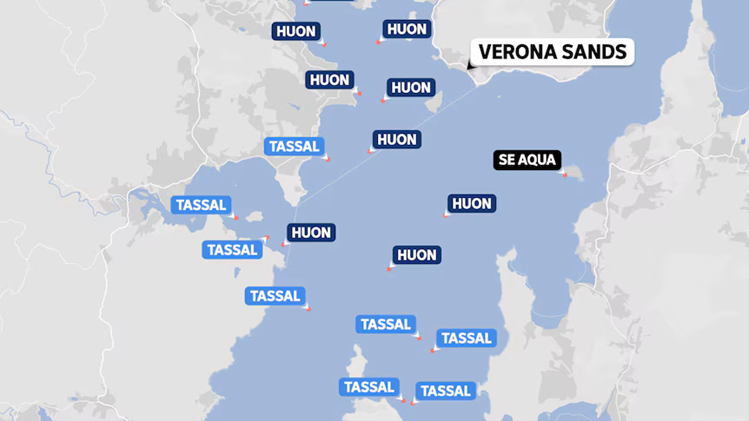
Image: Salmon farm location and ownership map via the ABC.
25. Sea Heritage Foundation and the Commonwealth Lighthouse Service (CLS) Ship MV Cape Don
The MV Cape Don is a fascinating model for a 10-year project and well worth visiting when next in Sydney. The ship is undergoing a staged 10-year strategic plan to diversify her income and dry dock the ship, creating training and employment pathways for Indigenous Australians.
Sea Heritage Foundation Pty Ltd is a non-profit incorporated charity founded to carry out the refurbishment and conservation of the historic Commonwealth Lighthouse Service (CLS) Ship MV Cape Don with the aim of preserving a unique example of Australian shipbuilding, ship design and maritime history. MV Cape Don, built at the State Dockyards in Newcastle in 1963 was one of a unique ‘Cape’ class of ships purpose-built to service the important shipping and trade lanes around Australia’s vast coastline.
Conservation work onboard is carried out by a crew of volunteer members of the MV Cape Don Society managed by the Sea Heritage Foundation Board of Governors. Take a tour every Friday (10am and 12pm) or Sunday (10am, 12pm, 2pm, and 4pm).
See: https://seaheritagefoundation.org.au/
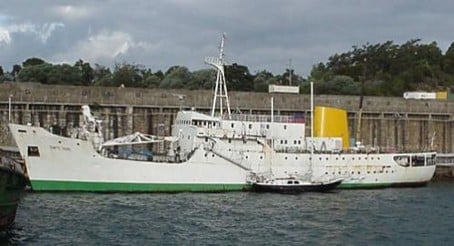
Image: The Cape Don ANMM
26. RAN NEWS: HMAS Sydney joins Bersama Shield
Bersama Shield is an annual multi-national military exercise conducted between the nations of the Five Power Defence Arrangement (FPDA): Australia, Malaysia, New Zealand, Singapore, and the UK. From late March until early July, HMAS Sydney will sail throughout the Indo-Pacific as part of Regional Presence Deployment 25-2 to conduct training, exercises and other engagements with regional navies. HMAS Sydney has joined Exercise Bersama Shield and is conducting training alongside Malaysia, Singapore, New Zealand and the United Kingdom. Participation in this exercise follows a port visit by Sydney to Singapore, the first overseas stop for this regional presence deployment since the ship left Australian waters earlier this month. During Bersama Shield, Sydney’s crew will exercise in a contemporary and complex environment with other defence forces.
See: Contact Air Land and Sea – HMAS Sydney’s three month journey
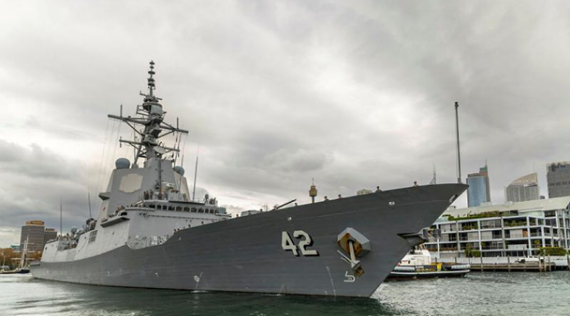
Image: HMAS Sydney via RAN
27. Colossal Squid Observed
What’s not to love? Kat Bolstead of the Schmidt Institute reports, “a century after its discovery, scientists capture first confirmed footage of a colossal squid in the deep”. The colossal squid was first described in 1925 based on specimens from the stomach of a commercially hunted sperm whale. A century later, near the South Sandwich Islands, an international research voyage captured the first confirmed video of this species in its natural habitat – a 30-centimetre juvenile – at a depth of 600 metres. The team on Schmidt Ocean Institute’s Research Vessel Falkor (too) captured the footage using their remotely operated vehicle SuBastian during an Ocean Census flagship expedition searching for new marine life. Colossal squid can grow up to 7 metres and weigh as much as 500 kilograms, making them the heaviest invertebrate on the planet. But little is known about their life cycle.
“Most of our deep-sea exploration equipment is large, noisy and uses bright lights if we are trying to film animals. But the colossal squid can detect and avoid diving sperm whales, which probably produce a strong light signal as they swim down and disturb bioluminescent animals. The squid best able to avoid such predators have been passing on their genes for millions of years. This leaves us with a current population of visually acute, likely light-avoiding animals, well capable of detecting a light signal from many metres away. The colossal squid is part of the ‘glass’ squid family (Cranchiidae). Three known glass squid species are found in the Antarctic ocean, but it can be difficult to distinguish them on camera. Researchers from the organisation Kolossal, aiming to film the colossal squid, observed a similarly sized glass squid during their fourth Antarctic mission in 2023. But since the characteristic features needed to identify a colossal squid – hooks on the ends of the two long tentacles and in the middle of each of the eight shorter arms – weren’t clearly visible, its exact identity remains unconfirmed.”
The expedition that captured the footage of the colossal squid was a collaboration between the Schmidt Ocean Institute, the Nippon Foundation-NEKTON Ocean Census, and GoSouth (a joint project between the University of Plymouth, GEOMAR Helmholtz Centre for Ocean Research and the British Antarctic Survey).
See: The Conversation – Colossal Squid
MMHN also recommends you see this important video: https://schmidtocean.org/first-colossal-squid-footage/
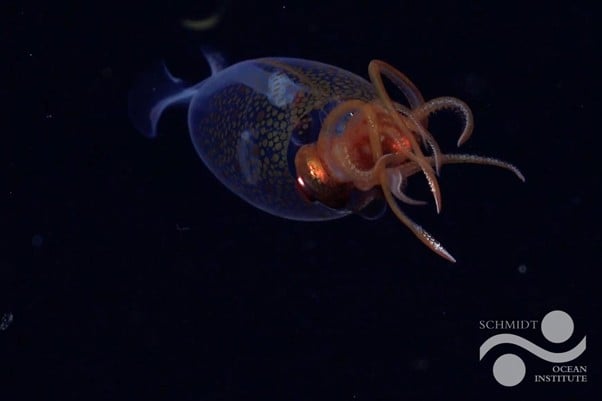
Image: The footage of a juvenile colossal squid was captured during the live feed from a remotely operated vehicle exploring the deep ocean. Image via Schmidt Ocean Institute.
28. Ocean Depths – Enduring Mystery and Resilience
A familiar name in David Attenborough and a (perhaps) lesser known one in Rachel Carson.
In 1937, a pioneering American marine biologist, conservationist and writer by the name of Carson wrote these words in her groundbreaking essay, Undersea, published in the Atlantic in 1937: “Who has known the ocean?” With our “earth-bound senses”, neither you nor I can grasp how profoundly the ocean is a place of paradoxes. It is shallow and deep, light and dark, placid and chaotic, benign and dangerous – filled with surprise and, possibly overall, beauty. For this reason, Carson observed, “no one could write truthfully about the sea and leave out the poetry.”
Fast forward to 2025: Renown naturalist David Attenborough recently wrote “After living for nearly 100 years on this planet, I now understand that the most important place on Earth is not on land, but at sea. To this day, we have seen more of other planets than we have of the ocean. Now we are making discoveries that completely change our understanding and could offer a better future for everyone on Earth forever.” Attenborough says, “If we save the sea, we save our world”.
We can all look forward to 99-year-old Attenborough’s soon to be released new film, Ocean with David Attenborough.
See: SMH – David Attenborough has a new film for his 99th birthday
Also: The Guardian
29. Princes Bridge Restoration Works
MMHN regards bridges as maritime infrastructure, especially the heritage bridges spanning the Birrarung/Yarra. The City of Melbourne reports works are completed on the first 2 sections. Works included: replacing, resetting, cleaning and consolidating bluestone blocks, conservation works like replacing mortar, repairing and artisan repainting of crests, lampposts and the balustrades, waterproofing sections of footpath, rewiring the public lighting.
Remaining sections 3 and 4 will commence in April. The entire works will be completed during 2026.
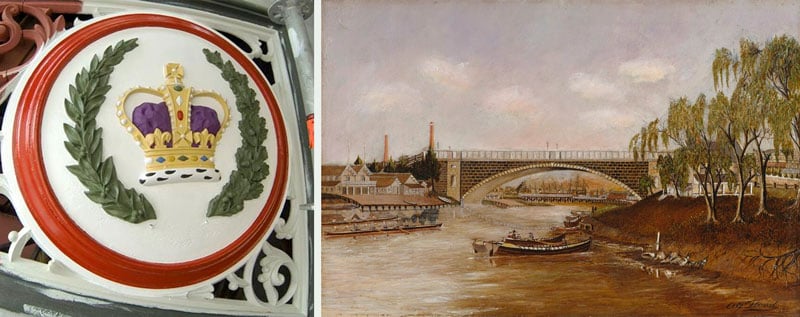
Image: Restoration work (left), historic image SLV (right).
30. Beyond Greenline
A good move: MMHN commends Councillors Southbank on the recent motion relating to Greenline funding commitments, status and permit approvals. MMHN has questioned the rationale, concept and cost of the Greenline project from the outset. The Greenline concept was inherently problematic. In fact, there are three pre-existing waterway trails in Melbourne: Northbank, Southbank, and Victoria Harbour. MMHN notes that prioritising Northbank (aka Greenline) was a misguided and ill-informed concept, mimicking New York rather than seeing the significance of our existing waterway trails. In effect, Greenline, despite our best efforts, persistently disregarded the significance of these waterways and the critical role they played in enabling the maritime trade that was the basis of Victoria’s prosperity. Greenline ‘turned its back’ on Melbourne’s rich maritime heritage. MMHN is a staunch and knowledgeable advocate for waterways and has commissioned accurate historical research to substantiate this. This information has been offered to the City of Melbourne as the basis for an MMHN Draft Budget Submission this month. In essence, MMHN is a calling for a Feasibility Report on a project to capture and make accessible the entire Melbourne maritime heritage story through the installation of wayfinding/informational signage (QR codes) along the three existing and interconnected trails on the banks of all three waterways:
· Northbank – Birrarung Marr to the mini park at the tip of North Wharf
· Southbank – Billabongs (Royal Botanical Gardens) to the Bolte Bridge
· Victoria Harbour – Moonee Ponds Creek to the Shipping Control Tower
Collectively, these three waterway trails constitute a major undeveloped public asset which is of immense social, cultural and economic significance. Whether you are a local, an interstate traveller or a visiting international student, using the trail and accessing fascinating, historically accurate stories (complete with images) is a wonderful way to get to know this city. MMHN will provide this research material free to the CoM. Our hope is the CoM will vote to support MMHN by firstly investing in a Feasibility Report on the project. Proper activation of these three waterway trails will ultimately bring Melbourne’s rich maritime heritage to life.
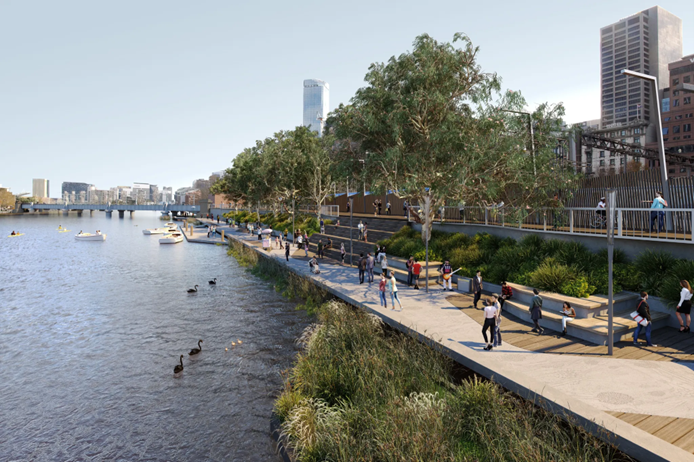
Image: via The Age and City of Melbourne
31. Blue Economy – City of Melbourne
MMHN responded to an invitation from the City of Melbourne Council to participate in the largest community gathering in Melbourne ever, convened to discuss the future Melbourne 2050. MMHN selected the Economic/Innovation Discussion Group with the specific intent to ensure that the ‘Blue Economy’ was raised and actually included in the future planning for Melbourne – which just happens to be Australia’s largest port. It was perhaps no surprise to find that amongst the participant entrepreneurs, developers, businesspeople, and economists, the ‘Blue Economy’ was a new concept. Like most of us, participants did not know what they did not know in relation to the ‘Blue Economy’. MMHN can assure you that they do now! And so they should!
According to the Australian Index of Marine Science (AIMS Index of Marine Industry 2023), Australia’s marine industry, widely referred to as the ‘Blue Economy’, contributed a total output of $118.5 billion towards the national economy and supported 462,000 full time equivalent jobs (direct and indirect employment). The output is $37.3 billion greater than that reported in the previous Index.
See: Euro News – The Blue economy
Also see: Australian Institute of Maritime Science (AIMS) – Australia’s blue economy grew through COVID
32. UK Aircraft Carriers: Operation Highmast
We seem to be situated in a very popular region of late. Analyst Bill Sweetman reports for The Stategist: “Highmast is the biggest test to date for the Royal Navy’s return to the carrier business, a plan 30 years in the making.”
The UK Operation Highmast commenced late April, as the British aircraft carrier HMS Prince of Wales and supporting warships embarked on an eight-month deployment, also known as Carrier Strike Group 25, to the Pacific and Australia. The latest carrier group is in uncharted waters. Prime Minister Sir Keir Starmer’s Labour government is still new after 12 years of Tory rule, and a strategic defence review is under way. Ukraine and Donald Trump have combined to form the second up-ending of strategic assumptions since Britain’s first strategic defence review committed to building the carriers in 1998, and British defence equipment plans (as usual) require more money than is available. The RN is irreversibly committed to carriers and what carriers do, which—as admirals Yamamoto and Halsey showed in the Pacific eight decades ago—is to project power at great distances. But there are issues to overcome in relation to aircraft which are the offensive as well as defensive elements of the immense vessels.
See: The Strategist – A British carrier group is coming to the Pacific
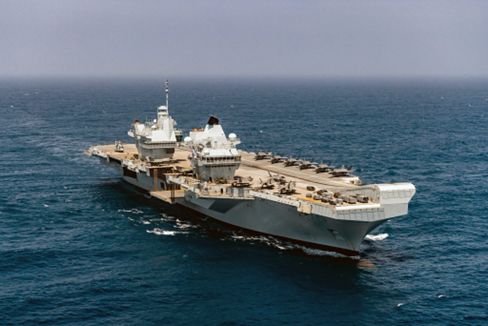
Image: via ASPI, The Strategist
33. Deep See Mining
Journalist Jessica Sier reports for the Australian Financial Review, “Australian entrepreneur Gerard Barron is driving America’s charge into controversial deep-sea mining”. Barron is CEO of The Metals Company, North America’s largest deep-sea mining outfit. He has spent the last 5 years lobbying for what was, until recently, off limits: the commercial extraction of minerals from the Pacific Ocean floor. Late last month, US President Donald Trump signed an executive order to fast-track deep-sea mining, a move aimed at wresting control of critical minerals such as cobalt, nickel and manganese from China’s grip and placing them back in Western hands. Long seen as environmentally hazardous, deep-sea mining now has “regulatory certainty”, largely thanks to Barron’s dogged campaign to reframe the potentially lucrative endeavour into a way to fuel the clean energy transition and reduce the West’s dependence on China which began in the early 2000’s. Barron first engaged with Brisbane-based underwater mining firm Nautilus Minerals, providing seed capital and gaining a front row seat to its ultimately doomed efforts to extract seafloor sulphides near Papua New Guinea. “The real game was nodules,” he said. “They’re vast, abundant, and contain the exact metals the world needs for electrification.”
See: AFR – Global mining’s new frontier
Also see: AFR – New venture from team behind Nautilus
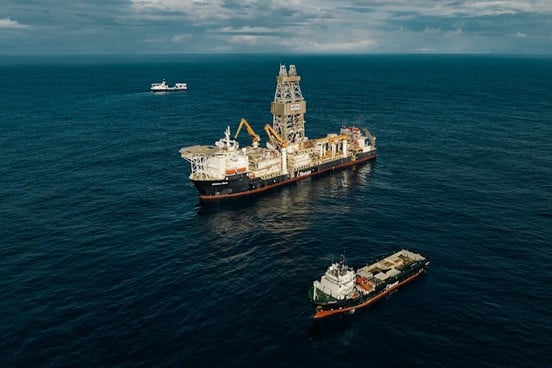
Image: Seabed mining via AFR
34. Port of Los Angeles – Global Trade Tension
The busiest container port in North America has been the Port of Los Angeles for more than two decades with record volumes for containerized trade. What’s happening there lately? A dramatic drop in port activity. A fascinating Bloomberg video interview with the CEO of the Port of Los Angeles discusses the wide, adverse, real-time, flow-on impact of interrupted maritime trade with China.
See: Bloomberg TV LA
Also see: https://www.portoflosangeles.org
And: GR Review – Tariff pause unlikely to reverse drop in LA port activity
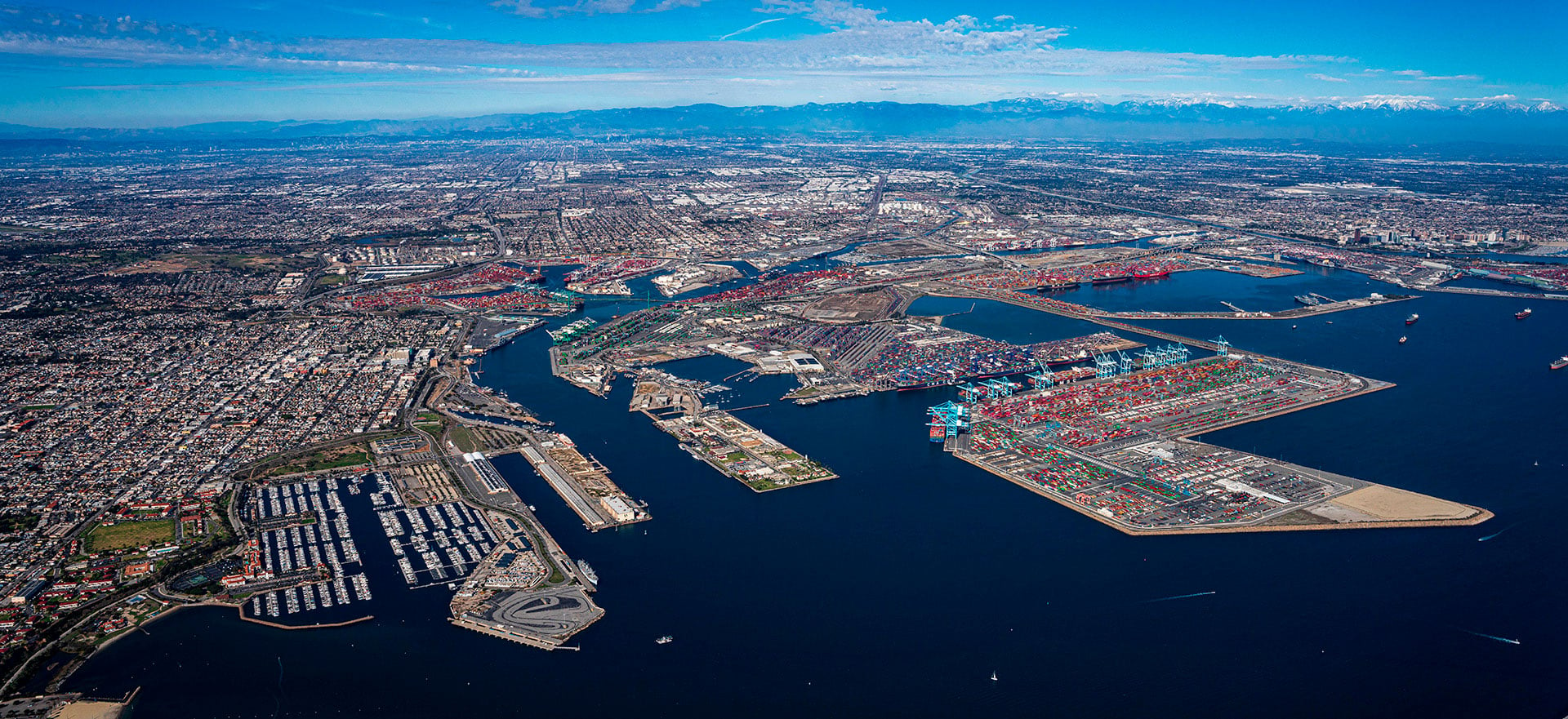
Image: Port of Los Angeles website
35. Mexican Navy Training Ship
Whenever a tall ship comes to grief, maritime heritage stakeholders around the globe. collectively wince. Sad news indeed that the splendid training vessel Cuauhtemoc was involved in a freak accident, the cause of which is not confirmed. It is thought to involve tugboat operations pulling the vessel from a riverside berth close to Brooklyn Bridge and encountering a very strong incoming tide. The vessel struck the underside of the Brooklyn Bridge and lost all three masts, upon which young trainees were unceremoniously stranded aloft in harnesses. Two of the 277 crew were killed and 22 injured. Of the injuries, 50% were critical. The Cuauhtemoc (90.5 metres long and 12 metres wide) sailed for the first time in 1982. Each year, at the conclusion of cadets training, it sets out on a world tour which, in 2024, included Australia.
What an unforgettable sight for the many MMHN members and the enthusiastic public that got to experience the Cuauhtemoc on its stop over in Melbourne. Its visit was reminiscent of former days on Station Pier – always very much a people’s pier.
For further information and video, see: The Age – Mexican Navy Training vessel hist Brooklyn Bridge
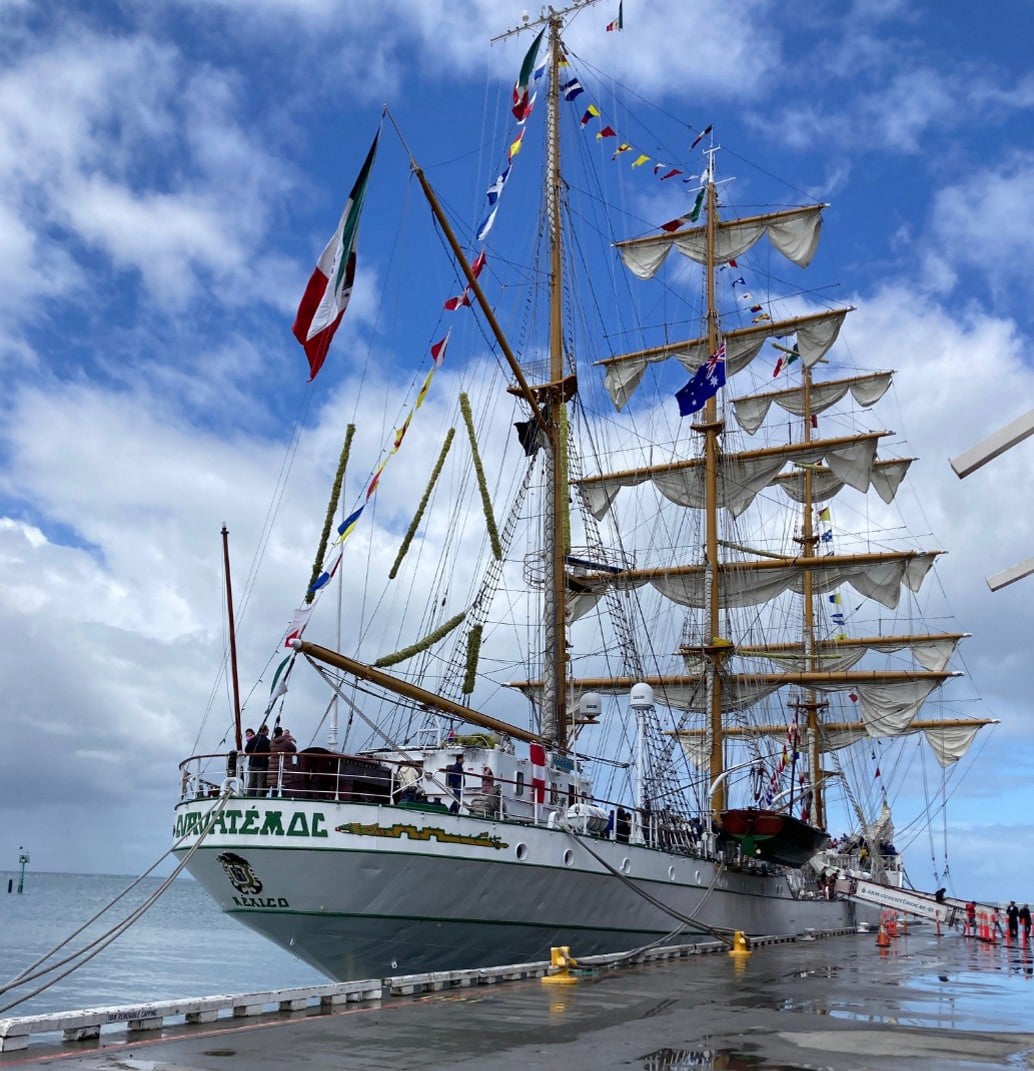
Image: Cuauhtemoc
36. Bhagwan Marine
Port infrastructure has always been at the heart of our maritime trade success. In the 19th and early 20th centuries, State Government heavily invested (think Coode Canal, Victoria Harbour) in protecting maritime trade capability. Bhagwan Marine recently announced a 6-year contract extension with Port of Melbourne valued at approximately $6 million per annum, which will now continue until 30 June 2030 covering marine maintenance services, including fixed and preventative maintenance, reactive and variable services, minor capital works for the port’s marine structures and aids to navigation. Bhagwan may also participate in other capital works programs for the port. Bhagwan Marine is a national Australian marine services company, founded in 2000 by the Kannikoski family in Geraldton, WA. They offer marine solutions within ports, nearshore, offshore and at subsea locations to industries including oil and gas, subsea, port, civil construction, renewables and Defence. They have a fleet of 95+ vessels comprising various types including dive support vessels, tugboats, multi-cats, utility vessels, barges and crew transfer boats, as well as other specialist vessels.

37. Station Pier Project Overview
Bhagwan Marine Pty Ltd (BM) were contracted by Ports Victoria (PV) to complete a wharf remediation package over 4 years. The package involved a wharf remediation at Station Pier, Victoria’s premier cruise ship wharf. Due to the high utilisation of Station Pier, works on the wharf had a time crucial element with the works to be completed during the cruise off-season.
Including:
- 230 pile repairs (wraps, encasements, splices & collars) over 3 months
- Pile driving
- Remediation and replacement of crossheads
- Beams and bracing
- Temporary support design/implementation
Additional objectives include:
- Undertaking rehabilitation works in a safe and sustainable manner.
- Performing rehabilitation works with minimal disruption to tenant activities and shipping logistics.
- Completing the rehabilitation works with no negative impact to the surrounding environment and local community
See: https://www.bhagwanmarine.com/project/port-victoria-station-pier-remediation-works/
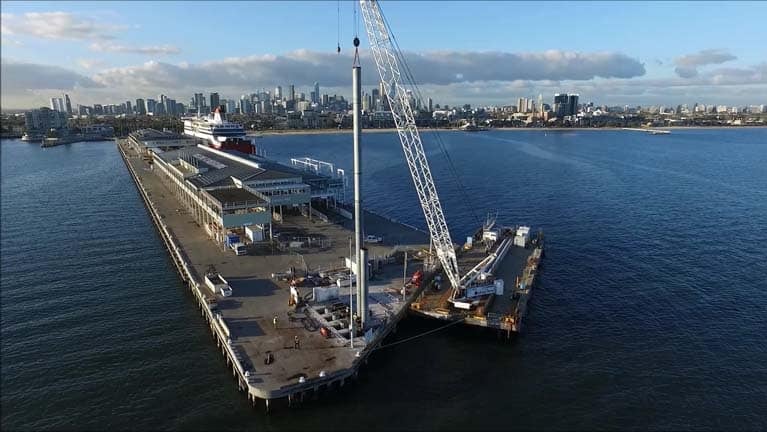
Image: Bhagwan website
38. Proof That Station Pier Really Matters
A Ports Victoria collaboration with MMHN welcomed an enthusiastic crowd of maritime heritage enthusiasts to this rare National Trust Heritage Month event on Station Pier. It was a joy to walk! Participants included representatives from the RAN, Port Melbourne Council, Port Melbourne Historical Preservation Association, as well as Beacon Cove residents, tour operators and many, many others. Ports Victoria staff spoke of the ‘nitty-gritty’ of pier engineering and maintenance and responded to the many questions put to them. MMHN spoke briefly about the urgent need to support Ports Victoria in advocating for adequate pier maintenance and restoration funding. Ports Vic are between a rock and a hard place. We do not question their support for maritime heritage infrastructure, but their job is actually and essentially operational. They simply cannot afford the level of investment required to preserve this massive, still-operational, piece of port infrastructure.
MMHN encourages ALL heritage enthusiasts to contact their local MPs. Ask them to press relevant Ministers and urge better care for this marvellous pier which is of irrefutable significance to our social, cultural and economic heritage. A reminder that MMHN already knows what this pier needs. Our task is to press government to stop squandering this heritage asset which, taking other global examples, could actually be generating income.
See the MMHN vision for Reimagining Station Pier:
MMHN Opportunity 7 – Station Pier
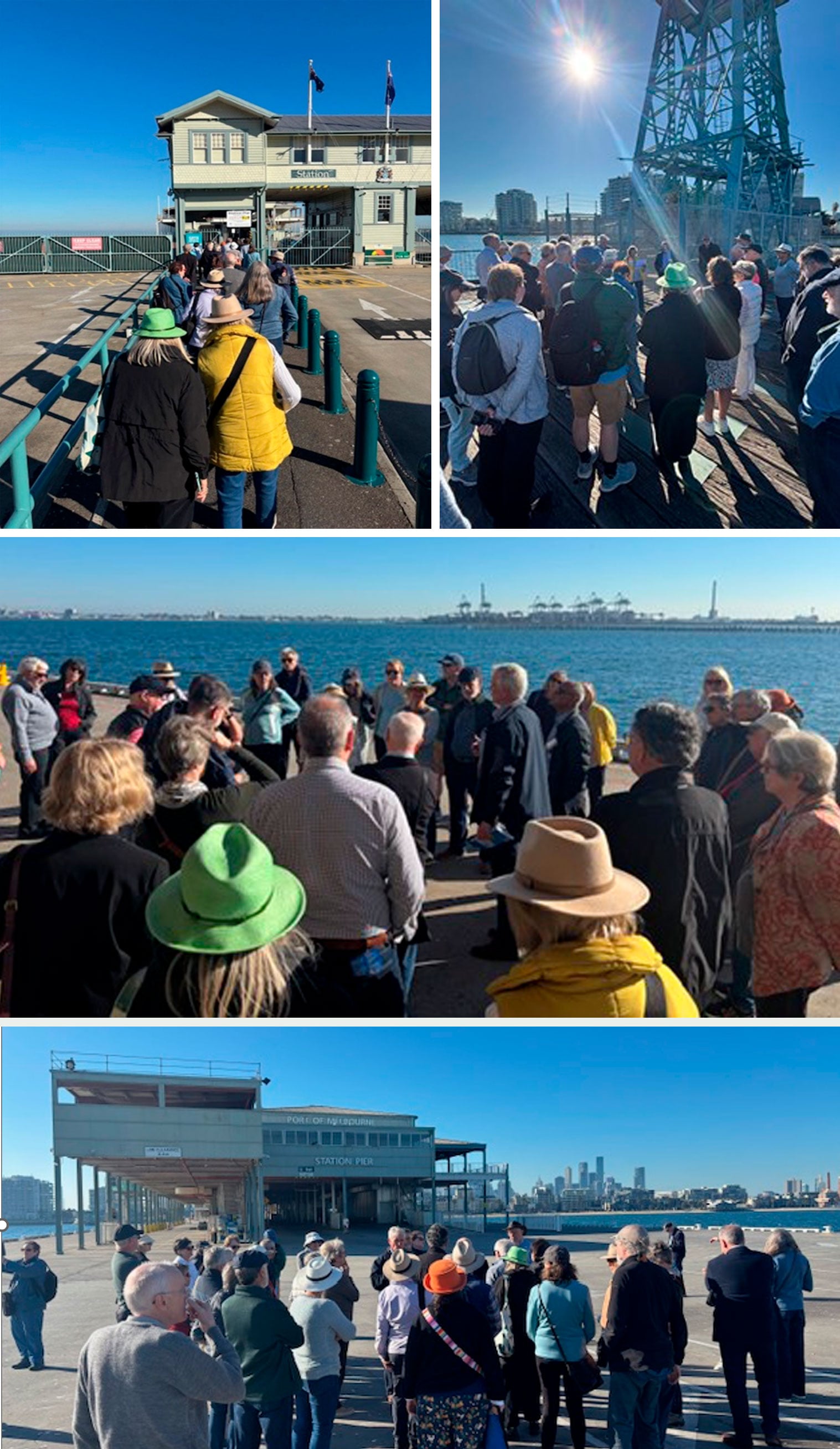
Image: Crowds at the National Trust Heritage event at Station Pier, presented by Ports Vic and MMHN. Photos via Jackie Watts.
Until next time,
Jackie
Dr Jackie Watts OAM
Chair,
Melbourne Maritime Heritage Network