

Greetings all,
No surprise, perhaps, that Japan is very much the theme of the MMHN Update this month. But first – let us share excellent news!
Contents
1. MMHN Maritime Trails Project – Launched at Seafarers Rest Park
2. Pirate Samurai Project: Australia’s First Contact with Japan (1830)
3. Port of Osaka
4. Yokohama Museum
5. Japanese Submarine Launch at Kobe
6. Station Pier – Public Access
7. Cutty Sark Inspiration for the Polly Woodside
8. The barque Peking
9. Deutsches Hafenmuseum, Hamburg
10. Heritage Fleet Group in Victoria Harbour – Threat, Solution and Action
11. Seawall Along New Quay on Victoria Harbour
12. Green Marine Tasmania MOU
13. Riverport Wharves Along the Birrarung/Yarra
14. Hull Maritime Museum Project
15. RAN Australian Fleet
16. OSSA Scholarship Fund – Maritime Skills Deficit
17. Royal Historical Society of Victoria
18. Inaugural Gippsland Lakes Boat Show 2026 – BIAV
19. Penguin Colony at St Kilda Pier
20. Rakali – More Wildlife Around the Bay
21. Antarctic Icepack Softens
22. Correction: Davis Research Station
23. Invitation: MMHN Christmas Gathering
1. MMHN Maritime Trails Project – Launched at Seafarers Rest Park
This has been a long, evolving, detailed project and a first for Victorian tourism. We are delighted with the end product! A three-part, historically accurate, comprehensive, illustrated narrative of maritime heritage accessible on your mobile phone.
See the MMHN website: https://mmhn.org.au/heritage-trails/
-
- Northbank: A Riverfront Port in the CBD – Birrarung Marr to the tip of North Wharf
- Southbank: Billabongs to the Bolte Bridge – The Boat Sheds to the Bolte West Precinct
- Victoria Harbour: A Port City – North Wharf to the East of Moonee Ponds Creek
We encourage you see the MMHN Maritime Heritage Trail Guide online and tell everyone! A reminder that the maritime heritage of the colonial riverport of Melbourne grew at such a cracking pace because it was driven by the discovery of gold which triggered large-scale immigration. Due to the booming maritime trade with Europe, Melbourne became one of the world’s richest cities. Maritime trade created the extraordinary prosperity of our city, once known as ‘Marvellous Melbourne’. As ships grew in tonnage, import and export cargo grew in volume. Demand for wharf and berth space led to massive public investment in port infrastructure downstream from the river port on the Birrarung/Yarra River towards Port Philip Bay.
Paradoxically, the greater the port, the less the public could see of it in operation. This is the very reason MMHN have produced this excellent Trail Guide (for free) so that the public can gasp the economic and cultural significance of maritime trade in this city.
MMHN is optimistic that this Maritime Trail Guide will prove to be of immense value to tourism in Docklands and the CBD and will certainly grow greater awareness of our rich maritime heritage.
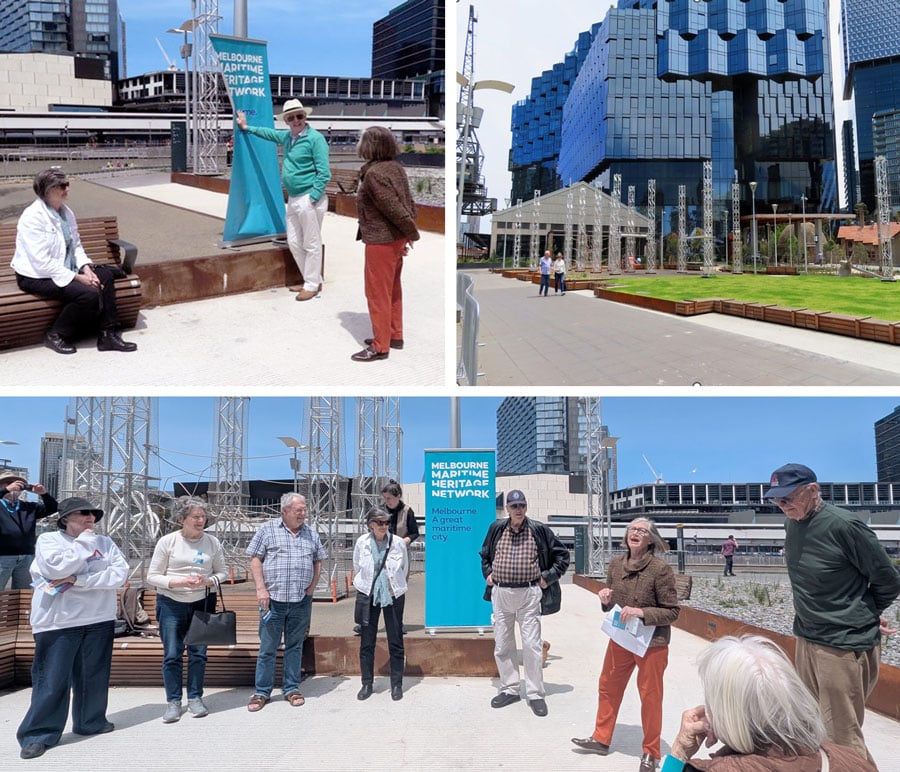
Images: MMHN Board Members and supporters at Seafarers Rest Park. Credit: Jeff Malley and Dimity Mapstone.
2. Pirate Samurai Project: Australia’s First Contact with Japan (1830)
In October, Jackie Watts (representing both MMHN and OSSA) was invited to speak at an event in Tokushima commemorating the 195th anniversary of Australia’s first contact with Japan. Many of you will have seen media reports of this amazing discovery in a detailed account and coloured images of a mysterious vessel arriving in Japanese waters between Tokushima and the tiny island of Tebujima. Melbourne-based historian/producers, Tim Stone and his Japanese wife Aya Hatano, alerted Jackie to the astounding voyage of the brig Cyprus, which was commandeered from Tasmania. In 2019, Tim and Aya made a two-part audio documentary for ABC Australia on the subject. MMHN hopes to hear more of this as the project unfolds. Listen to:
Episode 1 – Through Samurai Eyes: Japan
Episode 2 – Through Samurai Eyes: Tasmania
In February 2026, Tim is to present the tale as part of the ‘History Series’, produced by Royal Maritime Museum Greenwich under the swashbuckling title, The Piratical seizure of the brig Cyprus.
See: Through Samurai Eyes
Note: Early in 2026, MMHN have invited Tim Stone to present his latest research and answer your many questions. Stay tuned for details.
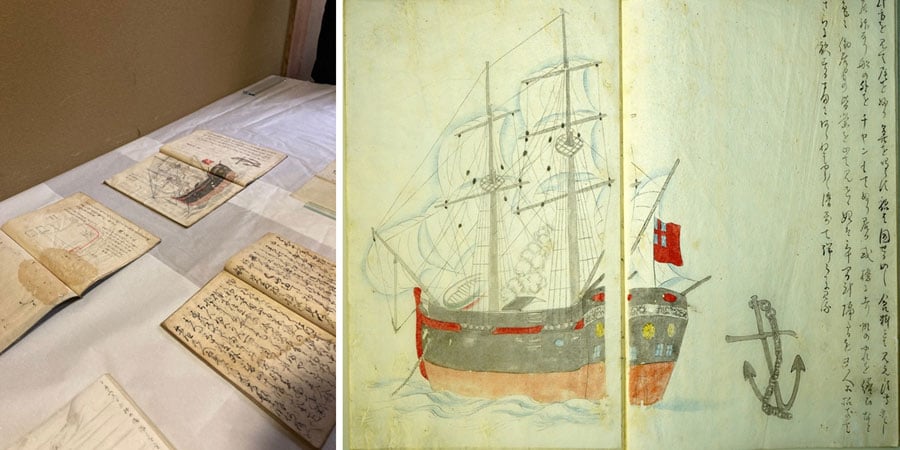
Images: An illustrated account of the arrival of a foreign ship, Hamaguchi Kanzaemon (1830). Credit: Jackie Watts, MMHN.
3. Port of Osaka
The City of Melbourne has a long-standing ‘sister-city’ relationship with the City of Osaka which commenced in 1978. However, a ‘port-city’ relationship between Melbourne and Osaka was established earlier, in 1972. In 1987, to mark the 120th anniversary of the founding of the Port of Osaka, the now famous Melbourne to Osaka two-handed yacht race commenced. While in Japan, Jackie took the opportunity to meet with senior staff from the Osaka Ports and Harbour Bureau. The port is designated to be the primary import terminal, whereas the nearby port of Kobe, is the designated export terminal. The port site is expanding apace. In 2025, it expanded by 2000ha of landfill creating the 155ha Yumeshima Island, the site of the 2025 EXPO. As well as operating as the main port in Japan, Osaka has an international ferry terminal and two cruise terminal wharves – 85 vessels are expected in 2025. In 2024, the Osaka Cruise Terminal was reviewed in the SMH. Consider this as you think about Station Pier (see following Update item on Station Pier)
See: Port guide – Osaka, Japan
Operating on completely different governance models to the Port of Melbourne, the Ports of Osaka and Kobe operate in tandem. In 2014, the Kobe-Osaka International Port Corporation (KOIP) was established by the Japanese Government to manage the ports of both cities through Osaka Prefectural and City Governments. Its container and ferry terminals are so supported by the Osaka Port & Harbors Bureau.
See: Osaka Ports and Harbours Bureau
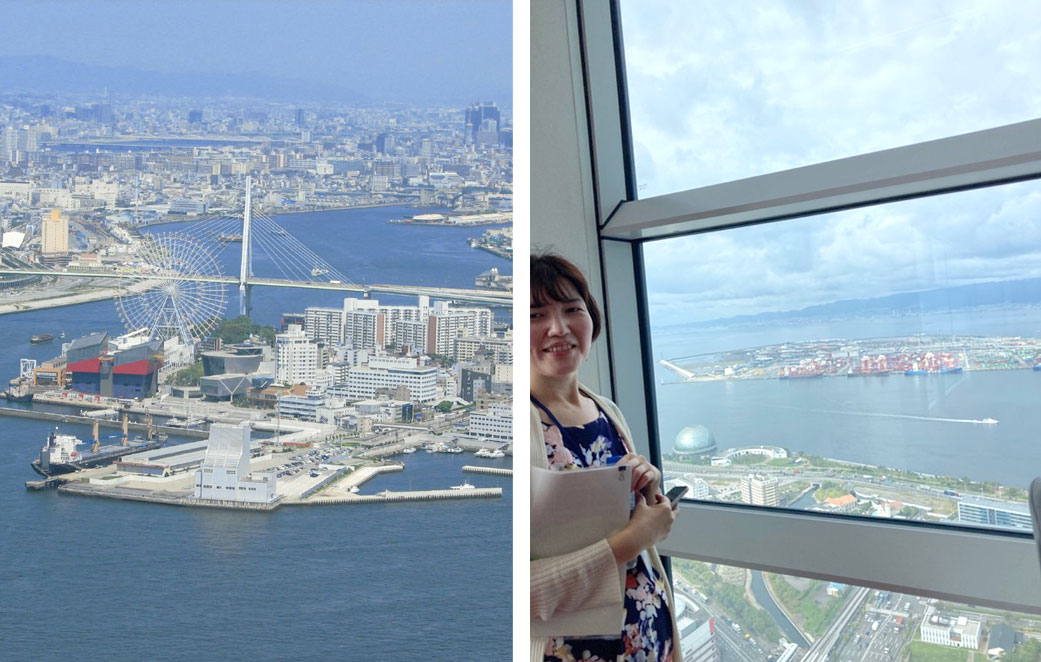
Images: Port of Osaka. Credit: The Port of Osaka website and Jackie Watts.
4. Yokohama Museum
MMHN thanks members John and Lia Howell for news of an unusual Japanese maritime ship museum at Yokohama.
“Our last stop was in the huge port of Yokohama. The port is very much occupied by vehicle exports, and in many locations you can see yards with thousands of new cars and trucks waiting to be loaded onto ships. There is only a small Maritime Museum, and floating in an old dock beside it is the vessel Nippon Maru. This was a Japanese sail training vessel launched in 1930 and now retired and open for inspection. Nearby is a cable car, and the magnificent view of the ship at night from the cable car shows just how an exhibit like this can be shown at its best.”
See: Sail Training Ship Nippon Maru
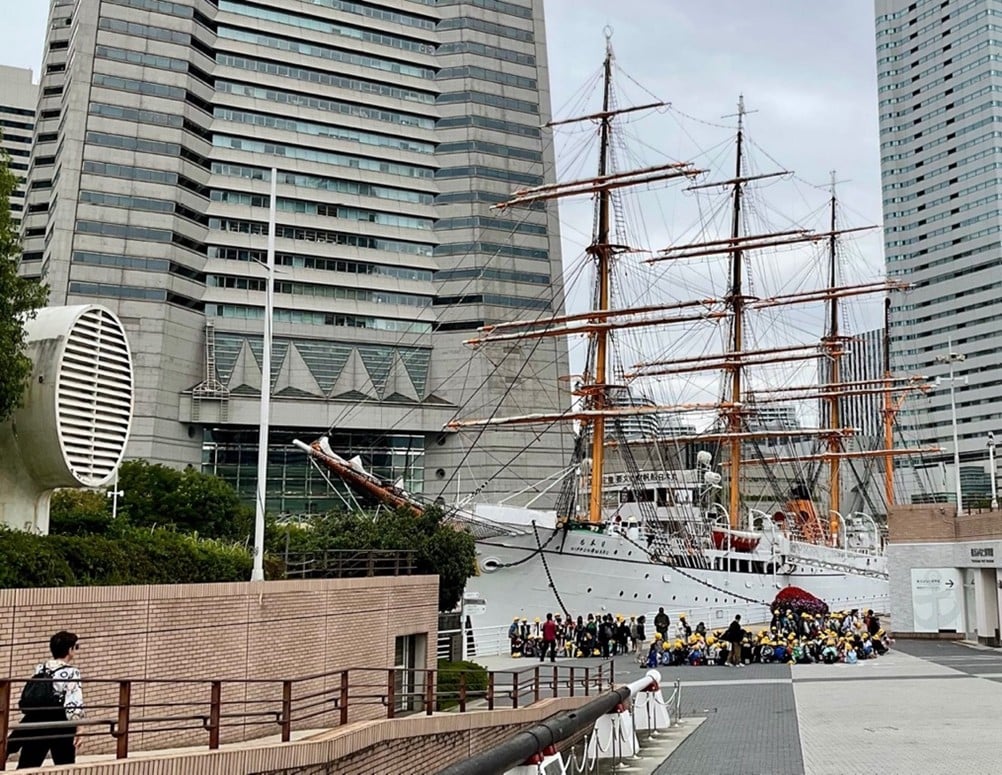
Image: School groups (and two tourists) waiting for the Museum ship to open. Credit: John and Lia Howell.
5. Japanese Submarine Launch at Kobe
Japan recently launched its first submarine since WWII. The 3,000-tonne vessel is powered by Kawasaki 12V 25/31 diesel-electric engines. The Sogei entered the water on October 14, 2025, from KHI’s shipyard in Kobe City. Costing about 73.6 billion yen ($484 million) to build, it is expected to enter service in March 2027. The name “Sogei” means “blue whale”. The Taigei-class submarines all incorporate “Gei” (whale) into their names, following the “Shio” (tide) and “Ryu” (dragon) series seen in previous Japan Maritime Self-Defense Force (JMSDF) submarines. “Taigei” itself means “big whale.”
See: Japan Launches Sixth Taigei-Class Submarine for JMSDF
For video footage of the actual launch, see: Japan Launches Sogei Submarine
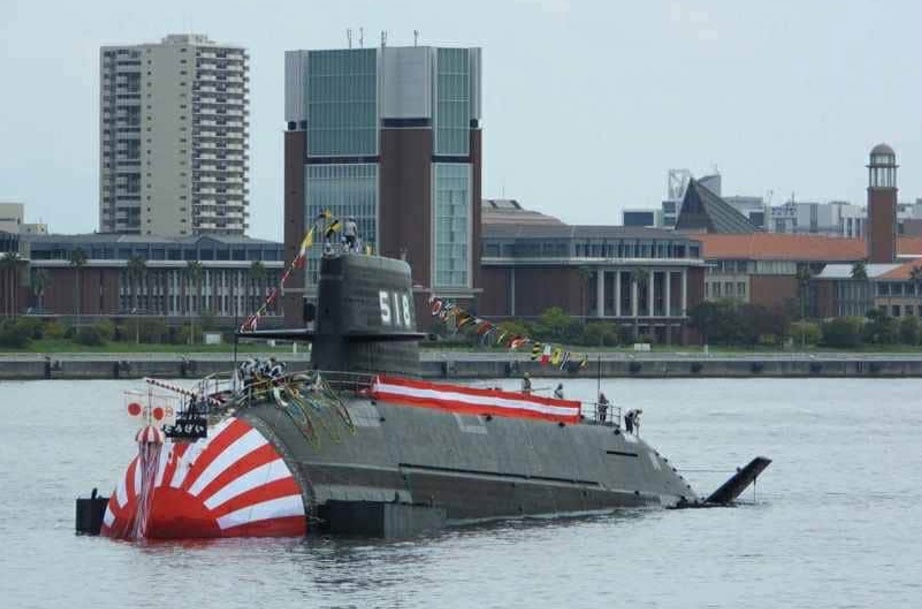
Image: JS Sogei, the sixth Taigei-class submarine. Credit: Taki Yoshihisa.
6. Station Pier – Public Access
Having advocated for 6 years now, MMHN is delighted to report movement on the Station Pier situation. The Victorian State Government appear to be taking steps to ‘reimagine’ this major maritime infrastructure asset.
Firstly, the pleasing announcement by Ports Victoria that there will be regular public access to Station Pier once again. MMHN is gratified to quote Ports Victoria:
“From Sunday October 19, 2025, Station Pier in Port Melbourne will be open to the public on weekends. Walk the historic wharf, enjoy sweeping bay views, and reconnect with Melbourne’s maritime heritage during daylight hours — except on cruise operation days. This long-anticipated reopening marks the first public access since 2020, following a major maintenance and preservation program led by Ports Victoria and the Victorian Government. The works ensure Station Pier’s ongoing role as Australia’s premier cruise and shipping terminal while allowing locals to reconnect with this extraordinary part of Melbourne’s maritime history”. Built in 1854, Station Pier has stood as the city’s front door to the world. It welcomed new arrivals seeking opportunity, returning servicemen, ocean liners of the golden age, and today, international cruise ships carrying travellers to our shores. To walk its weathered boards is to trace more than 170 years of stories — of farewells and homecomings, of salt air and anticipation. Now, with the pier once again open to the public, locals and visitors can experience that same sense of wonder that generations before have felt standing at the edge of Port Phillip Bay.”
See: Station Pier Opening to Public
Secondly, Beacon Cove Residents Association (BCRA) have alerted us to recent and most welcome advocacy action by the City of Port Phillip for the redevelopment of Station Pier and Waterfront Place vicinity. MMHN and BCRA have long called for leadership to revitalise Station Pier and the Waterfront Place Precinct. Two stumbling blocks seem to inhibit the development process.
- Unbelievably, it is not a designated State Government Precinct.
- It seems to be that the pier falls between two ministries, Tourism and Ports.
In 2022, MMHN successfully insisted that the Navigating our Port Futures Strategy address the Station Pier deficits which, of course, included a Victorian Cruise Shipping Strategy. In advocating for the development of Waterfront Place and Station Pier, Port Phillip Ward Councillor Heather Cunsolo states that Station Pier is “more than just a gateway for cruise passengers, it’s a vital part of our city’s identity and economy. We’re committed to working with all levels of government and industry to unlock its full potential and create a precinct that truly reflects the spirit of Port Phillip.”
See: Council champions bold vision for Station Pier revitalisation
Consider the earlier Update item reviewing the Port of Osaka Cruise Terminal and see MMHN’s vision: Reimagining Station Pier
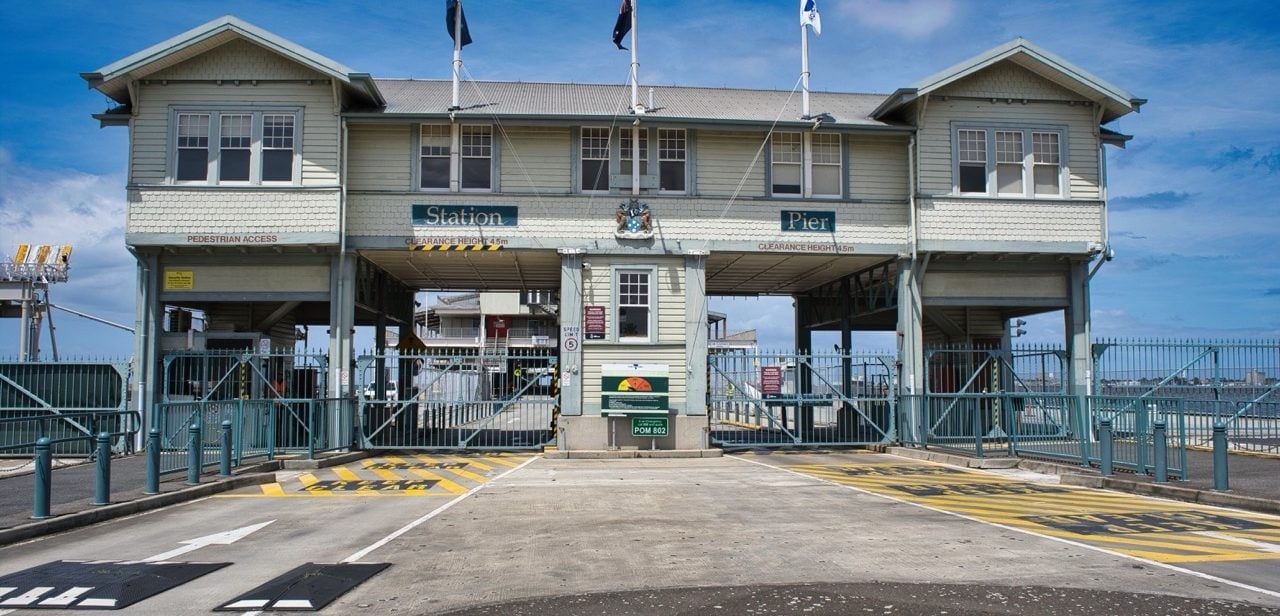
Image: Station Pier. Credit: Ports Victoria.
7. Cutty Sark Inspiration for the Polly Woodside
Maritime enthusiasts all over Victoria share a concern about the future of the National Trust (Vic) Polly Woodside, floating in the Duke & Orrs Dry Dock on Southbank. It is inspirational to consider the restoration model that Royal Maritime Museum, Greenwich adopted for the Cutty Sark. MMHN Board member Ross Brewer ponders: “Wouldn’t it be great to see the #PollyWoodside presented to the public similar to this. It would be an iconic maritime heritage asset for Melbourne in the heart of the city. It would be a wonderful tourist attraction like the Cutty Sark is now”.
The Cutty Sark is a British clipper ship built in 1869, famous for being one of the fastest of its time, primarily used to transport tea from China and later Australian wool to the UK.
See: https://www.rmg.co.uk/cutty-sark
What is inhibiting the realisation of such a plan for the ‘Polly’ is, of course, funding and a lot of it. But the first step costs nothing. The first step would be a serious, high-level meeting of public and private stakeholders to consider addressing the increasingly evident woes of the ‘Polly’.
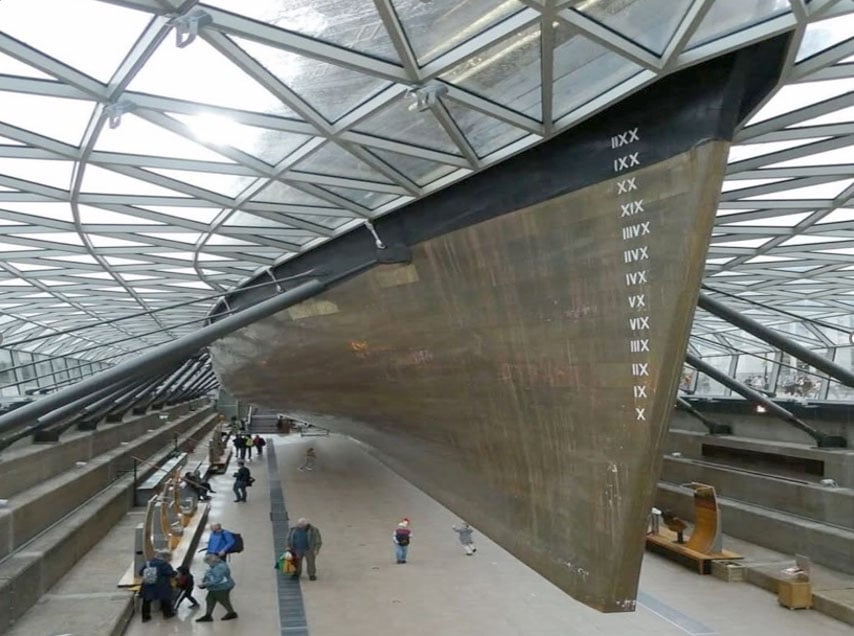
Image: The Cutty Sark’s copper hull. Credit: Martin Brookes of Electrotest Marine.
8. The barque Peking
Many of us have marvelled at the superb 1929 YouTube video of the Peking rounding Cape Horn in truly appalling weather.
You may wish look at the video: Ghosts of Cape Horn
The Peking obviously survived this drama and went on to a global career. When this video was presented at a recent World Ship Society meeting, MMHN member Ian Thomson was inspired to investigate this fascinating tale of vessel, career, rescue, restoration and secure future. MMHN thanks Ian for this report.
Few will be aware of the saga preceding the return of the Peking to Hamburg in 2017 where it was built by the Blohm+Voss shipyard in 1911. Ian reports: “After the outbreak of WWI, she was interned at Valparaiso and remained in Chile for the duration of the war. Awarded to the Kingdom of Italy as war reparations, she was sold back to her original owners, the Laeisz Brothers, in 1923, working in the nitrate trade until traffic through the Panama Canal proved quicker and more economical. In 1932, she was sold for £6,250 to Shaftesbury Homes. She was first towed to Greenhithe, renamed Arethusa II and moored alongside the existing Arethusa I. In July 1933, she was moved to a new permanent mooring in the UK, off Upnor on the River Medway, where she served as a children’s home and training school. During WWII, she served in the Royal Navy as HMS Peking. In 1974 the vessel was sold to Jack Aron, for the South Street Seaport Museum in New York City, where she remained for the next four decades. However, the Seaport NYC did not see Peking as part of its long-term operational plans and was planning to send the vessel to the scrap yard. A 2012 offer to return the ship to Hamburg, as a gift from the city of New York, was contingent upon raising an endowment in Germany to ensure the preservation of the vessel.”
Here is where the all-important element of funding enters the tale. Ian continues.
“She was taken to Caddell Drydock, Staten Island on the 7th of September 2016 to spend the winter. On the 14th of July 2017, she was loaded on the deck of the semi-submersible heavy-lift ship Combi Dock III for transport across the Atlantic, at a cost of some €1 million, arriving at Brunsbüttel on the 30th of July 2017. On the 2nd of August 2017, she was transferred to Peters Werft, located at Wewelsfleth for a three-year refurbishment at a cost of €38 million. The restoration included review of rigging, double floor steel plates, dismounting and remounting of all masts, docking in dry dock, renewal of the steel structure, removal of the cement that filled the lower 3.5 metres (11 ft) of the hull, painting, woodwork and overall refurbishment. The ship twice spent about two years in dry dock. Peking was refloated on the 7th of September 2018, and teak was reinstalled on deck. The ship was transferred on the 7th of September 2020 to Deutsches Hafenmuseum (the German Port Museum in Hamburg). If only such investment in the Polly Woodside were possible.
9. Deutsches Hafenmuseum, Hamburg
What a fortunate, well-funded museum to be presented with this fascinating vessel, the Peking! The museum exhibits the commercial and economic history of Germany’s largest port and wider issues of worldwide trade. In 2017, the German Federal Parliament approved initial funding of €94 million to rebuild the museum.
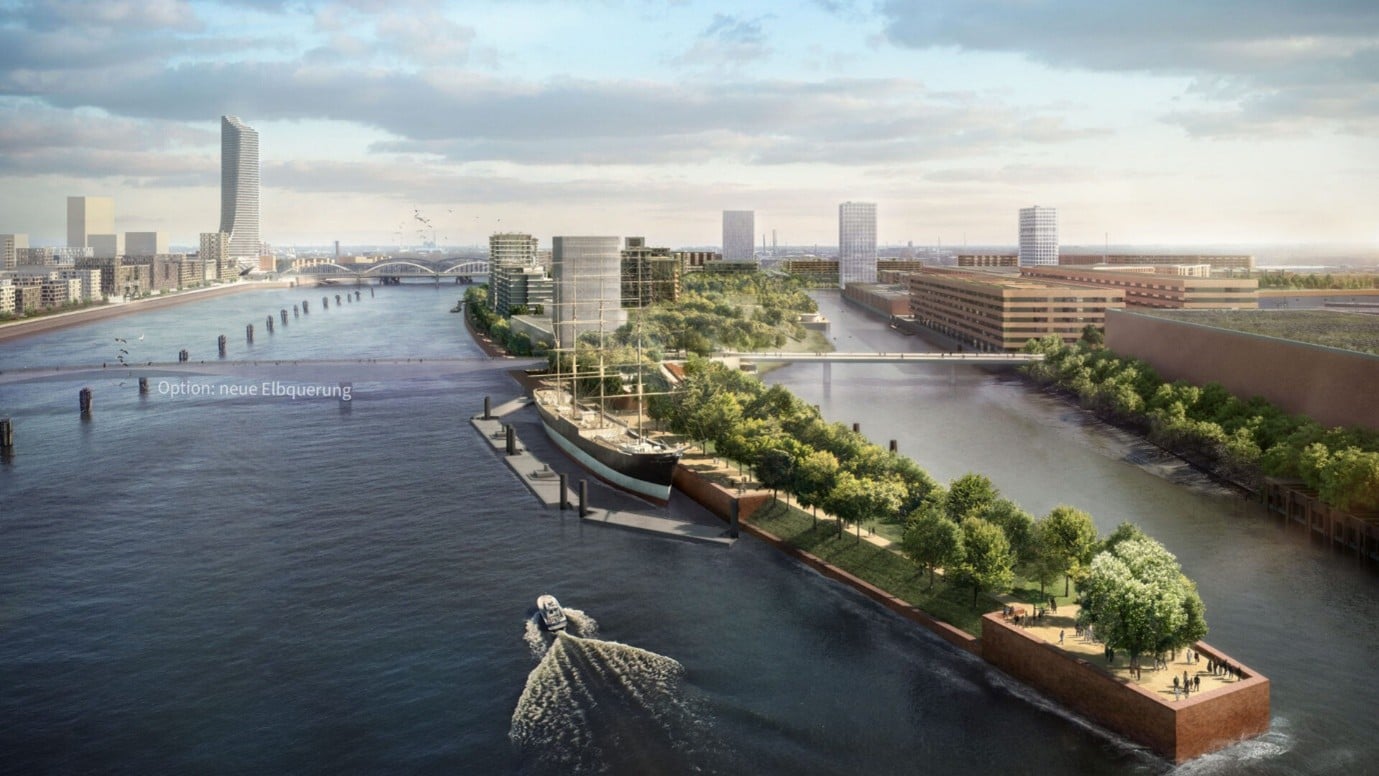
Image: Deutsches Hafenmuseum in Hamburg, Germany. Credit: Deutsches Hafenmuseum Museum website.
10. Heritage Fleet Group in Victoria Harbour – Threat, Solution and Action
In the face of callous disregard for the unique maritime heritage of Docklands by Development Victoria (DV), is there perhaps cause for optimism? The most urgent and acute challenge to maritime heritage in Docklands Precinct is, of course, Development Victoria’s plan to evict the Heritage Fleet Group. According to the eviction notice, the Fleet need to vacate Shed 2 on North Wharf by January 2026, effectively prohibiting any further restoration work on the vessels. While offering no viable relocation option, inexplicably DV offered $30,000 for each vessel. For what purpose?
Viable Solution: MMHN is pleased to support the Heritage Fleet Group in its recent proposal. The Fleet has identified a low-cost relocation option within Victoria Harbour which would enable work on the heritage fleet restoration to continue in the short term. The site, controlled by DV, is potentially an excellent site for a permanent Heritage Fleet facility on vacant land adjacent to the Ron Barassi Snr Park, across Victoria Harbour from North Wharf at New Quay. The City of Melbourne barge, used for staging the Central Pier, is onsite. The barge could accommodate all three heritage vessels. Access from the vacant site to the barge is via a gangway which spans the degraded seawall. Temporary work sheds or shipping containers on the land would provide an interim solution, enabling restoration works to continue. In the long term, this site is ideal for a permanent Heritage Fleet facility to ensure a Heritage Fleet presence remains in Docklands in the future. The Heritage Fleet Group has investigated and costed this option and determined that, given the barge and gangway infrastructure is already operating, estimated costs are minimal. Better still, the City of Melbourne has been consulted in relation to planning issues and has no objections to the proposal.
Our understanding of the situation at this time is that DV remain uncooperative. Despite DV’s own promotional material acknowledging the significance of the Heritage Fleet in Victoria Harbour, their Victoria Harbour agenda is unfathomable. MMHN has proposed this viable, cost-effective solution to the Minister for Precincts, Harriet Shing, who is responsible for DV.
Action Ahead: The Heritage Fleet Group is planning an ‘Our Ships Day of Protest’ on Sunday, December 7. MMHN encourages maritime enthusiasts to attend and lend support. Gather for community action on Harbour Esplanade, Docklands between 10am and 2pm.
11. Seawall Along New Quay on Victoria Harbour
During discussions around a viable relocation option for the Heritage Fleet, MMHN was reminded that DV has, regrettably over so many years, resisted calls to restore the shabby, degraded seawall along New Quay on Victoria Harbour. In effect, this has prevented public access to a sizable linear waters-edge park extending almost to the Bolte Bridge. DV has cited costs for this restoration work as being prohibitive.
This appears not to be the case. We note, without any demonstrable community benefit at all, a new seawall has been built on Harbour Esplanade where Central Pier used to be and at a relatively low cost (we hear merely circa $1.5 million). DV investment priorities are unfathomable.
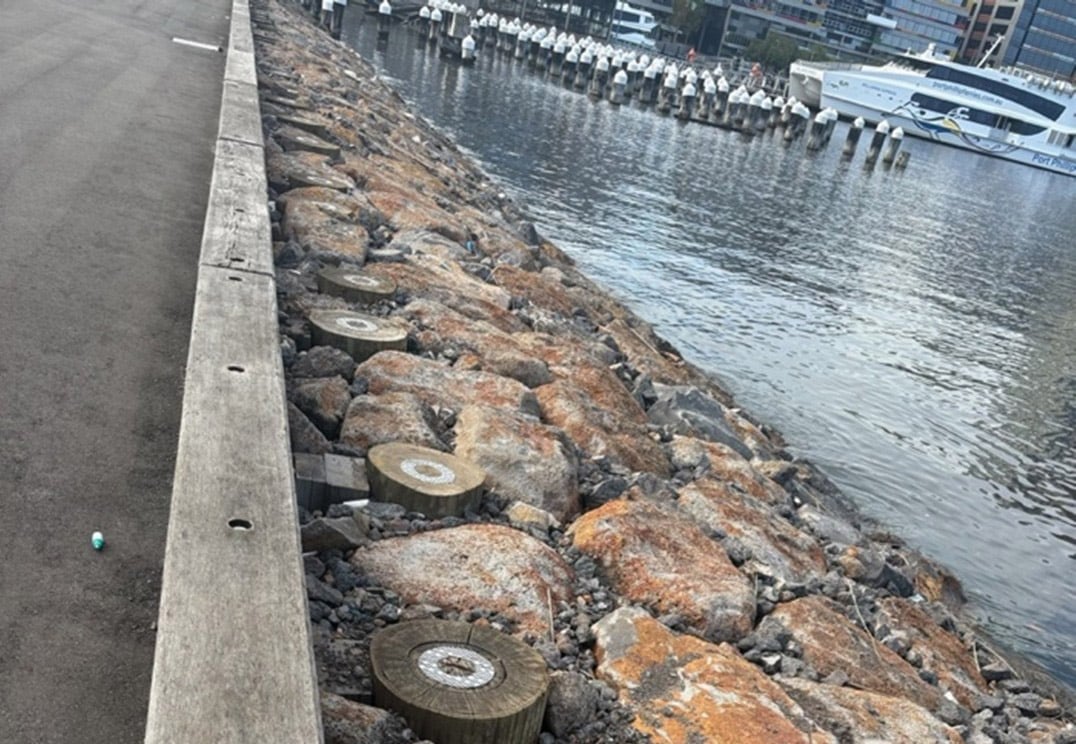
Image: Degrading seawall at New Quay. Credit: MMHN.
12. Green Marine Tasmania MOU
TasPorts and the H2U Group have signed a Memorandum of Understanding to investigate the feasibility of developing a large-scale green hydrogen and ammonia production and export facility within the Bell Bay port precinct in northern Tasmania. The proposed facility would be initially capable of producing up to 500,000 tonnes of green ammonia per year with the potential to scale-up, supporting the emerging hydrogen industry and advancing Tasmania’s renewable energy ambitions. Under the MoU, TasPorts and the H2U Group will assess the technical, economic, environmental and social feasibility of the project, including potential port infrastructure requirements, energy and water supply, export logistics, and local workforce opportunities.
H2U Group Founder and CEO, Dr Attilio Pigneri, states, “Bell Bay was ideally positioned to support both Australia’s export ambitions and the global energy sector’s transition to cleaner fuels”. It is a deep-water port located on the Tamar River estuary.
See: TasPorts and the H2U Group explore green hydrogen and ammonia production at Bell Bay
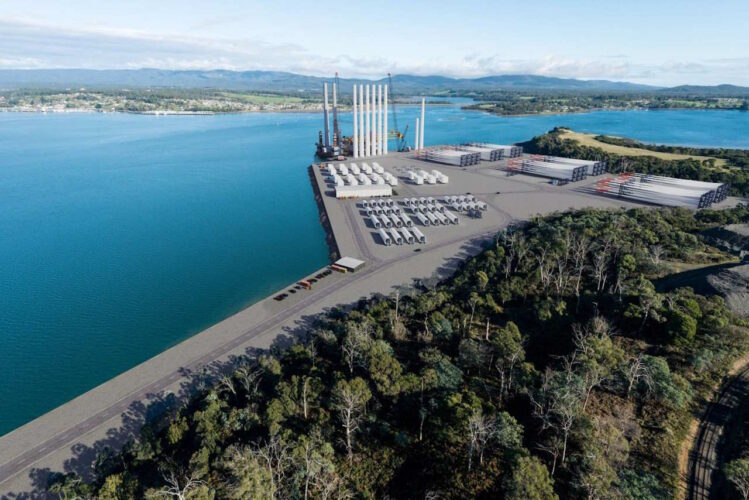
Image: Bell Bay, Northern Tasmania. Credit: TasPorts website.
13. Riverport Wharves Along the Birrarung / Yarra
MMHN Board Member Michael O’Brien recently discovered a fascinating article from The Weekly Times Annual, Centenary Number 1934 in the Monash Memorial Defence Library, a collection which was founded in 1890:
“Much of the trade of early Melbourne passed over what became known as Queen’s Wharf. The beginning of the riverside structure which was to provide berths from the old Falls Bridge to Spencer Street was Cole’s Wharf at the foot of King Street. Other wharves were built, and when the Falls Bridge became Queen’s Bridge, or about that time, they were rebuilt and linked so as to form a lengthy provision for shipping. In the earliest days the river was shallow and only vessels of about 12 feet draught were able to come up to the town berths. The illustration shows the paddle steamers and the small sailing vessels used largely for conveying cargo from ships from England anchored out in the Bay. Melbourne grew quickly after the discovery of gold in 1851, and the river berths were often crowded by small craft while Flinders Street was full of seagoing men of many nations. Forty years after Batman found the place for a village which in the course of a century was to become a great and noble city, it was decided to take steps to improve the port. The Harbor Trust was founded in 1877, James Lorimer being the first chairman. Some months later, Sir John Coode, one of England’s leading engineers, was engaged to investigate, and his plan, modified by the recommendations of Mr Joseph Brady, the Trust’s chief engineer, was acted upon. The expense involved was more than £1,000,000. Blasting operations were begun on the reef of rock on a line with Spencer Street. River and port improvement has been going on ever since that time. In the last 56 years 106,447,000 cubic yards of mud, silt and clay have been scooped from the bed of the Yarra and Port Phillip. From the river alone 59,070,000 cubic yards have been raised. A broad channel 1600 feet wide and 37 feet deep made possible the approach of great ocean liners to Port Melbourne. Recently the Euripides, 14,947 tons, came up the river to Victoria Dock. For many years, Queen’s Bridge was busy with bay, coastal and ocean-going ships, but now its usefulness and glory are both departed. The plans for the erection of a bridge at Spencer Street rendered the upper part of the river from Spencer Street to Queen Street impossible for shipping and Queen’s Wharf will soon be no more than a memory clinging around the tales of early Melbourne. The ships have gone beyond Spencer Street, and the growing importance of Melbourne is reflected in the long array of passenger and tramp (cargo) steamers and sailing vessels resting on the bosom of the Yarra.”
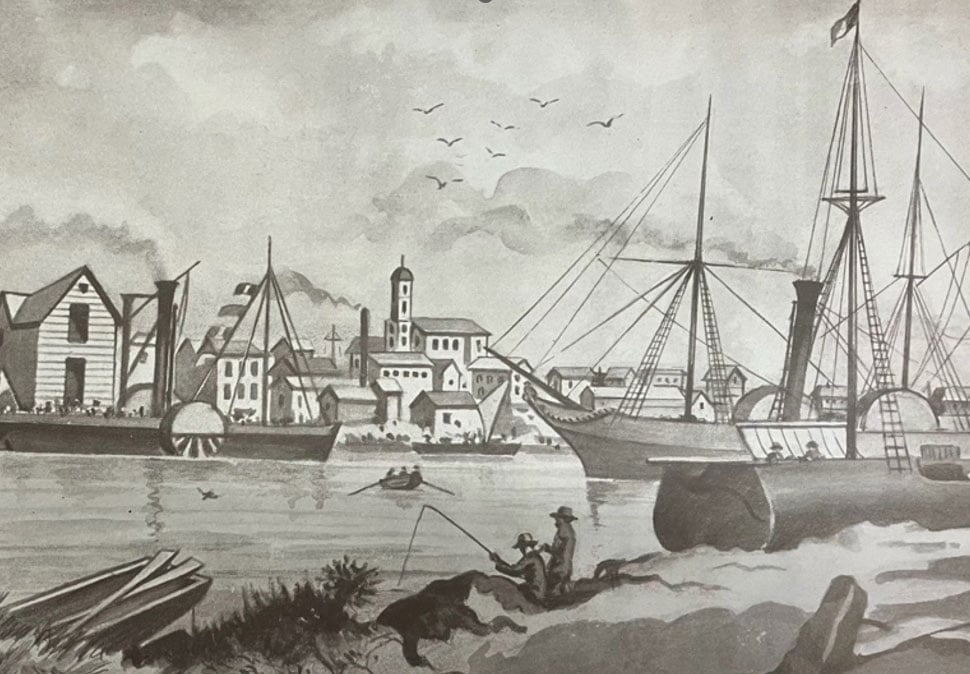
Image: Melbourne’s Riverport. Credit: The Weekly Times Annual, Centenary Number, 1934.
14. Hull Maritime Museum Project
MMHN enjoys a relationship with fellow maritime enthusiasts in the port city of Hull which, like many cities in Europe, invests in its maritime heritage. It is a cause for envy. A prime example is the Hull Maritime Museum Project (UK). Hull Maritime is delivering the refurbishment and preservation of six historic maritime sites and two historic ships. The Arctic Corsair and Spurn Lightship are also being fully restored. Hull has more than 800 years of seafaring history, including involvement in some of the UK’s most notable historical seafaring episodes. Following the success of its stint as 2017 UK City of Culture, it has seen substantial associated investment in city infrastructure and programmes.
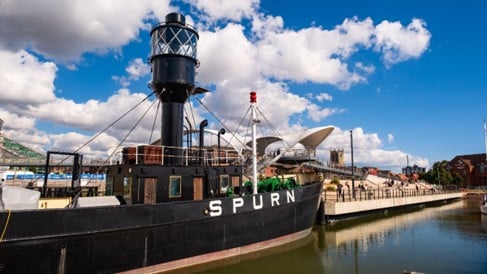
Image: Lightship Spurn. Credit: Hull Maritime Project.
15. RAN Australian Fleet
MMHN thanks the RUSI for alerting us to this comprehensive hour-long video of a recent talk by Rear Admiral Christopher Smith AM CSM RAN about the Australian Fleet.
See: The Australian Fleet
16. OSSA Scholarship Fund – Maritime Skills Deficit
MMHN commends OSSA for its work in addressing the maritime skills deficit in Australia. OSSA has a great vision for a strong, skilled, and sustainable maritime sector. Key elements OSSA has identified within this serious national deficit are a shortage of experienced seafarers and difficulty attracting new entrants to the profession. OSSA has taken a proactive step to address this problem by establishing the OSSA Scholarship Fund, dedicated to supporting young Australians pursuing professional seagoing careers. The Fund will provide both financial assistance and structured mentoring to trainees working toward maritime qualifications. Chair of OSSA, Richard Owen says, “The Fund was designed to help bridge the gap between classroom learning and actual time at sea – a critical requirement for those seeking to gain their professional marine qualifications. Initially we will target our support toward trainees who already hold an AMSA-approved trade qualification. Through structured mentoring and financial assistance, successful applicants will be able to complete the required sea service and associated training they need to progress. Financial support will help cover key costs such as approved sea time, travel, insurance and associated expenses – removing the financial barriers that can prevent otherwise capable and motivated trainees from completing their qualification pathways. OSSA will work closely with shipowners to secure suitable berths and ensure ongoing mentorship throughout the training period.”
OSSA is now seeking financial contributions to grow and sustain the Scholarship Fund. All donations to the Fund are tax deductible.
For more information or to discuss supporting the Scholarship Fund or becoming a member, contact OSSA at admin@ossa.org.au or visit their website here.
17. Royal Historical Society of Victoria
MMHN congratulates Dr Steven Cooke on his appointment as Executive Director of RHSV. Steven has extensive experience as the former CEO of the Melbourne Holocaust Museum, Senior Lecturer in Cultural Heritage and Museum Studies at Deakin University, and from roles at several Victorian heritage sites including Como House and Garden, Old Melbourne Gaol, and the Shrine of Remembrance. Also on that list, MMHN is pleased to note, is the Polly Woodside. Wonderful indeed to have a maritime enthusiast in this key heritage role in Victoria! A reminder that RHSV was formed in 1909 to advance how Victorians understand our history. It serves as a catalyst for the 340 historical societies across the state, in every hamlet, suburb and country town.
See: Royal Historical Society Victoria
18. Inaugural Gippsland Lakes Boat Show 2026 – BIAV
MMHN commends the Boating Industry Association of Victoria (BIAV) for expanding its engagement with heritage vessels. The Gippsland Lakes Boat Show in Paynesville (27 February – 1 March 2026) will complement the much-loved Paynesville Classic Boat Rally. Three years ago, MMHN Board Member Steve Walker, CEO of BIAV, incorporated a Maritime Heritage presence at the Docklands event. Significantly, Boat Show post-event attendee surveys reveal that ‘maritime heritage’ is now viewed as a major attraction at the event. Such exposure is invaluable in growing public awareness of maritime heritage in the wider community and the recreational boating public clearly appreciate heritage presence. The State Government, East Gippsland Shire Council and Gippsland Ports are supporting the event.
See: Don’t Miss Your Spot at the Gippsland Lakes Boat Show!
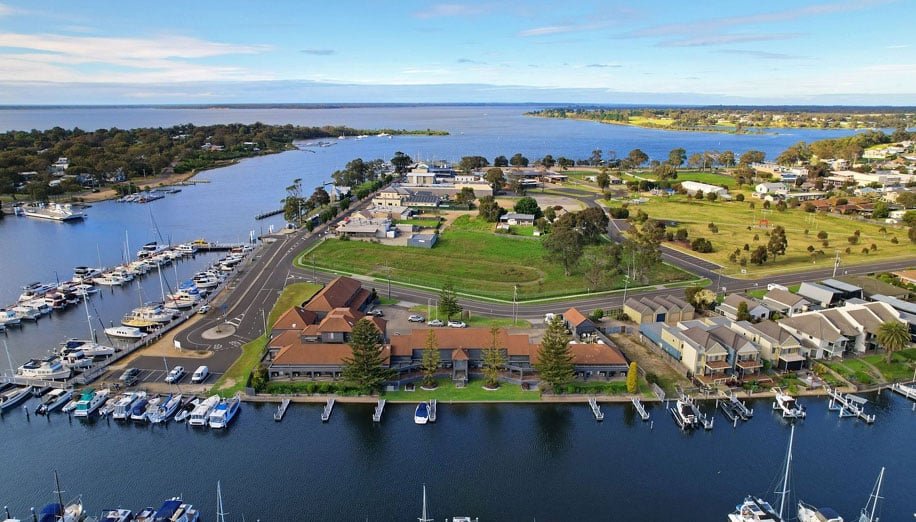
Image: Gippsland Lakes Boat Show. Credit: BIAV.
19. Penguin Colony at St Kilda Pier
Viewing this remarkable, 1400-strong Little Penguin colony on the St Kilda Breakwater as the birds return from their day of fishing in the bay is much improved by a spectacular viewing platform and nightly dusk. Phillip Island Nature Parks operates a free ticketed program at St Kilda Pier where participants can view the Little Penguins in their natural habitat and hear from knowledgeable guides. There are two Penguin Viewing Experience sessions per night. Booking online is essential as viewing sessions are capped at 150 people to offer better protection for the penguins.
Book here: Phillip Island Penguin Parade
Another viewing option is to take the St Kilda ferry for an hour-long Penguin Cruise. See: Penguin Cruise
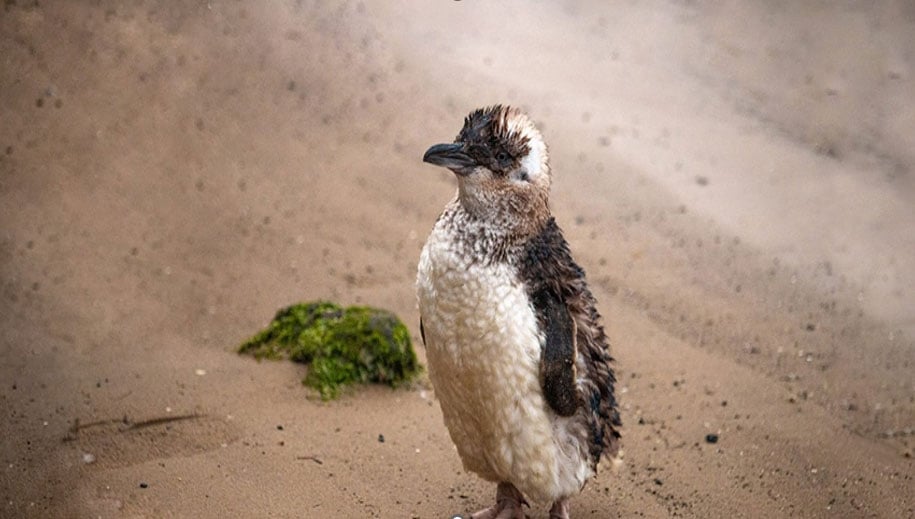
Image: Little Penguin at St Kilda Breakwater. Credit: Parks Victoria website.
20. Rakali – More Wildlife Around the Bay
Perhaps, during your Little Penguin visit to St Kilda, you should watch out for Rakali! The Rakali is a native water rat, found at some piers, jetties and other structures along the coastline of Port Phillip and our other waterways. Be on the lookout at Sandringham and Brighton piers, Elwood Canal, St Kilda Harbour and Port Melbourne foreshore. They appear at all times of the day but are very shy creatures and are usually tucked into the dark corners of structures and flora. Rakali are one of only two Australian mammals to be classified as semi-aquatic, the other being the platypus. They are Australia’s largest rodent species and are sometimes affectionately referred to as ‘Australia’s otter’. The Rakali are nocturnal hunters, mainly preying on small fish, crustaceans, molluscs and water bugs. They have also been known to eat frogs, small water birds, bird eggs and even other small mammals.
See: Friends of Native Wildlife Inc: Rakali
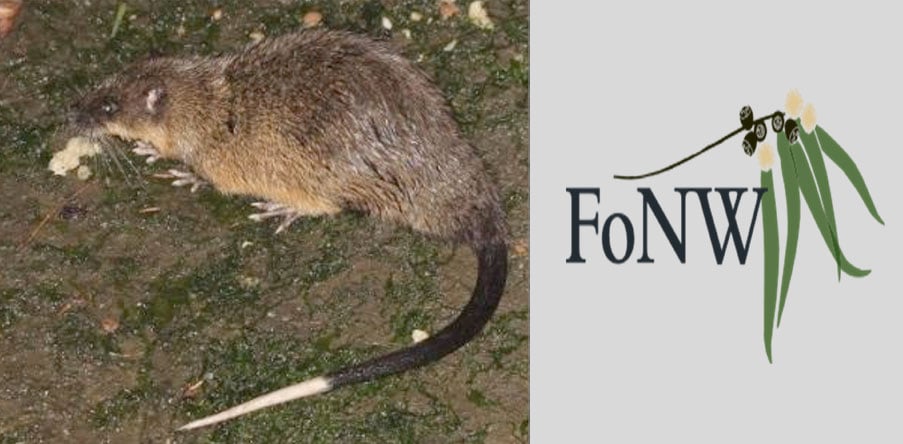
Image: A Rakali. Credit: Friends of Native Wildlife Inc.
21. Antarctic Icepack Softens
Ponant line vessel Le Commandant Charcot claims to have set a new cruise ship record for southerly ice penetration. The vessel was captained by Stanislav Devorsine, who is highly experienced in ice having spent 10 years resupplying research stations in Antarctica on the French icebreaker/supply vessel L’Astrolabe. Current ice conditions did not deter the Le Commandant Charcot, an ice-strengthened 150m x 28m Polar Class 2 vessel built in Romania in 2021. Powered by a hybrid electric/LPG system with electric batteries, capable of breaking through ice up to 2.5m thick. The voyage commenced at Lyttleton NZ and passed over the magnetic South Pole before approaching the Antarctic mainland, pausing at Australian regions Commonwealth Bay, Cape Denison, George V Land, Cape Adare, Scott’s Hut, Mt Erebus, Bay of Whales and the Ross Ice Shelf. Le Commandant Charcot completes its circumnavigation of Antarctica via the Amundsen Sea, Siple Island, Bellingshausen Sea and Pine Island Bay, dealing with 80% pack ice and fragmented sea ice, before crossing the Drake Passage and completing the voyage in Ushuaia, Argentina.
See: Cruise ship claims Antarctic record
See: Introduction to the Le Commandant Charcot
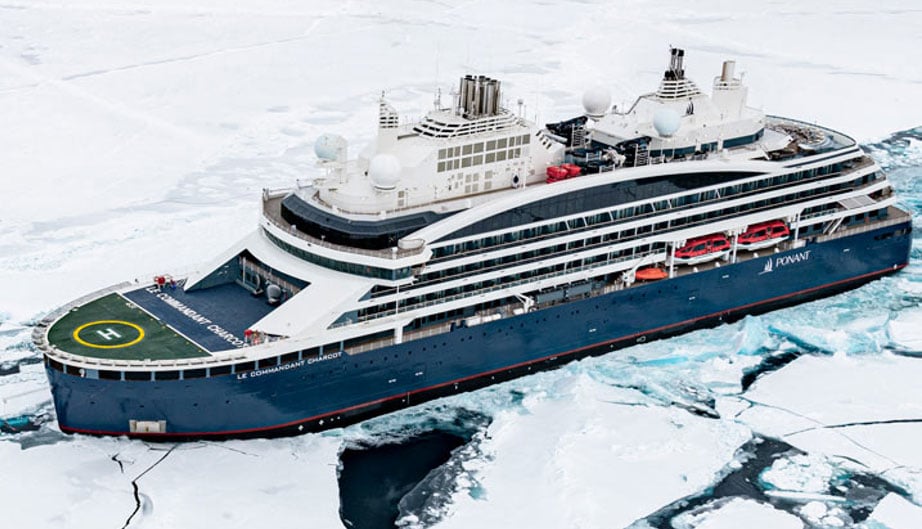
Image: Le Commandant Charcot vessel. Credit: Ponant website.
22. Correction: Davis Research Station
MMHN thanks our member Ian Thomson for alerting us. He notes that MMHN Update (item 8) incorrectly stated that Davis Research Station is on Heard Island when, as the most southerly Australian Antarctic station, it is actually located on the Antarctic continent near the Vestfold Hills, on the Ingrid Christensen Coast of Princess Elizabeth Land. The station is about 20km from the edge of the continental ice sheet.
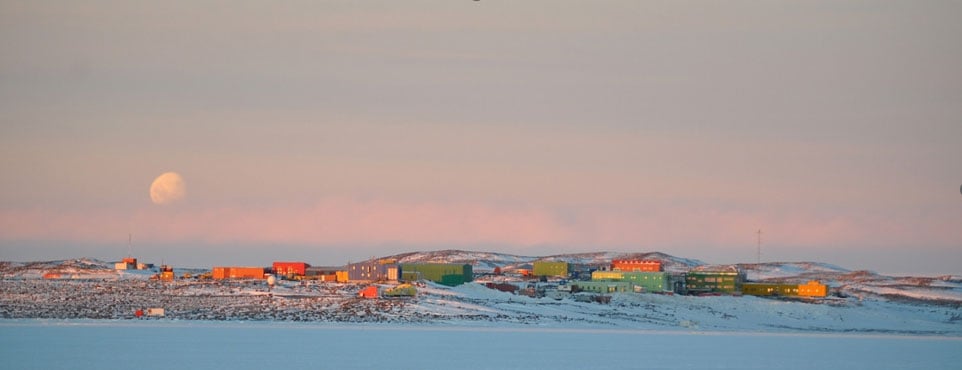
Image: Antarctica. Credit: Australian Antarctic Division (AAD) website.
23. Invitation: MMHN Christmas Gathering
When: Wednesday, December 10 between 6pm and 8pm
As 2025 draws to a close, it seems fitting that maritime enthusiasts gather in Victoria Harbour, which has been so very prominent in MMHN advocacy efforts this year.
Join us for a drink overlooking Victoria Harbour as we look back on matters of maritime import; the Shipping Control Tower stabilisation, Central Pier/Maritime Experience Centre, the Melbourne-Osaka Yacht Race, threats to the Heritage Fleet Group, the Melbourne Boat Show, the photography exhibition and associated publication of Last Lights on Victoria Dock and, last but not least, the launch of MMHN’s Maritime Heritage Trails e-guide.
Much to reflect upon and, as always, cause for both angst and celebration.
Where: Waterways Branch, City of Melbourne, Suite 120 (upstairs) at 425 Docklands Drive, New Quay Docklands.
How to get there: No. 96 Bourke St tram to Docklands. Get off at the last stop. Walk directly towards the water to premises near New Quay. On the right-hand side on the first floor (there will be signs).
Alternatively: Take the Collins St tram (Harbourside) to the last stop. Walk past Docklands Library, over to the water, then walk along Harbour Esplanade, turn left along New Quay, then turn right at Melbourne City Marina. Premises is on the left-hand side on the first floor (there will be signs).
IMPORTANT: For catering purposes for this Christmas gathering, please RSVP by 6th December to info@mmhn.org.au
Until next time,
Jackie
Dr Jackie Watts OAM
Chair,
Melbourne Maritime Heritage Network