

Greetings all,
A musical start to this MMHN Update. No, not sea shanties – although we do love those too. We refer to performances in two other musical genres.
Contents
1. Opera: The Wreck of the Loch Ard
2. Musical Theatre: When the Last Ship Sails
3. The Steam Ship Stettin
4. International Maritime Museum, Hamburg
5. Algal Bloom Lingering
6. Shadow Fleet – Denmark
7. Shadow Fleet – France
8. HIMI Voyage for the RSV Nuyina
9. Port Performance
10. Ropes Matter a lot to Maritime Enthusiasts
11. Decarbonisation Challenge
12. National Maritime Museum, Dublin
13. WWII Pollution Remains
14. Marshall Islands Atomic Relic
15. Francis Maybury – Round the World Voyage 1856 to 1861
16. RAN and the Royal Brunei Navy
17. Salmon Heritage – Tasmania
18. Lost Maritime Heritage
19. Some Boats are Special
20. Offshore Drilling in US Waters
21. MMHN Maritime Heritage Trail Launch: An Invitation
1. Opera: The Wreck of the Loch Ard
MMHN is always delighted to see Victorian maritime heritage literally showcased. This three-part opera by Felix Meagher, entitled The Wreck of the Loch Ard, is playing at the closing gala event of the Port Fairy Spring Music Festival on October 12.
The opera retells the story of the tragic shipwreck and the survival of the two young people. MMHN member Gordon McMillan described the performance as “brilliant”. You may find out more about the play here and more about the Loch Ard itself can be found here.
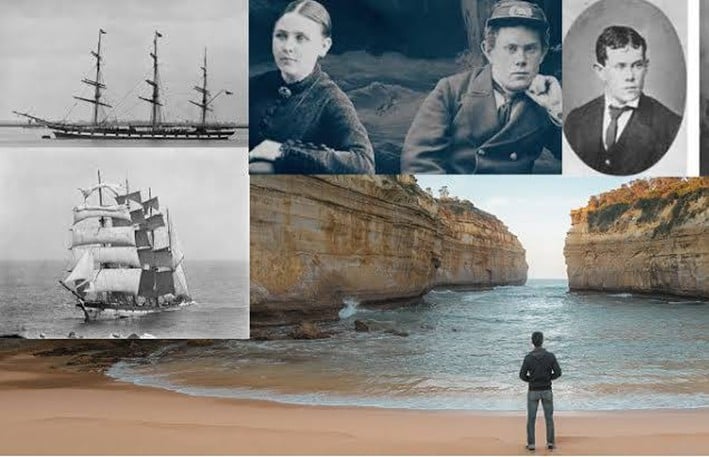
Image: The Loch Ard, the two survivors, and the location of the wreck near Port Campbell. Credit: Around and About website.
2. Musical Theatre: When the Last Ship Sails
A work by When the Last Ships Sails, features a poignant line: “a mountain of steel makes its way to the sea”.
See: Sting – When the Last Ship Sails
UK musician Sting grew up in Wallsend, north-east England, near the River Tyne (literally at the end of Hadrian’s Wall). Shipbuilding yards loomed as an immense presence at the end of his street. The influence was lifelong and inspired the lyrics of many of his songs. Later, as a tribute to the shipyards and culture of Wallsend that characterised his childhood home, Sting wrote the lyrics and music for a musical, entitled The Last Ship, based on a book by Lorne Campbell. This show will be performed in Brisbane at the QPAC Glasshouse Theatre from April 9 – May 3, 2026.
WeMadeShips is a Newcastle University initiative that collects photos, documents, stories and oral histories of the shipbuilding industry in north-eastern England.
Background: After WWI, and again after WWII in the 1950s and 60s, Wallsend shipyards faced significant foreign competition from Japanese and European shipyards. Shipbuilding ceased at Wallsend when Swan Hunter, the last major shipyard, closed its vessel construction operations in 2006. The shipyards are now derelict. The equipment, including its iconic cranes, were sold and transported to India. Most of the Tyne yards were demolished as soon as they closed. However, shipbuilding heritage is still visible on the Tyne’s bridges.
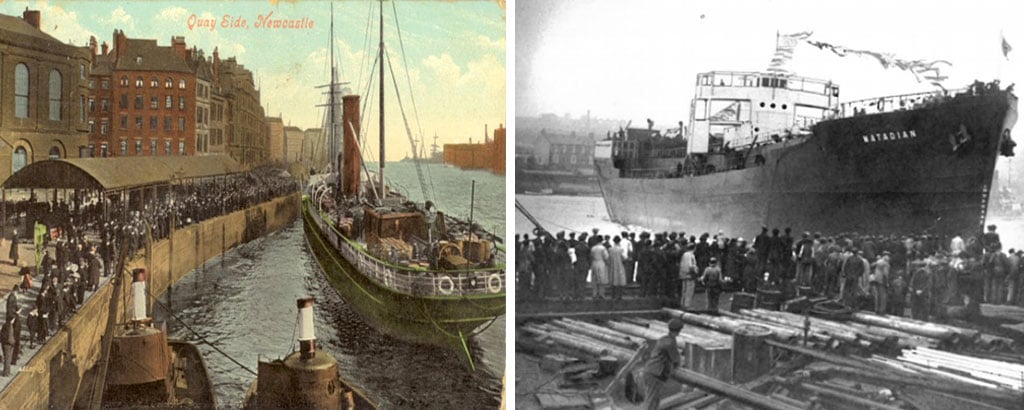
Images: The Wallsend shipbuilding industry. Credit: WeMadeShips website.
3. The Steam Ship Stettin
MMHN Director Dr Gregory Harper recently visited two maritime museums in Hamburg, Germany: Museumshafen Övelgönne and the International Maritime Museum.
The Museumshafen Övelgönne, located on the Elbe river in Hamburg, showcased an impressive array of boats, ships and maritime infrastructure. The photo below shows him in front of an icebreaker museum ship, Stettin.
The steam ship Stettin was an icebreaker operating between Stettin and the Baltic, and subsequently between Hamburg and the North Sea. It was recognised as a technical and cultural monument in 1982 and renovated extensively.
When she was built in 1933 in Pomerania, Stettin was the largest icebreaker under the German flag and was initially used in the Oder River and the famous Szczecin Lagoon near the capital of Pomerania of the same name. With the progress of the Red Army in World War II, the ship was transferred to Hamburg. The new berth in the Hanseatic city also changed the area of operation: until 1981, she operated in the Kiel Fjord and the Kiel Canal. As an icebreaker (51 metre long, beam 13.5 metre), her ‘bulbous’ hull structure ensured that the ship withstood the tremendous pressure from the metre-thick ice and was also able to free itself from the ice by swinging sideways in the event of danger. Propelled by a 2000hp steam engine with three-cylinder piston expansion rotating up to 120 revolutions per minute, the ship is obviously still operational.
4. International Maritime Museum, Hamburg
Ever alert to the possibilities in relation to MMHN’s Primary Objective – a Maritime Experience Centre – MMHN Board Members always take note.
Greg found the International Maritime Museum “an outstanding and somewhat overwhelming collection, and indeed an inspiration for all maritime enthusiasts – after three productive hours we barely scratched the surface. Hundreds of imaginative high-quality exhibits and many excellent ship models”. Greg lists some of the most impressive:
- An exhibition illustrating the development of modern navigation from astrolabe to modern GPS alternatives.
- An exhibition of the history of sail and the development of sail formats including the clipper ships and sailing pleasure craft.
- An explanation of the development of trading ships in the Baltic and North Seas including the evolution of ships from the Viking long ships through Cogs, Caravels and Hulks.
- Of course, naval battles were a recurring theme, and there were wonderful models to demonstrate the naval superiority of the British Royal Navy and its “ships of the line” at various stages, though clearly ship design went ahead in fits and starts in many places on Earth and under many flags.
- The fleets of the Dutch East India Company and the (British) East India Company were well represented as well.
Jumping ahead to more recent history, the museum had spectacular modern displays:
- the development of cruise ships and liners
- the development of fishing shipping
- the modern global systems for distribution of goods by ship where, of course, Hamburg harbour has long played a role.
Scientific investigation was well represented throughout:
- History of the famous German geographer and naturalist, Alexander von Humboldt.
- Role of research ships in the investigation of the depths of the oceans for basic discovery but also utilitarian purposes was well represented, and this was an opportunity to introduce some great female scientists who are helping push forward the boundaries of knowledge.
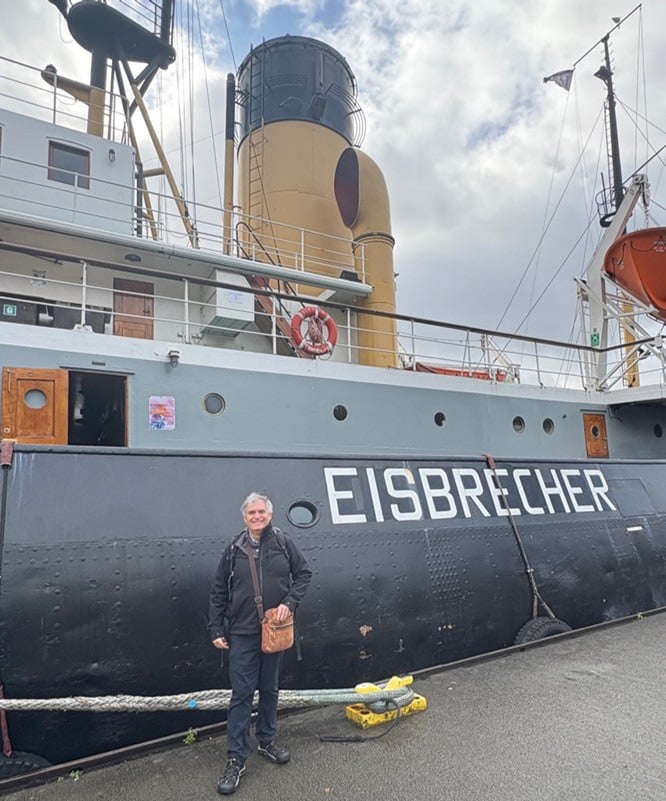
Image: Greg Harper near breaker museum ship Stettin. Credit: Greg Harper.
5. Algal Bloom Lingering
About 30% of the South Australian coastline has been affected by the algal bloom crisis that began in March, reports David Penberthy in The Australian. The SA Government has been criticised for the initial delayed response to the crisis – specifically impacting on SA tourism for the upcoming summer. SA Tourism have offered travel vouchers during the recent school holidays, and this may be repeated over summer. There are positive signs in the state’s fight against an algal bloom. You can read more at the links below.
See: SA government ‘cautiously optimistic’ about toxic algal bloom
And: Algal bloom casts cloud over summer ahead of poll
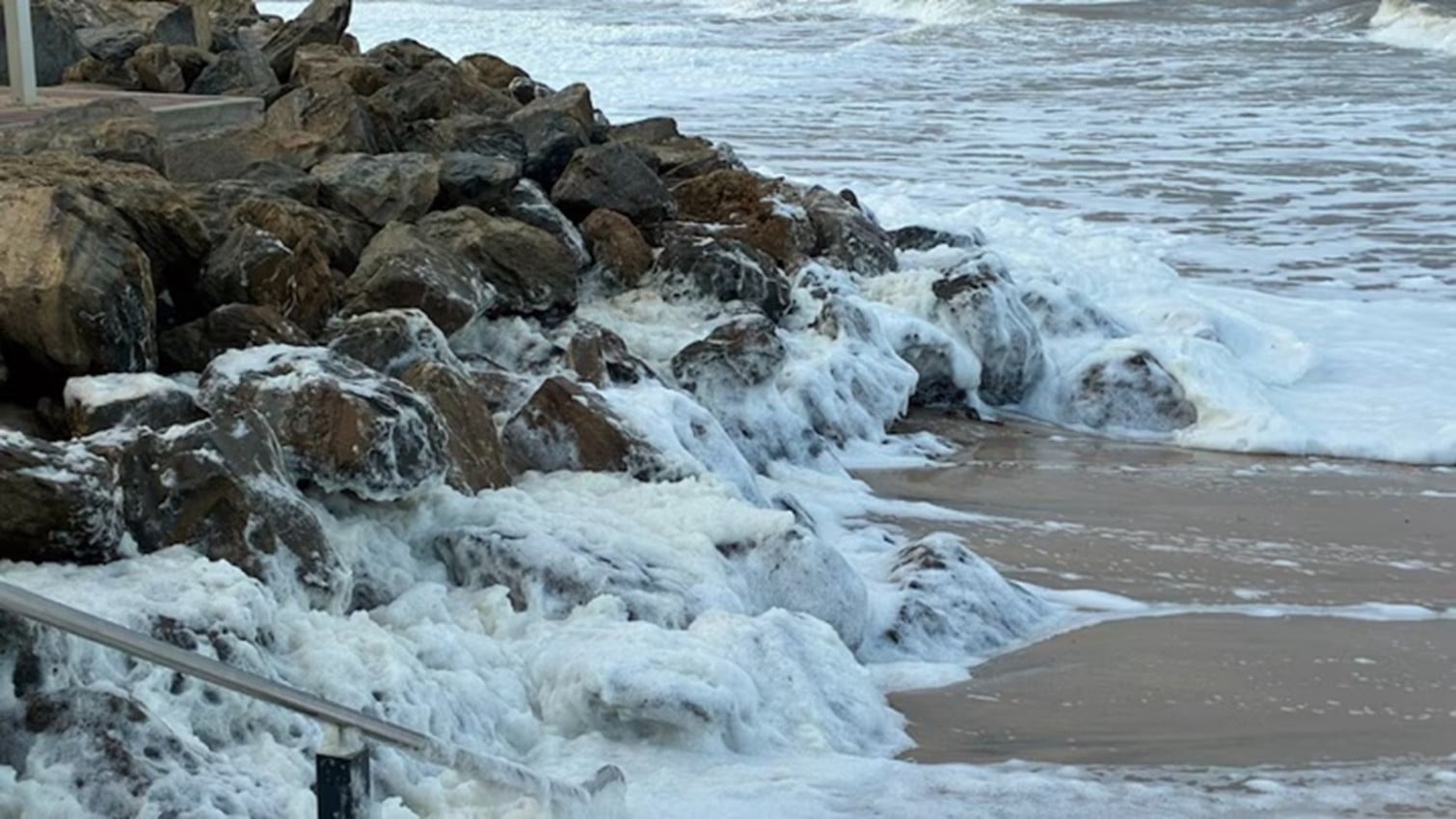
Image: Algal bloom foam is continuing to inundate metropolitan beaches. Credit: ABC News, Bobby Macumber.
6. Shadow Fleet – Denmark
The Danish Government will strengthen environmental oversight of tankers at Skagen Anchorage, a critical hub for the Baltic Sea, in response to the increased activity of shadow fleet vessels transporting sanctioned oil through Danish waters and posing a risk to marine environments. Russia’s ‘shadow fleet’ is estimated to contain some 600 to 1000 ships.
The Danish Maritime Authority in collaboration with EPA inspectors have reported old, worn ships and vessels that are non-compliant in relation to waste management, ship recycling certificates, ballast water management, scrubber water discharge, and fuel requirements. Further, ‘sniffer’ technology is to be deployed on the Great Belt Bridge to measure sulphur content in ship fuels and monitor compliance with sulphur limit values. The EU’s 18th Sanctions Package in July 2025 lists 444 sanctioned ships in the EU.
See: Denmark Tightens Oversight of Shadow Fleet Tankers in Strategic Baltic Gateway
And: Denmark Increases Inspections of Shadow Fleet’s “Old and Worthless” Ships
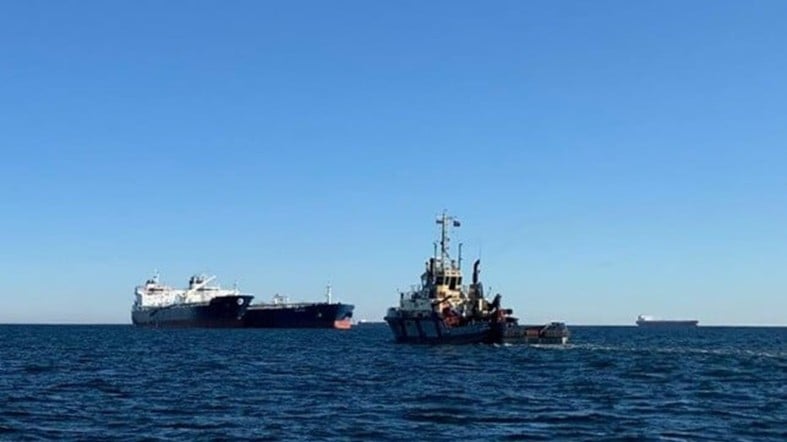
Image: Denmark will be inspecting vessels in the Skagen Red anchorage which it calls the gateway to the Baltic Credit: DanPilot, Maritime Executive website.
7. Shadow Fleet – France
French authorities have seized the shadow tanker Pushpa off the coast of France. The tanker is blacklisted by the EU for being part of Russia’s shadow fleet. The vessel, carrying 115,000 tons of oil, is suspected of launching drones that shut down Copenhagen Airport. Built in 2007, it has been variously known as Pushpa, Kiwala and Boracay. The tanker left the Russian port of Primorsk, outside Saint Petersburg, on September 20 and was scheduled to arrive in Vadinar in north-western India on October 20 according to data from the Marine Traffic tracking website.
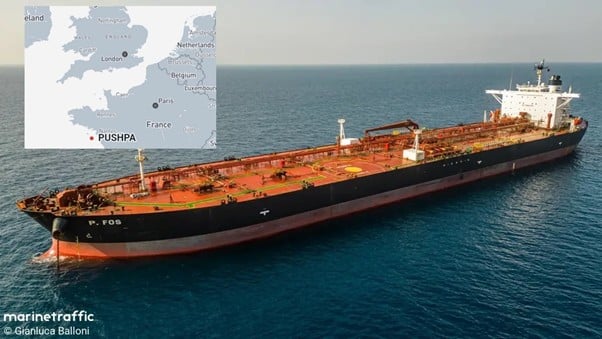
Image: The Pushpa oil tanker. Credit: ABC News.
8. HIMI Voyage for the RSV Nuyina
What is HIMI? Some might know, but for the rest of us it’s ‘Antarctic speak’ for Heard Island and McDonald Islands. The Australian Antarctic Division research/icebreaker Nuyina is to make a 55-day voyage to resupply two Antarctic bases and start the first major campaign to Heard Island and McDonald Islands in 20 years. On board the Serco-operated vessel are 99 expeditioners, almost 40 crew, three inflatable boats, and two helicopters. Casey Base will be the first stop, where some expeditioners will be flown off to commence key projects, and some of the Wilkins Aerodrome crew will depart to help prepare the ice runway. Helicopters will fly in critical cargos that are too fragile for the airdrop that is planned for mid-October. Then, Nuyina heads on to Davis research station on Heard Island where Nuyina will ‘park’ in pack sea ice for an over-ice resupply by truck and tractor. The ship parks about a kilometre from the station and is then unloaded.
See: Nuyina undertaking first HIMI voyage in over 20 years
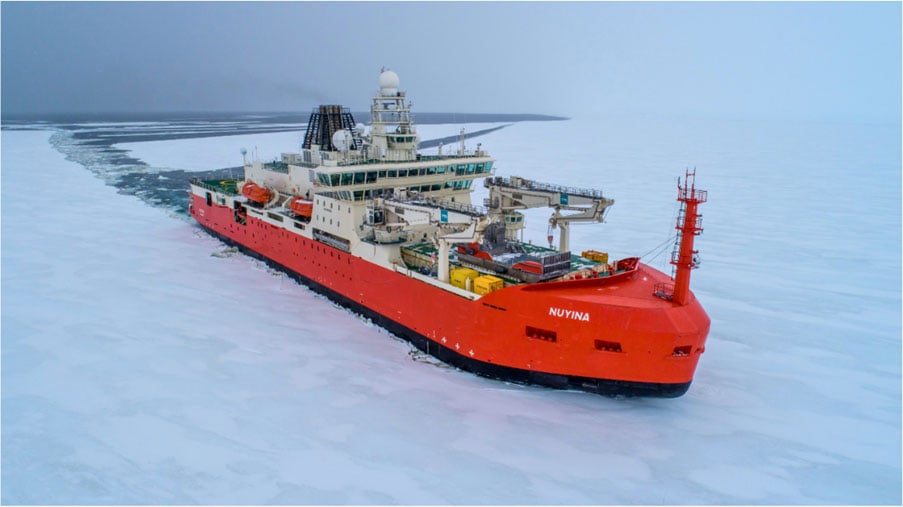
Image: RSV Nuyina. Credit: Pete Harmsen/AAD.
9. Port Performance
World Bank and S&P Global Market intelligence recently released the latest Container Port Performance Index (CPPI) and the World Bank Ports Performance table. Writing for the DCN News, Peter van Duyn reports that some in the logistics industry question the validity of indicators used to generate such comparative data in relation to Australia ports. The development of the CPPI is based on total container ship time in port. Van Dyun reports that a useful indicator in relation to terminal workforce is “The fact that all four container stevedores renewed their enterprise agreements this year and last suggests criticism of Australia’s port performance based on the industrial climate is unwarranted.”
See: OPINION: Annual Ports League table shows some winners and some losers
And: The Container Port Performance Index 2020 to 2024: Trends and lessons learned
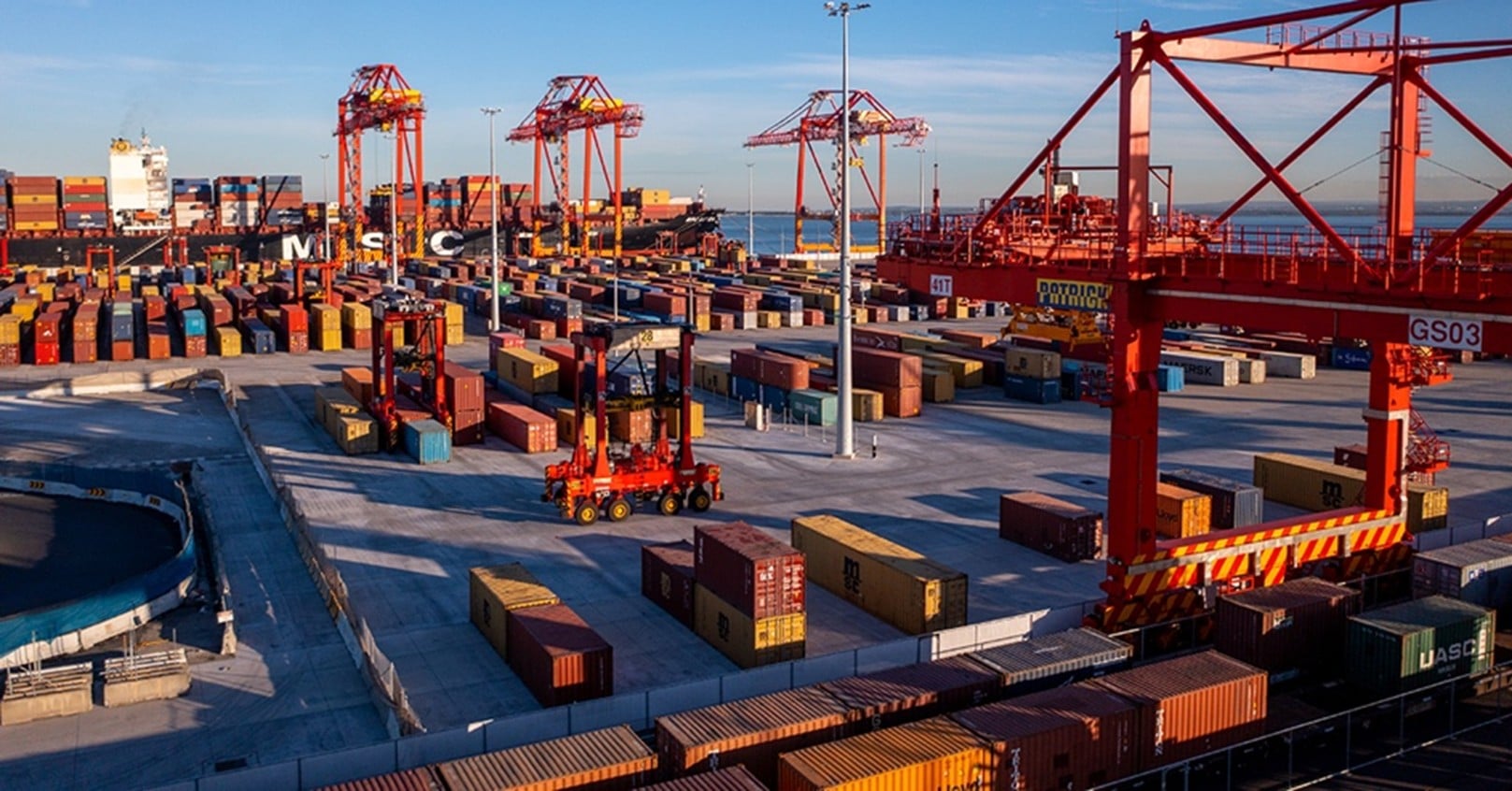
Image: Patricks Terminal. Credit: DCN News.
10. Ropes Matter a lot to Maritime Enthusiasts
MMHN recommends a new book on this product, without which maritime endeavour would have been impossible. Author Tim Queeney has just released Rope: How a Bundle of Twisted Fibres Became the Backbone of Civilisation. If you prefer to listen to an interview with the author, he discusses the history of rope with David Marr in a podcast by ABC Radio National titled ‘The twisted history of rope’.
“Rope weaves together the fascinating story of one of humanity’s oldest inventions — a simple twist of fibres that literally held the world together. From hauling stones for the pyramids to anchoring ships on daring voyages, rope has been the silent hero behind some of history’s greatest achievements.”
It is also wonderful to find that an Australian company is making rope in Melbourne.
See: The twisted history of rope

11. Decarbonisation Challenge
Global emission targets are inevitably controversial. Ken Hickson of DCN News reports that the International Maritime Organisation (IMO) is moving toward the adoption of a legally binding Net Zero Framework. The IMO framework is the first in the world to combine mandated emission limits and greenhouse gas pricing across an entire global industry. From 2027, the regulations will apply to large ocean-going vessels (5000 tonnage) which generate 85% of CO2 emissions. The US objected and withdrew from discussion and has threatened retaliatory tariffs. However, Joe Kramek, president and CEO of the World Shipping Council, describes the IMO framework as “a serious, effective plan that gives countries and industry a clear path to decarbonise shipping.”
Writing in TradeWinds, he emphasised that the agreement, forged over years of discussions among more than 100 governments, “delivers real targets, a fair playing field and a plan that keeps the focus on driving shipping’s decarbonisation”.
See: Net-Zero Shipping faces mounting challenges
And: IMO’s Net-Zero Framework is too much for some, not enough for others, but likely to work
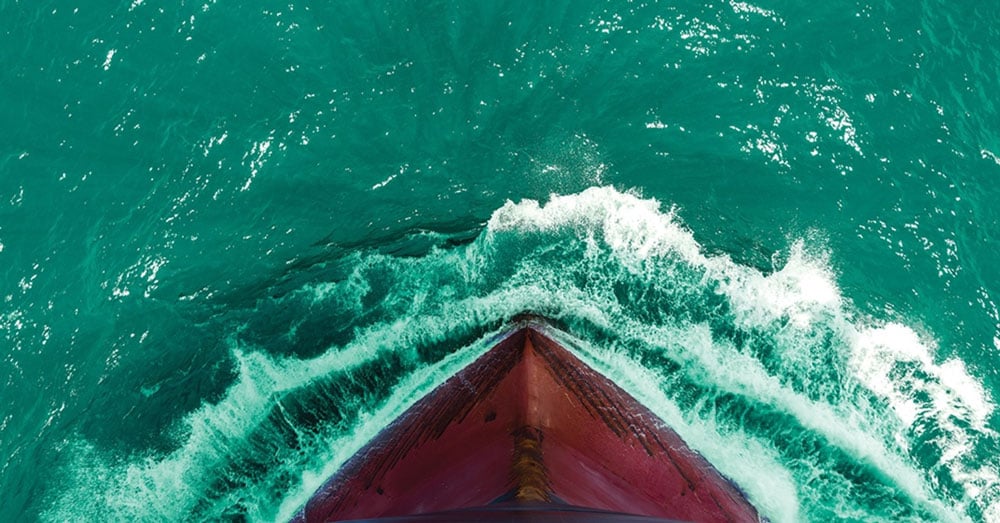
Image: Global shipping to target net-zero emissions by around 2050. Credit: DCN News.
12. National Maritime Museum, Dublin
A fortunate location indeed! The museum opened in 1978 in the former Mariners’ Church in Moran Park, located between the seafront and the centre of Dún Laoghaire, County Dublin. The heart of Dublin Bay’s cultural waterfront dating back to the 5th century, Dún Laoghaire was used by the High King of Ireland as a sea base to carry out raids on Britain!
In July 2025, it was awarded the prestigious top honour of Full Accreditation under the Museum Standards Programme Ireland (MSPI), recognising its exceptional commitment to preserving maritime heritage and its significant recent improvements under the dedicated work of its volunteers and staff. This achievement places the museum among the eleven Irish museums meeting the highest national standards in collection, care, governance, and tourism experience.
See: National Maritime Museum of Ireland
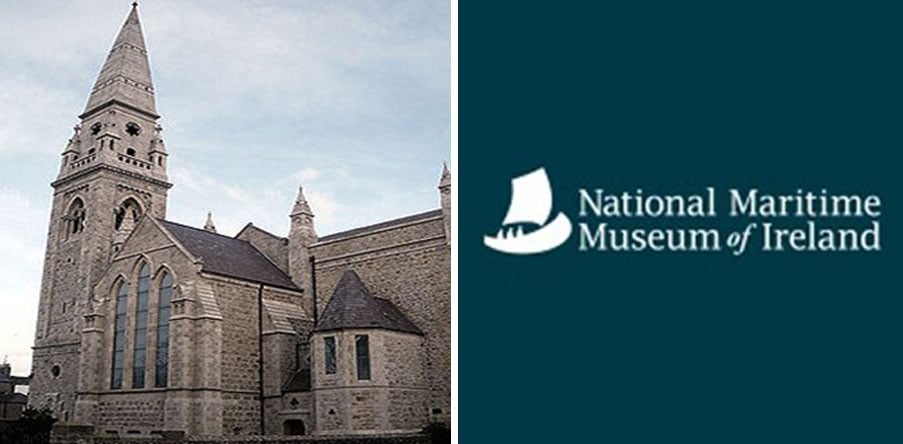
Images: The Mariners’ Church in Moran Park. Credit: Museum website.
13. WWII Pollution Remains
The four years of conflict between Japan and Allied forces featured well-known battles such as the Battle of the Coral Sea, the Battle of Midway and the Guadalcanal campaign in the Solomon Islands. Eighty years on, toxic remnants of war continue to damage ecosystems and Pacific communities. Ships and aircraft, at the time, were sunk. When the war ended, much of this material was simply left behind. Among the remains are an estimated 3800 wrecks, still lying on the Pacific Ocean floor. Unexploded ordnance continues to endanger communities. In places such as Palau, PNG and the Solomon Islands, post-WWII dangers are unearthed regularly. Extreme weather events are worsening, and sea levels are rising, exacerbating the dangers posed by wartime remnants. In 2020, a visiting fisherman found an unexploded bomb near Lord Howe Island, possibly shifted by cyclones or ocean currents.
See: 80 years since the end of World War II, a dangerous legacy lingers in the Pacific
And: Fisherman discovered unexploded bomb off Lord Howe Island
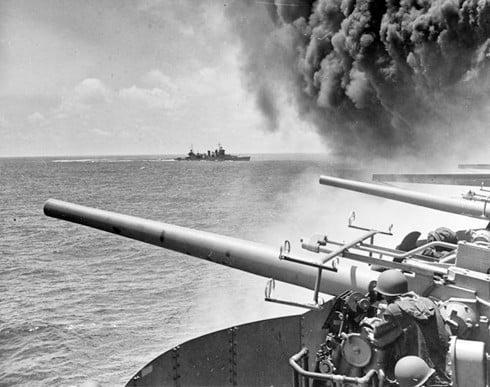
Image: The USS Astoria steams by USS Yorktown after the carrier was hit by three Japanese bombs in the Battle of Midway on June 4, 1942. Credit: US Navy via AP, The Conversation.
14. Marshall Islands Atomic Relic
The Runit Dome is a massive, cracked concrete structure on Runit Island in the Marshall Islands’ Enewetak Atoll, built by the US in the late 1970s to cover a nuclear test crater. It holds more than 3.1 million cubic feet – or 35 Olympic-sized swimming pools – of US-produced radioactive soil and debris from nuclear weapons testing between 1946 and 1958. Rising sea levels and extreme weather may increase radioactive sediments in the area and cracks in the dome’s surface could lead to contamination of surrounding waters. It is not clear what will happen to the environment when the tomb crumbles, and it has also been hard to track how the ecosystem has behaved over time.
‘The Marshall Islands’ atolls are the remnants of ancient volcanoes that once protruded from these cerulean seas. They were settled 3,000 years ago by the ancestors of present-day Marshallese who crossed the ocean on boats from Asia and Polynesia.’
‘“More than any other place, the Marshall Islands is a victim of the two greatest threats facing humanity — nuclear weapons and climate change,” said Michael Gerrard, a legal scholar at Columbia University’s law school.’
‘“The US position is that it has already paid more than $600 million for the resettlement, rehabilitation and radiation-related healthcare costs of communities affected by the nuclear testing,” said Karen Stewart, the U.S. ambassador to the Republic of the Marshall Islands.’
Note: The Republic of the Marshall Islands is an independent island nation in the Western Pacific Ocean, comprising 29 atolls and more than 1,150 islands and islets in the Micronesia region.
See: How the U.S. betrayed the Marshall Islands, kindling the next nuclear disaster
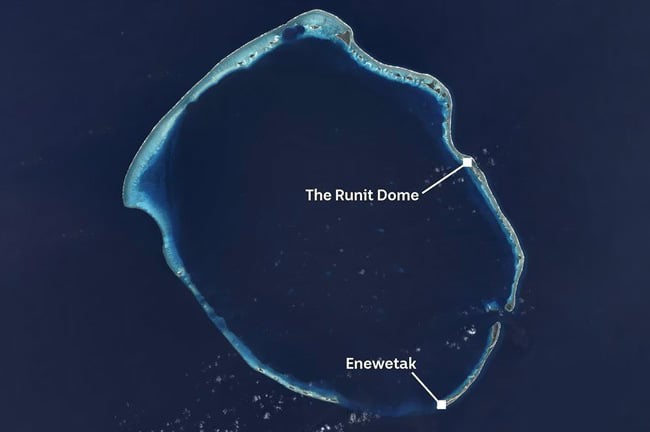
Image: The position of ‘the Tomb’ on Enewetak Atoll. Credit: ABC News.
15. Francis Maybury – Round the World Voyage 1856 to 1861
A fascinating tale. The preserved journals and diaries of Francis Maybury from his round the world voyage to the Victorian gold fields (1856 – 1861). The beautifully handwritten originals, which were recorded in print type in 1933, are now available in a new book, entitled Outward Voyage. Author Michael O’Connell contacted MMHN wondering, would anyone in MMHN be interested? Michael outlines the content:
“An account of ill-fated barque Joseph Somes. Consumed by fire. Marooned in Tristan d’Acunha. Rescued to Cape Town. Eventually to Holdfast Bay. Onwards to Melbourne. Buys a pick. Strikes gold. Great account of life in the bush. Glades hills and valleys. Tragedy in the bush. Brilliance of bird and animal life. A five year walk about. Outward via Cape of Good Hope. Homeward via dreaded Cape Horn.”
The 200-page journals typed in 1933 are all still available. If anyone would like to pursue this matter, email MMHN at info@mmhn.org.au.
16. RAN and the Royal Brunei Navy
In a bilateral maritime security activity, running for the first time since 2018, RAN and the Royal Brunei Navy (RBN) have completed Exercise Penguin, aimed at building interoperability and strengthening partnerships. HMAS Ballarat and an RAAF P-8A Poseidon maritime patrol aircraft worked with Royal Brunei Navy patrol vessel KDB Darulaman, Ijtihad-class fast patrol boat KDB Berkat, and a team from the Naval Surface Action Group during the exercise. The defence relationship between Australia and Brunei dates back to World War II.
The RBN is based and headquartered 4km from Muara Town in Brunei. Since 1977, the RBN has been equipped with missile gun boats and other coastal patrol craft.
See: Australian Defence Force and Royal Brunei Navy hold joint maritime security exercise
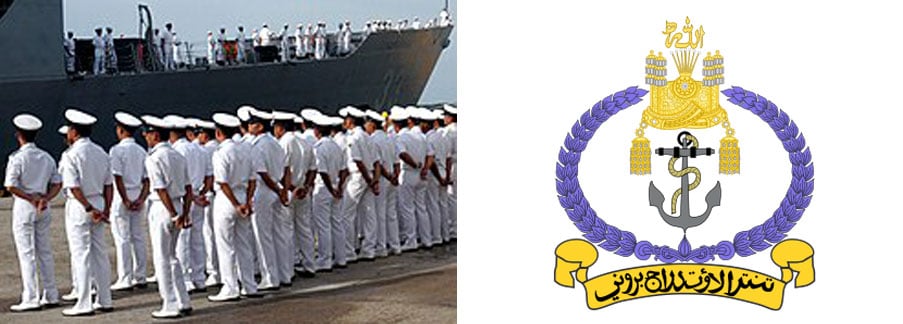
Image: The Royal Brunei Navy. Credit: Wikipedia.
17. Salmon Heritage – Tasmania
We are all aware of the contentious salmon industry in Tasmania (and elsewhere around the globe). You might enjoy this fascinating story about salmon in the mid-1800s. Tasmanian sheep farmer James Youl embarked on a fanciful mission to transport live Atlantic salmon eggs from the northern hemisphere to the south, thousands of miles across the seas, in the hopes of spawning a viable salmon colony in Australia. It was a mad endeavour that stretched the limits of science and technology and defied the accepted laws of nature. Author Steve Harris captures this amazing tale in Under the influence of salmon: how a man and a fish turned the world upside down.
See: The man who brought salmon to Tasmania
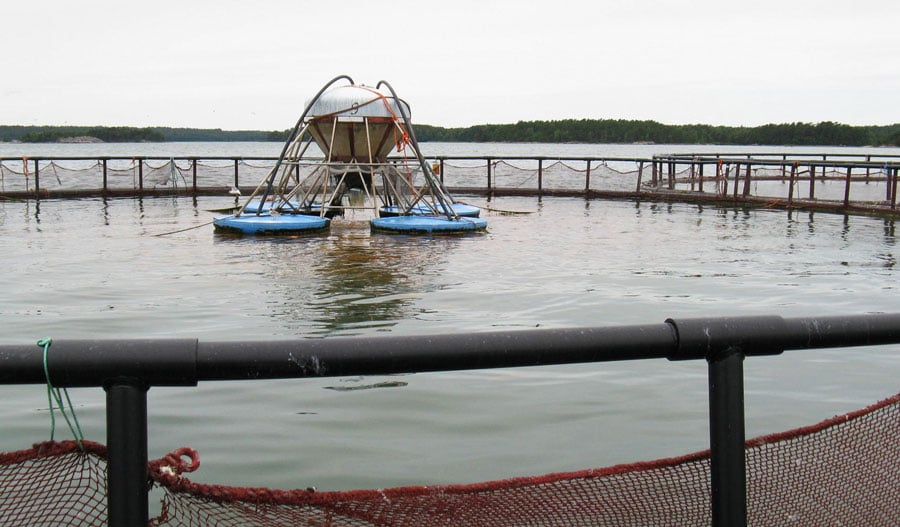
Image: A salmon farm in Finland. Credit: Wikipedia
18. Lost Maritime Heritage
Warning: a potentially painful read. MMHN is most grateful to and sincerely thanks Mark Dye, now of Rushworth Victoria, where he is working to restore a paddle steamer. Mark reminisces and laments:
“Yesterday I caught up with an old acquaintance from Geelong who has a company that services the port of Geelong infrastructure, wharves, jetties, moorings, etc, and is now extending into other areas too. He remembered my [Marks] timber motor launch [kept] the marina in Geelong years ago. I told him how I missed her (his vessel) after having to sell her last time I left Australia, and I wondered about the beautiful wooden boat that was next to mine, the Nellie-Bret that had come from the Victorian Motor Launch Squadron. I had always admired her with 5-cylinder Gardner, antique genset and the aft main cabin had been lined with teak boards left over from building parliament house in Canberra! He told me he pulled that boat up on the beach at his [works] Depot 2 weeks ago, smashed it up with his excavator and burnt it after Bob, her old owner had abandoned her as he could no longer get insurance. I asked about buying the Gardner diesel engine, as I remember he spent a fortune getting it overhauled. He told me it went in the scrap bin.”
MMHN comments: Insurance sinks the boat. Mark continues:
“It is a condition of having a boat in any marina, that it must be insured. Now the insurance companies have added a very expensive salvage clause to their policies but will not insure a wooden boat that’s more than 10 years old. So – to go on the slipway to have the hull surveyed, it also must be insured, and the insurance company wants to see an out of water inspection before giving insurance.”
MMHN shares anguish with Mark.
“[We were] deeply in shock… but there was worse to come. He told me, he crushes up 10 to 12 old wooden boats per month. Just last week he went to the swing moorings in a Melbourne bayside suburb, selected 3 of the worse ones and towed them back to Geelong for burning. He says he has more than 100 on the waiting list. I asked him how he can sleep at night. He said many of them aren’t in too bad condition, but what can he do? He can’t keep them all and they have to be gotten rid of, and nobody wants them. He has an old couta boat built in 1906 put aside because he didn’t have the heart to burn it. But its days are numbered too, come and get it if you want it!”
“Ah – there is more. Then, after a few more horror stories, he told me the group trying to get the old Port Phillip pilot ship Wyuna back to Victoria have given up waiting for a berth for her to be found and they too have abandoned her in Tasmania and walked away. He has been asked to dispose of her too now. It seems our valuable maritime heritage is being trashed. Boating has become so expensive, it’s for the elite only now, priced away from the average working man, just like owning a small plane has become. Something only the rich can afford to do now, with plastic modern throw away technology only allowed in the fast modern world.”
“I didn’t sleep a wink last night as I was too shocked. It’s the same mentality that spelt the end for the tug Forceful [sadly lost recently from Brisbane]. Organisations like the Steamboat Association and Wooden Boat Clubs need to appreciate what we have as it will soon end up that the old wooden boats we are custodians of are fast becoming a rarity as we attempt to hold onto the last of this technology while all the other unfortunate beautiful timber boats are crushed up and burnt at a staggering rate. Tragedy beyond words…”
MMHN can but lament and grieve.
19. Some Boats are Special
Sadly for Victoria Harbour and the Docklands community, a ‘rescue’ means yet another loss of significant maritime heritage.
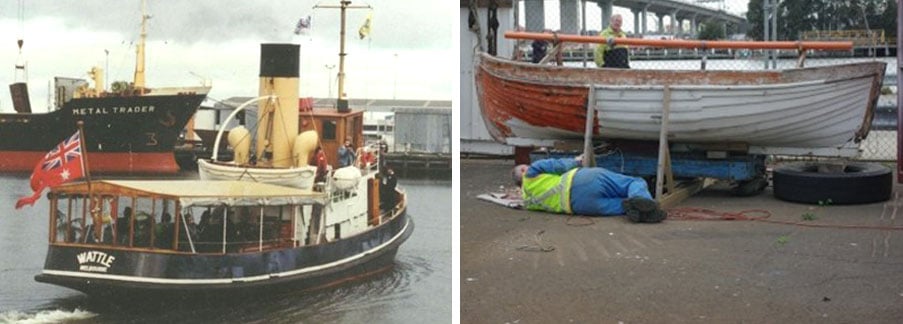
MMHN is grateful to Master of the Steam Tug Wattle, Capt. Rob Anderson, for alerting us to this fascinating maritime tale. It concerns the rescue of a very special small wooden boat that was facing destruction in 2025 at the end of a long, wide-ranging career on Victorian waters spanning Metung, Williamstown, Sorrento, Gabo Island, The Heads, Port Phillip Bay, Victoria Harbour and (hopefully) back again to the Gippsland Lakes.
Although circumstances remain unclear, the tale commences with a small wooden rowboat from Sorrento that was donated to serve as a lifeboat on the Victoria Harbour-based vessel, the Steam Tug Wattle. Note that the official name of the Wattle restoration project is Bay Steamers Maritime Museum Ltd (BSMM) – the ‘museum’ referring to the heritage vessel, Wattle. Under its own steam, the Wattle sailed down to Sorrento and anchored while the small boat was rowed out and hauled aboard. The Wattle then steamed back to Victoria Harbour. Eventually deemed too heavy for lifeboat purposes, the small boat remained stowed onboard the Wattle for some time before being transferred to North Wharf. Wattle volunteers, recognising its special design features, began restoring the boat. Perhaps restoration work priorities changed as work on the boat paused, and it was stored out of the way where it began gathering dust in the No.2 Work Shed. While work on the Wattle progressed, the special small boat deteriorated.
Fast forward to 2025. The Heritage Fleet were facing eviction from North Wharf and No.2 Work Shed and Wattle volunteers had hard decisions to make about where to relocate the vessel and where to store essential restoration materials and equipment. The other question – although not suitable for use on the Wattle – was what to do about the small wooden boat. Options were limited, but surely the rubbish tip was simply “NOT ON”!
For those who know boats, this one had features indicating that it was clearly special. However, Wattle volunteers who may once have had first-hand knowledge of the boat and its journey to the Wattle on North Wharf were no longer at hand.
Capt. Rob Anderson was intrigued:
- It was very heavily built, double-ended, and had 4 oars as well as a rudder. A small dinghy doesn’t need 4 oars and a rudder.
- There were filler pieces between the clinker strakes. This creates a smooth, planked external finish. Could this also indicate that perhaps it was made smooth in order to be hauled up the side of a ship?
- A very unusual feature on this boat was that it was double ended (i.e. no stern backboard). This improves buoyancy and floatation and reduces the risk of a wave lifting up the stern, causing the bow to tilt downward. What boats needed such features? Was this designed for use in choppy waters?
Who would know more? Rob was aware that Bulls Brothers of Metung had been building specialist boats since 1912. He wondered whether this was a Bulls Boats special build for the famous Ports and Harbours vessel, The Rip. Perhaps it was purpose-built to transport the explosives to blow up rock pinnacles around the entrance to the bay at Port Phillip Heads. In those days, explosives were highly volatile and risky to carry aboard, especially given The Rip was powered by internal combustion engines. To reduce risk, a heavy wooden rowboat was designed to be towed at a safe distance, carrying the explosives. Its special features seemed to align with this function. A rudder would reduce drag, and its smooth planking would make it easier to haul aboard once the job was done. All the speculation at this point seemed to make sense.
Rob contacted Kim Bull, grandson of one of the earlier Bulls Brothers. Rob admits that, as to the purpose, “turns out I was totally wrong!”. This small boat did not serve The Rip at all. Kim Bull checked his detailed records, and another fascinating purpose was revealed: “We can advise the following information as taken from the Bulls Boat List – Boat No 228 – Gabo Island Lighthouse 12′ Lifeboat clinker double-ender. Could this be that vessel?” It was eventually revealed that Kim’s grandfather actually visited the Wattle and recognised the small boat.
In more good news for Rob and the Wattle Restoration Group, Kim Bull continued; “Bulls would be very interested in saving the boat”. What a relief that this special boat will be rescued by Bulls and returned to where it started its ‘career’. Kim Bull plans to collect the boat from North Wharf in October. Options are under consideration for its future: display at the forthcoming Gippsland Lakes Wooden Boat Festival or, in the longer term, a return to Gabo Island.
Images: The Steam Tug Wattle and the special small boat. Credit: Jeff Malley and Rob Anderson.
20. Offshore Drilling in US Waters
Many of us will not be surprised—but we can’t simply look away. The ocean belongs to us all. Mike Schuler, managing editor of gCaptain, oversees daily news coverage on global shipping and maritime security. He reports “Trump Administration Unveils Massive Offshore Leasing Program Under One Big Beautiful Bill”.
The US Department of the Interior has announced a comprehensive schedule for offshore oil and gas lease sales. Thirty leases in the “Gulf of America” [Mexico] and six leases in Alaska’s Cook Inlet near Anchorage will be for sale, following directives from the One Big Beautiful Bill Act. Cook Inlet basin is Alaska’s oldest producing oil and gas basin, dating back to the 1950s. Production peaked in the early 1970s.
The long-term schedule aims to strengthen US energy independence through predictable offshore development opportunities. Interior Secretary Doug Burgum describes this as “a landmark step toward unleashing America’s energy potential […] a bold, long-term program that strengthens American Energy Dominance, creates good-paying jobs and ensures we continue to responsibly develop our offshore resources.”
Athan Manuel, Director of Sierra Club’s Lands Protection Program, criticized the move: “Trump’s billionaire giveaway reconciliation bill declared open season on our precious public lands and waters. Trump promised Big Oil CEOs he would give them free rein if they backed his campaign, and he delivered with the most anti-environment law in our history. The lease sales announced today make it clear that as far as Trump is concerned, no area of public lands and waters is safe from drilling, mining, and logging if it offers a chance to boost the bottom lines of corporate polluters.”
See: Trump Administration Unveils Massive Offshore Leasing Program Under One Big Beautiful Bill
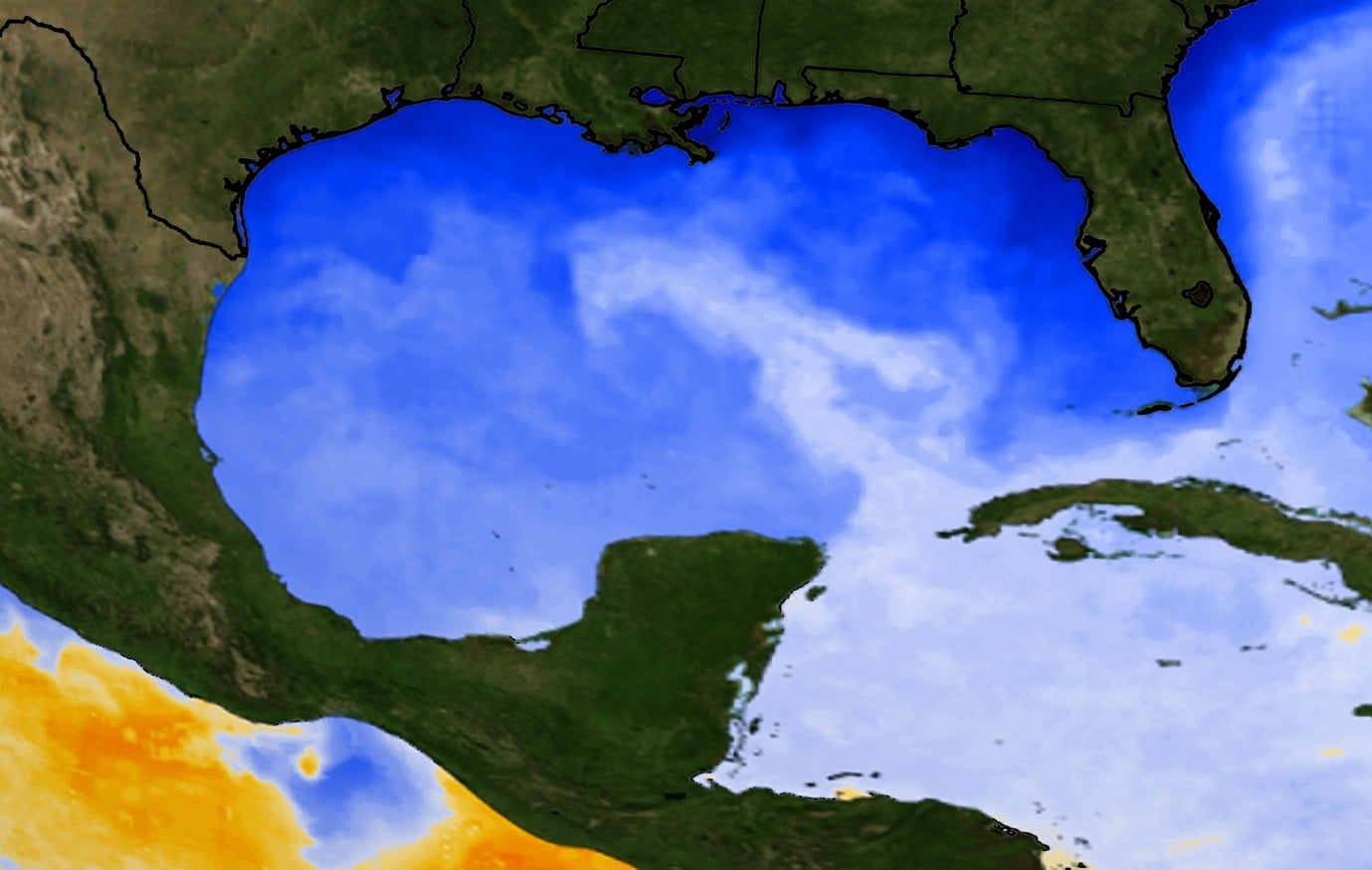
Image: Sea surface temperature in the Gulf of Mexico on March 1, 2008. The Loop Current can be recognized as the lighter region in the Gulf between the Yucatán Peninsula and Florida. Credit: NASA/Goddard Space Flight Centre Scientific Visualization Studio.
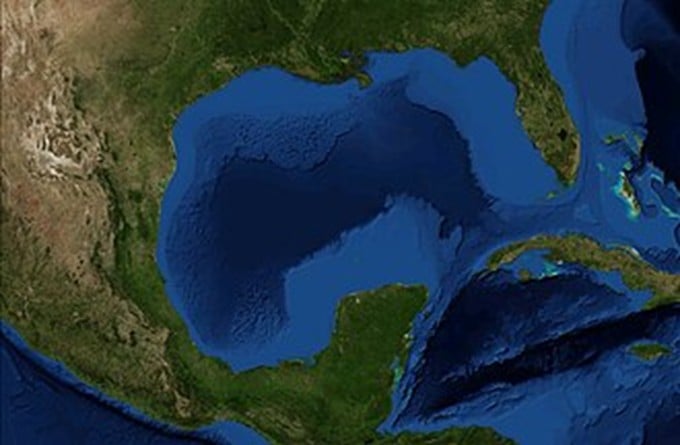
Image: Cook Inlet. Credit: Alaska Department of Fish and Game.
21. MMHN Maritime Heritage Trail Launch – An Invitation
The MMHN Maritime Heritage Trail has been a long and evolving project, but we are delighted with the end product. This three-part trail guide to our waterways is historically accurate, comprehensive, illustrated and provided free online via the MMHN website.
-
- Northbank: A Riverfront Port in the CBD – Birrarung Marr to the tip of North Wharf
- Southbank: Billabongs to the Bolte Bridge – The Boat Sheds to the Bolte West Precinct
- Victoria Harbour: A Port City – North Wharf to the East of Moonee Ponds Creek
MMHN invites you to launch the Maritime Heritage Trail project with us at the recently completed Seafarer’s Rest Park. After the official launch, several MMHN Board members will demonstrate the trail resource by leading a short, circular waterways walk. Bring your phones! MMHN is confident that it will prove to be of immense value to tourism in this city and will certainly grow greater awareness of maritime heritage.
Note: This event is a good opportunity to see the completed Seafarers Rest Park and the repurposed heritage-listed No. 5 Goods Shed on North Wharf.
When: Thursday, November 13 at 12.30pm
Where: Seafarers Rest Park, near the Vera Anchor
How to get there: Two options
1. Take the Flinders Street tram. There are two tram stop options. Alight at the first stop after Spencer Street, stop near the red brick Wailing Wall. Walk one block along Flinders Street, turn left at Siddeley Street and arrive at Seafarers Rest Park between the Mission to Seafarers and the river.
2. Alight opposite the Mission to Seafarers on Flinders St/Wurundjeri Way. Cross the road towards the river, turn right, half a block to the Mission to Seafarers, turn left at Siddeley St and arrive at Seafarers Rest Park.
Until next time,
Jackie
Dr Jackie Watts OAM
Chair,
Melbourne Maritime Heritage Network