

Greetings all,
September 25 marks World Maritime Day. The theme this year is very appropriate; “Our Ocean, Our Obligation, Our Opportunity”. This concept is not news to so many of us. Nevertheless, MMHN recommends that you take time to watch this short video.
See: IMO: Our Ocean, Our Obligation, Our Opportunity

Contents
1. Wharf Activism – Not a New Phenomenon
2. WWI: Battle of Bita Paka
3. Panama Canal – Pipeline Drought Response
4. Shipwreck Symposium
5. Marine Biofuel: the Future of Sustainable Shipping
6. Maritime Net Zero Framework – LNG, Biofuels, Nuclear
7. Russian Shadow Fleet – Australian Sanctions
8. Undersea Cables – Australia
9. Undersea Cables – Tasmania
10. 2025 Melbourne Boat Show
11. Maritime Careers Information
12. Heritage Fleet at the 2025 Melbourne Boat Show
13. Maritime Museums Victoria (MMV)
14. Alma Doepel: Restoration Update
15. Steam Tug Wattle: A Brief Report
16. News of the Wyuna Restoration
17. The Polly Woodside: Thoughts Anyone?
18. Women in Maritime
19. Chinese Progress: Submarine Drones
20. The #CorrectTheMap Campaign
21. Questions on the RAN Frigates Deal
22. Henderson Naval Shipyard, WA
23. Ghost Sharks – RAN
24. Marine Science and Technology Centre (Deakin Marine)
25. Invitation: AGM & ‘Williamstown, Submarines and the Future’
1. Wharf Activism – Not a New Phenomenon
Much of the news this past month has concerned protest, primarily on our streets but also on our wharves. Given that our wharves (and actually wharves all around the globe) continue to be the primary physical link in national global engagement, perhaps it is not surprising that recent protests once again target the economy through maritime port infrastructure.
Docks have historically served as high-profile sites for protest because of their vital role in global trade. Protest tactics on wharves have included blockading access, sit-ins, disrupting port operations, raising public awareness in opposition to foreign conflict, and campaigns targeting uranium and fossil fuel exports. During the 1970s and 1980s, anti-nuclear protesters held up shipments of uranium from Australia by occupying and blockading wharves.
See: https://commonslibrary.org/blockades-that-changed-australia/
Melbourne: Activists were arrested at Webb Dock in Port of Melbourne for blocking terminal gates while protesting against export shipments to Israel. Leaving aside the specific concerns that motivated this particular protest action, it was a graphic reminder that since the late 19th century, protest action aimed at achieving social change on the Port of Melbourne’s wharves has been a consistent feature of our maritime heritage. On the early wharves in the riverport of Melbourne, workers were generally poor, uneducated, and often immigrants. While maritime trade in the Port of Melbourne boomed and Victoria prospered, working conditions on the wharves remained appallingly dirty and dangerous. Even securing employment on the wharves was difficult, degrading, uncertain and unjust. Understandably, wharf workers began to protest collectively by forming unions to seek better working conditions and fair pay. Protest in the form of strikes disrupted lucrative port operations and maritime trade. Though often condemned by government and commercial interests, such protest actions ultimately resulted in better working conditions on wharves, as well as significant social change and equality of benefit for all working people today.
See: News.com.au – Activists block Melbourne wharf
Italy: Dockworkers in Italy blocked ports in Genoa and Livorno as unions staged nationwide protests against Israel’s war in Gaza.
See: Al Jazeera – Ports blocked in Italy as protests erupt
Newcastle: Back in November 2024, protesters paddled out on kayaks and small watercraft to block Newcastle Harbour, the world’s largest coal port. A total of 170 people were arrested during the anti-fossil fuel protest. The Port Authority confirmed that shipping movements in and out of the Port of Newcastle were temporarily paused.
See: ABC News – Scores arrested during anti coal protest in Newcastle
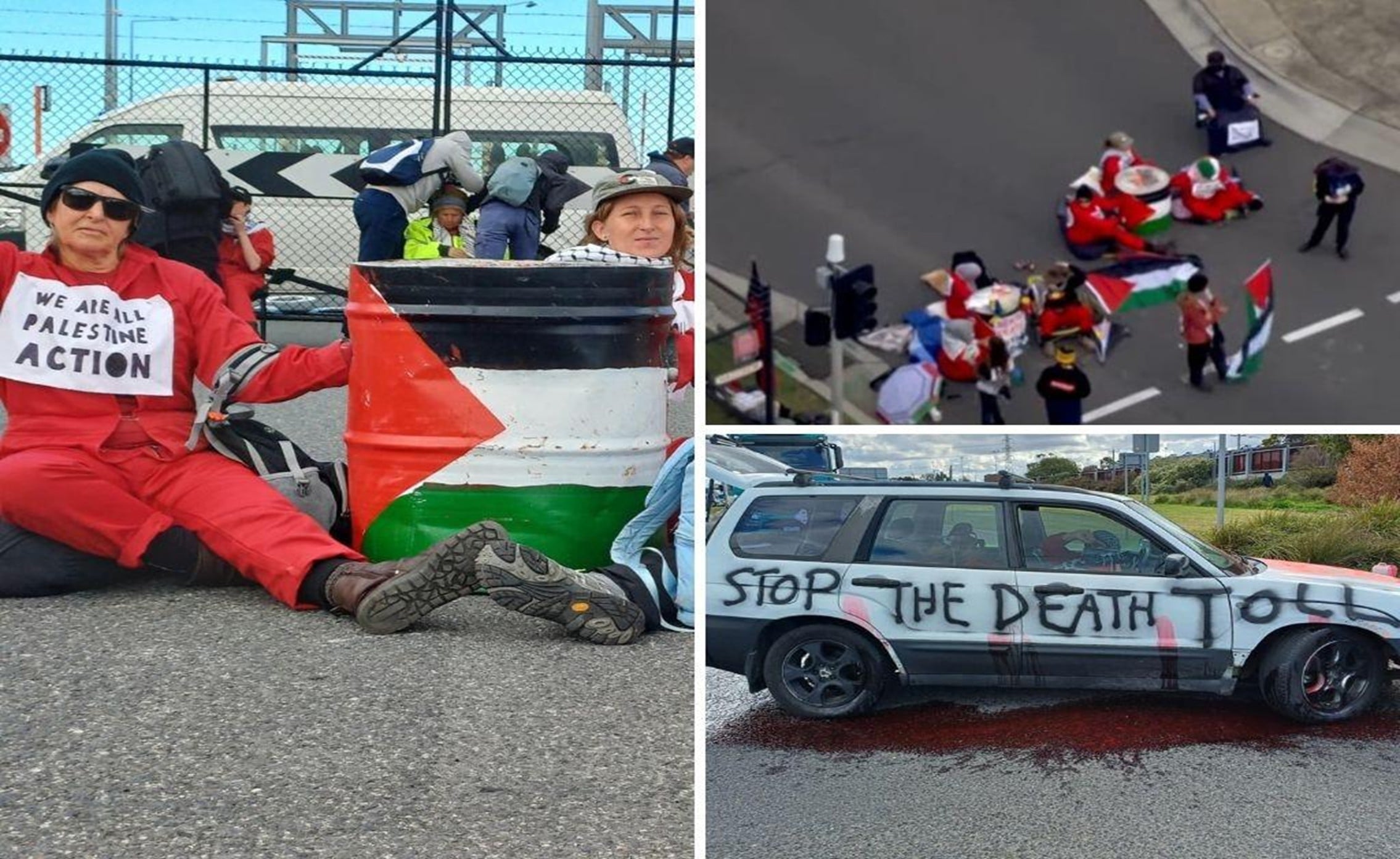
Images: Webb Dock, Port of Melbourne. Credit: ABC website.
2. WWI: Battle of Bita Paka
Papua New Guinea also seems to have been prominent in the news this month; treaties, soft diplomacy, 50th anniversary of independence, and rugby! But ANU National Security College’s defence and national security expert associate, Jennifer Parker, made a brief reference which caught our attention: “Defence treaty with PNG matters just as much as subs”.
Many of us are familiar with Australia’s engagement with PNG in WWII, but perhaps fewer people are aware of Australia’s operations there during WWI. The first Australian WWI casualty, Able Seaman Bill Williams, was a 28-year-old naval reservist from Melbourne who died at the Battle of Bita Paka on September 11, 1914. His task was to capture a German wireless station. The battle is reported to be Australia’s first military operation as a nation. It is a reminder, if any is needed, of just how significant these islands to our north are. As Peter Hartcher stated in The Age, “Papua New Guinea has always been at the core of Australia’s and the region’s security.”
The Battle of Bita Paka was fought south of Kabakau, on the island of New Britain, and was a part of the invasion and subsequent occupation of German New Guinea by the Australian Naval and Military Expeditionary Force (AN&MEF). Following Britain’s declaration of war on Imperial Germany on August 4, 1914, Australia and the other members of the British Empire were automatically involved, with Prime Minister Joseph Cook stating on August 5 that, “when the Empire is at war, so also is Australia”. Are there echoes of this in the proposed treaty currently being negotiated between PNG and Australia?
See: The Age – Australia must be secure behind its Pacific front door
Also: The Age – Why this defence treaty with a pacific neighbour matters
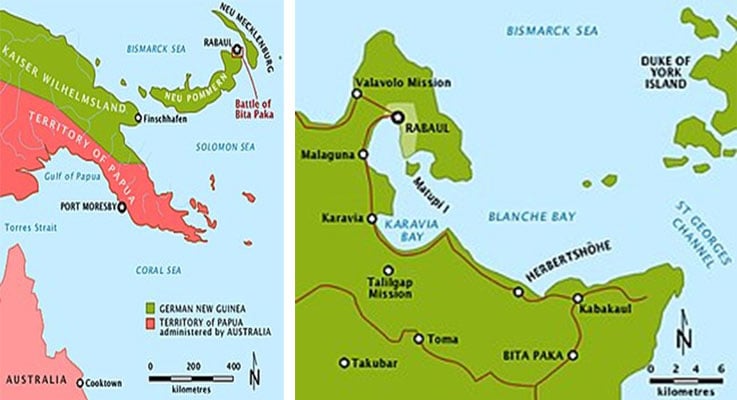
Image (left): Location of Bita Paka, 1914. Image (right): Vicinity of Rabaul, Blanche Bay and Bita Paka on the Gazelle Peninsula, New Britain. Credit: Wikipedia.
3. Panama Canal – Pipeline Drought Response
Leaving aside the political tensions, operational passage through the Panama Canal has been problematic due to low water – the impact of a 2023-24 El Niño weather event. The proposed pipeline initiative emerged as a solution to significantly reduce tanker canal transits by redirecting specific cargo types through the pipeline, particularly ethane and LPG. The pipeline would specifically transport LPG from the Atlantic Ocean to the Pacific Ocean between maritime terminals on both coasts. The Panama Canal Authority (ACP) has officially launched the selection process to develop a natural gas pipeline across the Panama isthmus to relieve some traffic at the maritime chokepoint. The 76-kilometer pipeline project is designed to transport propane, butane, and ethane between the Gulf of Mexico and Northeast Asia. Transfer capacity will be 2.5 million barrels per day. Forty-five global energy companies including ExxonMobil, Shell, Energy Transfer, and Mitsubishi, as well as financial institutions like Japan Bank for International Cooperation (JBIC) and Sumitomo Mitsui Banking Corporation are assessing the project. The Panama Canal expects to begin construction of a gas pipeline in 2027. The fuel would arrive by ship to Panama’s Caribbean coast and, after crossing the isthmus via the pipeline, would be reloaded on the Pacific side for shipment to Asia. The Panama Canal Authority estimates the trade will double in the next decade.
See: gCaptain – Panama Canal launches major natural gas pipeline
Also: The Tico Times – Panama starts talks on gas pipeline
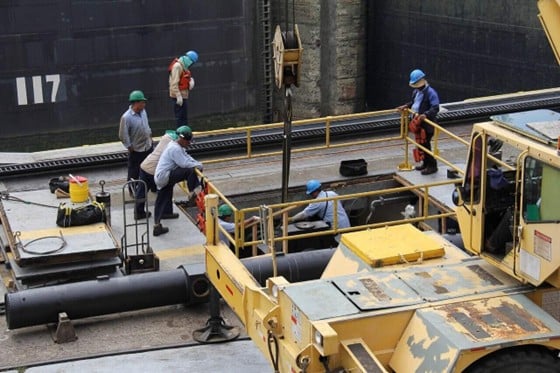
Image: Workers at the Panama Canal. Credit: Tico Times.
4. Shipwreck Symposium
There are many shipwreck enthusiasts in the MMHM membership and beyond! Note the forthcoming symposium on the subject, entitled Changes: Power, Money and Technology in the Maritime World. Running from 27th – 28th November at the University of Sydney and the Australian National Maritime Museum, the program will adopt an inter-disciplinary approach to historical shipwrecks across the Indo-Pacific and the Mediterranean. Research presented will examine global seafaring, including historical and archaeological studies of Western Australia’s early European shipwrecks and shipbuilding in the Australian colonies. Symposium themes include shipwrecks as sites of technological innovation, circulation of wealth through maritime trade, intangible heritage and seafaring knowledge, artistic and architectural representations of maritime power, and comparative approaches across the Mediterranean and Indo-Pacific. See the illustration below – a small stretch of the Victorian Coast – for some local notable shipwrecks.
For more information about the symposium, see: The DCN – Maritime mavens seek lost shipwrecks
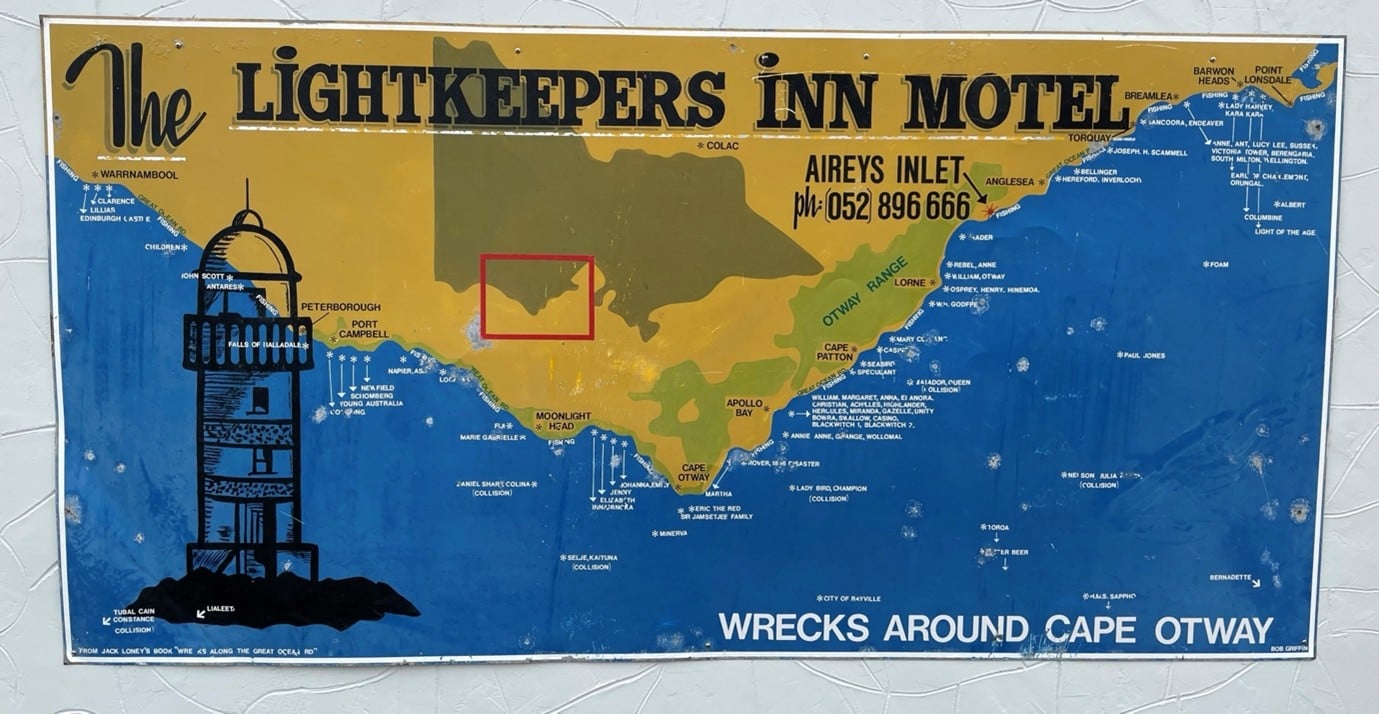
Image: Local mural depicting the numerous wrecks along Victoria’s Cape Otway. Credit: Liz Rushen
5. Marine Biofuel: the Future of Sustainable Shipping
The potential of biofuels in shipping is being explored to assess their viability and impact on decarbonisation. Navigating towards a cleaner future, biofuels are a key area of focus because of their technological readiness, availability and contribution towards environmental sustainability. Lloyds Register reports, “The maritime sector is exploring a wide variety of biofuels, including Fatty Acid Methyl Esters (FAME), hydrotreated vegetable oils (HVO), biomass-to-liquid (BTL) products, glycerol, and straight vegetable oil (SVO) products. These biofuels can be used in concentrations up to 100% (B100) or as substantial blend components with residual-type products. Biofuels are considered technologically ready for deep-sea shipping, as they can be used as drop-ins or blends with minor modifications to existing engines, machinery, and storage systems. This simplifies the transition from existing fossil-derived fuels. However, biofuels have also sparked controversy, with questions raised about their sustainability impacts and whether they will be available in sufficient quantities to meet the needs of different sectors.”
By way of clarification: Biofuel is fuel that is produced from organic matter (biomass) including plant materials and animal carbon emissions. The two main types of biofuel currently being produced in Australia are biodiesel and bioethanol, used as replacements for diesel and petrol (gasoline) respectively. In Australia biodiesel is usually made from vegetable oil, animal fats (tallow) or used cooking oil. Biodiesel is created through the reaction of these substances with an alcohol such as ethanol or methanol with the presence of a catalyst in processes called transesterification.
See: LR Knowledge Hub – Biofuel

Image: Lloyds Register website.
6. Maritime Net Zero Framework – LNG, Biofuels, Nuclear
The International Maritime Organisation’s Net-Zero Framework, approved by the Marine Environment Protection Committee in April 2025, represents the first global attempt to combine mandatory emissions limits and greenhouse gas pricing across an entire industry sector. The IMO will officially vote on its Net Zero Framework next month. Speaking during London International Shipping Week, Chris Wiernicki (ABS Chair) warned that while a global regulatory framework is necessary, there is a disconnect between regulatory ambitions and industry realities.
“Shipping and the IMO are on different trajectories. There is no clear pathway for green fuel availability and scalability and infrastructure support […] achieving net zero for shipping by 2050 looks like a wildcard […] mechanics need to be thought through. Right now, we are not where we need to be.”
Wiernicki called for greater recognition of transitional fuels in the IMO framework and argued that LNG is being over-penalized in the early 2030s despite its role in underpinning blue fuels and keeping hard-to-abate segments compliant. “LNG and biofuels are mission critical to any success and should not be overlooked, over penalized or discarded in the Net Zero regulation.”
He described maritime decarbonization as a “three-part calculus: 70 percent fuel selection, 15 percent energy efficiency, and 15 percent performance optimization,” adding that software will play a pivotal role in achieving immediate gains given the current scarcity of green and blue fuel variants. His recommendation? “Recognise LNG as a legitimate transition fuel and that it is itself a fuel in transition. Recognise that nuclear propulsion offers immense promise.”
If the framework is adopted then as planned, the measures would become mandatory in 2027 for large ocean-going ships over 5,000 gross tonnage which emit 85% of the total CO2 emissions from international shipping. The IMO’s initial deal was passed by 63 states, with 16 voting no and 24 abstentions.
See: gCaptain – ABS Chief Warns of Disconnect Between IMO Ambitions and Maritime Reality
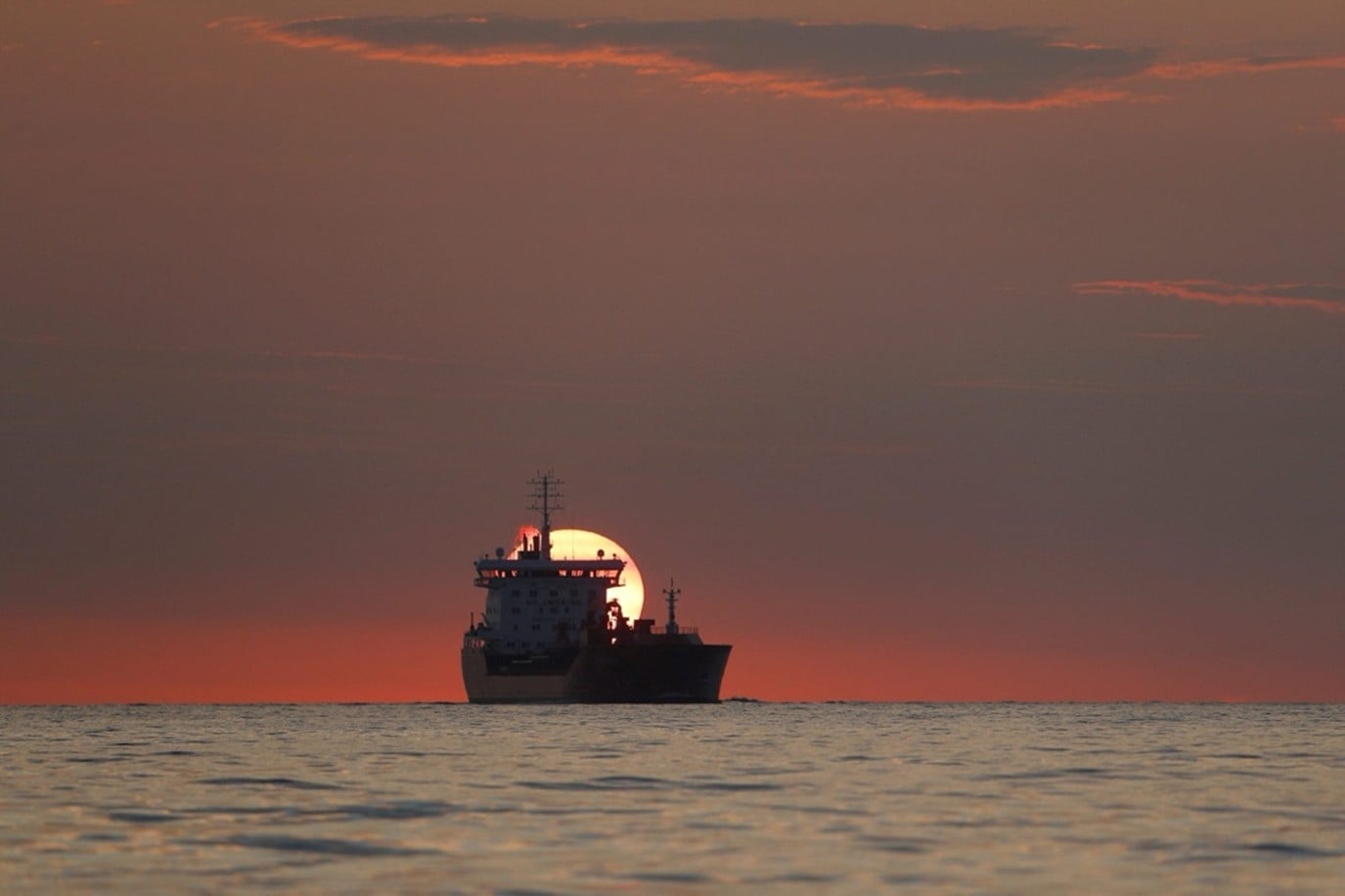
Image: A tanker ship is seen in the English Channel at sunrise, near Dover, Britain, August 4, 2021. Credit: REUTERS, Peter Nicholls.
7. Russian Shadow Fleet – Australian Sanctions
Recently, Ukrainian President Volodymyr Zelenskyy posted to X on September 19, 2025:
“I am grateful to Australia for lowering the price cap on Russian Oil to $47.6 barrel and sanctioning 95 vessels of Russia’s Shadow Fleet. More than 150 vessels were sanctioned by Australia in 2025. These measures directly cut Kremlin revenue and war machine. This step follows similar action by Japan, NZ the UK and other partners. Strong joint pressure does work. Now we look forward to strong sanction from the US. Russia will stop the war only if pressure against is sufficiently painful.”
A reminder that the Russian shadow fleet is a clandestine network of hundreds of vessels insured and operated by Russia to evade policing, following the enactment of 2022 Russian crude oil price cap sanctions in response to the 2022 Russian invasion of Ukraine. Foreign Minister Penny Wong states: “Australia has taken this action alongside our international partners, including the European Union, the United Kingdom, Canada, New Zealand and Japan. Australia maintains its total ban on imports from Russia of oil and refined petroleum.”
Russia’s so called “shadow fleet” operates in plain sight, turning the world’s shipping lanes into a tool of economic and ecological risk. Hundreds of these shadow tankers carry crude oil through European waters each day, many beyond their service life and registered under opaque holding structures. The result is a maritime environment made increasingly hazardous; between 2022 and 2024 alone, shadow fleet vessels were involved in dozens of incidents at sea, many of which involved oil spills. Estimates of the size of the shadow fleet vary, with industry participants putting the number at anything from ‘more than 400’ to ‘north of 600’, or roughly a fifth of the overall global crude oil tanker fleet.
“Our data shows that it has now reached around 650 units,” said Andrea Olivi, head of wet freight at commodity trader Trafigura, which estimates that two-thirds of that number are crude tankers.
See: Irregular Warfare Initiative – Russia’s Shadow Fleet
Also: Minister for Foreign Affairs – Australia takes further action to constrain Russian oil revenue
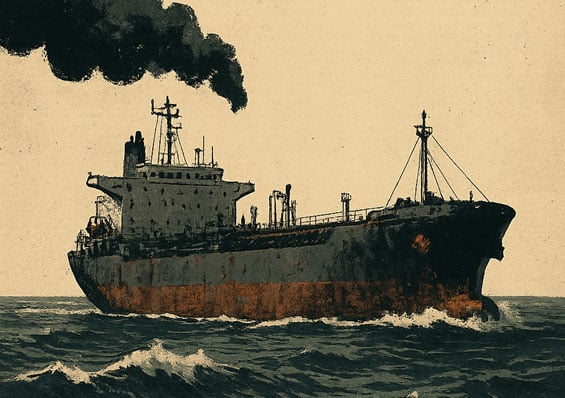
Credit: Irregular War Initiative
8. Undersea Cables – Australia
Out of sight and, to our peril, out of mind. Keith Wolahan, Victorian barrister and MP, eloquently described these cables in the ASPI The Strategist as, “Threads that bind: cables, community and Australia’s defence.” It is not simply about defence infrastructure and security but the cohesion of our society. Cables that connect us to the world and connect us to each other.
“Cables are where digital security and social cohesion intersect. A nation that cannot protect its cables cannot credibly defend its sovereignty. But a nation too divided to protect its people cannot defend anything at all… Protecting our subsea cables therefore requires more than engineering fixes. Yes, we need multiple routes, onshore data centres and partnerships with allies.”
“The economic stakes are immense. Each day, $22 trillion moves through subsea cables. A coordinated attack could devastate financial systems and take years to recover.” Global and interstate social connections are equally critical. Defence cable policies matter and are the key to our national resilience against digital isolation and social fragmentation.
In an earlier article for ASPI The Strategist, Jess Woodall writes that, “Five main international cables connect Australia to cyberspace and global voice networks. They carry 99% of Australia’s total internet traffic, dwarfing the capacity of satellites. Submarine cables are vital to our communications, economic prosperity, and national security. They also tend to break. A lot.”
“Unfortunately, the situation for Australia is more complicated. Sitting in the Southern Hemisphere, we’re largely isolated from the busy network of Transatlantic and North Asian Cable lines. We’re also unable to use overland fibre optic cables from other countries, leaving us reliant upon just a handful of international undersea cables. The physical placement of these cables also creates risks. The majority of the cables are gathered closely together within ‘protection zones’, located off Perth and Sydney.”
“AMSA and the Fisheries Management Authority perform some surveillance of cable protection zones. But the cable owners and operators who responded to the same ACMA report unanimously indicated that current protection zone monitoring arrangements were unsatisfactory… Comprehensive legislation protects undersea cables, but dispersal and preventative monitoring would significantly lower the risk to Australia’s communication infrastructure.”
See: ASPI Strategist – Threads that bind
Also: ASP Strategist – Australia’s vulnerable submarine cables
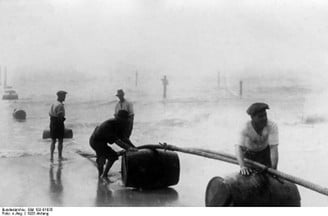
Image: Historical cable work, 1925. Credit: ASPI The Strategist.
9. Undersea Cables – Tasmania
Not without local Tasmanian political controversy, this 345km undersea cable, contributing to the shift away from coal power, is the second undersea electricity cable and transmission line connecting Victoria and Tasmania. Tasmanian Energy Minister Nick Duigan described the Marinus Link project as “a massive deal for Tasmania, our future energy security, our energy supply — but also the Tasmanian bottom line and prosperity for our state.”
It will also “bring more of Tasmania’s hydro-electricity to the mainland.” The political controversy relates to the late release of the business case by the State Government. The Tasmanian Opposition stated that Tasmanians deserved to know what was in the full business case. “There are risks around our major industrials and their ongoing viability. There are opportunities in terms of building new renewable energy.”
See: ABC News – Marinus deal signed
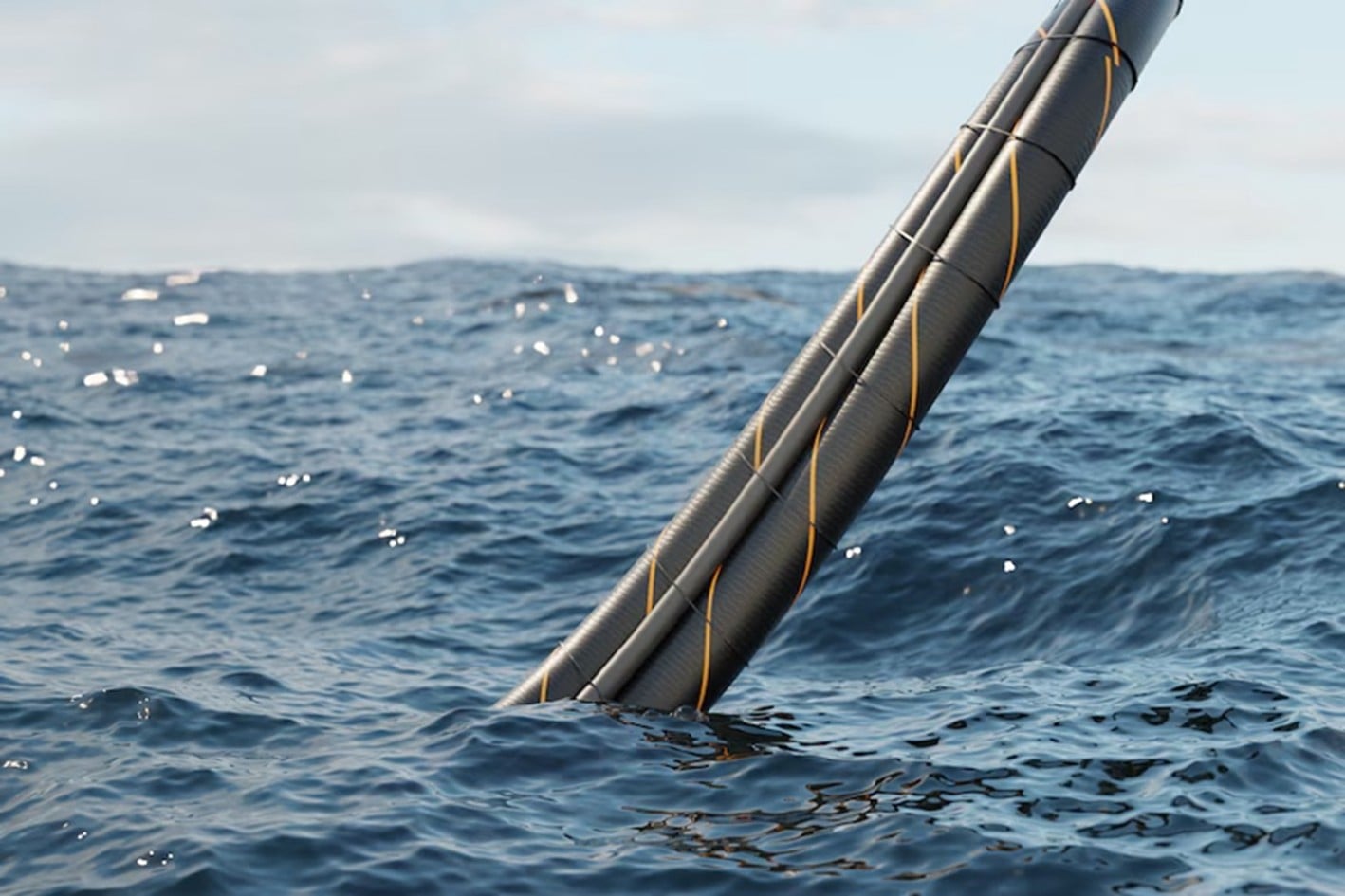
Image: The Marinus Link will be a second underwater electricity cable and transmission line between Victoria and Tasmania. Credit: Marinus Link
10. 2025 Melbourne Boat Show
Always an indication of just how passionate Victorians are about recreational boating is the extraordinary public enthusiasm for the Boat Show in Victoria Harbour, Docklands. Once again, MMHN acknowledges the commitment of Boating Industry Association (Vic) for welcoming the Heritage Fleet back to this event. And, once again, OSSA and MMHN are collaborating to present the Children’s Maritime Art Exhibition at Magnet Gallery in The District Shopping Centre between 14 – 19 October.
See: https://www.melbourneinternationalboatshow.com.au/
11. Maritime Careers Information
MMHN is delighted to note that Boating Industry Association (Vic) are again hosting the Boating Careers & Education Hub at the Melbourne Boat Show. Leading TAFEs and colleges will showcase the pathways into boating and marine trades.
12. Heritage Fleet at the 2025 Melbourne Boat Show
Volunteer members of our immensely tenacious Heritage Fleet will be participating at the 2025 Melbourne Boat Show on Harbour Esplanade. Regrettably, the dispute between the Heritage Fleet and Development Victoria about DV’s proposed relocation of the heritage vessels from North Wharf remains unresolved.
A reminder: The roll out of the Lendlease Tower Project on North Wharf will soon render the Heritage Fleet working spaces and berths inaccessible. To support the Heritage Fleet, MMHN sincerely hopes that the many thousands of marine enthusiasts at the 2025 Boat Show will make the time to visit the Heritage Fleet along Harbour Esplanade. MMHN applauds the generous volunteer crew of the Steam Tug Wattle, who will be hosting representatives on board from some of the 17 members of Maritime Museums Victoria (MMV) during the Boat Show. Plenty to see and discuss there!
13. Maritime Museums Victoria (MMV)
MMHN commends the many valiant, enthusiastic, proactive maritime stakeholder volunteers within the network of 17 maritime collections dotted around Victoria working to keep ‘afloat’. MMHN recommends that you take a moment to see this MMV video link and visit any local Maritime Museum in your vicinity.
See: MMV video here
14. Alma Doepel: Restoration Update
MMHN thanks staunch volunteer Bill Reid for this latest information on the as yet unresolved ‘Notice to Vacate’ and restoration progress. Bill refers euphemistically to “behind the scenes negotiations, media exposure via Docklands News, social media platforms and lobbying of Councillors and local MPs etc.”
MMHN convened a well-attended public Heritage Fleet Forum at the Docklands Library in order to forge collaboration within the Heritage Fleet on this vexed matter. Development Victoria subsequently produced a revised fleet relocation date; the end of 2025. Completion of the various fleet projects are unlikely by this date. Alternative relocation options remain unknown. In the meantime, restoration continues apace while the Alma is on the slipway for two weeks and multiple tasks are planned: bow thruster tunnels, topsides re-sanded and painted, surveyor to conduct initial stability and floating experiments, anti-fouling completed, waterline marked, heavy scaffolding work, looking at anodes, protection against corrosion, and ventilation.
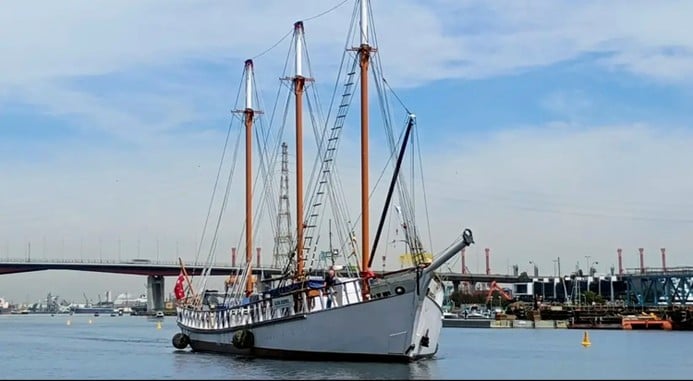
Image: Alma Doepel project – on her way to the 2024 Boat Show. Credit: Unknown.
15. Steam Tug Wattle: A Brief Report
As the Lendlease construction site expands further along North Wharf, work on the Wattle continues amidst difficulties related to diminishing working space and road access. Combine these challenges with the inevitable tension related to the relocation of the Wattle, the site of which is not yet known, and it is all likely to have a less than beneficial effect on morale amongst the volunteers determined to complete this restoration.
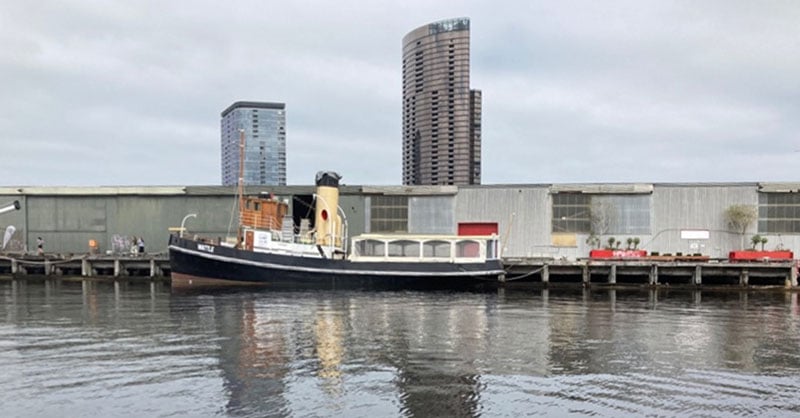
Image: The Wattle at North Wharf. Credit: Jackie Watts.
16. News of the Wyuna Restoration
MMHN sincerely thanks Rosey Kendall (Western Port Oberon Association Inc) for the timely reminder that pilot cutter Wyuna is undergoing restoration (regrettably, at present) across Bass Strait at Bell Bay. The Wyuna is considered a Victorian vessel by all who love her and courageously work on her and is a significant member of Victoria’s Heritage Fleet. Hopefully we will welcome her back home in due course. Here is the most recent progress report from the restoration crew, Max Bryant and Bobby Stone, who would warmly welcome any volunteer assistance (noting that access to the vessel requires that the TasPorts Induction be completed online through Veritas, which can be found here). Max alerts any prospective help to the fact that on board comforts are sparse, because TasPorts has thus far disregarded requests to access shore power.
Max: “When we first started the restoration work, we ran the ship’s own system. We were scolded for running the ship’s power system without their permission. I wonder if other ships entering the port have to get permission to run their internal power systems. I think not. Our older portable generator is failing with lights on and if we boiled the kettle and the fridge cut in, we were plunged into darkness. So, having negotiated a deal through Bunnings in Launceston, we purchased the full Boar Unit. It is 8kva electric start. Uses a bit more fuel but with the ability of running a decent heater to warm the mess. Bobby and I had strife getting the generator up the gangway, along the top deck, down the stairs to the mid deck, then around on to the starboard side. We bought a new compressor with a needle gun and hose. We are starting to make big inroads into the restoration work on the top. The needle gun has made it so much easier to get rid of the rust spots, especially on the davits.”
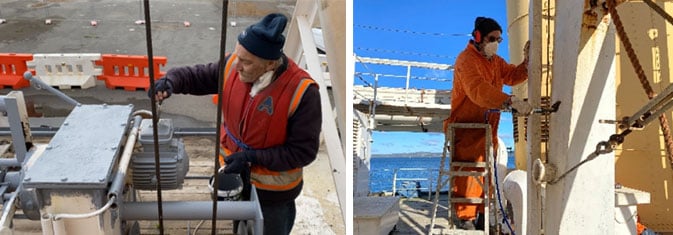
Images: The Wyuna restoration works. Credit: Max Bryant.
17. The Polly Woodside: Thoughts Anyone?
Sadly, the heritage Polly Woodside floats landlocked on Southbank, unable to join the rest of the Heritage Fleet during the Boat Show on Victoria Harbour. Too many low bridges and too many other seemingly intractable problems need to be addressed before such adventures can be contemplated.
But you can take action. Now is your chance to help solve a uniquely Melbournian maritime heritage ‘Polly problem’. MMHN appeals to all maritime enthusiasts who share a fondness for the Polly, currently floating in the heritage-listed Duke & Orrs Dry Dock on Southbank. MMHN invites you to share any ideas or proposals you may have in relation to maximising the Polly’s heritage value in this port city of ours. The Polly has enjoyed multiple incarnations and perhaps there are more to come. MMHN looks forward to hearing your thoughts about how to create a bright future for her. To visit her, take the tram from Harbour Esplanade along Flinders St, get off near the Mission to Seafarers, then walk over the Seafarers Bridge. Look at the Polly and email your thoughts to info@mmhn.org.au.
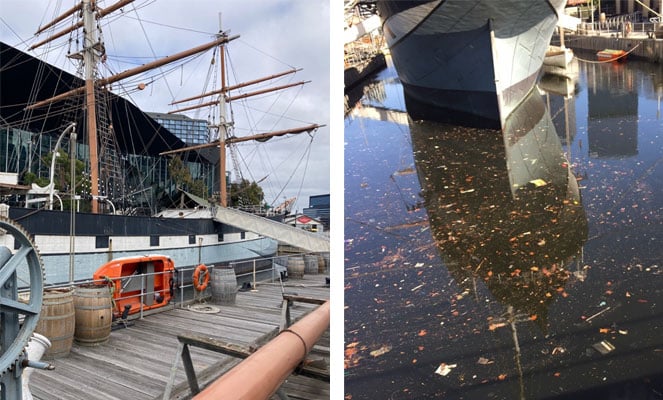
Image: The Polly Woodside. Credit: Jackie Watts.
18. Women in Maritime
MMHN is delighted to note key maritime sector organisations proactively supporting women in maritime careers in an industry where women are historically underrepresented.
MMHN congratulates Patricks Terminals for such positive action on gender equality in stevedoring, freight and logistics. Patrick Terminals’ WILpower Cadet Program is seeking applicants for its 2026 intake. This is a flagship diversity and inclusion initiative, offering a structured two-year cadetship that involves hands-on operational experience, mentoring and tertiary study opportunities in Melbourne, Brisbane and Sydney. It includes a competitive full-time salary, structured rotations, one-on-one mentoring, and support for further education through the Australian Maritime College. For more information or to apply visit https://ww.patrick.com.au/wilpower.
MMHN also congratulates BIA (Vic) Melbourne Boat Show on launching their Women on Water networking event at Melbourne City Marina. The City of Melbourne, WIRFAB, Victorian Fisheries Authority, Better Boating Victoria, and Boating Careers are all proud sponsors of this free event. Spaces are limited so register your interest here.

19. Chinese Progress: Submarine Drones
In 2010, China established the SHU’s Research Institute of Unmanned Surface Vehicle Engineering. The institute has a stated focus on uncrewed, intelligent and swarming transportation systems for military and civilian uses, with the goal of contributing to China’s maritime and polar strategies as well as national defence. The drones are the result of three years of testing and are ready for deployment with the PLA Navy. The institute has developed 15 intelligent USVs, named the Jinghai series. Historically, the US has had a technological edge, but China’s rapid advances in autonomy, swarm intelligence, and cross-domain integration – linking USVs with uncrewed systems in the air, space and land domains – are closing the gap.
China’s recent Victory Day Parade featured its latest military technology including two new extra large (circa 20 m) unmanned underwater vehicles (XLUUVs): the AJX002 and the HSU100. The AJX002 is a smooth-hulled torpedo-shaped drone, whose likely purpose is reconnaissance. The HSU100 is 3 m wider with two masts for communications or other purposes and may be capable of uncrewed minelaying. These massive drones indicate China’s growing investment in the XLUUV program, which is the largest program of its kind in the world, with at least five types of large uncrewed vehicles already being developed in or out of the water.
See: Naval News – Chinese Military Parade
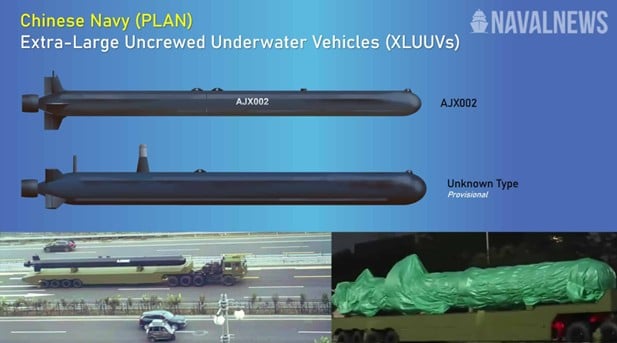
Image: Uncrewed Underwater Vehicles. Credit: Naval News
20. The #CorrectTheMap Campaign
Maps matter, a lot. They help shape how we make sense of, view and value area. Maps are not neutral depictions. They carry social, economic and political baggage. This is why changing the current map and shifting to an agreed-upon world map is difficult – but not impossible. The African Union has endorsed the #CorrectTheMap campaign, a call for the UN and the wider global community to use a revised and agreed-on world map. The map most commonly used is called the Mercator projection, created over 450 years ago. Map projections are how cartographers (map makers) “flatten” the three-dimensional Earth into a two-dimensional map. The Mercator projection was designed for colonial exploration and maritime trade. But, over the centuries, it has become an all-purpose projection for many governments, educators and companies. It exaggerates the area of North America and Eurasia while underrepresenting the size of much of South America and Africa. As the largest continent in the global south, Africa is a victim of this cartographic inequity. The #CorrectTheMap campaign calls for a move to the Equal Earth map projection, developed in 2018 by an international team of cartographers to address the distortions conveyed in the Mercator projection.
The African Union has endorsed the call for the United Nations and the wider global community to use a different kind of world map. Why is the African Union intent on correcting this ‘technical’ flaw? To alter and influence the way Africa is regarded and valued. Erroneous European colonial cartographic traditions have long diminished the scale and significance of Africa. The ‘flattening’ that occurs in the Mercator projection inflates the size of countries closer to the North or South Pole, in effect exaggerating the area of North America and Eurasia while diminishing the area of South America and Africa, the continents most adversely impacted by cartographic inequity. For example, the Mercator projection shows Greenland as nearly the same size as Africa, when in reality Africa is about 14 times larger.
According to the #CorrectThe Map campaign, a move to the Equal Earth map projection would address the distortions found in the Mercator projection that relate to perceived global power.
There are actually over 200 projection methods. The Dymaxion projection, developed by US engineer Buckminster Fuller, was designed to challenge ideas of the North and the South.
See: The Conversation – World maps get Africa’s size wrong
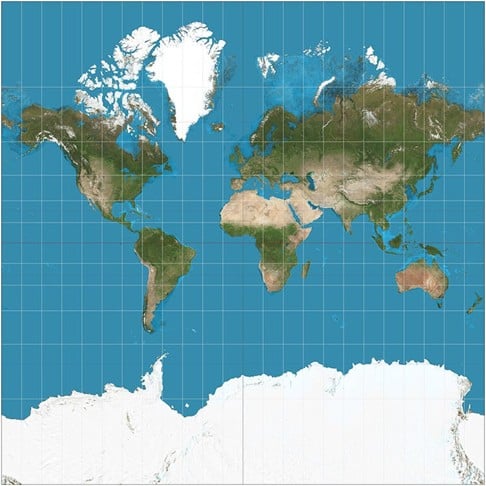
Image: The Mercator projection. Credit: The Conversation, Strebe, Wikimedia Commons.
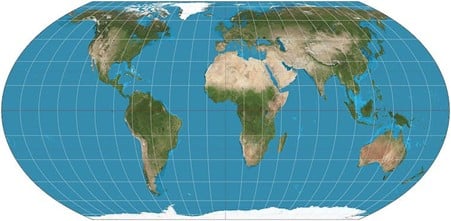
Image: The Equal Earth projections. The African Union has endorsed using the Equal Earth Projection as it better represents the true size of the world’s continents. Credit: The Conversation, Strebe, Wikimedia Commons.
21. Questions on the RAN Frigates Deal
More naval decisions. The Hunter Class frigate program is an Australian Government initiative to build 9 multi-mission frigates for the Royal Australian Navy (RAN), replacing the aging Anzac Class frigates. Strategic Analysis Australia (SAA) provides policy insights into national security, defence and international relations challenges. Ben Packham reports in The Australian on September 2 that SAA Director Michael Shoebridge has urged the Federal Government to scrap the Hunter Class program. The 2018 deal for 9 Hunter Class frigates at $9 bn per vessel was reduced to 6 vessels after a review in 2024. The ships are a heavily modified version of BAE Systems’ Type-26 frigate, and these changes have resulted in a significant increase in the cost of the vessels. Questions arise when it seems the Norwegian Government will buy 5 of the original Type-26 frigates for just $4 bn per vessel. The RAN Hunter Class frigate will be one of the most advanced anti-submarine warships in the world. Modifications may include incorporating the leading-edge Australian CEA phased-array radar, the Aegis combat management system and the integration of the Seahawk Romeo Maritime Combat Helicopter. The 6 Hunter Class frigates will be built in Australia by ASC Shipbuilding (now known as BAE Systems Maritime Australia, a subsidiary of BAE Systems Australia Ltd) at the Osborne Naval Shipyard in South Australia.
See: RAN – Hunter Class frigate
And Strategic Analysis Australia: https://strategicanalysis.org
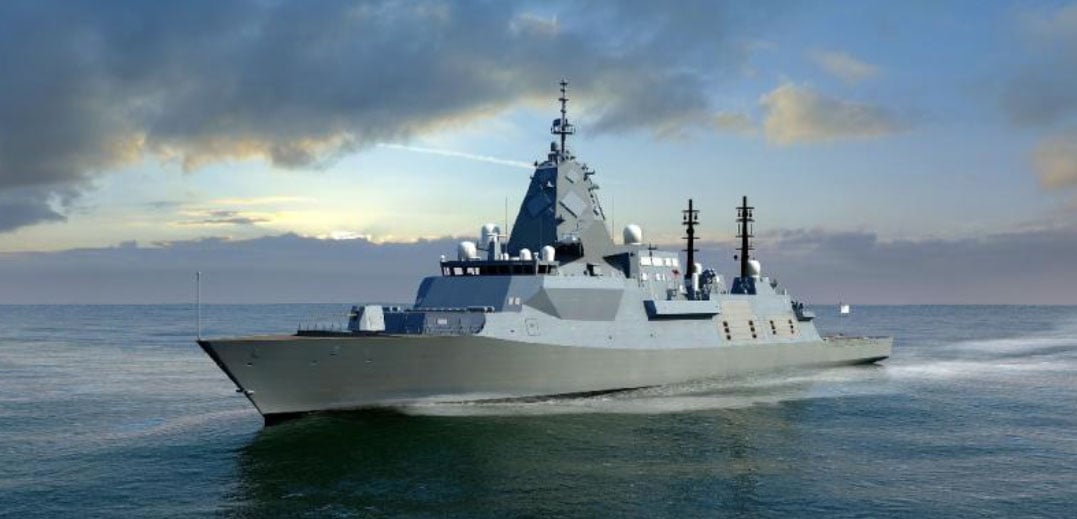
Image: An artist’s impression of the BAE Systems SEA 000 Future Frigate, Global Combat Ship. Credit: RAN.
22. Henderson Naval Shipyard, WA
Where is it? The Australian Marine Complex on the Cockburn Sound waterfront at Henderson is approximately 8 km south of the port city of Fremantle, Western Australia. Dan Jervis-Bardy reports that the Federal Government will spend $12 bn on a major upgrade of the shipyard and has confirmed that the US Navy will have access to Henderson for maintenance of its submarines as part of the AUKUS pact. Theoretically, in future, UK, US and Australian nuclear submarines will rotate through HMAS Stirling (which is also in WA) from 2027. The US is currently reviewing the AUKUS pact. Over the next decade, the Henderson Yard will cost $25 bn and be used for docking and maintenance of nuclear-powered submarines as well as other naval shipbuilding projects.
See: The Guardian – ‘A facility for them’
23. Ghost Sharks – RAN
What are they? The Ghost Shark Program, in planning for the last two years under funding from the existing defence budget, will result in the construction of more than 24 drones at a cost of $1.7 bn over the next 5 years.
The RAN deal, signed on August 26 and announced on September 10, encompasses a “fleet” of Ghost Shark extra-large unmanned underwater vehicles or XLUUVs. The contract with Anduril Australia is worth A$1.7 bn, or about US$1.12 bn. A Navy fact sheet describes the Ghost Shark as “a cost-effective, stealthy, long-range, trusted undersea capability that can conduct persistent and disruptive intelligence, surveillance, reconnaissance and strike” and says “it leverages an all-electric powertrain capable of executing long-range, long-duration missions without surfacing, preserving stealth and increasing time on mission”. Defence Minister Marles said, “Nations will need to have an entire mass underwater military capability, and that’s what Ghost Shark represents.“
See: Defence News – Australia orders fleet of unmanned submarines
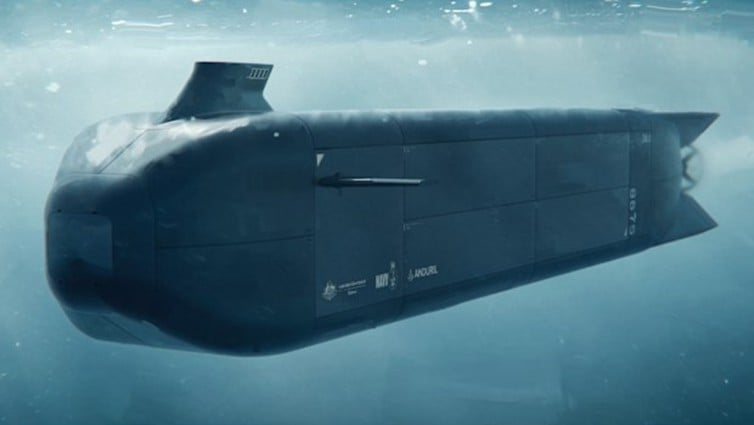
Image: The Ghost Shark. Credit: RAN.
24. Marine Science and Technology Centre (Deakin Marine)
MMHN Board Member Dr Greg Harper visited Deakin University’s Deakin Marine in early September as part of a tour group that included members of the Great Ocean Road Coast and Parks Authority (GORCPA) hosted by Deakin researchers. Greg reports that he was “amazed by the array of projects being undertaken by the researchers at Queenscliff, with links to other Deakin sites at Warrnambool and Waurn Ponds and, in particular, wonderful ‘bespoke infrastructure’ used to perform relevant research”. Greg cited, as an example, the great lengths Deakin undertakes to constantly bring fresh seawater into the facility to enable research on kelp, mussels, sea urchins and oysters, getting as close to field conditions as possible. Among many great opportunities, Greg was particularly struck by the work of marine scientist Dr Prue Francis. Prue has a program to support the community’s ‘Ocean Literacy’ and has published several important papers in the field. One recent paper takes stock of many pathways that engage Australian society in achieving ocean sustainability including ocean educational programs, community engagement efforts at all levels, projects to foster cross‐sectoral collaboration connecting people to the ocean, and work to build actionable policy and funding frameworks with the intent to ensure long‐term impact. MMHN shares many of these Deakin Marine objectives and adopts similar community-based aspirations. Greg hopes to create opportunities to link MMHN to Dr Francis’ work with the mid-term objective of developing examples of the work to share at the International Congress of Maritime Museums, to be held in Sydney in October 2026. Greg is keen to encourage and host ICMM delegates in Melbourne at a ‘satellite’ conference meeting, to enable Victoria to present the compelling, yet seldom-recognised story of Victoria’s maritime heritage. In the longer term, a relationship between MMHN and Deakin will assist in developing content and materials for the MMHN Maritime Experience Centre project in Docklands Precinct, designed to inform, educate and inspire community members about matters maritime.
See: Deakin Queenscliff Marine Science Centre
Also: Deakin Marine Research and Innovation Centre
25. AGM & Presentation: ‘Williamstown, Submarines and the Future’
INVITATION
When: Wednesday, October 8 at 6:30pm
Where: Royal Historical Society Victoria
239 A’Beckett St, Melbourne
Join us at the MMHN AGM Presentation: ‘Williamstown, Submarines and the Future’.
Peter Quinlivian, lawyer (BAE Systems), historian, author and MMHN Board member will share with us his unique insights on the historical and current complexities related to submarine matters.
Until next time,
Jackie
Dr Jackie Watts OAM
Chair,
Melbourne Maritime Heritage Network
info@mmhn.org.au